All posts by Jenny Alexander

I've written loads of children's stories and funny non-fiction books on useful topics such as how to be happy and how to handle bullies, bigmouths and so-called friends. My books for adults include five on the art and craft of writing, and I write a monthly column for Writing Magazine. I run creative workshops both as an independent and for organisations large and small.

The glimpse is the gift

Last night, I had a dream about the rewards of writing, and when I woke I thought, I can blog about that. When I turned on my computer in the morning, I discovered this quotation in my Facebook timeline, which was a delightful synchronicity to start the day.

I slept and dreamt that life was joy. I awoke and saw that life was service. I acted and behold, service was joy ~ Rabindranath Tagore

Because this was my dream.

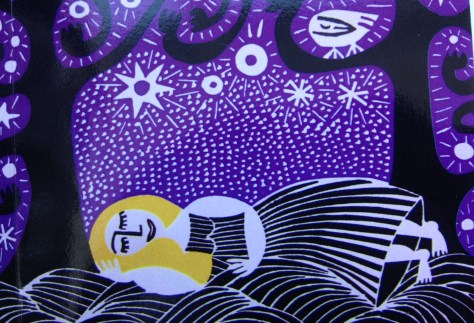
I am in a wild, upland place, being taken to see a wonderful plant. I’m given just the briefest glimpse of tall stems with early blooms of the most intense purple, and I realise it’s the colour that I’ve been brought to see. Usually, I am brought to see the indescribable aqua, but this time it’s this purple.

I’ve been writing something, and it’s a test – if I pass, I can come back and see this purple in all its intensity, in full flower. But this time, I have not passed and I will have to go back and start again, and try with another piece of writing.

This is the work, and I’m grateful for it. I don’t feel disheartened by failure, because the work itself is my reward.

It was always like this. I look back at all my writing, so many books I poured my heart and self into that never saw the light of day – real work, hard work – and I never achieved any kind of fame or recognition, but I don’t regret any of it.

Like the family years. I remember the sense of pride I took in the tasks of the household and childcare, which felt important, and a privilege, to be able to live in service to the work. I never felt bored or resentful, or that what I did was unimportant.

I had work, and I wanted to do it as well as I could. Not everybody is given that sense of purpose. I’ve glimpsed the colour, and one day I might see it in full flower, but the glimpse is the gift.
IMG_2241
Dreaming purple


The shortest book review ever

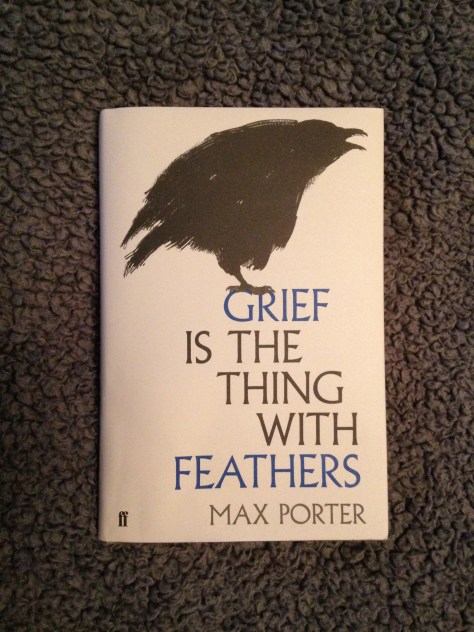
The book: Grief is the Thing with Feathers, by Max Porter

IMG_2234

The review: Wow.

***********************************************************************

That’s it. Everything I want to say.

Can I tell you what happens? I don’t want to tell you what happens.

Can I tell you about the writing style? I don’t want to tell you about the writing style.

Am I glad I read it? No, because now I’ll never be able to come to it new again.

If you haven’t read it, you can come to it new, which is why I don’t want to tell you anything about it.

So there you have it.

Wow.


A must-read for would-be memoirists

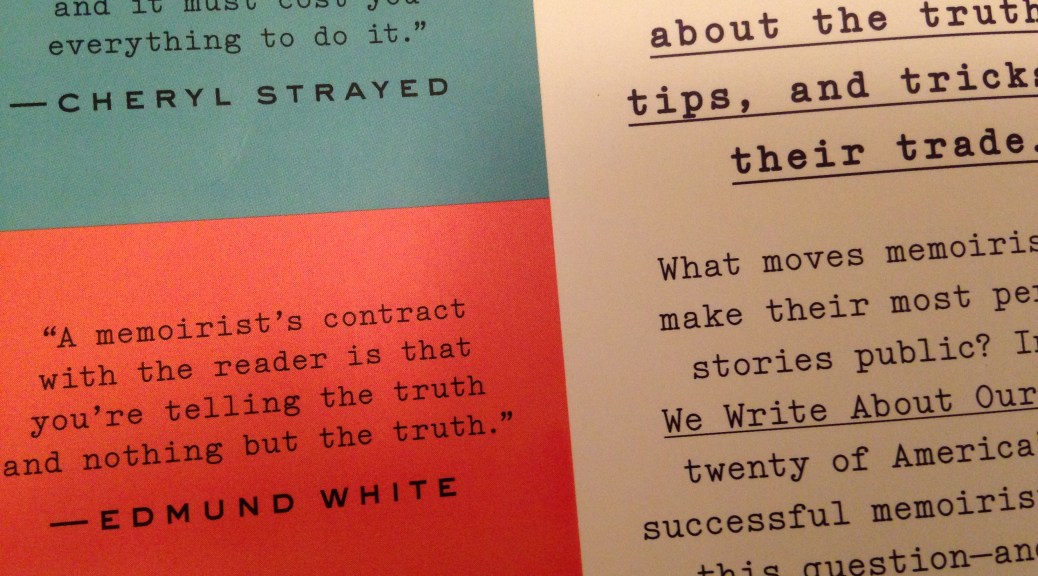
Last week, I mentioned a brand new book edited by Meredith Maran called Why We Write About Ourselves: Twenty Memoirists on Why They Expose Themselves (and Others) in the Name of Literature . I was hoping it might help me develop my thinking about the issue of whether it’s OK to tell your story when in doing so you will almost certainly intrude upon the privacy of those closest to you.

I’m happy to say that it has.

IMG_2235

Most of these thoughtful essays about memoir writing address the problem specifically, with many of the authors saying that they send the relevant pages to anyone mentioned by name before they go to publication.

Several say that if the person had any objection to being named they would either disguise their identity or omit the passages concerned altogether. Others say they make the judgement on a case-by-case basis.

I like this approach from Sue Monk Kidd:

Whenever I use someone’s name or reference them, I send them the relevant page or pages of the manuscript before turning the book in. They are usually close friends or family members. I tell them, ‘This is what I’m saying; if you have problems with it, let’s talk about it. I won’t necessarily change the content, but I’ll change your name ~ Sue Monk Kidd

I think a definite upside to sending the manuscript to anyone you’ve mentioned would be that there wouldn’t be any surprises – you’d have had the discussion before you decide how to proceed.

No surprises for the person who is mentioned and none for the author either: several of these essays mention the experience of expecting someone to find a particular thing intrusive and finding they’re fine with that, but have taken serious umbrage about something else the memoirist never dreamed might be problematic.

Related to the question of whether it’s OK to expose other people in telling your own story is the question of why we want to write the memoir at all. The point is made that since memoirs  pretty much always risk hurting people, what could make that a risk worth taking?

The most common reason the writers here give is the desire to help or inspire other people who may be experiencing something similar to what they have lived through. This made me smile, since one of my writing goals for this year is ‘Let go of the drive to be helpful in my writing.’

How can I make my writing better, deeper, truer? Is it true to my voice and my vision? Questions like that often consumed me. They were vital; they still are. But as I got older, the point was not only how I served my work; it was about what my work served ~ Sue Monk Kidd

But I guess this drive to be helpful may be another aspect of my writer self that makes me quite well-suited to memoir writing, besides the mix of fiction and non-fiction I write and the examined life that I mentioned in my last post.

So those are my big takeaways from this book, but there’s so much in it that I’m sure anyone who’s thinking about writing memoir will find the answers to their questions too.

Have you ever considered writing about your own life? Why might you want to, and what holds you back?

Is your life story yours to tell?

I’ve always suffered from this odd inconsistency as a writer: I love reading memoirs and I  have lots of creative ideas for writing one myself, but it’s never felt acceptable to me to go there because you can’t tell your own story without involving other people.

I got round this in the memoir sections of Writing in the House of Dreams by focusing on my inner life and barely mentioning anyone in my day-to-day except my older sister, who had been dead for forty years, but it was a struggle and meant I had to leave out some of my most powerful dream experiences because they involved other family members and close friends.

I only realised this week that I’ve probably been put off writing autobiographically by a particular kind of memoir that seems to dominate the market, even having its own section in many bookshops – so-called inspirational lives, or more commonly, misery memoirs.

I’ve never actually read one of these. I don’t like the idea. Writing about traumatic childhood experiences feels like something that could be very therapeutic, but therapeutic writing is private writing for me. Therapy is about healing, and publishing this kind of book feels like something that’s more likely to put existing rifts beyond healing.

(Having said that, and in passing, this article by ghost writer, Andrew Crofts, on the excellent Authors Electric blog makes an interesting case for the misery memoir as lifting the lid on child abuse and paving the way for the current exposure of people like Jimmy Savile.)

But there are lots of different motivations for writing autobiography besides therapy or a desire for justice, and I’ve had to give some thought to those in planning my upcoming Writing Your Life workshops.

As a writer of both fiction and non-fiction and the owner of an examined life, I suspect that writing memoir may be my natural speed. It’s certainly the kind of writing I feel most alarmed by, and the things you fear almost always turn out to be your greatest opportunities.

I’ve got some ideas for telling some of the stories of my life which feel exciting and intriguing but, in the meantime, I’ve just bought a book called Why We Write About Ourselves: Twenty Memoirists on Why They Expose Themselves (and Others) in the Name of Literature, edited by Meredith Maran. I’m hoping it’ll help me develop my thinking. I’ll let you know if it does.

Any thoughts?


Have you read any great memoirs lately?

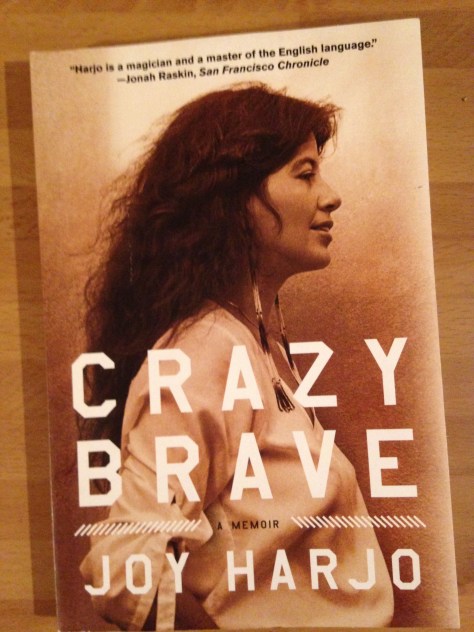
As I mentioned a few months ago in my blog post When was the last time you felt really happy? I’ve been reading a lot about the craft of writing autobiography lately, and when I posted about this on my fb author page someone recommended Joy Harjo’s wonderful memoir.

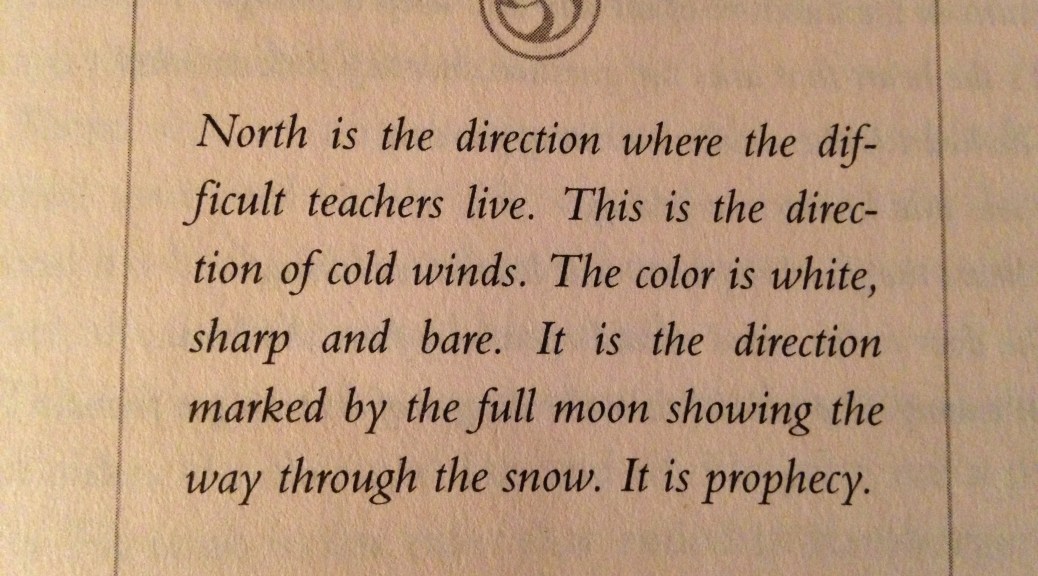
IMG_2180It’s beautifully written, short but perfectly formed, with the text divided into four sections named after the directions – East for sunrise and beginnings, North for difficult teachings, West for leaving and being left, and finding your way in the darkness, and South for release.

I love the voice, so thoughtful and steeped in the spiritual traditions of Harjo’s ancestors, and the way the story begins with her journey towards being born, which gives her the opportunity to describe the lives of her parents before they became her parents.

The story is embedded in its time and place in such a way that it evokes her whole social situation, bringing it alive even for readers like me, who may have known nothing at all about the Mvskoke/Creek Nation.

Much of what she says really chimes with me, such as this idea, that has informed my life in every area, especially my writing:

I believe that if you do not answer the noise and urgency of your gifts, they will turn on you. Or drag you down with their immense sadness at being abandoned.

 I’ll be blogging about other great memoirs and books on memoir writing over the coming months, while I’m planning my workshop days on ‘Writing Your Life’ and pondering my own next autobiographical adventure.

Have you read any great memoirs lately?


When does a book need a new title and cover?

A few weeks ago, I attended a webinar organised by the wonderful Alliance of Independent Authors, in which Joanna Penn said we shouldn’t be afraid to rebrand our  self-published books as we begin to understand our market better.

Shortly after that, I came across her article On Changing Book Titles And Covers: My Own Experience And How You Can Do It Too, and those two things got me thinking about what I’ve learnt about my market in the months since I published my most recent books.

I think what I may have learnt is that choosing a cover and title isn’t about what I like, but about telling the customer exactly what they’re going to get, in the couple of seconds they’ll spend glancing at it in amazon or wherever.

I’m not sure, which is why I’m blogging – I would really value your feedback.

Here’s the cover my editor, designer and I came up with for my YA novel about sibling suicide, Drift.

9781910300084The rationale behind this choice of cover was that most current YA top-sellers seem to involve artwork rather than photography, and art is one of the themes of the book.
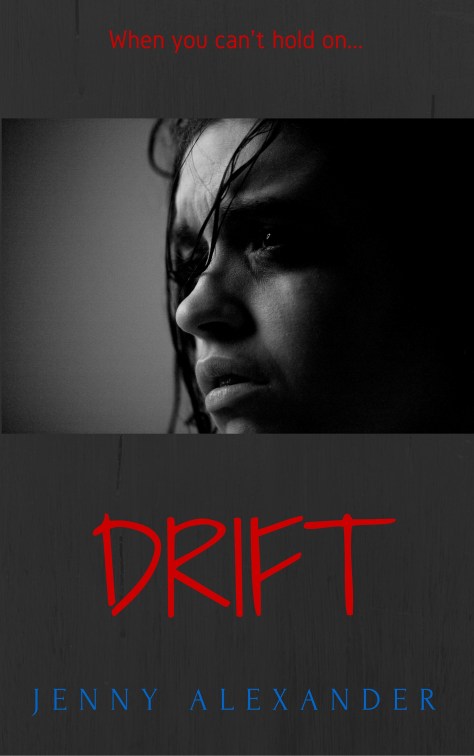
But does that image really suggest sibling suicide/angst/grief and depression? Are there really any clues as to what kind of story it is? And does it have a real impact that makes you feel curious to read inside?

I like the cover, but I’m not sure it works. So last night I mocked up a completely different one in canva . I don’t like it as much, but I do think it might do the job better – here’s the sketch so far.

drIFTWhat do you think?

The other book I brought out last year was When a Writer Isn’t Writing: How to Beat Your Blocks, Be Published and Find Your Flow. I’ve typed that title enough times to be starting to feel it’s too long! Besides that, before I published it, an author friend of mine, Kelly McCain, said she felt a more positive sounding title might be more appealing.

I think she was right, and I’m leaning towards re-titling it something like Writer’s Block: Beat it, Be Published and Find Your Flow or How to be a Happy Writer: Beat Your Blocks, Be Published and Find Your Flow. Which title would you be more likely to buy?

Although it pains me, I think the cover image might not be helping the book either. I like it a lot – I love all Hilke MacInyre‘s work – but I’m not sure it tells the reader in that one-second glance, what kind of book they’ll be getting.

9781910300053–half

The rationale behind this one was that I wanted a brand-look with Writing in the House of Dreams I thought the two might help each other in the market. But I’ve discovered that most readers who have read both seem to have liked one but not the other (that’s me reading between the lines – my readers are too nice to actually say it!)

Writing in the House of Dreams isn’t your run-of-the-mill writing or dream book, so I guess the cover image is probably OK, but most practical books on writing like When a Writer Isn’t Writing have covers with more text and smaller/plainer designs.

Neither of these books have sold a huge number of copies, so what do you think – worth a revamp? Or should I give them a little more time, just as they are?

Do you want to know what your dreams mean?

I wrote my first poem when I was about 6 years old (it was about my teddy bear) and carried on writing and loving poems until we began to study poetry in English Literature. Then I discovered that poems had hidden meanings you had to decode and that decoding them was always beyond me.

Instead of enjoying the mystery and music of a poem, and listening for the ways it spoke to me, I learnt to pick it apart and reduce it to an interpretation decided upon by my teacher. Instead of feeling, when I read a poem, as if I was on the exciting brink of something, I just felt stupid because I knew I couldn’t go there on my own.

I rediscovered my love of poetry through learning to engage with my dreams. Trying to analyse a dream can make you feel confused instead of excited, and I soon gave that up. But if you relax and let go of worrying about what they mean, ideas and associations might bubble and pop as you remember and reflect on tham, or you may find no immediate associations with your day life at all.

Either way, as with poetry, the key to enjoyment and ultimately understanding is to approach you dreams with your child mind, your beginner’s mind, open to all its possibilities.

Don’t ask what it means, but rather feel and experience what it is – let it work in you. Enjoy its images, patterns and music. Hold it in your mind without interfering; allow learning and insights to develop and grow.

What makes fiction, poetry and dreams so intriguing is that they are products emerging into consciousness in the minds of their creators, who don’t even know yet what they are. They are beyond the reach of logic and reason.

Sharing dreams, sharing writing, in this attitude feels exhilarating, and we’ll be doing six lovely sessions of it here in Cornwall, starting on January 20th. If you’re in the area, do check out the details on my workshops page.

If you can’t get to a workshop, there’s plenty more about how to approach dreams and writing along with lots of creative exercises for you to try in my book Writing in the House of Dreams.

Thank-you for calling by the House of Dreams in 2015, and may 2016 bring you much love, peace and joy.


Why you should never read someone else’s journal

In the long hiatus between my mother’s death on October 19th and her funeral last Friday, I wasn’t able to focus on work much at all, and that felt OK and appropriate. I slept a lot, dreamt a lot, read non-fiction books and wrote in my journal.

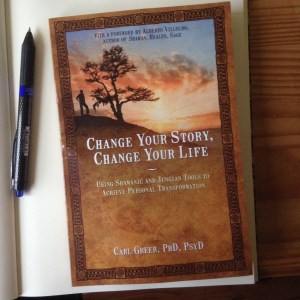
I was working through some of the exercises in Change Your Story, Change Your Life: Using Shamanic and Jungian Tools to Achieve Personal Transformation by Carl Greer one morning, when it occurred to me that anyone reading my journal after I died might not understand, as I do in the writing, that it’s an experiment, and not a report.

Slow start warning: I nearly gave up on this book after the first chapter, which felt like puff and waffle. Glad I didn't.
Slow start warning: I nearly gave up on this book after the first chapter, which felt like puff and waffle. A few chapters in, I’m glad I didn’t.

Actually, my whole journal is a perpetual work-in-progress. Every page I write is part of a creative exploration. It isn’t me – it’s a kaleidoscope of all the possibilities of me, and I’m aware of that when I’m writing in it in much the same way as when I’m gathering notes for a work of fiction, knowing all the time that many of my ideas won’t fit the story and will have to be discarded.

A journal or diary is a first encounter with ideas and events, before you’ve had a chance to ponder and decide what you think of them. To get a true sense of a person’s life, I guess you’d need to read their autobiography, because there you have a completed work. Where a journal is a mess of notes, often contradictory or inconsequential, an autobiography is an expression of the writer’s identity, his or her choice of what’s important and how they understand what’s happened.

I was struck by something in Natalie Goldberg’s book on memoir-writing Old Friend from Far Away last week; she says we shouldn’t think we have to be old before we can write a memoir. We don’t need the whole story all in one go, at the end. We can write memoirs from time to time throughout a long life, and each one will be the most complete expression of who we are and how we understand our lives up to that point.

In that sense, I guess autobiography could be seen as a work-in-progress too, but the difference is that in autobiography we are writing what we know about ourselves and our life, whereas in journalling we are feeling our way along the borders of our knowledge, and what we find must be judged as me or not-me, accepted or discarded, as part of the process of becoming.

If you read someone’s journal – as well as the obvious problem that it is private writing and they did not intend it to be read – you will not find the person there, and thinking that you will could give you every which kind of wrong impression, like listening to someone’s dreams and believing you can interpret them. A good dream therapist will simply hold the dream so that the dreamer can look at it from different angles, because only the dreamer can find out what it means.

I love my journals
I love my journals

I include all sorts of things in my journals – dreams, ideas, experiences, book reviews, quotations, drawings, writing exercises and creative experiments. I love them, just as I love my dreams, specifically because they don’t define me.

With both, there’s a feeling of infinite possibility, a continuously forming sense of direction, so that even at the end of a lifetime of journalling and dreaming, I’m sure there will be no conclusion, because the conclusion is always up ahead.

IMG_1508

My children have strict instructions to burn my diaries without reading them when I die. What would you like to happen to yours?

‘Use your dreams to grow your soul’ – Patti Allen in the House of Dreams

Today, I’m delighted to welcome dream teacher and author Patti Allen MA in the House of Dreams. Patti served on the teaching staff of Seneca College in Toronto in the field of Holistic Health for ten years and currently serves as a mentor for Denise Linn’s online courses for Hay House.

With a specialty in facilitating dream groups, and a frequent guest on radio and TV, she presents lectures and workshops on the topic of dreams and how to work with them. Her dream healing oracle deck, The Abaton Keys® combines creativity, wisdom and dream knowledge to help dreamers access their own wisdom.

Patti Allen
Patti Allen

Patti, when did you first begin to remember and explore your dreams?

The first dream I interpreted was in 1980 after hearing an interview with Gayle Delaney on the radio. It helped me with a decision that was weighing on me. But I didn’t start exploring my dreams deeply until I didn’t my training in the Rubenfeld Synergy Method® in 1991, a technique for integrating body, mind, emotions and spirit. Part of the requirement was to go through the work myself and my dreams became quite vivid and intense. It began my search for meaning and a life-long love of dream exploration.

How do you use dreams in your own life?

Dreams have advised me on relationships, helped me problem-solve and given me access to Source and creative possibilities. They amuse me, educate me, help me learn about myself and those in my life. Quite simply, I am enlightened by my dreams and I am bereft without them.

What is the relationship between dreams and creativity?

I believe that we are created in the image of the Creator and embedded in that is creativity! Dreams provide inspiration in the emotions they convey, the colours they feature and in the stories they tell and visual images they show us. They are just waiting to be mined and used to create our lives… whether we use them in a “creative” project or not.

I’m particularly drawn to your website page on the Abaton Keys. What was your process in creating them?

Thank you! I did my master’s degree on the role of dreams and healing in ancient Greece and I loved the healing practices associated with dreams and the healing temples of Asklepios. Then, Denise Linn, the founder of the Soul Coaching Institute and my teacher in Soul Coaching®, created a course for Hay House on oracle card readings. I served as a mentor for that group and was inspired by the course material to actually create my own deck. It was a creative birthing that couldn’t have happened without the amazing work of collage artist Julia Still. As much as I organized the project, there was something bigger than myself, organizing me! To this day, when I do a reading for a client, I check the book that explains each card. The work came through me but didn’t necessarily lodge in the part of my brain that I can access. An interesting process to say the least!

Is there anything else you would like to say about dreams?

Yes! Explore your dreams, play with them and use them to grow your soul. There is no right or wrong way to start. We spend a 1/3 of our lives sleeping and through dream work, we can be 100% awake!Patti Allen

To learn more or contact Patti, go to www.pattiallen.com

When was the last time you felt really happy? Write for 10 minutes…

I’m reading Nathalie Goldberg’s book on writing memoir, which goes under the wonderful title of Old Friend from Far Away. As you might expect with Goldberg, it’s full of practical writing exercises, and when I came to this one, I was briefly stalled: When was the last time you felt really, really happy?

IMG_0073

I’ve done the exercise before – I can’t remember now what prompted it – and it was really easy. Having fresh blueberries on my morning muesli – that had made me happy. Watching an old episode of Frasier while I was eating it – happy, happy, happy. My normal approach to life is celebratory and thankful, so happiness always feels close to the surface.

But today I found myself having to cast my mind back, across the numb times of these past few weeks, during which my mother was given a diagnosis of leukaemia, developed pneumonia and died, all within ten days. She approached the end of her life the way she approached every part of it, with stoicism, taking care of the practicalities and being clear about her preferences and decisions.

She was 90 years old, and had been ready to go for several years, as her physical condition deteriorated; she was not at all afraid of dying. She died in her own home, having steadfastly refused all life-extending treatments, with her family at her bedside, on her wedding anniversary, so in many ways it felt like a blessed death.

In this interval between my mother dying and her funeral, I’ve been mostly sleeping, walking and reading – books like the Nathalie Goldberg.

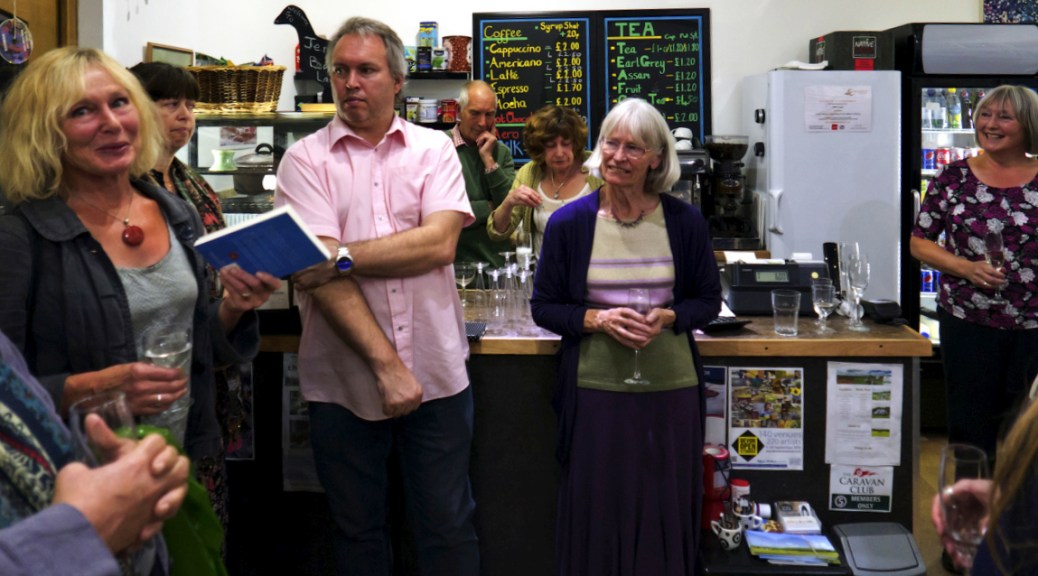
When was the last time I felt really, really happy? I suddenly remembered my book launch, at my friend Gill’s art gallery in Devon. My younger daughter was staying with me, and she raised the toast for one of the books I was launching. One of my oldest friends raised the second toast. I did some readings.

P1290965

It was a stunning, beautiful evening, a full moon over Dartmoor, and a happy throng inside the bright gallery, among the paintings and artefacts. Everything flowed.

A happy throng
A happy throng

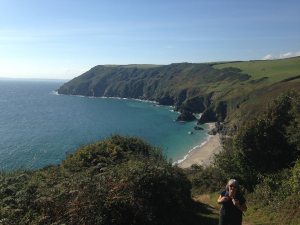
Afterwards, my daughter stayed on for a few days. The weather was hot, as it often is in Cornwall in the last days of September, and we walked the coastal path together.

12019852_10153626600030030_5704215196115227108_n

So that’s what I’ve just written about, and now the last time I felt really happy was half an hour ago.

Such is the transforming magic of writing. When you use all your senses to immerse yourself in the creative experience and allow your body to feel the emotions, you are creating or re-creating real experience for the self.

Right now, I can’t manage to push forward into new worlds with fiction and my current work-in-progress, but writing into the more familiar territory of my own life feels easy and affirming.

I’m looking forward to offering a new course in memoir writing in 2016