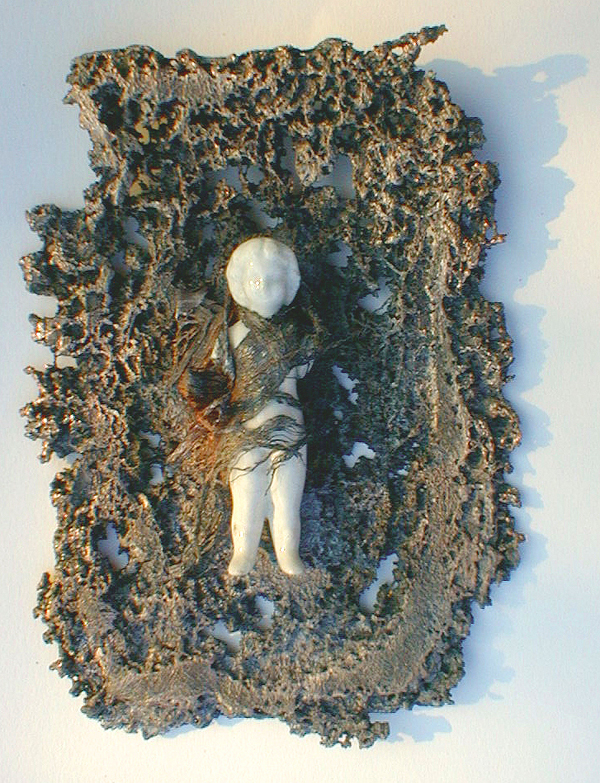
Jung called the Shadow ‘the seat of creativity’ because it contains every potential in us, not just the qualities we identify with. Instead of being limited and narrow, like our ideas about who we are and what life is, it’s fluid and boundless, and messy like real life.
Meeting the Shadow is an experience of expansiveness; it releases energy which was previously tied up in holding the border between what we think of as ‘me’ and ‘not me’, what we think of as ‘how life is’ and how life really is.
It isn’t something you can understand by reading about it. Jung said the archetypes were not ideas but ‘pieces of life itself.’ You have to experience it, and you only know you’ve got it when you are changed by that experience.
An uncomfortable meeting
Meeting the Shadow is always uncomfortable. If it’s easy, you aren’t doing it right, because the Shadow is by definition the aspects of our self that we’re so uncomfortable with, we’ve disowned them.
This is not to say the Shadow is only negative. Positive potentials which may have been strong in us can be lost. For example, a strong-willed child may learn to identify that strength as a bad thing, and grow to suppress and deny it.
We can’t see the Shadow in ourselves; we have to look in the mirror of the world, where we have projected it out, and the clue is in our feelings.
Five obvious places to look
- Think about people who provoke an exaggerated emotional response in you, either positive or negative. These might be people you know personally or public figures. The things you dislike or admire about them could be undeveloped potentials in yourself.
- Think about your fictional heroes and villains – who’s your favourite character in the drama/sitcom you’re following? Which character do you most despise? Describe them in two words. Consider!
- Slips of the tongue. When you say something you didn’t mean – or someone takes something you’ve said in a way you didn’t mean – what would it say about you if you meant it?
- Notice what people say about you – both criticisms and compliments – anything you balk at could flag up qualities in you that you haven’t fully recognised.
- Consider anything which blocks your ego-desires, anything you normally fight against in life, as possibly carrying shadow aspects. Physical symptoms which stop you doing what you want, for example.
Letting go of how things ought to be – accepting how things are
Whatever you resist in life, rather than fighting it, see what happens if you side with it instead. Experiment, but don’t go at it like a sledge hammer. This isn’t about instant insights; it’s about attitude.
It’s about a way of being in the world, not demanding explanations, but opening to possibilities, being willing to let go of what you think you understand, without having to replace it with another understanding. It’s about amplifying your experience to accommodate uncertainty and confusion.
Judge by results. You’ll know whether the Shadow is at work by what happens when you stop resisting the things and people in life that you don’t like. The Shadow is an unwelcome visitor, but it comes to bring balance and wholeness.
For example, if you think of yourself as a hard worker, willing to put in all the hours, but back problems mean you keep having to take time off, the illness may be helping to bring balance. It may be forcing you to occupy more of your self, more than just the part that is hard-working. If you acknowledge it, loosen your identification with hard-working and swap some of your overtime for leisure activities, the Shadow’s happy and your back problems may start to improve.
Authors talk about writers’ block. But if instead of battling with it we accept it as part of the natural rhythm of writing, it ceases to be a problem and becomes enabling. Writing is more than time spent at the computer, and words written per day. Trying to push on when it isn’t flowing may mean the ideas aren’t firmed up enough, or you aren’t ready, and your block is forcing you to be patient and receptive.
If you want to explore shadow-work further, I recommend this book of short pieces by various authors – it’s both accessible and thought-provoking.