Category Archives: Dreams

What would you write if you were writing your life?

A friend emailed me this week about a series of workshops I’m doing in March-April called ‘Writing your Life.’ She said,  ‘I suppose some people might have had lots of exciting adventures they want to tell other people about. For me it’s more about my internal life…’

This reminded me of a dream I had just after the New Year, when I was planning my writing and other work projects for 2014. Specifically, I was thinking I should probably stop messing about with self-publishing my dream book before I actually started spending money on it, and concentrate on writing some proposals for books that might find a publisher and bring some money in.

In my dream, I was walking briskly along a tarmac path towards the station, in a stream of other people who were all wearing suits. I noticed the person in front of me was Deborah Meaden, the millionaire businesswoman from Dragon’s Den.

The path rose to the left over a long wide bridge, but I saw a little dirt track dipping away just before it, and made a diversion. Several people rushing by onto the bridge called me and told me I was going the wrong way and I would miss the train, but by then I could see that the path led down to a long sandy beach.

The sea was coming in and the space under the bridge was under water, but I could paddle along the very edge, and as I did so, I suddenly saw hundreds of brightly-coloured fish swimming around. Stopping to watch them, I noticed there were other creatures swimming in the shallow water too – little crocodiles and lizards, hippos and tiny elephants.

I stood there transfixed, overwhelmed by feelings of wonder and gratitude.


Everyone’s life is particularly lit up by different areas of experience. For me, like my friend, it’s the inner world that feels most exciting. In dreams and imagination I’ve been to wonderful places and seen amazing things, and those travels are as vivid in my memory as other people’s memories of travels in the outer world.

One of the memoirs I’ve found most gripping is Jung’s ‘Memories, Dreams, Reflections’ and the memoir strand in my own ‘Writing in the House of Dreams’ is very much the story of my dreaming, which is the great adventure of my life.

Inner or outer, the adventure’s the thing. Writing is a way of seeing, and understanding where the power that drives your life is, and the joy. I love that some people will bring ‘lots of exciting adventures’ they’ve had in the outer world to these workshops, and others the thoughts and imaginings that have lit up their life from within.

What would you write if you were writing your life?

How tiny dreams can be big openings into writing, by Nicole Tilde

One of the reasons I love having guests in the House of Dreams is because they can surprise me with a new angle on writing and dreams. Here, Nicole Tilde talks about the creative treasure that can be found in what I call dream fragments, or ‘tiny dreams.’

Nicole Tilde
Nicole Tilde

She said to me in a dream, “Give me your knees child!”

And I did.

It got me thinking about poetry And how it starts with the knees

If I were to teach a poetry class

We would begin with the knees

I would teach the importance

Not of kneeling

But in hard work In finding your true north

We would walk through tall grass

And find the mud

That sinks

Deep Into the lines

Of our skin We would clear paths

And uncover ourselves

From beneath the bloodstone

And polished quartz

We would wander in silence

And not write a thing

And wait

Wait for that moment

When the healing of the work

Runs through your skin

Like a shimmering blue skink In the mapled wind

This poem was inspired by a Tiny DreamTiny dreams are the little vignettes or scenes that are often ignored or discarded as random. Tiny Dreams come to me as colors, objects, phrases, or flashes of feelings. They are not always connected to plot, place or scene.

One of the most common comments I hear from people is that their dreams are random or meaningless. But I wonder what a random dreamer might think of someone grabbing their knees and saying, “Give me your knees, child!” For me, the meaning in this short dream segment was large, full and sweeping. It was a window, a door, a threshold into poetry. We can find these openings everywhere if we are open to the experience.

What do I know about knees? Why would I give the power of my knees over to anyone? Unless perhaps, she came to heal me. Unless she was the crone who visits me so often, the Baba Yaga of my personal myth. The one with the faces of many.

I opened myself to the message. I let the window sash fly.

I garden on my knees. I might greet the wonder of the sun on my knees. I might approach someone younger than me on my knees. I could pray on my knees. We get on our knees to do the hard work. When I am full of regret or spinning off my center of conviction, I might lose the strength to stand on my own two feet, become weak in the knees. I might also become weak in the knees when I’m falling in love.

Knees are pretty important. I could see the significance of what I was asked to give in this dream. It was not random at all.

Just as we give ourselves over in our dreams, in poetry there is a moment of giving the writing over to the story beneath the story, to the river of awen. And beyond this there is a process of collecting the objects, events or dream symbols we’ve noticed, and then connecting the pieces.

I went to the river.

During the days prior to this dream I had worked in the yard, cutting paths through a corner of the property. I had been in the garden a lot, and I was reminiscing about how the hard work of gardening was a lot like writing. The pieces from this experience connected with the meaning of ‘giving over my knees,’ and I sat down and wrote this piece, ‘Poetry Class.’

What kind of class would that be, just wandering in silence, not writing a thing? What kind of poetry class offers you the chance to notice the blue skinks, this is what we call the blue lizards here in Georgia, and the maple leaves dancing in the wind? But this is exactly what I would teach. Afterwards, I might send everyone home with the instructions to dream.

Poetry is about noticing, collecting, tiny-dreams, the stories that drift beneath the stories. It’s about being present. It’s not about analyzing, but letting the events of our lives sink in and run all over our skin.

And the hard work? We give over our knees by doing the daily work of being a writer, a poet, an artist, by doing the hard work every day. To find true north we walk every day towards the star of our desire.  One step. One word. One line. One sentence.

She said to me in a dream, “Give me your knees, child!” And I did.

Nicole Tilde is a prose writer. Her work echoes the many storytellers who have gone before her. The storytellers who have unknowingly pitched for emotion by opening readers to feelings they thought were lost.  Her stories are of the everyday, of finding the sacred in the mundane and recognizing everyday objects as talismans. She publishes within her membership site at dream-speak.com You can find samples of her writing at nicoletilde.com or you can connect with her on her Facebook page.  


Christmas archetypes – the dark intruder and the wondrous baby

I think of them as the nameless or faceless one – archetypal images which carry the pure power of a universal human experience. In pantheistic cultures they may be represented by gods and goddesses. In our secular world, we encounter them most directly in dreams.

A few weeks ago, I had a series of nightmares about an intruder in my house. I never saw his face because fear woke me up, but rather than feeling disturbed, I felt attentive, because like the Death card in tarot or the Tower, the dark intruder is a messenger of change.

Major changes are always unsettling and being unsettled is always unwelcome. Even if we’re actively seeking new ways of being and want to move forward into new areas of experience, there will still be resistance because change involves letting go of the familiar, and the outcome is never certain. Better the devil you know than the devil you don’t know.

These dark intruder dreams were swiftly followed by a series of dreams about babies. Like the dark intruder, the archetypal baby provokes a powerful emotional response, but rather than fear and anxiety, it’s an outpouring of love, hope and happiness.

It occurred to me to wonder whether baby dreams often follow dark intruders; they kind of should, because they are both aspects of change, the one full of initial fears and the other moving forward into joyfully anticipation.

Our major Christmas archetypes are Santa Claus, the intruder who brings gifts, and the Christian symbol of the wondrous baby who brings redemption, light after darkness at the turning of the year.

010

Happy Christmas everyone, and may all your challenges in 2014 bring blessed new beginnings.

The gifts of writing – 1

I’m constantly aware of the ways that being a writer enriches my experience of life, and the run-up to Christmas feels like a great time to think about three gifts of writing in the House of Dreams. Today, the gift of stillness.  

Years ago, a friend of mine told me she’d seen me in the supermarket, but hadn’t said hello. She said I was just looking at the apples, but with such a quality of stillness and concentration that she didn’t want to break the spell.

When she said it, I remembered that moment. I had been looking at the apples, but I wasn’t thinking about them. Their shapes and colours had caught my eye and held me there, but my mind was open, unfocused, receptive.

The great American writer, Henry Miller, said that an artist was someone who had antennae, who knew how to ‘hook up to the cosmos.’ The elements that made up a poem or novel or any work of art were already in the air, waiting to be given voice, and that explained why themes and discoveries tended to break at the same time in different parts of the world.

Writing teaches you to be receptive. The more you do it, the more sensitive your antennae become. In dreams and daydreams we can more easily ‘hook up to the cosmos’ but it can happen any time, even when we’re doing the most ordinary things, such as supermarket shopping.

In these moments, time disappears; there is nothing but openness, and presence. You are completely ‘in the now,’ not thinking about the past or the future or your shopping list; not thinking about other people, or yourself. Not thinking about your writing, or work, or any of the things that usually anchor your mind.

You would not want this to happen all the time – that would be madness – but in this busy, busy world, for a lot of people it never happens at all. If you want to be happier, they say, ‘Slow down,’ be more ‘in the now.’ When a writer’s mind puts its antennae up, that is a little bit of bliss.

Next week I’ll be giving thanks for another of the gifts of writing. I do hope you’ll call by.

In the meantime, writers, do you have these ‘apple’ moments too?

How to write an introduction

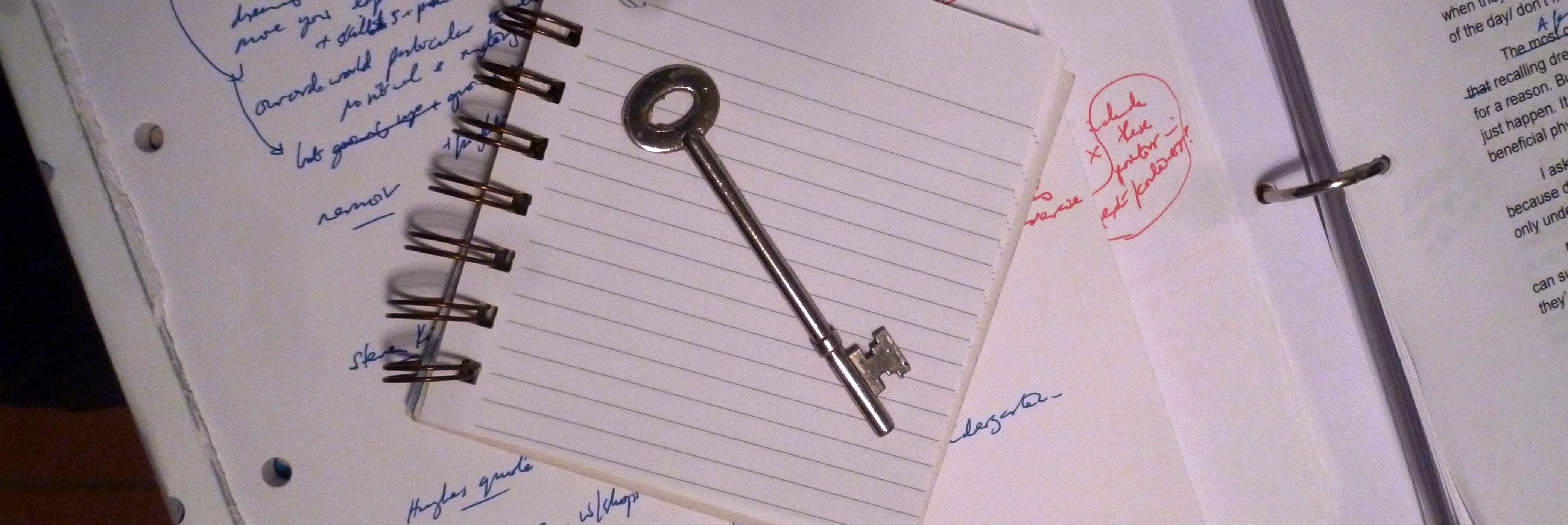
a) What’s it about? b) Who’s it for? c) Why should they trust me? Writing an introduction should be as easy as abc, but if you get stuck with yours like I did, I think I’ve found the key.

key

For a while now, I’ve been working on the final draft of ‘Writing in the House of Dreams.’ It took me three weeks to go through the whole text, making tweaks and adjustments, so when I decided to re-write the introduction I thought it would take me a few days at most.

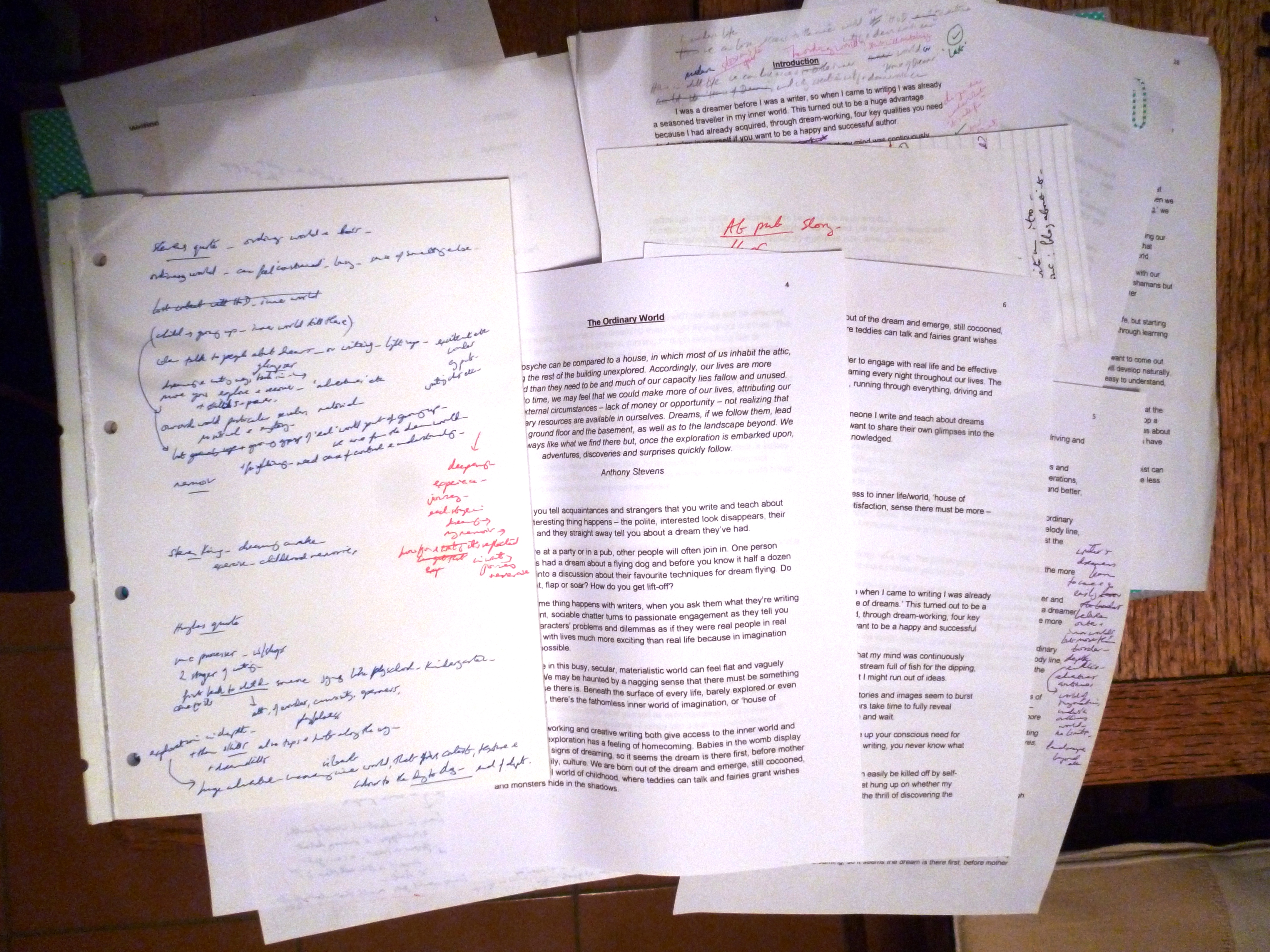
Ten days later, I had a huge and growing heap of notes and a brain like knotted spaghetti.

A growing heap of notes

When I thought about who my book was for, the answer was obvious – dreamers and writers. But what do dreamers and writers want to read about? It seemed to me that the answer to that was interpretations and publishing deals.

When I thought about what my book was about, it certainly wasn’t mainly interpreting and writing techniques, although those did come into it.

What I’m most interested in, what makes my book so ‘niche’, is how dream-awareness and writing can transform your reality, because they both mean learning to come and go easily between the inner and outer world, making ordinary life feel bigger, more exciting, more resonant.

I’m interested in how that ability to come and go across the border can take you ever deeper and wider, because imagination has no limits. I like that the more you understand, the more your sense of mystery grows.

I love the feeling that you can take your explorations as far as you want to go, into layers of myth and beyond, pushing back the limits of your courage, curiosity and skills.

So what is my book about? Adventures in the inner world. Discoveries. Secrets and treasures we can bring back to enrich and inspire our everyday life.

Who is it for? Dreamers and writers, at every level of experience, who are interested in the adventure for its own sake, and not only in writing as a career or dreaming as a source of insights into waking life.

That sounds pretty clear, doesn’t it? That sounds succinct and honest. But I had to come here to my blog, in order to unravel all the strands and identify what the main ones were. On a blog, you haven’t got 75,000 words to explore your themes; you’ve got a few paragraphs to make a point.

When you blog, you’re very conscious of your readers because they’re real people, individuals who might comment on what you’ve written as soon as it goes up.

Yesterday I got the essence of the book by drafting this blog post, and then a happy synchronicity this morning affirmed the focus for the rest of the opening chapter, which is about the leaving the magical world of childhood and learning later to engage with it again.

Someone had posted a comment on my article ‘The dream and the writer’s trance’ which said, ‘I used to slip into the writer’s trance rather easily when I was a child but now I find it harder to get to that state’ (thank-you, Sehena)

So if you know the abc of writing an introduction but you just can’t seem to boil it down, write a blog. That was the key for me.

Thank you for reading and joining in 🙂

Dreams and the creation of music, by Travis Wernet

Today, I’m delighted to welcome my first musician in the House of Dreams. Travis Wernet is a professional dream teacher with three studio albums under his own name and musical moniker ‘Outlaw Dervish.’

Simone Weil called attention prayer. I think she was onto something. When we listen to music we are paying a special consideration to sound. Over recent years I’ve become increasingly observant of how, when I am dreaming, I seem to be engaged in an attentively mindful space of awareness. As a musician, there are even ways that I see how I’ve got to give attentiveness to the instruments I am playing. This serves the evocation of sounds that feel the most fulfilling as they emerge, seemingly out of the invisible ethers surrounding the instruments in the space where I am creating. How similar this seems to my experience of the way dreams appear!

In my experience, dreams can influence the creation of music, they can feature and contain music and, as it turns out, music also influences the creation of dreams.

While recording the didjeridu tracks for my meditation album, Yoro Yoro,  dreams synergized with the work we did in the studio one day. As we gathered tonalities for various songs, I remembered a dream from the previous night.

In the dream I am in the company of three aboriginal people… The first, a tribal elder, invites me to spear fish with him. Next, I see a woman and a man who are sitting in the ocean meditating. I notice all this and then the scene becomes somehow ethereal. I drift up into space and see the earth, which shape-shifts into what I know are the call letters for a radio station “K Be Radio”. Upon witnessing this I float back down to earth and witness a peaceful scene near the sunny seaside where softly blowing sands mix with waving grasses in the wind.

At the time we were recording, the energy of this dream supported a fluid ability to get what are called “one-takes” for the songs we were crafting. This simply means that in the studio, the first effort to add the didjeridu tracks turned out to be the most satisfying to our ears, minds and hearts. The tone of our collaboration in this sense felt effortless and energizing. Exactly what we wanted for the meditation album! The ambience of connection with the meditators and the vision of the globe, as well as the hint at an aura of pure being, with the “it’s okay to be” radio station, all added a felt dimension to our project.

Beyond this, I can see over recent years how that dream was helping to set the stage for current creative endeavors. I’ve become very fascinated with and involved in musical dream incubation. This is the use of certain kinds of sounds and music to invite and receive helpful, healing dreams. Alas, that’s a story for another time.

Receiving and imagining the dream of “the Three Aboriginals and K Be Radio” has also afforded me the message of a deep spiritual experience which set me on a path of renewed authenticity wherein I have sought to tune myself to the frequencies of who I am at an essential level. In addition the dream has inspired me to share its messages with others, through music and my work with dreams.

Travis Wernet
Travis Wernet

Following years of international travel, co-leading ceremonies from the Great Pyramid in Egypt to the Lotus Temple in New Delhi, Travis shares his work at home in the US and offers online video dream groups, workshops and private sessions. To find out more about his work, check out his blog and website

The healing power of creative writing

Writing can be therapeutic even when it appears to have nothing at all to do with the events of our lives. Here’s how.  

In my last post I was talking about the healing power of dreams to ground us physically and emotionally when we get over-stressed and too much ‘in our head.’ Since then, I’ve been to a Lapidus workshop in Bristol which has made me want to share my thoughts on the healing power of creative writing.

Lapidus - 'words for well-being'
Lapidus – ‘words for well-being’

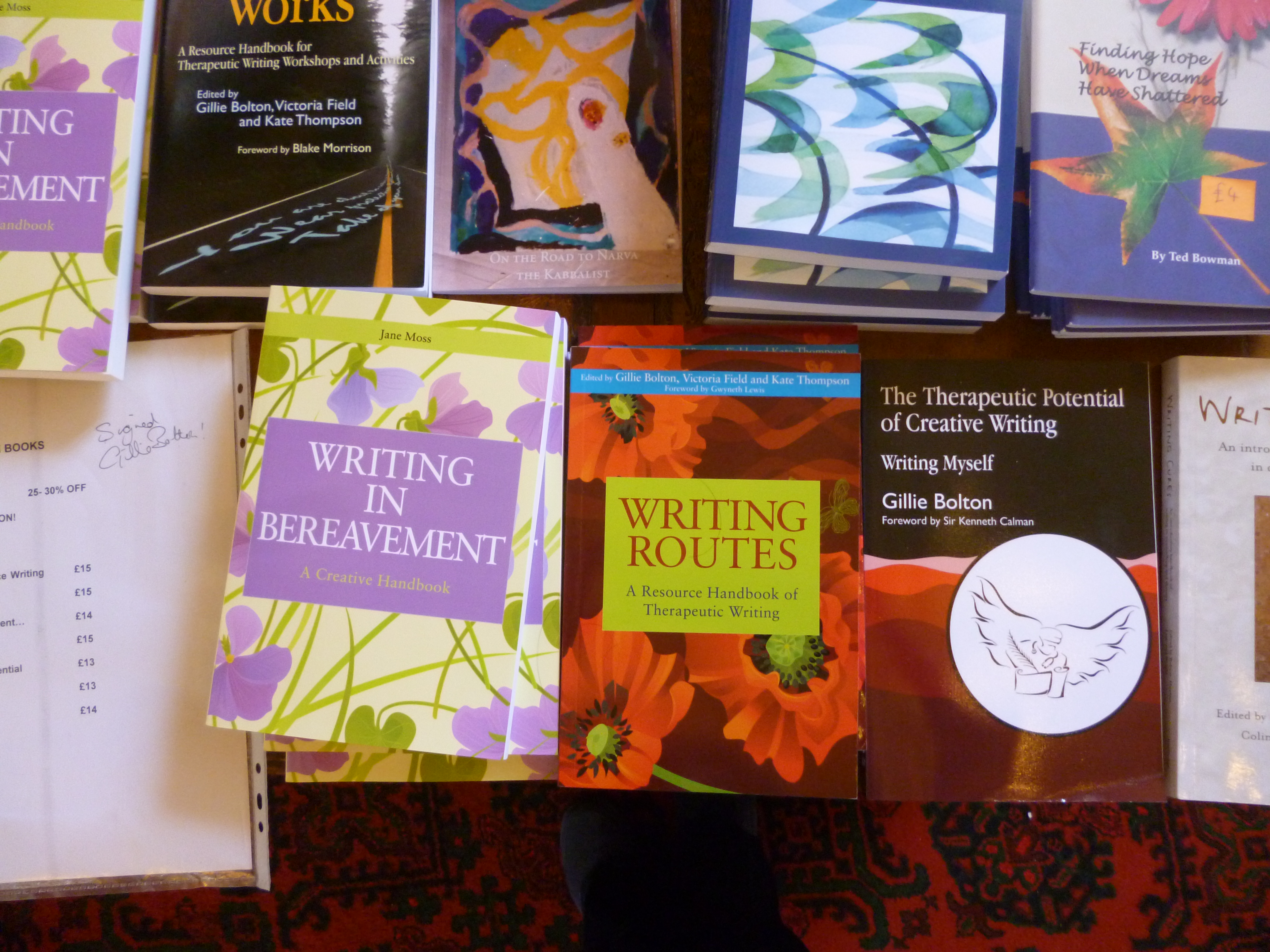
Lapidus is an organisation for writing therapists; it includes mental health practitioners who use creative writing within their clinical practice and authors who teach writing in non-clinical settings as a route to greater understanding of the self and the world.

Some of the wonderful books on offer at the Lapidus conference

Most of the Lapidus workshops I’ve attended have involved writing about our real-life personal experiences, and they have felt rather like counselling sessions, where the theoretical base seems to be about moving towards catharsis or reframing difficult life events or relationships.

One of the great tools of writing therapy is ‘journaling.’ This is a regular practice of personal writing reflecting on personal insights, day-to-day experiences, dreams and inspirations; it’s pretty much what my dream-diaries have evolved into over the years and I can highly recommend it.

But creative writing doesn’t have to be autobiographical in order to be therapeutic. Every poem or piece of fiction we write connects us to our authentic emotions, like the sad dream I was talking about in my last post; it takes us beyond the narrow limits of what we are capable of understanding about ourselves and releases us into the wide, fast flow of emotional and imaginal experiences that make us who we are.

Do you keep a writing journal? Or have you experienced the healing power of writing in other ways? I love to hear about your thoughts and experiences

How can a really sad dream be a really good thing?

A sad dream can make you feel out of sorts all through the following day, but it may be Nature’s way of helping you to cope with stress. Here’s how it worked for me.

As I mentioned in my last post back in July, I decided to take the whole of August off, and headed North for four glorious weeks living mostly under canvas. All that fresh air and freedom… when the time came, I did not want to come back.

Paddling across to Oransay from Colonsay at low tide with Barbara Gay from New Zealand. Fun!

I had been redrafting 24:7 right up until the day before I went on holiday, so I arrived home to a messy house and a garden full of weeds, as well as a stack of paperwork in my study that I had been putting off for months.

Top of my to-do list was my tax return. Enough said. Two days of hair-tearing and tedium.

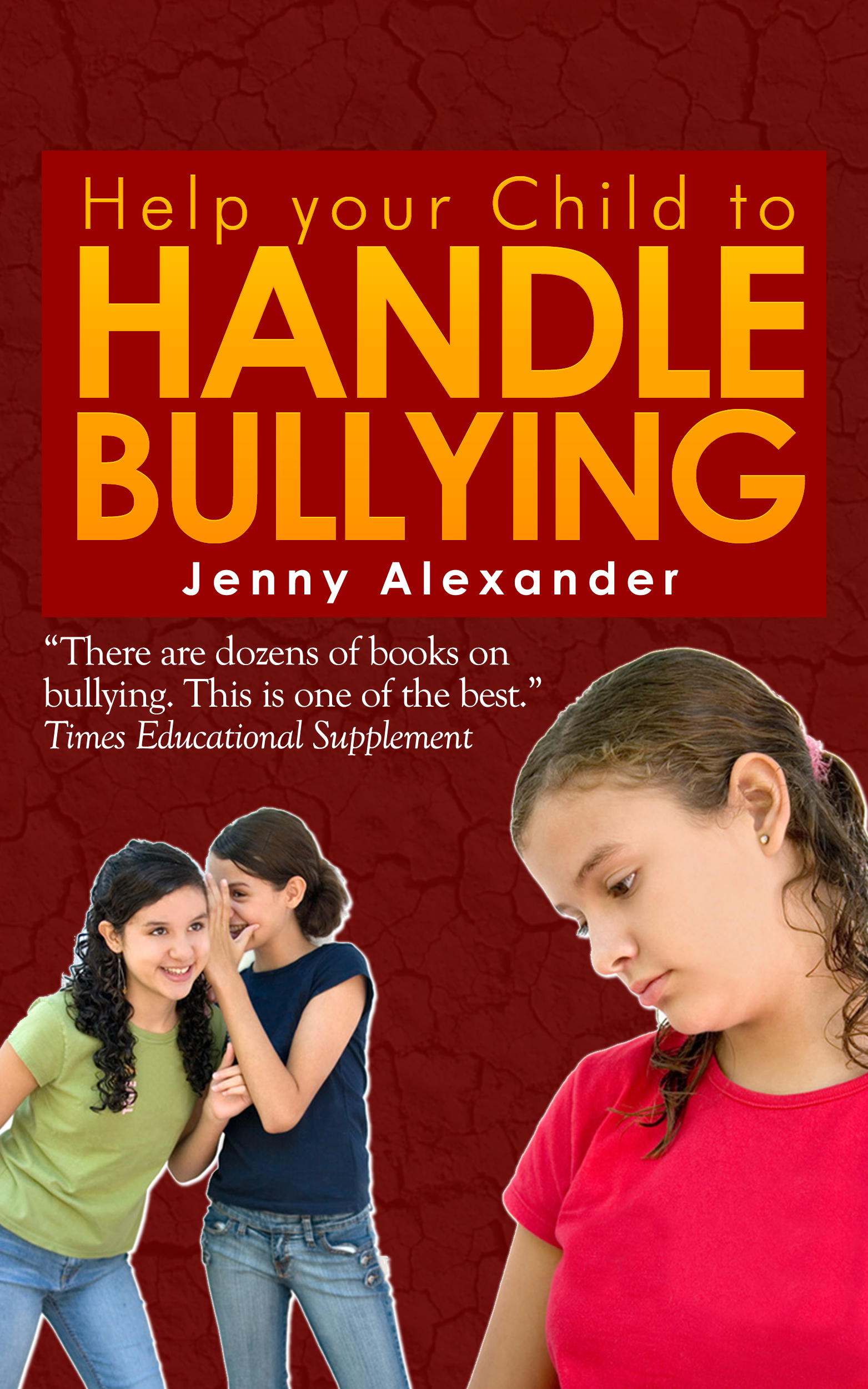
Second was my self-publishing venture, a new e-book edition of Help your child to handle bullying, which I had abandoned back in June. Everything about it made me feel anxious, and there were endless technical problems with the formatting that had to be ironed out (thank-you draft2digital – you were very patient)

Even deciding which endorsement to use on the cover was stressful

Frazzled and still fed up about not being still on holiday, I moved on to seeking copyright permissions for the forty or so quotes I want to use in my child-of-the-heart book, ‘Writing in the House of Dreams.’ This entailed days and days of tracking down publishers and agents, writing emails and filling in lengthy forms.

More stress. Would I be able to trace all the copyright holders? Would they grant permission? Would they demand a fee I couldn’t afford?

And what was the best way of producing the book and bringing it to market? Alongside seeking permissions I began doing research, which turned up a bewildering array of possibilities. I opened discussions, asked questions, discovered even more possibilities. More stress.

All the time, I was aware of the other things on the list, including coming back to my blog. I decided to quit the team on girlsheartbooks, where I’d been blogging once a month, and thought about taking this one down.

There were lots of lovely things on the calendar, as usual, those first weeks home from my holiday, but I was still cross about being back at work and stressed out by all the things I had to get through on my list.

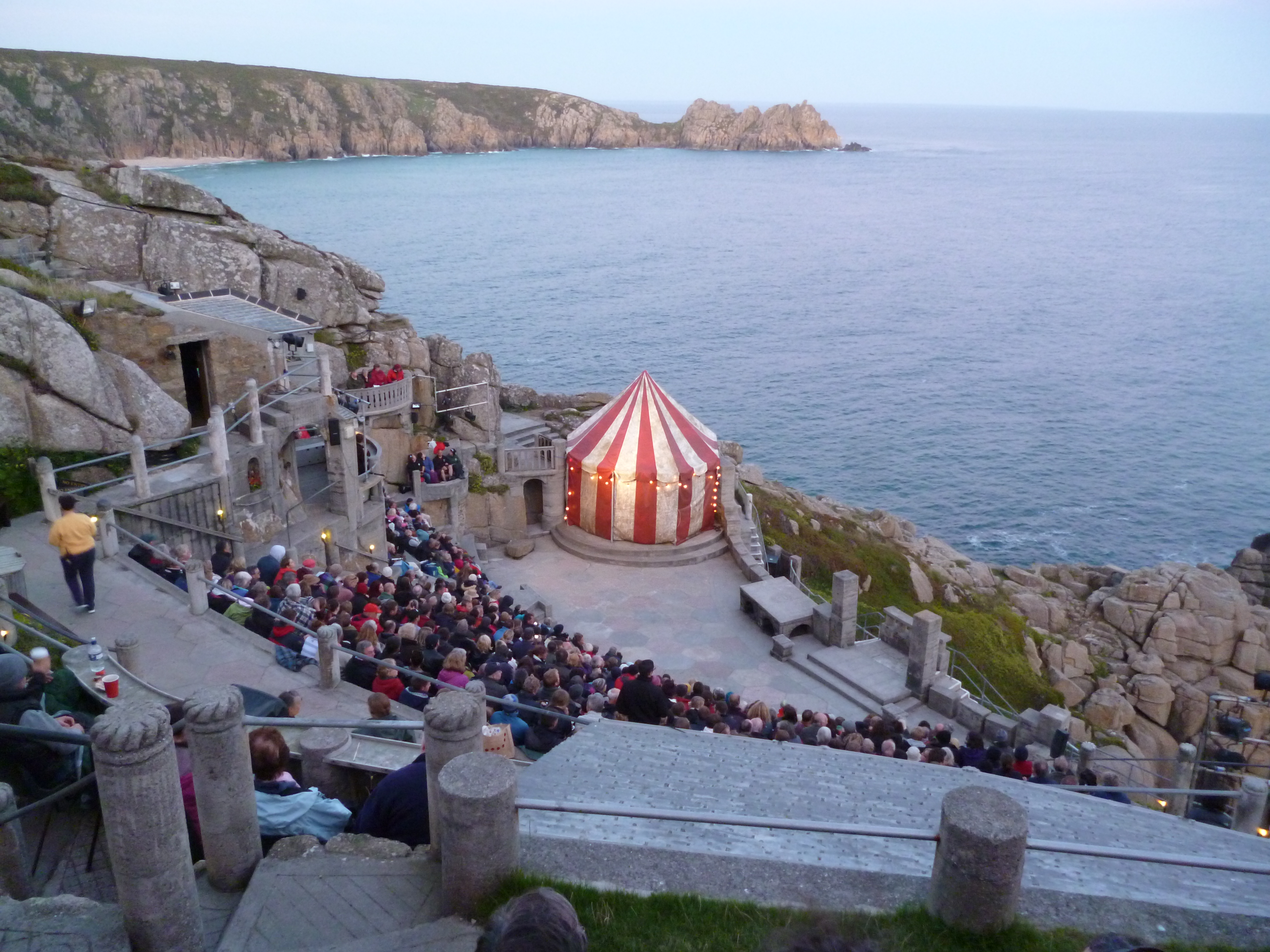
'The Taming of the Shrew' by an all-female cast at the Minack theatre - one of the lovely things on the calendar
‘The Taming of the Shrew’ by an all-female cast at the Minack theatre – one of the lovely things on the calendar

Then one morning I woke up in tears, from a really, really sad dream. I don’t remember now what it was about, just that the sadness carried over into the day. I lost the will to start work, or the energy to stick at it. I read a bit, walked a bit, sat in the garden. Sighed and cried. Watched the birds.

That night, I slept better than I had for weeks and woke up feeling calm and clear, like the rain-washed sky after a storm.

Stress, like drink and drugs, can be an avoidance of ‘legitimate suffering.’ Life is hard sometimes, as well as wonderful, and one way of coping is by shutting the feelings out.

When you’re stressed, your whole focus is in your head; you spiral up into thoughts and ideas about what you should be doing, and push yourself so hard that you have no time to think about anything else.

Dreams connect you with your emotions, whether they are sad, frightening or euphorically happy ones. When you’re spiralling into stress and stuck in your head, it may take a very powerful dream that spills over into your waking life to slow you down and bring you back into your heart and body.

Instead of letting myself wallow as I had wanted to when I got home from my amazing holiday, I decided to ‘pull myself together’ and ‘stop being silly’ and get on with what needed to be done. My dream forced me to feel the feelings I had been avoiding.

Coming back to my blog after, as it’s turned out, two months away, feels really lovely. I’ve given it a new look, which I hope you’ll like, and got lots of lovely articles planned which I’m looking forward to writing.

The list can wait.

Have you ever had a dream that’s brought you down or lifted you up when you really needed it? I love to hear your thoughts and comments.

Our stories, our selves

My work is emotionally autobiographical. It has no relationship to the actual events of my life, but it reflects the emotional currents of my life ~Tennessee Williams

This quotation from Tenessee Williams seems to me to encapsulate where dreams and creative writing are the same.

Being literal-minded, if we try to relate the writing to the author we only do it in a direct way, wondering whether the people in the story are based on real people or the events are things the author has actually experienced.

We do the same with dreams, especially if we focus only on the symbols and not the emotions.

But even where we don’t find any obvious connection between the story and the author, the dream and the dreamer, it is powerfully there because dreams, like fiction, are simply story-versions of the dreamer’s or author’s emotional experiences.

Have you ever written a story that seemed to have nothing to do with your own life, only to realise later that it was ’emotionally autobiographical’?

Can writing make life better?

My favourite chapter in Patricia Garfield’s ground-breaking book, ‘Creative Dreaming,’ is the one about the Senoi dreamers, whose dream-practice is designed ‘to make life better.’

My 1976 copy of the very wonderful 'Creative Dreaming'
My 1976 copy of the very wonderful ‘Creative Dreaming’

In this tradition, if you have an unhappy or disturbing dream, you create a happy outcome for it, either by going back to sleep and dreaming it on, or through creative visualisation when awake.

If every time you have a bad dream you bring it to a satisfying resolution, soon your dreaming mind will start to follow the pattern you have consciously created, and difficult dream situations will always be resolved within the dream.

This practice doesn’t only make your dreamlife happier, it makes your waking life better too, because it works as a kind of rehearsal, an empowering opportunity to experience yourself as someone who confronts their fears and finds their courage and ingenuity in difficult situations.

One of my most common nightmares when I was younger was fear of falling from high places, and that fear was reflected in my waking life. First, I learnt to handle it in my dreams and then, building on that imaginative experience, in my waking life, so that nowadays I love the exhilaration of pushing through the fear to reach the heights.

Up high in Prague last month - hello, Pat!
Up high in Prague last month – hello, Pat!

This is exactly what we do when we write fiction. We put our characters in difficult situations and imagine them forward to a place of resolution. These fictional situations emerge, like dreams, from our deep unconscious, and like the Senoi dreamers, we transform them in imagination in order to triumph over them.

Has your dreaming or writing ever helped you to face a deep fear and feel empowered?