Category Archives: Spirituality

Dreaming, death, love and grace

Last night, I dreamt about Anne. She was my closest friend in Shetland, where I lived for most of my twenties, and when I moved away we spoke maybe once or twice a year on the phone and met up every five years or so. That was enough to keep the connection alive, because it was a very strong connection.
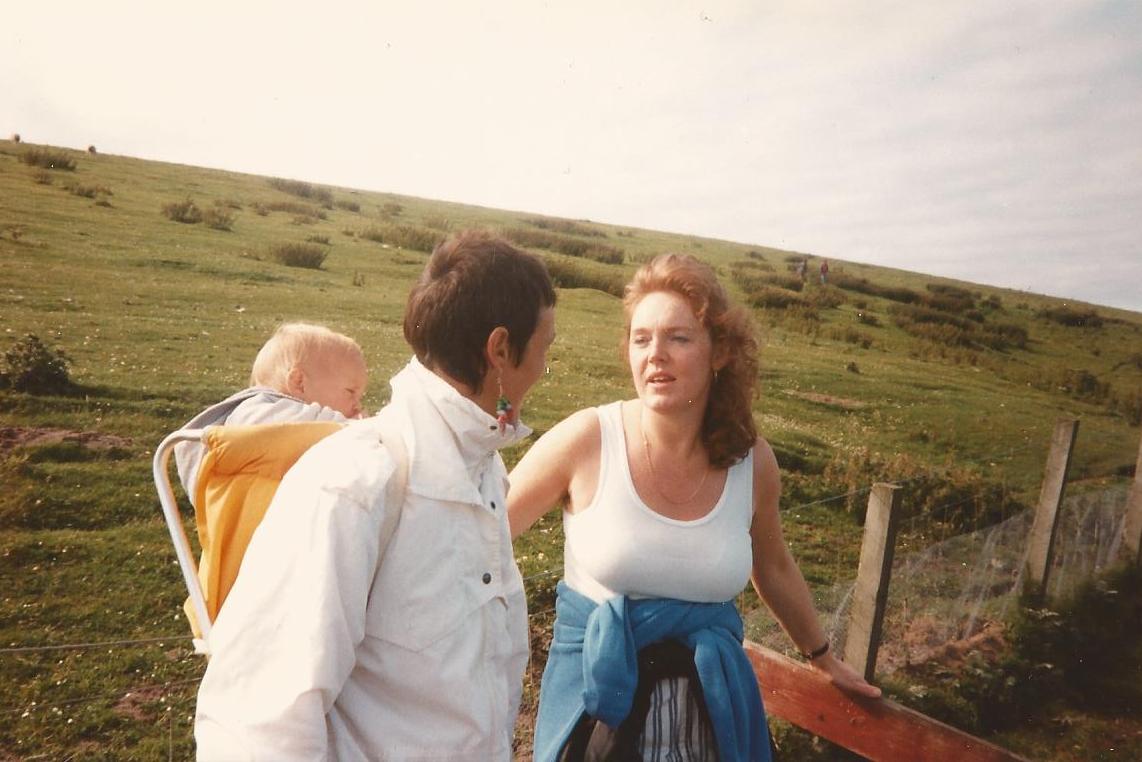
Anne with me and my youngest child, on a visit to Shetland (you can tell I'd got de-acclimatised by then!)
Anne with me and my youngest child, on a visit to Shetland (you can tell I’d got de-acclimatised by then!)

When we first met, I had been estranged from my family for several years, and my big sister had recently killed herself. I was in the middle of a meltdown; Anne was warm and kind.

I’m sitting on the grass opposite a house, but rather than a road between us, there’s a channel of water. Two seals swim up to the house and a young woman comes out to play with them. For several minutes, I watch this magical scene.

The woman comes across and I ask if the seals will let me play with them too, and she says why not? So I go, and we play, and then she invites me into her house for tea.

Inside her house, the young woman is Anne. She gives me a long, lovely hug and I tell her I love her. ‘We go way, way back,’ I say to her new partner, who seems a bit wary of me…

The rest of the dream was our tea-time together in her chaotic house, with her children running around – just exactly as our visits used to be. When I left to go on with my journey, we hugged again, such a comfortable hug, and when I woke I could still feel the warmth of her body and the smell of her hair.

It took me several moments to realise it had been a dream, and several more to remember that Anne was dead – she died nearly ten years ago.

Then I thought, what a wonderful gift that dream was, because it was as real as if we had really met; it was just as pleasurable and loving as at any other time we were together. It was also a complete surprise. I hadn’t asked for this dream, or expected it – it was given to me, by grace.

When I first met Anne, those decades ago, I had no concept of karma or past lives, but I felt that I had always known her. It wasn’t a spark of interest and a getting to know, but a moment of recognition and a reconnecting.

Now, I probably see her once every five years or so in my dreams, just as we saw each other when she was alive, and I expect I’ll meet her in some other future life… if that doesn’t sound too mad.

Have you ever had a vivid dream about someone who’s died? Or felt a karmic connection?

What kind of writer do you want to be?

I’ve always thought of myself as a very happy writer. I used to put it down purely to the fact that I was a dreamer first, and therefore completely used to coming and going across the threshold of consciousness, which meant I never experienced any kind of writing angst about getting blocked or running out of ideas.

But at the recent Scattered Authors conference in Peterborough, my friend and fellow-writer Penny Dolan recommended a book she thought I might like, called ‘Coach yourself to writing success,’ by Bekki Hill, and it has extended my thinking.

life coaching book

Penny was right – I love this kind of book. I enjoy doing practical exercises that help me to arrive at different ways of looking at things. I’m a great fan of life coaching too, having had some life-changing sessions with astrological life coach, Pat Neill, a few years ago and more recently a brilliant group session with a writing coach at a Lapidus networking day.

What has become clearer for me through reading this book is that another reason I’m very happy in my writing is that my goals are perfectly attuned to my core values.

We commonly measure writing success in terms of sales and celebrity, but I have never felt any of that is important; I haven’t felt jealous, anxious or disheartened about having less of a public profile than many of my writing friends.

My core values, it turns out, are in order of importance:

  1. Beauty/ creativity. I’ve blogged about the elegant harmonies of structure that please me in my work on the children’s blog, girlsheartbooks http://girlsheartbooks.com/2012/12/18/does-this-make-me-weird/
  2. Nature/health. I love the writing life because it means I can live somewhere remote and go walking in nature every day
  3. Loving/caring/sociability. I enjoy the connection with readers, for example here on my blog, although it’s medium-profile and profit-free. One of my main drives in writing for children is to suggest ideas which might help them create positive experiences and deal with difficult ones
  4. Originality/self-expression. The parable of the talents has always informed my life, and it feels very important to me that we explore, uncover and develop our God-given gifts, whatever they might be
  5. Spirituality/solitariness. This was the surprising one, because I’d have thought it would rank higher, but when I did the next exercise, expanding upon these core values, I discovered that all of the first four boil down to ways of celebrating the divine, in myself, the world and other people

You are more likely to achieve your writing goals if they fit with your core values in life. Should you manage to achieve goals that don’t, your success is less likely to make you feel happy.

That is not to say you are limited forever to where you are today, because core values can change and evolve. Like you yourself, they are a work-in-progress.

But for this moment and this step, understanding how your current writing goals relate to what your soul wants is empowering and may be a revelation. Like Penny, I can totally recommend this book.

Have you ever thought about how well your writing goals tie in with your core values?

If the doors of perception were cleansed

To round off my blog birthday celebrations, here is ‘the one that got away’ – an article about my spiritual path of dreams which was published on another blog earlier in the year  

When people talk about dreams as spiritual experience, they usually seem to be thinking in terms of what Jung called ‘numinous’ dreams – that is, dreams which have an unmistakably spiritual quality, inspiring awe and wonder, and often bringing revelations.

These ‘big’ dreams do indeed feel like wonderful gifts from outside the self, and they stay vividly with you across the decades, lighting your life. But dreams which feel quite ordinary can also be a doorway to profound changes in consciousness.


For example, I once dreamt I was having coffee with my neighbour. I was fully aware that I was dreaming – lucidity is very common in experienced dreamers.

Normally, in lucid dreams, my waking ‘I’ might be there as an observer or commentator, and occasionally if I didn’t like the way things were going, I might intervene and change the action of the dream.

But this dream didn’t have any action at all. It didn’t have any narrative to distract me – I was just sitting there, drinking coffee, and I was bored. There was a silky cushion beside me, and I ran my hand absent-mindedly across it. I noticed how smooth the fabric felt; I ran my fingers along the hard ridge of the trim.

I thought, ‘Hold on a minute – this is a dream!’ Since nothing much else was going on, I went on testing the evidence of my senses and yes, I really could smell the coffee; I really could feel the crumbly biscuit between my fingers and taste its light vanilla on my tongue. I could hear my neighbour’s voice, talking to me. I knew it was a dream, but it felt exactly the same as ‘real’ life.


When I woke up, I could feel the quilt resting lightly across my body; I could see the light from the gap in the curtains ribboning across it; I could hear my husband’s gentle breathing and smell the warmth of our two bodies. But now I knew that my mind could create a whole different reality which felt as real to my senses as this one. So the senses were unreliable witnesses, and waking life a reality no more substantial than the dream.

When you read back over old dream diaries, you will also find that seemingly ordinary dreams can be precisely predictive, and you may find so many of these that it’s impossible to dismiss them all as flukes and coincidences.

According to our normal understanding of time, it should not be possible to predict the future, but the experience of predictive dreaming shows irrefutably that it is.

So gradually, actively engaging with dreams can dissolve the narrow rational and materialistic viewpoint, through which we normally understand life. In the words of William Blake, ‘man has closed himself up, ’til he sees things thro’ narrow chinks of his cavern.’

The practical, experiential path of dreaming can lead to a falling-away of ideas and illusions, and open you up to the mind-blowing reality. ‘If the doors of perception were cleansed everything would appear to man as it is, infinite.’


Dream gateways – how the gods get in

I was talking last week about the faceless ones in my dreams, figures who had no individual characteristics but represented the pure power of the archetype. Other words for these pure powers might be energies, or spirits.

When peoples throughout the ages have sought to engage with these spirits, they have given them faces and names. Different traditions choose different faces and names, according to their culture, to represent the same essential qualities.

So, for example, in Ancient Greece Demeter was the goddess of harvest, but in Ancient Egypt this essence of harvest/mother/nature was called Isis.

After my first encounters with the faceless ones, I began to dream about gods and goddesses. Often, their names were unfamiliar to me in waking life, so it felt as if I was dipping a deeper stream. This experience will be familiar to a lot of dreamers, of words we have no conscious knowledge of coming to us for the first time in dreams.

One night I dreamt that Thoth was in my study. I had a vague notion that Thoth sounded like some kind of devil, so it spooked me. But when I looked him up, I found he was, amongst other things, the Ancient Egyptian god of scribes. The universal spirit of writing, in the shape of Thoth, had taken up residence in my writing room. Sweet!

A week later, by a happy synchronicity, I found a figurine of Thoth in a seaside nick-nacks shop, amongst the beach mats and sunglasses. I brought him home and now, if I ever feel disheartened or directionless as a writer, he inspires me with the pure power of writing.

Have you ever dreamt about gods, goddesses or other religious symbols?

Dreaming the faceless ones

I first discovered the concept of archetypes in the early seventies, when I was starting to try and understand my dreams. At that time, there were few books about symbols, and most of them were not very accessible to the general reader.

My symbols dictionary gave ‘archetype’ meanings for some symbols, which I found completely puzzling. Why did some symbols have two definitions, and which one should I apply to my individual dream?

Because my dictionary only offered archetypal meanings for certain symbols, I thought some symbols were archetypes and some were not; it was only a decade later that I began to understand the archetypal as a layer of meaning behind everything. Just as behind every object in waking life there are layers of personal symbolic significance, so beyond that there are layers of group/cultural/universal meaning.

Jung said you could not understand archetypes in a theoretical way; they were ‘pieces of life itself’, which you could only understand through direct experience. My first experience of archetypes was in my dreams.

I thought of them as the faceless ones, because they seemed to have no individual identity, they were generic – an old man, an old woman, a baby; a doctor, a teacher, a guide. These dream figures had a different quality about them – I felt drawn to them because of their mystery.

I gradually understood that these faceless figures represented the pure spirit of , say, wisdom or adventure, healing or learning. Meeting them showed me how the archetypes worked in more ordinary dream figures – if I dreamt about a friend who was a doctor, for example, he would be appearing both as himself, as what he personally represents to me and also as the universal figure of the healer.

The faceless ones gave me experience of archetypal energies at work in my dreams, and this layer of meaning brought deeper resonance to every dream experience, and every part of daily life.

The encounter with the archetypes is a spiritual experience, and I’ll be exploring that idea in my post next week.

Do you have a daily practice?

Many of the best books on writing, and pretty much every book on dreaming, recommend establishing a daily practice.

The Artist’s Way by Julia Cameron, and Becoming a Writer by Dorothea Brande, both propose the idea of ‘morning pages’ – setting aside half an hour first thing in the morning to write stream-of-consciousness, before your mind gets distracted by the mundane  concerns of the day.

The wonderful Writing down the Bones, by Nathalie Goldberg, develops this idea, comparing writing with Buddhist meditation practice.

The daily practice approach focuses on the process of writing rather than the products. It’s not instead of your books and stories, but as well; it’s the seed-bed from which your finished creative pieces grow. 

In the same way, writing down any dreams and dream fragments you remember upon waking isn’t just about big dreams and insights – it’s about deepening your awareness of the continuous dream-life that runs parallel with your life in the dayworld.

As with morning pages, you have to set aside value judgements and simply write, whatever comes, because that’s how you find and develop the authentic writer or dreamer that you are.

Betty Edwards, in Drawing on the Right Side of the Brain, says it doesn’t make any difference what you do – the point of any daily practice is the experience of ‘flow.’ Knitting, jogging and gardening are all a form of meditation, as are writing and other creative activities.

Anything in which you are able to lose yourself and the world, will change and enrich your life, and doing it every day makes this out-of-time experience part of you; it grounds you in something bigger than yourself.

Do you have a daily practice? What are its benefits in your life?

How I tamed my black dog

I’ve had so much interesting feedback after last week’s post about depression, dreams and the creative life that I’ve decided to make a diversion from my usual themes of dreaming and writing, and talk about my own black dog.

Children can have depression too

He first showed up when I was a child and, by the time I was eight, I had a secret collection of things I could use to kill myself with. I couldn’t, of course, keep my depression secret. It involved whole days of crying, hiding or refusing to get out of bed.

The doctor decided the problem must be hormonal, so at the age of eleven I was put on the pill, to try and regulate my hormones. It didn’t help. I graduated to antidepressants in my mid teens, and a psychiatrist I saw briefly at nineteen added sleeping pills to the mix.

Nothing helped, and I didn’t doubt for one moment that sooner or later my black dog was going to kill me. Maybe he would have, if my big sister’s black dog hadn’t killed her first.

When someone close to you commits suicide, suddenly it isn’t abstract any more. You can’t tell yourself that nobody will care, or that they’d be better off without you. You properly understand the concept of never coming back.

My sister killed herself with prescription drugs washed down by wine – a fact that seemed proof positive of what I already suspected – the drugs were not the cure. I stopped taking them.

Then things got really scary.

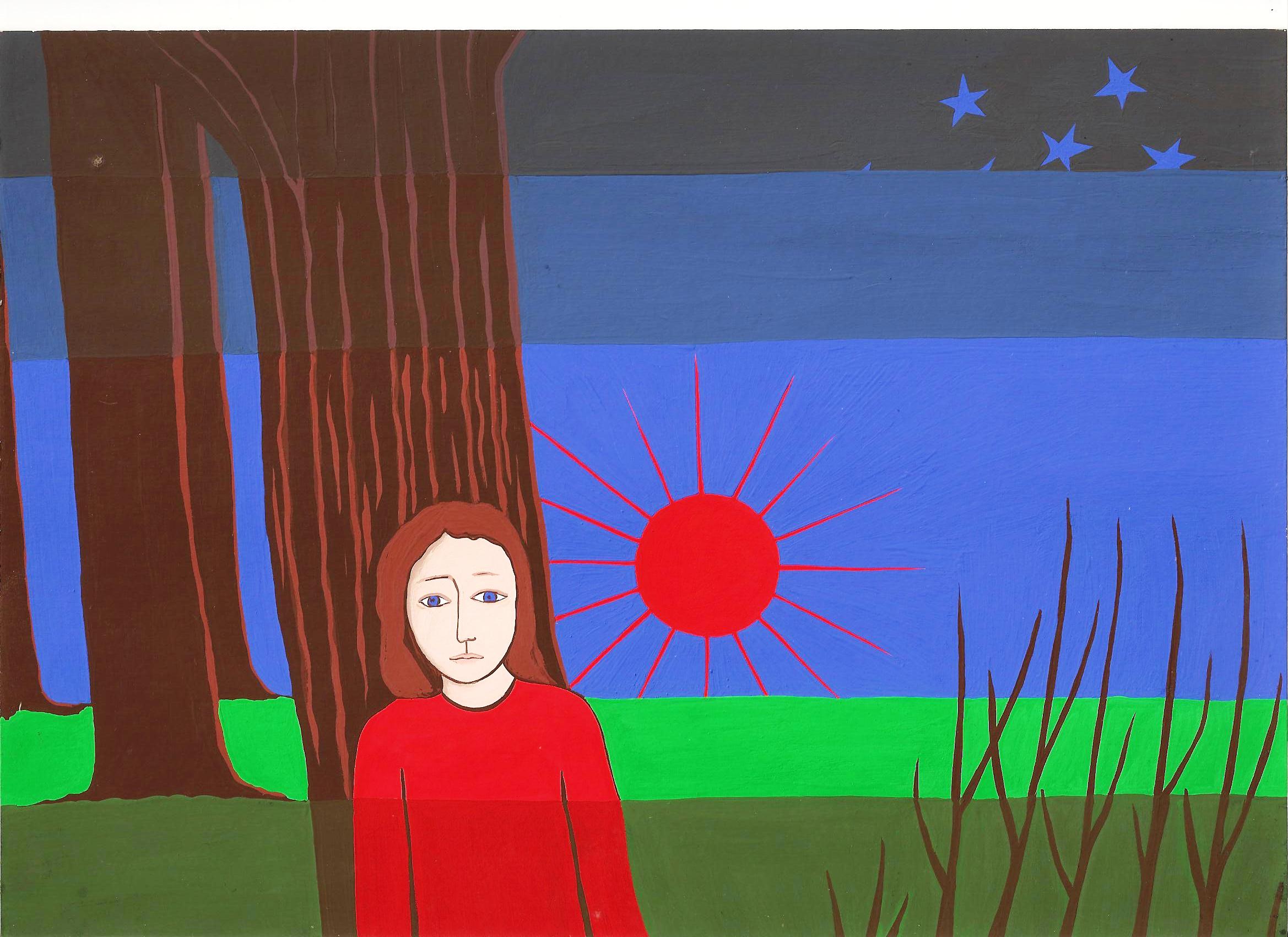
Hiding in the dead planet – how I pictured my depression as a young adult

I was in therapy with a psychiatrist for three years. It was a holding-space. The black dog hadn’t killed me, but he might as well have, because all that time focusing hard on every bad thing that had ever happened in my life, mysteriously failed to lift the darkness.

So there I was, clear of chemicals and all talked out with the talking cure; just me, all on my own, with this big black dog.

What happened next might surprise you – it surprised me. I discovered American self-help. It was all American in those days – here in Britain, the idea of self-help was eyed with suspicion as flakey, self-indulgent and unscientific.

But actually, these books drew on ideas you could find in various religious traditions; they were timeless wisdom repackaged for a secular age. The suggestions I came across in books such as Love is letting go of fear, You can heal your life and Feel the fear and do it anyway were life-changing for me.

What it boiled down to was observing your mind, understanding its behaviour and modifying it. And taming the mind turned out to be taming the black dog.

Now that science has caught up, these ideas have become mainstream, wrapped up in shiny new Cognitive Behavioural Therapy packaging. I’ve written a number of children’s self-help books based on CBT, because there’s nothing complicated about it; it’s mostly a question of awareness.

My black dog still shows up from time to time, but not very often and never for very long. I think that’s what happens with any dark thing in the soul – when you embrace the darkness, it becomes less dark.

I wish I’d been kinder and more patient with my black dog from the start but then maybe I simply wasn’t able to be – patience may be one of the gifts he has brought me.

This is just my story, of course. Other people will find prescription drugs and psychotherapy more helpful than I did, although both can have serious side-effects. I would add that, although my years in therapy didn’t help me handle the black dog, they did bring me benefits and insights for which I am grateful.

Depression, dreams and the creative life

A few weeks ago, I heard author Matthew Johnstone talking about his experience of depression on the BBC World Service, and it got me thinking about the link between depression, dreams and the creative life.

Strikingly, Matthew said he would not change anything – his depression was part of him. Rather than try to kill the black dog, he had learnt how to tame it.

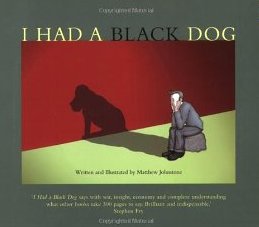
Matthew Johnstone’s book

In the West, we treat depression as an illness, a malfunction in the brain which needs to be cured with chemicals or brought under control by psychological explanations.

Depression challenges all our cultural values. It makes us antisocial in a world where naturally solitary types are labelled ‘poorly socialised’; it makes us still, in a world of manic activity.

Depression stops us from having what we want – which boils down to happiness – and we believe we should always be able to get what we want, because this is a secular world. Without God/fate/mystery, we expect to have control over our own lives.

Nobody would choose to feel depressed, but that is precisely the opportunity depression brings. It brings us to a standstill on our chosen track and, by stopping us from having what we think we want, it opens us up to something new and unexpected. It makes our life bigger.

It’s a well-documented fact that people dream more during periods of depression. Often these dreams are particularly vivid and memorable; they release a torrent of new images which, if we pay attention, can open doorways into new places of the mind, and inspire new directions in life. The loss of these life-giving dreams may be one of the most harmful side-effects of antidepressant drugs.

Many writers label their depression as ‘writer’s block.’ Suddenly the story they thought they had all planned out is stalled, or they can’t find any ideas for the next one. But this is the gift of the black dog for writers – it forces you to be still and receptive, so that new insights and inspirations can come in.

Writer’s block is simply impatience, which means literally the inability to tolerate suffering, delay, toil or vexation (from the Latin word meaning ‘to bear’)

Depression can feel dark and frightening, like a big black dog, but kicking him will make him mean. Don’t try to kill him, but don’t underestimate him either – if he hangs around your house, you need to tame him.

I think the black dog is a special danger for children and young people, before life has given them the perspective of time or put support systems in place. That’s why I wrote my children’s book, ‘How 2B Happy’, in which the very first principle is that we can’t be happy all the time; we have to accept unhappiness. But we can deal with it, and discover what gifts it brings.

In my last two posts, I’ve been talking about synchronicity, and needless to say several blog posts on dreams and depression have come to my attention this week. Toko-pa has written a passionate piece here, in which she talks about ‘the intelligence of our melancholia’ http://toko-pa.com/2007/03/08/bleed-joyfully-a-fresh-view-of-depression/#comment-497 You might also enjoy this piece from ispeakindreams http://ispeakindreams.wordpress.com/2012/06/26/the-beauty-of-our-dreams-healing-within-dreams/

Has a period of depression ever led to a breakthrough for you?

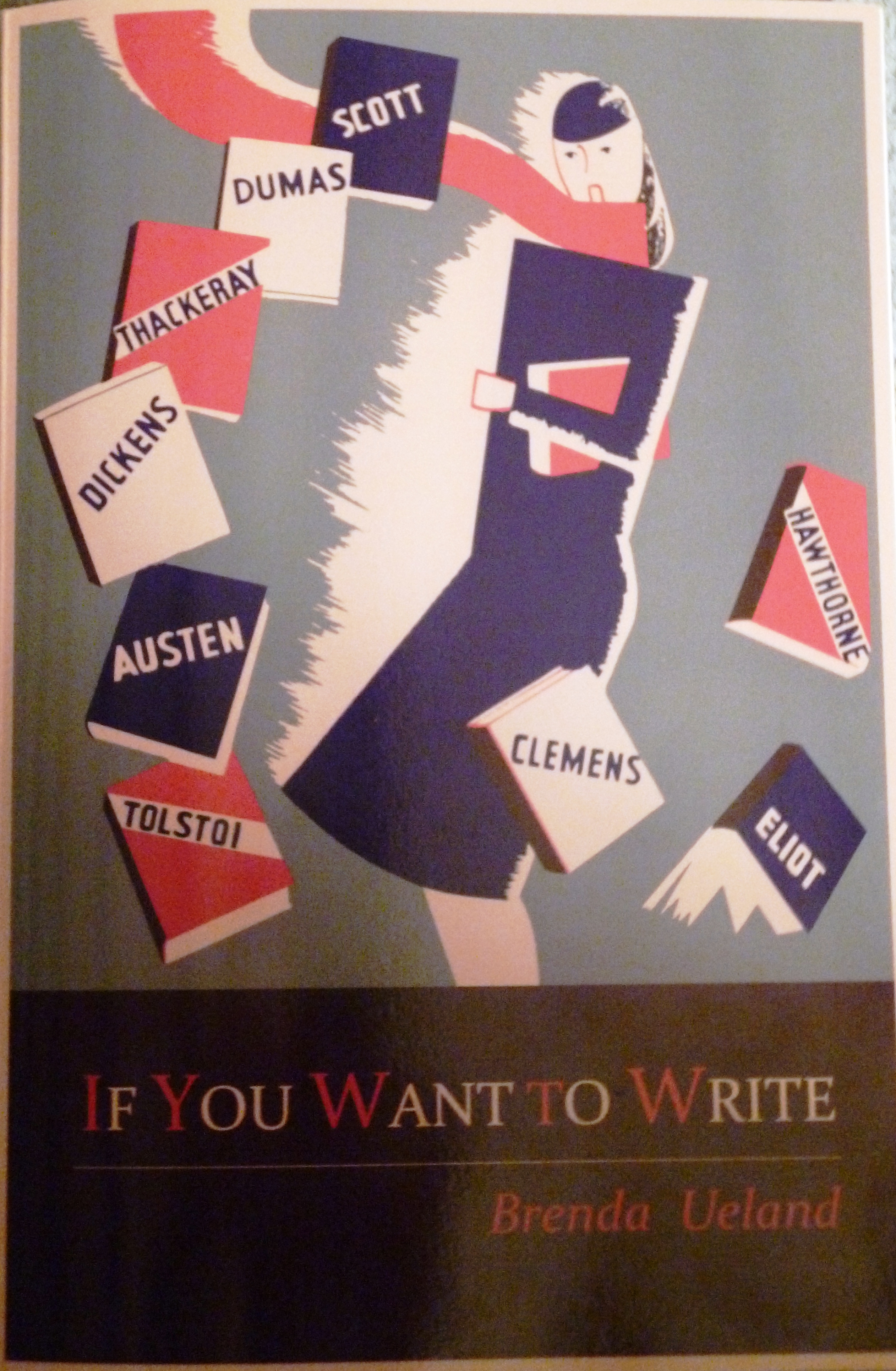
Book Review: ‘If you want to write,’ by Brenda Ueland.

I like this book. I knew I would, as soon as I saw that the first chapter was called, ‘Everybody is talented, original and has something important to say.’ Brenda Ueland made this exciting, inspiring and humbling discovery, as I have, through teaching creative writing.

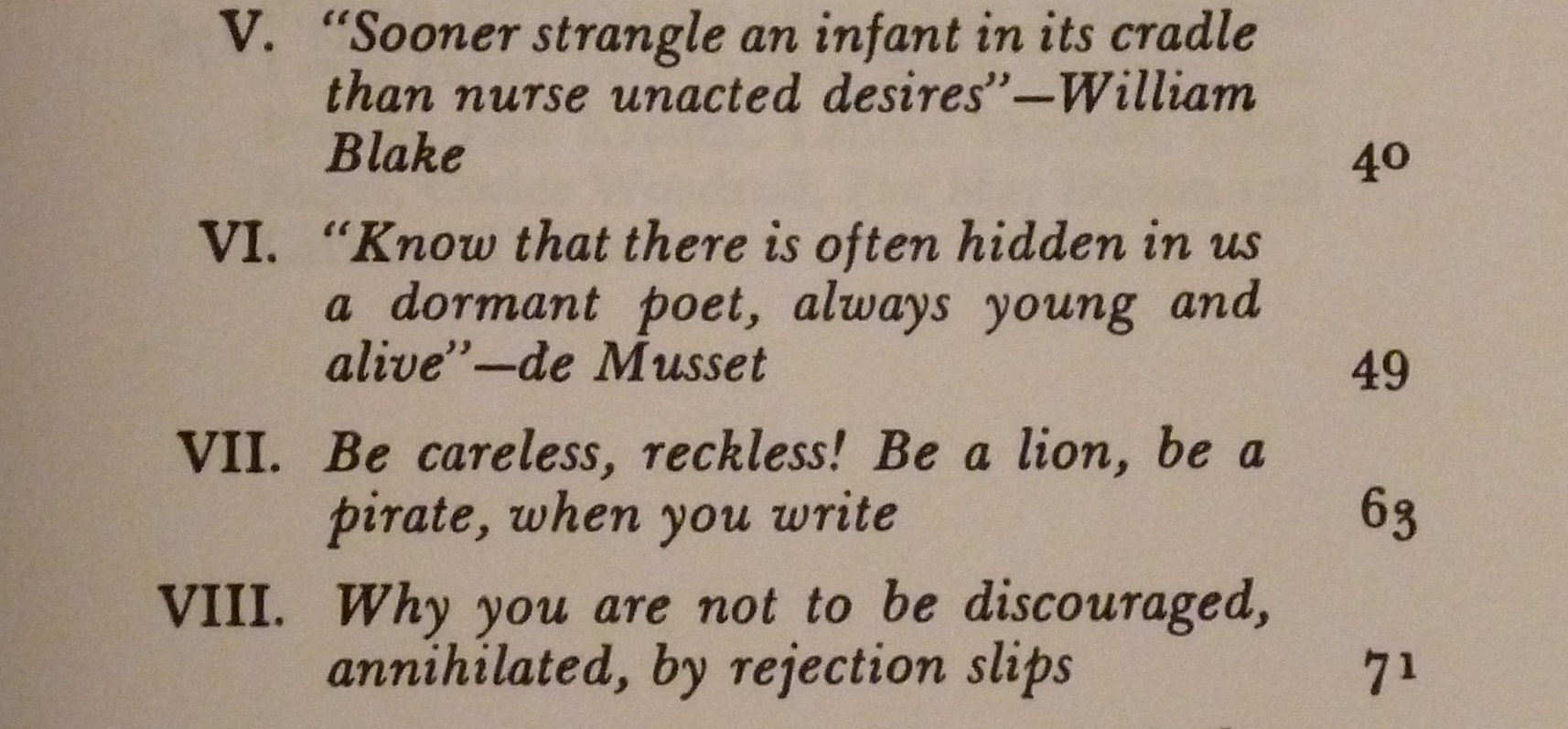
Her second chapter heading is a quotation from William Blake, ‘Imagination is the Divine Body in Every Man.’ So straight away, she is talking about the relationship between imagination and soul, and seeing creative writing as a spiritual undertaking.

Ueland has some cracking chapter headings!

We write because we love writing, and love is a transforming energy. Therefore, she says, writing is never a waste of time, whether we are published or not. Writing will make us feel ‘happier, more enlightened, alive, impassioned, light-hearted and generous…’

According to Ueland, writing can make us feel healthier too. ‘Colds will disappear,’ she assures us, ‘and all the other ailments of discouragement and boredom.’

The book is full of great quotations. I love this, for example, from Alfred de Musset: ‘There exists in most men a poet who died young, whom the man survived.’

At times in the book, as in the quotations, there are certain assumptions and attitudes that grate for the modern reader – all people referred to as ‘men’, for example, as in the de Musset quotation, and one or two casually racist remarks which sound quite shocking to us today.

It’s not surprising if some lines feel culturally unacceptable now in a book that was first published in 1938, but it seems a real shame someone didn’t edit them out, because the substance of what the author has to say is timeless, thoughtful and inspiring.

Writing, Ueland says, is a way to find your true self. ‘And why find it? Because it is, I think, your immortal soul and the life of the Spirit, and if we can only free it and respect it and not run it down, and let it move and work, it is the way to be happier and greater.’

Life after death – the way of the dreamer

James Hillman, in ‘Dreams and the Underworld,’ describes dreaming in terms of sinking down, of dropping below the surface of things, into the realm of death.

In our dreams, we completely identify with the dream ‘I’, and the waking ‘I’ is no more; the assumption that we are ourselves within the dream is an illusion.

The dream ‘I’ is not the self as we know it. In different dreams, it may be a different gender from the dreamer, or a different age; it may have a different job and skill-set; it may even have supernatural powers. The dream ‘I’ is one of myriad characters which inhabit the ‘inner self.’

Writing fiction is similar to dreaming. We enter the ‘writer’s trance’ and ‘become’ our characters. We live in their lives, and grapple with their circumstances. But it is less intense because we are still aware of our own physical body, sitting at our desk, dipping in and out of the writing dream to answer the phone, pick up email or make coffee.

Choosing to engage with dreams is like a kind of suicide. We let go of the waking ‘I’ and willingly become the dream ‘I’, walking the underworld. In this way, the dream ‘I’ is like the soul – it lives on after ego awareness is gone.

Some of my guests here have described dreams in which they have been or become animals, and some of my workshop participants have reported dreaming in the ‘I’ of characters from different places and times, ages and genders. Have you had a dream in which it’s obvious the dream ‘I’ is not your waking self?