Category Archives: Symbols

Create great plots by harnessing the power of myth

In our culture, because we have broken our conscious connection with myth, we tend to see our lives as separate and unique.

But every individual life follows paths and patterns which are universal. Each life story is built on a template of all human stories.

Through mythology, we can connect with the essence of our own life experience, and walk with greater consciousness the mythic pathways where we all are one.

Being aware of the archetypal dimension of experience can be particularly useful for writers. You can use mythic templates quite deliberately to help you construct stories which will have resonance with your readers.

I like to use the Hero’s Journey, the master-myth explored at length in Joseph Campbell’s book, ‘The Hero with a Thousand Faces’

In this story

  • the hero hears the call to adventure, which he at first refuses
  • something helps him to engage with the adventure and he sets out into the unfamiliar world
  • he meets allies and enemies
  • he’s tested
  • he has to muster all his inner resources to face his supreme ordeal
  • he finally claims his reward and takes it back to his community

This is a master myth because it isn’t limited to one area of human experience, such as becoming a mother or making the transition between middle and older age.

The Hero’s Journey explored through mythology and in the lives of women and writers – it is capable of endless applications

The Hero’s Journey describes every challenge we may have to face, however small or large; from the daily challenge of getting out of bed or learning something new to a greater challenge such as finding a new job or coming to terms with the death of a loved one.

Life continuously presents us with challenges, which we at first refuse, because we don’t want the effort and disruption of change. If we refuse, we get a nudge. We may seek the help and support of friends or strangers, books or teachers, and we may encounter unhelpful people who stand in the way.

Every time we engage with a challenge, we win a reward – new strength, new insight, new effectiveness in our world, which we can then ‘bring home’ and incorporate in our life.

You can use mythic templates in a deliberate way to construct strong stories, but simply being aware of the universal dimension in your characters’ stories will give them depth and new dimensions. As Dorothea Brande says, ninety percent of writing happens unconsciously, with us often finding things in our writing we did not consciously put there.

If you want to explore the Hero’s Journey in more depth, I’d recommend ‘The Writer’s Journey’ by Christopher Vogler, where he looks at various Hollywood blockbusters as versions of the hero myth.

August is all about archetypes here in the House of Dreams – next week, I’ll be telling you how I first encountered the archetypes in my dreams
How to take your writing to the next level

What is the difference between a good story and a great one? Why do some characters stay with you for a couple of weeks or months, and others for a lifetime?

It’s all about archetypes.

Your characters are first and foremost individual people with their own personal histories, hopes and personalities, but beyond that they are also part of something bigger – a family, a country, a culture, each of which will also have its own history, values and aspirations.

At the deepest level of collective consciousness, we share a common humanity. People in every time and place know what it is to feel anger, pride, distress, delight; we all have archetypal relationships, such as those between children and parents,siblings, lovers, enemies and friends.

Great stories tap into these archetypal layers. Their characters have a larger-than-life feel, because they embody more than their own personal story, and yet they feel completely convincing because we recognise in them something universal in ourselves.

Shakespeare’s characters have this archetypal quality. King Lear is more than a foolish old King at the end of his reign – his story resonates on deeper levels, as a story of political power, every when and where; on the deepest levels it’s a story of family dynamics and the process of growing older.

Lear’s daughters, likewise, show us different aspects of the universal experience of shifting power within the family, when children grow up and become effective in the world just as their parents begin to lose their effectiveness.

King Lear is like the very embodiment of an old man’s folly; in the same way, Lady Macbeth seems to embody the pure spirit of ambition and Othello the spirit of jealousy.

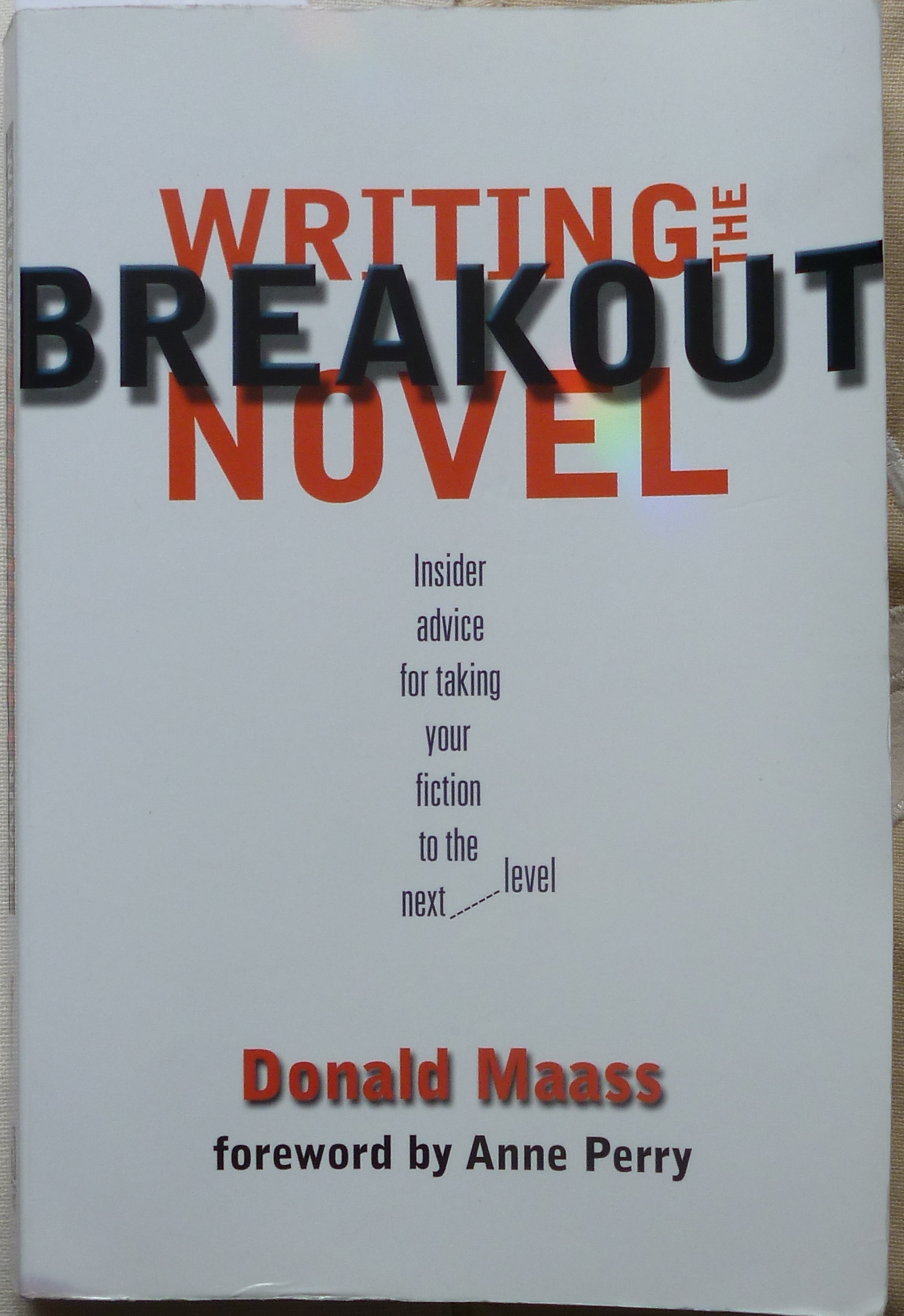
You can find an in-depth exploration into what gives fiction universal appeal in Donald Maass’s wonderful book, ‘Writing the Breakout Novel,’ which is addressed to experienced writers who may not yet have achieved great sales.

My well-thumbed copy of Maass’s thought-provoking book

Among other things, Maass invites us to consider our characters as part of their social and historical moment, not in a secondary way, but keeping this archetypal dimension in the forefront of our mind.

What makes a breakout novel memorable are conflicts that are deep, credible, complex and universal enough so a great number of readers can relate – Donald Maass

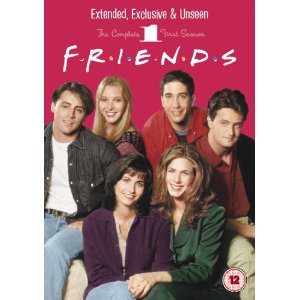
I’ll finish with a more recent example that springs to mind – the phenomenal success of ‘Friends.’ On the individual level, we’ve got six main characters each with their own life experiences.

Massive mega-hit, ‘Friends’

On the cultural level, the series hit at the moment when young people no longer stayed in the family home until they were married and ready to make a home of their own, but could enjoy a transitional time of sharing with a pseudo ‘family’ of their own contemporaries.

On a universal level, ‘Friends’ is a story of every person’s first steps into the adult world, now and back through the ages; when parents no longer provide, and we have to find out who we are and how we can cope without them.

August is going to be ‘archetypes month’ here in the House of Dreams, so sign up for email reminders if you don’t want to miss anything!

3 writing tricks and how to make them convincing

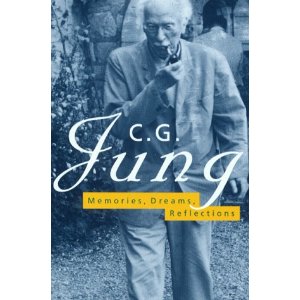
The way we normally assume the world works is through cause-and-effect, but alongside this there is another pattern, which Carl Jung termed ‘synchronicity.’

‘Memories, Dreams, Reflections’ – Jung’s wonderful memoir.
Synchronicity is sometimes defined as ‘meaningful coincidence.’ As opposed to causal links, which are objective and impersonal, synchronicity is personal and subjective. In synchronicity, the outer world reflects the inner world, as when, for example, you are thinking of someone and you bump into them on the street.

Most people only notice synchronicity in really striking coincidences. For example, a friend of mine was whiling away an hour at the office trying to plan a round-the-world cycling trip when, going out for a sandwich, he stepped over a book lying open on the pavement about… you guessed it… cycling round the world.

Or indeed the incidence I mentioned in last week’s post, about the pomegranate.

But synchronicity is part of the fabric of being, not just astonishing moments, and writers can use it in fiction without readers balking at it because, although people may not be conscious of it, it is part of everyone’s reality.

There are three ways writers may use synchronicity

1     Pathetic fallacy. This is where the environment reflects the mood of the characters or the atmosphere of the action.

A gathering storm…
…a still, rainy night…
…or a lovely sunny day – the weather will often reflect the mood of the characters

2     Coincidences. This is where the plot progresses in an unexpected or non-logical way.

3     Supernatural aid. If your character is troubled by doubts and indecision, they may see signs and portents in their environment. It’s like incubating a dream to help you make up your mind about something – you spot the answer much more readily when you know the question.

How can you use these devices in fiction in a way that feels natural and unobtrusive? By becoming more aware of synchronicity in your own life. Dream awareness will help with this, because synchronicity works in the same way as dreams; it’s a symbolic layer of reality which transforms objects and stories into symbols of the self.

The more you tune into synchronicities in your own life, the more freely and convincingly you will be able to integrate it in the lives of your characters.


Three times in my life, I’ve seen a sudden rainbow at a moment when I was agonising over a decision I had made, and felt reassured.

Have you ever felt you received a nudge/confirmation/warning from life?

Author Vanessa Harbour has added her thoughts about synchronicity on her blog – worth checking out 

How a broken toilet seat solved a conundrum

In the four or five weeks since I delivered ‘Writing in the House of Dreams’ to my agent, my life has not been writing-friendly.

Between the nightmare chaos of having builders in to fix the roof and fit a new bathroom, and the fun chaos of lots of visitors, there simply hasn’t been time for work.

What I had been planning to do after everything quietened down last weekend was decorate the rooms where the leaky roof had done most damage, but I couldn’t face it – I just wanted to get back to my writing.

The problem was, I couldn’t decide what to write. I had two projects in development – a children’s series to follow my Peony Pinker books, and an adults’ book similar to ‘Writing in the House of Dreams.’ Both of these ideas felt interesting and exciting, in completely different ways.

My heart said do the latter, even though I didn’t have much more than a bunch of vague ideas and a few scribbled notes.  My head said do the former, because I had already written a full synopsis and half of the first story, and my agent had given it the thumbs-up. So I was faced with a conundrum.

I still hadn’t made up my mind the next morning, when my brand new toilet seat broke, dragging me away from my just-getting-back-to-normal life and dumping me back in the local B and Q, where I seemed to have spent most of the previous month.

I felt tetchy. I’d paid nearly thirty quid for that toilet seat, and you could have fashioned better fixings out of tin foil. I felt even more tetchy when the local store insisted that, as I’d bought it at a different branch an hour’s drive away, that’s where I would have to take it back to.

I bought a second toilet seat, tossed the faulty one in the boot, and set off for home. But it felt such an irritating waste of a morning that I took a diversion and drove out to the holy well at Saint Clether.

The holy well is a magical place, full of history and mystery, nestled in a beautiful valley. In my experience, it isn’t possible to stay confused, angry or upset for long, within its ancient walls.

St Clether holy well

As I tramped along the path, I suddenly remembered how I had come to the well before, when I was faced with exactly the same writing dilemma. My head had been telling me try and get a contract for another children’s series, but my heart wanted to throw common sense to the winds and focus on my dream book for a while.

The version of my dream book I was working on at that time was called ‘Pomegranate’, after the myth of Persephone. When I got to the well, I found lots of people celebrating the celtic festival of harvest, and among the coins and crystals left as offerings in the wall, someone had managed to perch a pomegranate.

I could not have been more astonished if the skies had opened and the voice of God boomed out, ‘Write “Pomegranate!”‘

I did, and I had never regretted that decision. So now I was alert for any signs or portents that might give me a heads-up this time. I went into the little chapel, picked up a candle to light, and just stood there. The working title of my current adults’ book idea is ‘Sixty Candles.’

When it comes to writing, I find that the heart usually does get its own way in the end, but often not before a fair few steps in the opposite direction, unless Life gives me a shove (I’ll be blogging about signs and portents next week)

If the toilet seat hadn’t broken, I wouldn’t have had to go to B and Q. If the local store had been willing to exchange it, I wouldn’t have felt so cross that I needed a calming diversion.

If I hadn’t gone to the well, I wouldn’t have remembered the last time I was faced with this exact conundrum. I probably would have gone on dithering between my two projects for weeks, instead of being able to throw myself whole-heartedly into one of them.

So my broken toilet seat solved a conundrum. What had seemed a completely irritating, bad thing, triggered a very positive train of events.

Have you ever had a bad experience that turned out to have been a good thing?

Nothing is ever good or bad, but thinking makes it so ~ Shakespeare

What was that dream about?

In ‘Take the bones and build a story’ I suggested a way of stripping back a dream to its basic theme or emotion and using that as a starting-point for creating new fiction.

The reason why dreams can energise and inspire your writing is because many of them reflect an emotional situation or dilemma which is current in your waking life, whether you are consciously aware of it or not.

For the same reason, stripping dreams down to the bones can provide clues as to what they are about, if their meaning is not immediately obvious.

Reducing a dream to the ‘someone is doing/feeling something’ format – ‘someone is making a stand… someone doesn’t like what they’re seeing… someone is being reckless…’ –  will often reveal a connection with something that’s going on in your waking life.

Recently, I dreamt I was walking on a path with a huge expanse of water on one side and a rushing river on the other. I was feeling happy and excited. I stopped to look down at the river and saw that it was full of fish – some tiny, others very big.

I stepped into the water and paddled out a little way. The current was strong, and the water was up to the top of my wellies. Some people on the far side were tut-tutting, saying it wasn’t safe, but I didn’t feel in any danger.

I reduced this dream to, ‘Someone is somewhere amazing… someone is feeling happy… someone should be feeling scared…’

At the time, in my day-life, I had just delivered my dream book, and I knew it might be the start of a big shift in my writing life. It felt exciting. But maybe a small voice somewhere was saying, shouldn’t you be feeling a bit more worried?!

Reducing dreams to their themes is what the kind of interpretation book which doesn’t fix on symbols, but rather on situations does – ‘Ten common dreams and what they mean’ sort of thing.

‘The Universal Dream Key’ by Patricia Garfield- subtitle, ‘The 12 most common dream themes around the world’
Most dreams about falling, for example, would reduce to ‘someone is feeling insecure/afraid’ and therefore they will usually reflect a waking-life situation in which the dreamer is feeling insecure.

Most dreams about being chased will reduce to ‘someone is running away from something… someone is feeling scared…’ Most dreams about shopping will come down to  ‘someone is making a choice/considering their options…’

You can check whether these stock interpretations are right for your particular dream by thinking about how you felt in the dream situation. Not all dreams about falling indicate insecurity, even if most do. You may have had a feeling of release and liberation as you plunged over the cliff!

Not all dreams about being chased will be negative – you may be the world’s fastest runner, and loving that your pursuer hasn’t any chance of catching you. Or of course, you might rather hope that the person chasing you will catch you.

The wonderful thing about dream interpretation is that one size does not fit all. Experts and commentators can suggest useful ways in, but only the dreamer can hear how the dream fits in the full symphony of the heart.

Why symbols dictionaries don’t work

There’s a popular idea that you can decode dreams in the same way as you might translate from a foreign language, by using a symbols dictionary. If you’ve ever tried it, you may have found it less than enlightening.

The point about symbols is that, unlike signs, they have no fixed or universal meaning. For example, a dog would mean something very different symbolically to someone who has been bitten as a child and always avoided them, and a dog-lover brought up in a dog-loving family.

For me, roses always carry connotations of my grandmother’s garden – the smell, the velvety petals, the dark dusky colours – and they have added resonance from all the happy and sad occasions when I played in her garden as a child. Roses are, for me, what madeleines were for Proust.


For someone whose first real awareness of roses was as lovers’ gifts, they might be a symbol of romantic love, or they might conjur negative memories for someone whose abusing partner always bought roses to express remorse, for example.

Meaning isn’t only different for different dreamers; it evolves over time within the individual consciousness. The same person who thinks of roses as symbols of love and romance at twenty might also associate them with violence and betrayal at forty.

When I was a child, I ate some berries which made me very sick, and got into a lot of trouble for it. Berries meant Bad. My first encounters with wild blackberries and blueberries were deeply mistrustful, but ultimately positive, so now berries have much wider symbolic potential.


In the same way, a culture’s symbols are always developing. The swastica  carried positive significance before the Nazis adopted it as their emblem. The Union Jack has been tainted by association with extreme right-wing groups in the UK.


When I was a child, cigarette-smoking was considered a healthy activity, associated with youth, beauty and the great outdoors. Now, all those connotations have completely disappeared.

The objects in dreams don’t have a set meaning; they have personal resonance. If you want to understand more about them, don’t look in a book of definitions. Look in your own life and experiences; notice your own emotional responses to them.

Having said that, there is a kind of dream book which can sometimes throw some light on what dreams mean. I’ll be blogging about it next week.

Guest post: The waking dream that sparked the book

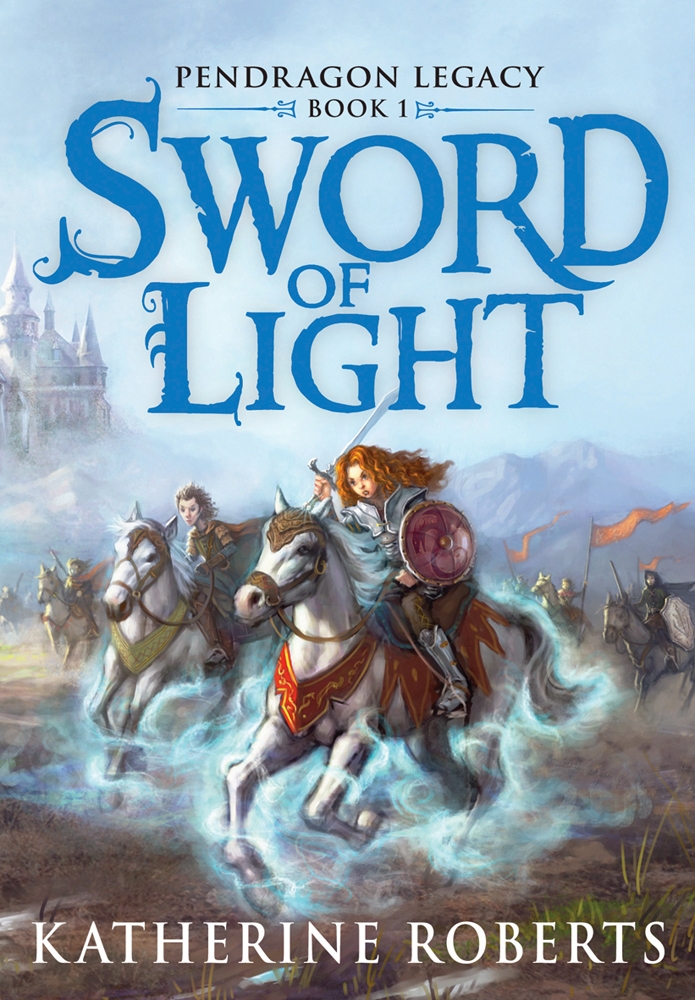
Today, I’m delighted to welcome children’s author, Katherine Roberts, to the House of Dreams, on her blog-tour to celebrate her new book ‘Sword of Light.’

It’s especially exciting for me because this is the first time, as far as I know, that a book has been published which was helped along by one of my workshops, in this case, for the Scattered Authors Society  http://www.scatteredauthors.org/

My Heroine’s Journey for SWORD OF LIGHT, by Katherine Roberts

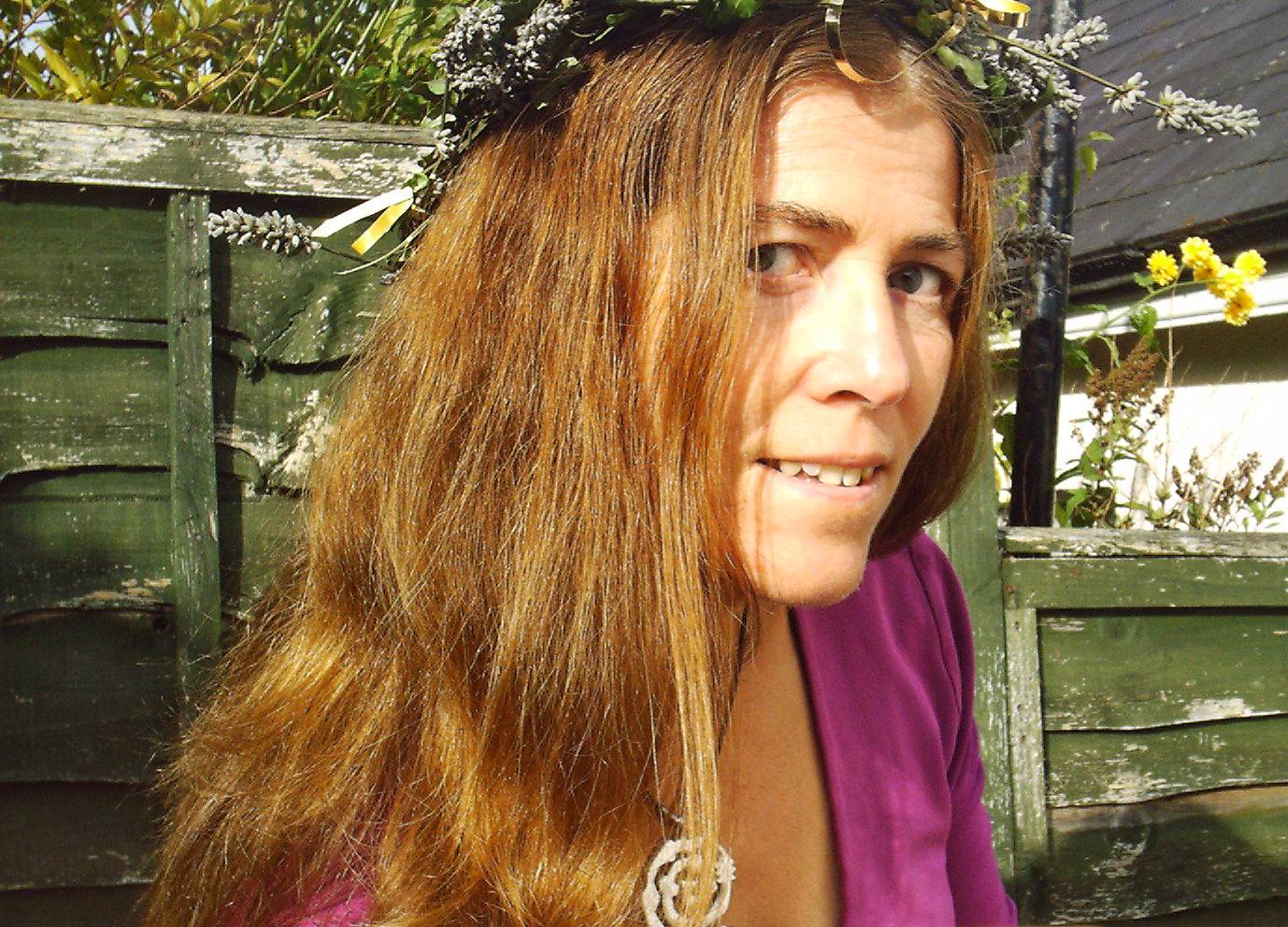
Katherine Roberts

My inspiration for ‘Sword of Light’ came in a waking dream, when I attended a workshop led by the lovely Jenny Alexander, who guided a few of us children’s authors on a ‘Hero’s Journey’ along our personal writing paths. It went like this.

Imagine you are walking in a familiar place, when you see a sign saying, ‘To the Treasure…’

I am in the local wood on the boardwalk, and it is raining so no-one else is walking today. The trees are dripping and the bluebells are out. All smells green and garlicky. I am approaching my favourite bridge over a stream, where I often imagine fairies, when I see a new path twisting through the trees where there are no marked trails. A sign says TO THE TREASURE. I think it is one of the farm’s treasure hunts for children, so I hesitate because it might be something tacky and disappointing. But since no-one is around to laugh at me, I decide to take a look.

You find the path blocked…

I push through some ivy and find the path blocked by a monstrous dragon that some local artists have strung up in the trees by the boardwalk for the annual Arts Trail. It is a fantasy creature made of old grey canvas, black feathers, and a scary triangular beak/snout. It is meant to be a future people’s idea of a bird they have never seen because birds are extinct in the future, and it has come alive. It hisses at me. It has been tied in the trees long enough, and now it has escaped. But it can’t fly because its wings have not been made the right way, and they are soggy with the rain. Also, it has no eyes, so it is blind.

How do you get past the block…?

The ‘future-bird’ cannot see me so I freeze, trying to make no sound. I think about going around it, but the undergrowth is too thick. Also, it’s boggy because I am off the boardwalk. I am too afraid of its huge sharp beak and its powerful claws to try climbing over it, so I decide to fool it. I pick up a stick and throw it into the undergrowth. The dragon hears the stick land and flaps off after it, getting  its wings entangled in the bushes and shrieking as it flounders in the bog. I hurry past before it can get free, a bit afraid of meeting it again on the way back.

You find the treasure…

As I leave the dragon behind, the sun comes out and the path emerges in a clearing where there is a barrow covered by greenery. I push aside some leaves and crawl inside, where I find a gleaming sword. This is the treasure! I take the sword, thinking it might be useful if I have to fight the dragon, although I don’t really want to soil the beautiful blade with its blood, nor hurt the ‘future-bird’ because it is the last of its kind. Also, I doubt my fighting skills because I have not been trained to use a blade. So I venture back warily along the dripping path, where the sun now sparkles through the leaves and gleams off my treasure.

What do you do next…?

The dragon is still stuck in the bog, but it has exhausted itself and the sun is drying its feathers. It steams gently, its wings spread in the warmth. It still cannot see me, but the sword is magic so it can see the light coming off it. It crawls towards me, as if hypnotised. It seems less afraid now, maybe because it is no longer lost and alone. I stroke its beak and it does not attack. Murmuring to the creatuire, I climb on its back, and since the sun has dried out its wings it can now fly. Although it is still blind, my eyes will guide us. As we take off and circle above the trees in the sunshine, I see the glint of water below where fairies live. We both feel amazingly free. As long as we continue to trust each other, we can fly anywhere in the world, and my sword of light will defend us from enemies, past or future.

Sword of Light

I was writing the first draft of ‘Sword of Light’ at the time of this workshop, and am quite spooked by how many elements have ended up in the book:

The sword – Excalibur, the Sword of Light that was forged in Avalon.

The dragon/’future-bird’ – a shadrake, a dark dragon from the underworld of Annwn which breathes ice instead of fire.

The heroine – Rhianna Pendragon, King Arthur’s daughter.

***

SWORD OF LIGHT is published this month by Templar in hardcover, and you can follow Rhianna Pendragon on Twitter at www.twitter.com/PendragonGirl

Katherine’s website is at www.katherineroberts.co.uk

Death and the dream book

Well, I didn’t see it coming. When I finally finished my dream book last week, I was planning to break open the bubbly, but I just felt bereft.

Before I was ever published, I knew I wanted to write a book about dreams, and for twenty years, that book has been the heart of my writing life, at first a secret addiction, later an open obsession.

There have been various versions along the way, non-fiction, autobiography, novel, work-book… each new one rising like a phoenix from the ashes of the one before. I liked them all – my agents liked them too – but none of them felt exactly right.

The dream book defined me to myself, as a writer, far more than my growing body of children’s books. I’ve loved it, felt impatient with it, hated it in equal measure. I’ve wished I could put it down and get on with my  proper writing career.

And now I can. It feels like a death, but all week, I’ve been dreaming about babies. This reminds me of the Death card in Tarot, which is sometimes called Death and Rebirth.

Death in Tarot is deep change. As one situation ends, a new one begins. I don’t know what kind of writer I will be now that a third of my writing life won’t be channelled off into this dream book any more.

When I blogged about it before, I discovered that not every writer has a ‘dream book.’ https://jenalexanderbooks.wordpress.com/2011/10/13/does-every-writer-have-a-dream-book/ Although at times it has felt like a curse, I feel very blessed that I’ve had mine.

So farewell and thank you, grand passion of my writing life, and hello and welcome dream-babies of whatever is coming next.

Bubbly wine, anyone?

Next week – great excitement in the House of Dreams – Katherine Roberts will be calling in on her ‘Sword of Light’ blog tour to tell us how a workshop session she did with me helped her to find the story