Category Archives: Writing

What are the best writing prompts for daily practice?

The idea for this post was suggested to me by a comment about a previous article ‘Do you have a daily practice?’ 

lyndart wrote, ‘I have difficulty giving myself permission to let those creative juices flow… Any suggestion for a topic?’

Trees

You can use any random word such as ‘trees’ or ‘motor-bikes’ or ‘dinner-time’ for a writing prompt, and there are many sites which offer a fresh suggestion every day. I do this myself for warm-ups with groups, giving a random word and asking them to write freely about it, keeping the pen moving on the paper even if at times they find themselves writing things like, ‘I have absolutely nothing else to say on this topic, I don’t know why I’m doing this,’ until their mind finds its way back to the theme.

But the very best prompts for daily practice are the ones you come up with for yourself because, like dream images, whatever emerges spontaneously from your own relaxed mind will have emotional resonance and personal significance for you right now, whether it’s immediately obvious or not.

To find images which are active in you at the moment, sit comfortably with your notepad or laptop, close your eyes and take a few slow, steady breaths. Clear your mind. 

Think of an object – the first thing that comes to you. Don’t censor or try to find something ‘better.’ Write for five minutes, stream-of-consciousness, without pausing. Change direction when one stream runs out, allowing yourself to go where your thoughts take you, even if you stray from your starting-out point.

If you prefer, you can write a list of the first five things you think of, then choose one from your list to write about. You can write for ten or fifteen or even twenty minutes in this way if that’s your daily practice.

I love… my garden

Another way of finding prompts that have particular resonance for you is beginning with a phrase such as ‘I remember’ or ‘I wish’ or ‘I love’ or ‘I hate’ because these will take you immediately into areas that you care about.

I often use this kind of prompt in workshops, especially about childhood, which is the living root of every life. I give a topic such as ‘my mother’s kitchen’ or ‘my childhood bedroom.’ I’ve written about this on the wonderful girlsheartbooks blog, ‘What was your favourite toy when you were little?’ 

The key with daily writing practice, as with all creative endeavours, is pleasure. Writing about themes and topics which have personal resonance is always pleasurable and over time, it will deepen your understanding of yourself as a writer.

Have you got any suggestions for good writing prompts? Please share!

Why would an author want to write a blog?

This week, I’m celebrating a whole year of Writing in the House of Dreams.

I asked fuelyourblogging – a really useful site for bloggers – for an end-of-year assessment, and they said

Your blog is a great example of balancing both a personal focus and a focus on others with similar experiences. As a writer, I see a lot of value and insight on your blog that I can use on my own path, so I’m engaged right off the bat.

The personal stories add that unique perspective people look for, as mentioned above.

Keep up the great work!

Woo hoo! *happy dance*

‘Writing in the House of Dreams’ has a hundred fantastic followers, including some who bring in lots of casual visitors through tweeting about my posts and sharing on facebook (special big huge thank-you – you know who you are!)

But writing a blog is undeniably very time-consuming, and for an author that’s time doing your normal work, but without getting paid. So why would an author want to write a blog?

The short answer is, because it’s a whole new adventure in writing. It might take time away from your work-in-progress, but it doesn’t take away any writing-time.

The time I spend writing my blog makes the writer-in-me feel happy because

  1. It have total creative freedom – there’s no pressure to try and make what I write here attractive to a mass market
  2. I get instant feedback from readers – this has given me many insights, especially through people sharing their personal stories
  3. It brings me the generous gift of guest posts from some fabulous interesting people
  4. Its reach is global – I have readers from every continent, some of them reading my blog in translation
  5. It engages me in the blogosphere as a reader – I’ve discovered some great new writers and had lots of interactions on other people’s blogs
  6. It makes me engage more fully with networks such as twitter, linkedin and facebook – which I enjoy

I’m going to tweet and fb one of my fave posts each day this week, as part of my blog birthday celebrations.

So gather round, dear friends, grab a glass and help yourselves to a slice of virtual cake… and thank you for coming to the party 🙂

Create great plots by harnessing the power of myth

In our culture, because we have broken our conscious connection with myth, we tend to see our lives as separate and unique.

But every individual life follows paths and patterns which are universal. Each life story is built on a template of all human stories.

Through mythology, we can connect with the essence of our own life experience, and walk with greater consciousness the mythic pathways where we all are one.

Being aware of the archetypal dimension of experience can be particularly useful for writers. You can use mythic templates quite deliberately to help you construct stories which will have resonance with your readers.

I like to use the Hero’s Journey, the master-myth explored at length in Joseph Campbell’s book, ‘The Hero with a Thousand Faces’

In this story

  • the hero hears the call to adventure, which he at first refuses
  • something helps him to engage with the adventure and he sets out into the unfamiliar world
  • he meets allies and enemies
  • he’s tested
  • he has to muster all his inner resources to face his supreme ordeal
  • he finally claims his reward and takes it back to his community

This is a master myth because it isn’t limited to one area of human experience, such as becoming a mother or making the transition between middle and older age.

The Hero’s Journey explored through mythology and in the lives of women and writers – it is capable of endless applications

The Hero’s Journey describes every challenge we may have to face, however small or large; from the daily challenge of getting out of bed or learning something new to a greater challenge such as finding a new job or coming to terms with the death of a loved one.

Life continuously presents us with challenges, which we at first refuse, because we don’t want the effort and disruption of change. If we refuse, we get a nudge. We may seek the help and support of friends or strangers, books or teachers, and we may encounter unhelpful people who stand in the way.

Every time we engage with a challenge, we win a reward – new strength, new insight, new effectiveness in our world, which we can then ‘bring home’ and incorporate in our life.

You can use mythic templates in a deliberate way to construct strong stories, but simply being aware of the universal dimension in your characters’ stories will give them depth and new dimensions. As Dorothea Brande says, ninety percent of writing happens unconsciously, with us often finding things in our writing we did not consciously put there.

If you want to explore the Hero’s Journey in more depth, I’d recommend ‘The Writer’s Journey’ by Christopher Vogler, where he looks at various Hollywood blockbusters as versions of the hero myth.

August is all about archetypes here in the House of Dreams – next week, I’ll be telling you how I first encountered the archetypes in my dreams

How to take your writing to the next level

What is the difference between a good story and a great one? Why do some characters stay with you for a couple of weeks or months, and others for a lifetime?

It’s all about archetypes.

Your characters are first and foremost individual people with their own personal histories, hopes and personalities, but beyond that they are also part of something bigger – a family, a country, a culture, each of which will also have its own history, values and aspirations.

At the deepest level of collective consciousness, we share a common humanity. People in every time and place know what it is to feel anger, pride, distress, delight; we all have archetypal relationships, such as those between children and parents,siblings, lovers, enemies and friends.

Great stories tap into these archetypal layers. Their characters have a larger-than-life feel, because they embody more than their own personal story, and yet they feel completely convincing because we recognise in them something universal in ourselves.

Shakespeare’s characters have this archetypal quality. King Lear is more than a foolish old King at the end of his reign – his story resonates on deeper levels, as a story of political power, every when and where; on the deepest levels it’s a story of family dynamics and the process of growing older.

Lear’s daughters, likewise, show us different aspects of the universal experience of shifting power within the family, when children grow up and become effective in the world just as their parents begin to lose their effectiveness.

King Lear is like the very embodiment of an old man’s folly; in the same way, Lady Macbeth seems to embody the pure spirit of ambition and Othello the spirit of jealousy.

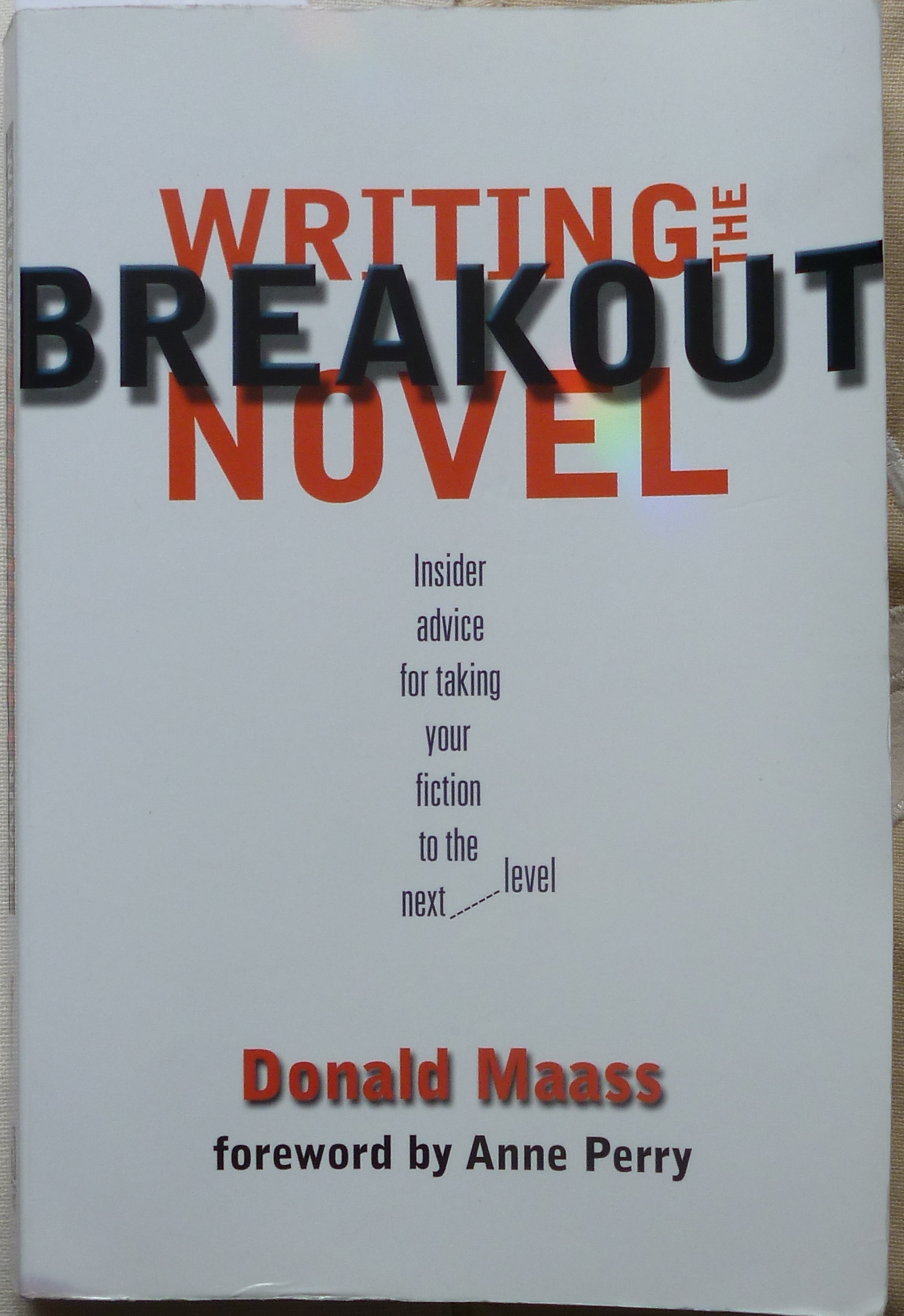
You can find an in-depth exploration into what gives fiction universal appeal in Donald Maass’s wonderful book, ‘Writing the Breakout Novel,’ which is addressed to experienced writers who may not yet have achieved great sales.

My well-thumbed copy of Maass’s thought-provoking book

Among other things, Maass invites us to consider our characters as part of their social and historical moment, not in a secondary way, but keeping this archetypal dimension in the forefront of our mind.

What makes a breakout novel memorable are conflicts that are deep, credible, complex and universal enough so a great number of readers can relate – Donald Maass

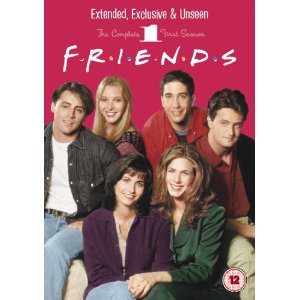
I’ll finish with a more recent example that springs to mind – the phenomenal success of ‘Friends.’ On the individual level, we’ve got six main characters each with their own life experiences.

Massive mega-hit, ‘Friends’

On the cultural level, the series hit at the moment when young people no longer stayed in the family home until they were married and ready to make a home of their own, but could enjoy a transitional time of sharing with a pseudo ‘family’ of their own contemporaries.

On a universal level, ‘Friends’ is a story of every person’s first steps into the adult world, now and back through the ages; when parents no longer provide, and we have to find out who we are and how we can cope without them.

August is going to be ‘archetypes month’ here in the House of Dreams, so sign up for email reminders if you don’t want to miss anything!

Do you have a daily practice?

Many of the best books on writing, and pretty much every book on dreaming, recommend establishing a daily practice.

The Artist’s Way by Julia Cameron, and Becoming a Writer by Dorothea Brande, both propose the idea of ‘morning pages’ – setting aside half an hour first thing in the morning to write stream-of-consciousness, before your mind gets distracted by the mundane  concerns of the day.

The wonderful Writing down the Bones, by Nathalie Goldberg, develops this idea, comparing writing with Buddhist meditation practice.

The daily practice approach focuses on the process of writing rather than the products. It’s not instead of your books and stories, but as well; it’s the seed-bed from which your finished creative pieces grow. 

In the same way, writing down any dreams and dream fragments you remember upon waking isn’t just about big dreams and insights – it’s about deepening your awareness of the continuous dream-life that runs parallel with your life in the dayworld.

As with morning pages, you have to set aside value judgements and simply write, whatever comes, because that’s how you find and develop the authentic writer or dreamer that you are.

Betty Edwards, in Drawing on the Right Side of the Brain, says it doesn’t make any difference what you do – the point of any daily practice is the experience of ‘flow.’ Knitting, jogging and gardening are all a form of meditation, as are writing and other creative activities.

Anything in which you are able to lose yourself and the world, will change and enrich your life, and doing it every day makes this out-of-time experience part of you; it grounds you in something bigger than yourself.

Do you have a daily practice? What are its benefits in your life?

When did you come out as a writer?

Out and proud now – it wasn’t always so!

A friend of mine was really pleased with herself the last time I saw her because, after a lifetime of writing, she had finally stepped into that space and owned it. She had told an events organiser, ‘I’m a local poet.’

It reminded me of another friend who had written several novels which absolutely no-one else knew about. She had only told me because she wanted my advice about how to find a publisher.

Coming out as a writer doesn’t sound as if it should be hard, but I think for many writers it can be. We may have to do it bit-by-bit, our family and close friends first, before going public enough to maybe join a writing group or sign up for some courses. Having confessed we’ve been writing, there’s another coming-out to do if we decide to try and be published.

Since I had wanted to be an author from a very early age, my family always knew, and I actually foisted my teenage efforts on school friends for a penny a chapter. So the fact that I wrote was never something I felt shy about confessing, and when the time came for me to try and earn a living from it, I was happy for everyone to know.

I reckoned that otherwise they’d just have thought I was a slacker anyway, sitting around at home when all my children were in school or playschool. On the whole, it seemed better to risk looking like someone with unrealistic expectations, wasting a lot of time and effort which was doomed to failure, than someone who wasn’t making any effort at all.

It came as a complete shock to me, therefore, when my first books came out, to find that I suddenly felt exposed. It wasn’t only my family and friends who knew any more – now everyone would know, and what’s more, they could read what I’d written.

I couldn’t understand at all why I was having such a problem – I mean, wasn’t that the point of being an author, to have people read what you’d written? So when I found myself on a psychodrama day with a group of counsellors, I told them I was totally up for exploring the reasons why.

In psychodrama, I went straight into a cave with all my writing and flatly refused to come out! 

In a cave… and not coming out!

It turned out that the essence of my anxiety was about having things out there that I’d written, which I might find embarrassing further down the line. This did happen, a decade later, when I was revising my adults’ book on bullying for a new edition. I had completely changed my mind on the subject of forgiveness, and I realised that there might be any number of earlier opinions in others of my books that I’d long ago left behind in my life.

I was reassured to read, in John Fowles’ preface to a new edition of his first book, ‘The Magus,’ how he had wrestled with just this difficulty. Much of what was in the book, he no longer felt or even liked very much. He said he considered doing a total rewrite, because he felt embarrassed about what he now could see were the book’s shortcomings.

But in the end, he decided to leave the text just as it was, saying

All artists have to range the full extent of their own lives freely. The rest of the world can censor or bury their private past. We cannot, and so have to remain partly green till the day we die… callow green in the hope of becoming fertile green.

 A lot of the books I enjoy reading are essays, memoirs and opinion pieces, and I like writing that kind of book too. Perhaps that’s why this was my particular stumbling block, when it came to coming out as a writer.

An enemy of self-reliance is consistency – we feel we can’t contradict our former ideas and utterances – but that’s just conforming to other people’s idea of who we are based on historical evidence. We think we may be misunderstood – but so what? We need to live and grow in the present, not be tied down by the past.  Ralph Waldo Emerson

The book I’ve just written about dreams is full of my own ideas, experiences and opinions, and now I’m writing this blog… I guess you could say that I’m over it now!

If you’re a writer, did you find it hard to tell people about your writing, or writing ambitions? Did you have a particular block when it came to going public?

Guest post: The worlds where dreams may take us

Flying with Fairies, by Bob Cherny

Bob Cherney

We can analyze our dreams for what they say about us, fear them for what they might mean, take them for more than they are, merely enjoy them or follow them into the worlds where they may take us.

My book “Flying with Fairies” is this last. Born of a single brilliant full-color image, the first chapter turned into a second and then into a novel and then into a series. This book was a departure from what I had written previously and is unlike anything I have written since. But then, the dream that inspired it stood out from the other dreams for its visual clarity and symbolic obscurity. It was an opportunity to be exploited and a challenge to be faced. It spoke of pleasure and of hard work at the same time.

“Gatorbait”, a short story published in a Florida based regional publication, was also based on a single image. Where “Fairies” was based on a mid-air collision between a fairy and a flying human, “Gatorbait” was based on a young rodeo competitor and her flying horse.

I have a first chapter of a spy thriller that was so completely formed in my mind when I woke up, I could wait two days before writing it down. I have no idea what I will do with that chapter, but it’s there in case of whatever.

Everyone dreams, but remembering and exploiting dreams takes a willingness to step into a place where few of us are comfortable going. If you wish to write, go there. Take the risk. Exorcise the demons by writing them down and capturing them on the printed page where they can no longer do you any harm.

Do not work for your dreams. Make them work for you.

http://stagewalker.embarqspace.com/

My thanks to Bob for this glimpse into a wonderful dreaming and writing life, and for his insightful comments about exorcising personal demons by capturing them on the printed page. 

How do you make your dreams work for you?

3 writing tricks and how to make them convincing

The way we normally assume the world works is through cause-and-effect, but alongside this there is another pattern, which Carl Jung termed ‘synchronicity.’

‘Memories, Dreams, Reflections’ – Jung’s wonderful memoir.
Synchronicity is sometimes defined as ‘meaningful coincidence.’ As opposed to causal links, which are objective and impersonal, synchronicity is personal and subjective. In synchronicity, the outer world reflects the inner world, as when, for example, you are thinking of someone and you bump into them on the street.

Most people only notice synchronicity in really striking coincidences. For example, a friend of mine was whiling away an hour at the office trying to plan a round-the-world cycling trip when, going out for a sandwich, he stepped over a book lying open on the pavement about… you guessed it… cycling round the world.

Or indeed the incidence I mentioned in last week’s post, about the pomegranate.

But synchronicity is part of the fabric of being, not just astonishing moments, and writers can use it in fiction without readers balking at it because, although people may not be conscious of it, it is part of everyone’s reality.

There are three ways writers may use synchronicity

1     Pathetic fallacy. This is where the environment reflects the mood of the characters or the atmosphere of the action.

A gathering storm…
…a still, rainy night…
…or a lovely sunny day – the weather will often reflect the mood of the characters

2     Coincidences. This is where the plot progresses in an unexpected or non-logical way.

3     Supernatural aid. If your character is troubled by doubts and indecision, they may see signs and portents in their environment. It’s like incubating a dream to help you make up your mind about something – you spot the answer much more readily when you know the question.

How can you use these devices in fiction in a way that feels natural and unobtrusive? By becoming more aware of synchronicity in your own life. Dream awareness will help with this, because synchronicity works in the same way as dreams; it’s a symbolic layer of reality which transforms objects and stories into symbols of the self.

The more you tune into synchronicities in your own life, the more freely and convincingly you will be able to integrate it in the lives of your characters.


Three times in my life, I’ve seen a sudden rainbow at a moment when I was agonising over a decision I had made, and felt reassured.

Have you ever felt you received a nudge/confirmation/warning from life?

Author Vanessa Harbour has added her thoughts about synchronicity on her blog – worth checking out 

How a broken toilet seat solved a conundrum

In the four or five weeks since I delivered ‘Writing in the House of Dreams’ to my agent, my life has not been writing-friendly.

Between the nightmare chaos of having builders in to fix the roof and fit a new bathroom, and the fun chaos of lots of visitors, there simply hasn’t been time for work.

What I had been planning to do after everything quietened down last weekend was decorate the rooms where the leaky roof had done most damage, but I couldn’t face it – I just wanted to get back to my writing.

The problem was, I couldn’t decide what to write. I had two projects in development – a children’s series to follow my Peony Pinker books, and an adults’ book similar to ‘Writing in the House of Dreams.’ Both of these ideas felt interesting and exciting, in completely different ways.

My heart said do the latter, even though I didn’t have much more than a bunch of vague ideas and a few scribbled notes.  My head said do the former, because I had already written a full synopsis and half of the first story, and my agent had given it the thumbs-up. So I was faced with a conundrum.

I still hadn’t made up my mind the next morning, when my brand new toilet seat broke, dragging me away from my just-getting-back-to-normal life and dumping me back in the local B and Q, where I seemed to have spent most of the previous month.

I felt tetchy. I’d paid nearly thirty quid for that toilet seat, and you could have fashioned better fixings out of tin foil. I felt even more tetchy when the local store insisted that, as I’d bought it at a different branch an hour’s drive away, that’s where I would have to take it back to.

I bought a second toilet seat, tossed the faulty one in the boot, and set off for home. But it felt such an irritating waste of a morning that I took a diversion and drove out to the holy well at Saint Clether.

The holy well is a magical place, full of history and mystery, nestled in a beautiful valley. In my experience, it isn’t possible to stay confused, angry or upset for long, within its ancient walls.

St Clether holy well

As I tramped along the path, I suddenly remembered how I had come to the well before, when I was faced with exactly the same writing dilemma. My head had been telling me try and get a contract for another children’s series, but my heart wanted to throw common sense to the winds and focus on my dream book for a while.

The version of my dream book I was working on at that time was called ‘Pomegranate’, after the myth of Persephone. When I got to the well, I found lots of people celebrating the celtic festival of harvest, and among the coins and crystals left as offerings in the wall, someone had managed to perch a pomegranate.

I could not have been more astonished if the skies had opened and the voice of God boomed out, ‘Write “Pomegranate!”‘

I did, and I had never regretted that decision. So now I was alert for any signs or portents that might give me a heads-up this time. I went into the little chapel, picked up a candle to light, and just stood there. The working title of my current adults’ book idea is ‘Sixty Candles.’

When it comes to writing, I find that the heart usually does get its own way in the end, but often not before a fair few steps in the opposite direction, unless Life gives me a shove (I’ll be blogging about signs and portents next week)

If the toilet seat hadn’t broken, I wouldn’t have had to go to B and Q. If the local store had been willing to exchange it, I wouldn’t have felt so cross that I needed a calming diversion.

If I hadn’t gone to the well, I wouldn’t have remembered the last time I was faced with this exact conundrum. I probably would have gone on dithering between my two projects for weeks, instead of being able to throw myself whole-heartedly into one of them.

So my broken toilet seat solved a conundrum. What had seemed a completely irritating, bad thing, triggered a very positive train of events.

Have you ever had a bad experience that turned out to have been a good thing?

Nothing is ever good or bad, but thinking makes it so ~ Shakespeare

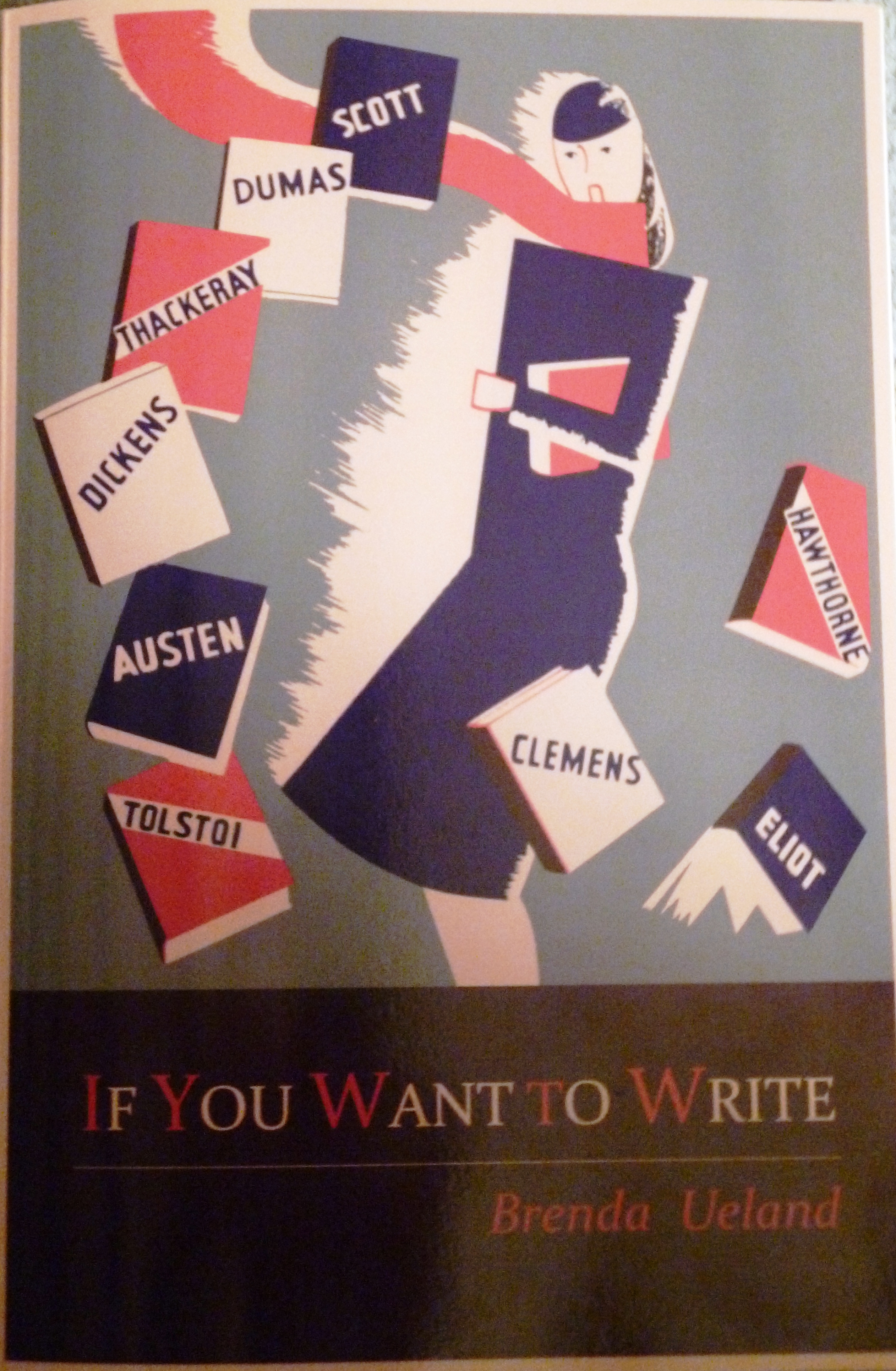
Book Review: ‘If you want to write,’ by Brenda Ueland.

I like this book. I knew I would, as soon as I saw that the first chapter was called, ‘Everybody is talented, original and has something important to say.’ Brenda Ueland made this exciting, inspiring and humbling discovery, as I have, through teaching creative writing.

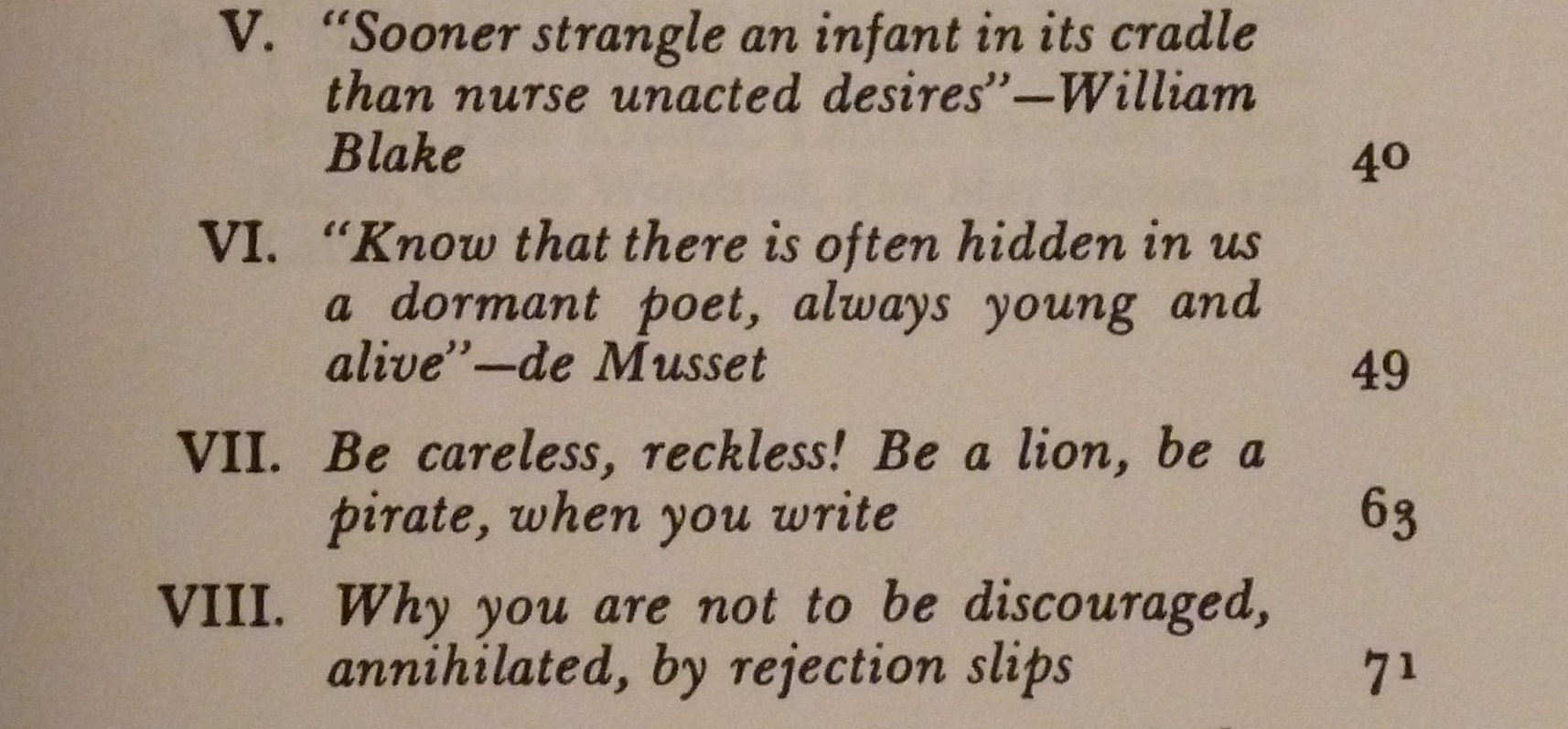
Her second chapter heading is a quotation from William Blake, ‘Imagination is the Divine Body in Every Man.’ So straight away, she is talking about the relationship between imagination and soul, and seeing creative writing as a spiritual undertaking.

Ueland has some cracking chapter headings!

We write because we love writing, and love is a transforming energy. Therefore, she says, writing is never a waste of time, whether we are published or not. Writing will make us feel ‘happier, more enlightened, alive, impassioned, light-hearted and generous…’

According to Ueland, writing can make us feel healthier too. ‘Colds will disappear,’ she assures us, ‘and all the other ailments of discouragement and boredom.’

The book is full of great quotations. I love this, for example, from Alfred de Musset: ‘There exists in most men a poet who died young, whom the man survived.’

At times in the book, as in the quotations, there are certain assumptions and attitudes that grate for the modern reader – all people referred to as ‘men’, for example, as in the de Musset quotation, and one or two casually racist remarks which sound quite shocking to us today.

It’s not surprising if some lines feel culturally unacceptable now in a book that was first published in 1938, but it seems a real shame someone didn’t edit them out, because the substance of what the author has to say is timeless, thoughtful and inspiring.

Writing, Ueland says, is a way to find your true self. ‘And why find it? Because it is, I think, your immortal soul and the life of the Spirit, and if we can only free it and respect it and not run it down, and let it move and work, it is the way to be happier and greater.’