How to take your writing to the next level

What is the difference between a good story and a great one? Why do some characters stay with you for a couple of weeks or months, and others for a lifetime?

It’s all about archetypes.

Your characters are first and foremost individual people with their own personal histories, hopes and personalities, but beyond that they are also part of something bigger – a family, a country, a culture, each of which will also have its own history, values and aspirations.

At the deepest level of collective consciousness, we share a common humanity. People in every time and place know what it is to feel anger, pride, distress, delight; we all have archetypal relationships, such as those between children and parents,siblings, lovers, enemies and friends.

Great stories tap into these archetypal layers. Their characters have a larger-than-life feel, because they embody more than their own personal story, and yet they feel completely convincing because we recognise in them something universal in ourselves.

Shakespeare’s characters have this archetypal quality. King Lear is more than a foolish old King at the end of his reign – his story resonates on deeper levels, as a story of political power, every when and where; on the deepest levels it’s a story of family dynamics and the process of growing older.

Lear’s daughters, likewise, show us different aspects of the universal experience of shifting power within the family, when children grow up and become effective in the world just as their parents begin to lose their effectiveness.

King Lear is like the very embodiment of an old man’s folly; in the same way, Lady Macbeth seems to embody the pure spirit of ambition and Othello the spirit of jealousy.

You can find an in-depth exploration into what gives fiction universal appeal in Donald Maass’s wonderful book, ‘Writing the Breakout Novel,’ which is addressed to experienced writers who may not yet have achieved great sales.
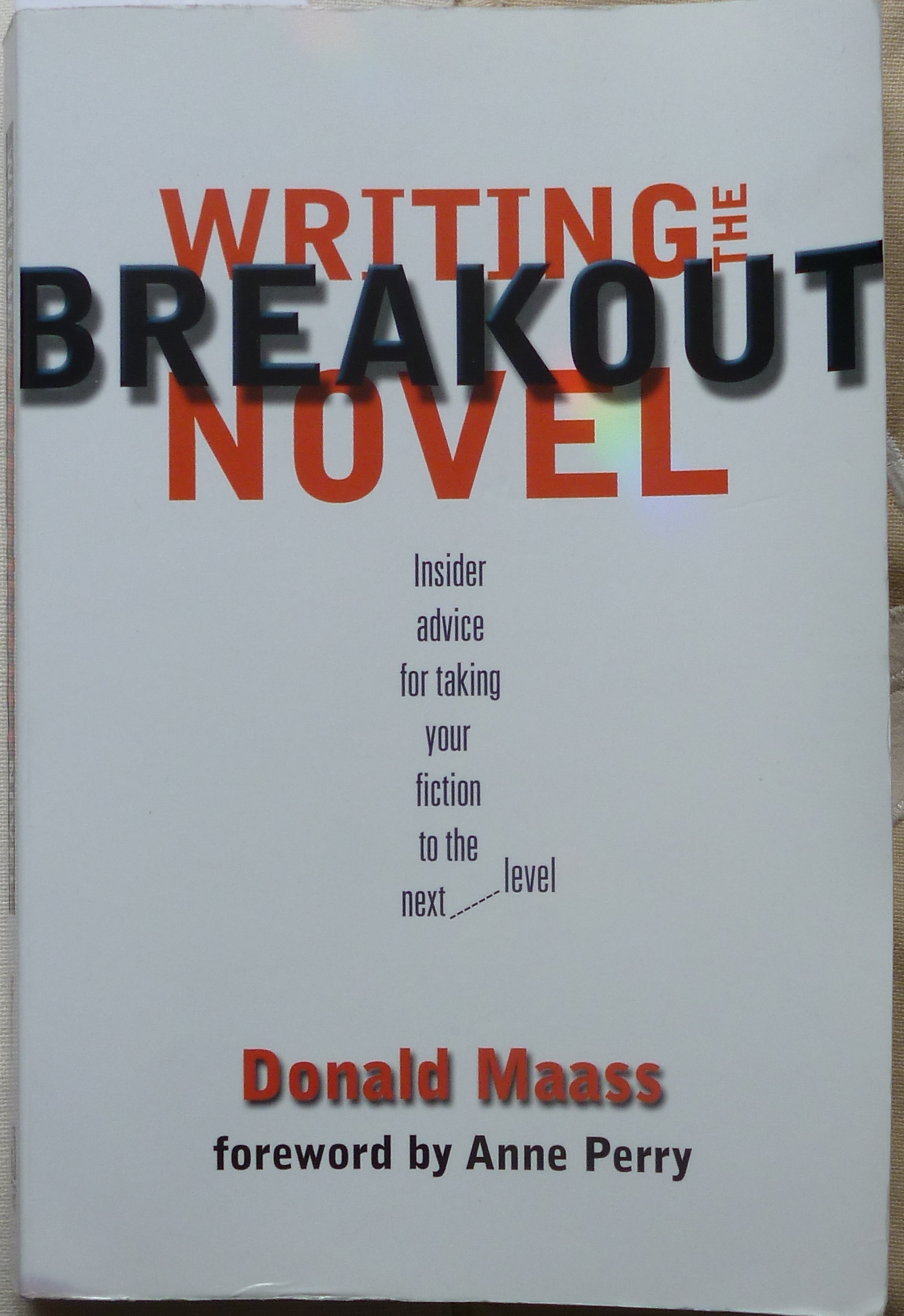
My well-thumbed copy of Maass’s thought-provoking book

Among other things, Maass invites us to consider our characters as part of their social and historical moment, not in a secondary way, but keeping this archetypal dimension in the forefront of our mind.

What makes a breakout novel memorable are conflicts that are deep, credible, complex and universal enough so a great number of readers can relate – Donald Maass

I’ll finish with a more recent example that springs to mind – the phenomenal success of ‘Friends.’ On the individual level, we’ve got six main characters each with their own life experiences.
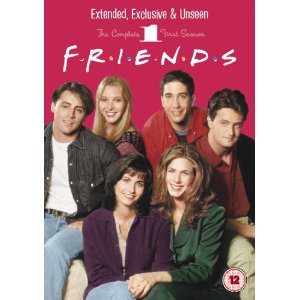
Massive mega-hit, ‘Friends’

On the cultural level, the series hit at the moment when young people no longer stayed in the family home until they were married and ready to make a home of their own, but could enjoy a transitional time of sharing with a pseudo ‘family’ of their own contemporaries.

On a universal level, ‘Friends’ is a story of every person’s first steps into the adult world, now and back through the ages; when parents no longer provide, and we have to find out who we are and how we can cope without them.

August is going to be ‘archetypes month’ here in the House of Dreams, so sign up for email reminders if you don’t want to miss anything!

Do you have a daily practice?

Many of the best books on writing, and pretty much every book on dreaming, recommend establishing a daily practice.

The Artist’s Way by Julia Cameron, and Becoming a Writer by Dorothea Brande, both propose the idea of ‘morning pages’ – setting aside half an hour first thing in the morning to write stream-of-consciousness, before your mind gets distracted by the mundane  concerns of the day.

The wonderful Writing down the Bones, by Nathalie Goldberg, develops this idea, comparing writing with Buddhist meditation practice.

The daily practice approach focuses on the process of writing rather than the products. It’s not instead of your books and stories, but as well; it’s the seed-bed from which your finished creative pieces grow. 

In the same way, writing down any dreams and dream fragments you remember upon waking isn’t just about big dreams and insights – it’s about deepening your awareness of the continuous dream-life that runs parallel with your life in the dayworld.

As with morning pages, you have to set aside value judgements and simply write, whatever comes, because that’s how you find and develop the authentic writer or dreamer that you are.

Betty Edwards, in Drawing on the Right Side of the Brain, says it doesn’t make any difference what you do – the point of any daily practice is the experience of ‘flow.’ Knitting, jogging and gardening are all a form of meditation, as are writing and other creative activities.

Anything in which you are able to lose yourself and the world, will change and enrich your life, and doing it every day makes this out-of-time experience part of you; it grounds you in something bigger than yourself.

Do you have a daily practice? What are its benefits in your life?

When did you come out as a writer?

Out and proud now – it wasn’t always so!

A friend of mine was really pleased with herself the last time I saw her because, after a lifetime of writing, she had finally stepped into that space and owned it. She had told an events organiser, ‘I’m a local poet.’

It reminded me of another friend who had written several novels which absolutely no-one else knew about. She had only told me because she wanted my advice about how to find a publisher.

Coming out as a writer doesn’t sound as if it should be hard, but I think for many writers it can be. We may have to do it bit-by-bit, our family and close friends first, before going public enough to maybe join a writing group or sign up for some courses. Having confessed we’ve been writing, there’s another coming-out to do if we decide to try and be published.

Since I had wanted to be an author from a very early age, my family always knew, and I actually foisted my teenage efforts on school friends for a penny a chapter. So the fact that I wrote was never something I felt shy about confessing, and when the time came for me to try and earn a living from it, I was happy for everyone to know.

I reckoned that otherwise they’d just have thought I was a slacker anyway, sitting around at home when all my children were in school or playschool. On the whole, it seemed better to risk looking like someone with unrealistic expectations, wasting a lot of time and effort which was doomed to failure, than someone who wasn’t making any effort at all.

It came as a complete shock to me, therefore, when my first books came out, to find that I suddenly felt exposed. It wasn’t only my family and friends who knew any more – now everyone would know, and what’s more, they could read what I’d written.

I couldn’t understand at all why I was having such a problem – I mean, wasn’t that the point of being an author, to have people read what you’d written? So when I found myself on a psychodrama day with a group of counsellors, I told them I was totally up for exploring the reasons why.

In psychodrama, I went straight into a cave with all my writing and flatly refused to come out! 

In a cave… and not coming out!

It turned out that the essence of my anxiety was about having things out there that I’d written, which I might find embarrassing further down the line. This did happen, a decade later, when I was revising my adults’ book on bullying for a new edition. I had completely changed my mind on the subject of forgiveness, and I realised that there might be any number of earlier opinions in others of my books that I’d long ago left behind in my life.

I was reassured to read, in John Fowles’ preface to a new edition of his first book, ‘The Magus,’ how he had wrestled with just this difficulty. Much of what was in the book, he no longer felt or even liked very much. He said he considered doing a total rewrite, because he felt embarrassed about what he now could see were the book’s shortcomings.

But in the end, he decided to leave the text just as it was, saying

All artists have to range the full extent of their own lives freely. The rest of the world can censor or bury their private past. We cannot, and so have to remain partly green till the day we die… callow green in the hope of becoming fertile green.

 A lot of the books I enjoy reading are essays, memoirs and opinion pieces, and I like writing that kind of book too. Perhaps that’s why this was my particular stumbling block, when it came to coming out as a writer.

An enemy of self-reliance is consistency – we feel we can’t contradict our former ideas and utterances – but that’s just conforming to other people’s idea of who we are based on historical evidence. We think we may be misunderstood – but so what? We need to live and grow in the present, not be tied down by the past.  Ralph Waldo Emerson

The book I’ve just written about dreams is full of my own ideas, experiences and opinions, and now I’m writing this blog… I guess you could say that I’m over it now!

If you’re a writer, did you find it hard to tell people about your writing, or writing ambitions? Did you have a particular block when it came to going public?

Guest post: The worlds where dreams may take us

Flying with Fairies, by Bob Cherny

Bob Cherney

We can analyze our dreams for what they say about us, fear them for what they might mean, take them for more than they are, merely enjoy them or follow them into the worlds where they may take us.

My book “Flying with Fairies” is this last. Born of a single brilliant full-color image, the first chapter turned into a second and then into a novel and then into a series. This book was a departure from what I had written previously and is unlike anything I have written since. But then, the dream that inspired it stood out from the other dreams for its visual clarity and symbolic obscurity. It was an opportunity to be exploited and a challenge to be faced. It spoke of pleasure and of hard work at the same time.

“Gatorbait”, a short story published in a Florida based regional publication, was also based on a single image. Where “Fairies” was based on a mid-air collision between a fairy and a flying human, “Gatorbait” was based on a young rodeo competitor and her flying horse.

I have a first chapter of a spy thriller that was so completely formed in my mind when I woke up, I could wait two days before writing it down. I have no idea what I will do with that chapter, but it’s there in case of whatever.

Everyone dreams, but remembering and exploiting dreams takes a willingness to step into a place where few of us are comfortable going. If you wish to write, go there. Take the risk. Exorcise the demons by writing them down and capturing them on the printed page where they can no longer do you any harm.

Do not work for your dreams. Make them work for you.

http://stagewalker.embarqspace.com/

My thanks to Bob for this glimpse into a wonderful dreaming and writing life, and for his insightful comments about exorcising personal demons by capturing them on the printed page. 

How do you make your dreams work for you?

How I tamed my black dog

I’ve had so much interesting feedback after last week’s post about depression, dreams and the creative life that I’ve decided to make a diversion from my usual themes of dreaming and writing, and talk about my own black dog.

Children can have depression too

He first showed up when I was a child and, by the time I was eight, I had a secret collection of things I could use to kill myself with. I couldn’t, of course, keep my depression secret. It involved whole days of crying, hiding or refusing to get out of bed.

The doctor decided the problem must be hormonal, so at the age of eleven I was put on the pill, to try and regulate my hormones. It didn’t help. I graduated to antidepressants in my mid teens, and a psychiatrist I saw briefly at nineteen added sleeping pills to the mix.

Nothing helped, and I didn’t doubt for one moment that sooner or later my black dog was going to kill me. Maybe he would have, if my big sister’s black dog hadn’t killed her first.

When someone close to you commits suicide, suddenly it isn’t abstract any more. You can’t tell yourself that nobody will care, or that they’d be better off without you. You properly understand the concept of never coming back.

My sister killed herself with prescription drugs washed down by wine – a fact that seemed proof positive of what I already suspected – the drugs were not the cure. I stopped taking them.

Then things got really scary.

Hiding in the dead planet – how I pictured my depression as a young adult

I was in therapy with a psychiatrist for three years. It was a holding-space. The black dog hadn’t killed me, but he might as well have, because all that time focusing hard on every bad thing that had ever happened in my life, mysteriously failed to lift the darkness.

So there I was, clear of chemicals and all talked out with the talking cure; just me, all on my own, with this big black dog.

What happened next might surprise you – it surprised me. I discovered American self-help. It was all American in those days – here in Britain, the idea of self-help was eyed with suspicion as flakey, self-indulgent and unscientific.

But actually, these books drew on ideas you could find in various religious traditions; they were timeless wisdom repackaged for a secular age. The suggestions I came across in books such as Love is letting go of fear, You can heal your life and Feel the fear and do it anyway were life-changing for me.

What it boiled down to was observing your mind, understanding its behaviour and modifying it. And taming the mind turned out to be taming the black dog.

Now that science has caught up, these ideas have become mainstream, wrapped up in shiny new Cognitive Behavioural Therapy packaging. I’ve written a number of children’s self-help books based on CBT, because there’s nothing complicated about it; it’s mostly a question of awareness.

My black dog still shows up from time to time, but not very often and never for very long. I think that’s what happens with any dark thing in the soul – when you embrace the darkness, it becomes less dark.

I wish I’d been kinder and more patient with my black dog from the start but then maybe I simply wasn’t able to be – patience may be one of the gifts he has brought me.

This is just my story, of course. Other people will find prescription drugs and psychotherapy more helpful than I did, although both can have serious side-effects. I would add that, although my years in therapy didn’t help me handle the black dog, they did bring me benefits and insights for which I am grateful.

Depression, dreams and the creative life

A few weeks ago, I heard author Matthew Johnstone talking about his experience of depression on the BBC World Service, and it got me thinking about the link between depression, dreams and the creative life.

Strikingly, Matthew said he would not change anything – his depression was part of him. Rather than try to kill the black dog, he had learnt how to tame it.

Matthew Johnstone’s book

In the West, we treat depression as an illness, a malfunction in the brain which needs to be cured with chemicals or brought under control by psychological explanations.

Depression challenges all our cultural values. It makes us antisocial in a world where naturally solitary types are labelled ‘poorly socialised’; it makes us still, in a world of manic activity.

Depression stops us from having what we want – which boils down to happiness – and we believe we should always be able to get what we want, because this is a secular world. Without God/fate/mystery, we expect to have control over our own lives.

Nobody would choose to feel depressed, but that is precisely the opportunity depression brings. It brings us to a standstill on our chosen track and, by stopping us from having what we think we want, it opens us up to something new and unexpected. It makes our life bigger.

It’s a well-documented fact that people dream more during periods of depression. Often these dreams are particularly vivid and memorable; they release a torrent of new images which, if we pay attention, can open doorways into new places of the mind, and inspire new directions in life. The loss of these life-giving dreams may be one of the most harmful side-effects of antidepressant drugs.

Many writers label their depression as ‘writer’s block.’ Suddenly the story they thought they had all planned out is stalled, or they can’t find any ideas for the next one. But this is the gift of the black dog for writers – it forces you to be still and receptive, so that new insights and inspirations can come in.

Writer’s block is simply impatience, which means literally the inability to tolerate suffering, delay, toil or vexation (from the Latin word meaning ‘to bear’)

Depression can feel dark and frightening, like a big black dog, but kicking him will make him mean. Don’t try to kill him, but don’t underestimate him either – if he hangs around your house, you need to tame him.

I think the black dog is a special danger for children and young people, before life has given them the perspective of time or put support systems in place. That’s why I wrote my children’s book, ‘How 2B Happy’, in which the very first principle is that we can’t be happy all the time; we have to accept unhappiness. But we can deal with it, and discover what gifts it brings.

In my last two posts, I’ve been talking about synchronicity, and needless to say several blog posts on dreams and depression have come to my attention this week. Toko-pa has written a passionate piece here, in which she talks about ‘the intelligence of our melancholia’ http://toko-pa.com/2007/03/08/bleed-joyfully-a-fresh-view-of-depression/#comment-497 You might also enjoy this piece from ispeakindreams http://ispeakindreams.wordpress.com/2012/06/26/the-beauty-of-our-dreams-healing-within-dreams/

Has a period of depression ever led to a breakthrough for you?

3 writing tricks and how to make them convincing

The way we normally assume the world works is through cause-and-effect, but alongside this there is another pattern, which Carl Jung termed ‘synchronicity.’

‘Memories, Dreams, Reflections’ – Jung’s wonderful memoir.
Synchronicity is sometimes defined as ‘meaningful coincidence.’ As opposed to causal links, which are objective and impersonal, synchronicity is personal and subjective. In synchronicity, the outer world reflects the inner world, as when, for example, you are thinking of someone and you bump into them on the street.

Most people only notice synchronicity in really striking coincidences. For example, a friend of mine was whiling away an hour at the office trying to plan a round-the-world cycling trip when, going out for a sandwich, he stepped over a book lying open on the pavement about… you guessed it… cycling round the world.

Or indeed the incidence I mentioned in last week’s post, about the pomegranate.

But synchronicity is part of the fabric of being, not just astonishing moments, and writers can use it in fiction without readers balking at it because, although people may not be conscious of it, it is part of everyone’s reality.

There are three ways writers may use synchronicity

1     Pathetic fallacy. This is where the environment reflects the mood of the characters or the atmosphere of the action.

A gathering storm…
…a still, rainy night…
…or a lovely sunny day – the weather will often reflect the mood of the characters

2     Coincidences. This is where the plot progresses in an unexpected or non-logical way.

3     Supernatural aid. If your character is troubled by doubts and indecision, they may see signs and portents in their environment. It’s like incubating a dream to help you make up your mind about something – you spot the answer much more readily when you know the question.

How can you use these devices in fiction in a way that feels natural and unobtrusive? By becoming more aware of synchronicity in your own life. Dream awareness will help with this, because synchronicity works in the same way as dreams; it’s a symbolic layer of reality which transforms objects and stories into symbols of the self.

The more you tune into synchronicities in your own life, the more freely and convincingly you will be able to integrate it in the lives of your characters.


Three times in my life, I’ve seen a sudden rainbow at a moment when I was agonising over a decision I had made, and felt reassured.

Have you ever felt you received a nudge/confirmation/warning from life?

Author Vanessa Harbour has added her thoughts about synchronicity on her blog – worth checking out 

How a broken toilet seat solved a conundrum

In the four or five weeks since I delivered ‘Writing in the House of Dreams’ to my agent, my life has not been writing-friendly.

Between the nightmare chaos of having builders in to fix the roof and fit a new bathroom, and the fun chaos of lots of visitors, there simply hasn’t been time for work.

What I had been planning to do after everything quietened down last weekend was decorate the rooms where the leaky roof had done most damage, but I couldn’t face it – I just wanted to get back to my writing.

The problem was, I couldn’t decide what to write. I had two projects in development – a children’s series to follow my Peony Pinker books, and an adults’ book similar to ‘Writing in the House of Dreams.’ Both of these ideas felt interesting and exciting, in completely different ways.

My heart said do the latter, even though I didn’t have much more than a bunch of vague ideas and a few scribbled notes.  My head said do the former, because I had already written a full synopsis and half of the first story, and my agent had given it the thumbs-up. So I was faced with a conundrum.

I still hadn’t made up my mind the next morning, when my brand new toilet seat broke, dragging me away from my just-getting-back-to-normal life and dumping me back in the local B and Q, where I seemed to have spent most of the previous month.

I felt tetchy. I’d paid nearly thirty quid for that toilet seat, and you could have fashioned better fixings out of tin foil. I felt even more tetchy when the local store insisted that, as I’d bought it at a different branch an hour’s drive away, that’s where I would have to take it back to.

I bought a second toilet seat, tossed the faulty one in the boot, and set off for home. But it felt such an irritating waste of a morning that I took a diversion and drove out to the holy well at Saint Clether.

The holy well is a magical place, full of history and mystery, nestled in a beautiful valley. In my experience, it isn’t possible to stay confused, angry or upset for long, within its ancient walls.

St Clether holy well

As I tramped along the path, I suddenly remembered how I had come to the well before, when I was faced with exactly the same writing dilemma. My head had been telling me try and get a contract for another children’s series, but my heart wanted to throw common sense to the winds and focus on my dream book for a while.

The version of my dream book I was working on at that time was called ‘Pomegranate’, after the myth of Persephone. When I got to the well, I found lots of people celebrating the celtic festival of harvest, and among the coins and crystals left as offerings in the wall, someone had managed to perch a pomegranate.

I could not have been more astonished if the skies had opened and the voice of God boomed out, ‘Write “Pomegranate!”‘

I did, and I had never regretted that decision. So now I was alert for any signs or portents that might give me a heads-up this time. I went into the little chapel, picked up a candle to light, and just stood there. The working title of my current adults’ book idea is ‘Sixty Candles.’

When it comes to writing, I find that the heart usually does get its own way in the end, but often not before a fair few steps in the opposite direction, unless Life gives me a shove (I’ll be blogging about signs and portents next week)

If the toilet seat hadn’t broken, I wouldn’t have had to go to B and Q. If the local store had been willing to exchange it, I wouldn’t have felt so cross that I needed a calming diversion.

If I hadn’t gone to the well, I wouldn’t have remembered the last time I was faced with this exact conundrum. I probably would have gone on dithering between my two projects for weeks, instead of being able to throw myself whole-heartedly into one of them.

So my broken toilet seat solved a conundrum. What had seemed a completely irritating, bad thing, triggered a very positive train of events.

Have you ever had a bad experience that turned out to have been a good thing?

Nothing is ever good or bad, but thinking makes it so ~ Shakespeare

Guest post: The dream that became a fairy-tale

How a Dream Became a Fairy Tale – by Juanita Havill

I’ve kept dream journals for years and they provide inspiration, characters, and plots. One in particular, about a glass bed, led easily into a story…

The boy I was babysitting didn’t want to go to sleep. “I’m afraid,” he protested. He balked. I insisted. Still he wouldn’t move. So naturally I turned to an alternate bed, that is, a glass bed. I don’t recall exactly why I had the glass bed with me, but what a relief!

As soon as I rolled the heavy glass bed into his bedroom, he lay on it, stretched out, and fell asleep without the comfort of sheets, pillow, or blanket.

The headboard of the bed impressed me mightily. Thick glass, it was carved with images of children, youths, deer, rabbits, and foxes. I watched him snooze for a while to make sure that he was not feigning sleep. The warm glow from the little boy’s night light illuminated the glass carvings. Satisfied, I woke up.

I don’t always wake up from dreams satisfied. Often times I’m anxious, puzzled, or fearful, but not this time. I wrote a quick account of the dream in my journal, and a few years later I turned the dream into a short tale for a children’s magazine and “The Glass Bed” was published.

Such is the waking mind that the story became a fairy tale in which a young prince refuses to go to bed at night and neither king nor queen nor princess nor court wizard can come up with a solution.

Although the court jester’s idea of a glass bed is scoffed at, finally the transparent bed with its solid glass headboard is installed in the prince’s room.

The prince continues to have frightening dreams, but because he is no longer alone, he is able to sleep. Why isn’t he alone? Because everyone at court crowds into his bedroom to watch the prince’s scary dreams projected across the glass headboard.

What was that dream about?

In ‘Take the bones and build a story’ I suggested a way of stripping back a dream to its basic theme or emotion and using that as a starting-point for creating new fiction.

The reason why dreams can energise and inspire your writing is because many of them reflect an emotional situation or dilemma which is current in your waking life, whether you are consciously aware of it or not.

For the same reason, stripping dreams down to the bones can provide clues as to what they are about, if their meaning is not immediately obvious.

Reducing a dream to the ‘someone is doing/feeling something’ format – ‘someone is making a stand… someone doesn’t like what they’re seeing… someone is being reckless…’ –  will often reveal a connection with something that’s going on in your waking life.

Recently, I dreamt I was walking on a path with a huge expanse of water on one side and a rushing river on the other. I was feeling happy and excited. I stopped to look down at the river and saw that it was full of fish – some tiny, others very big.

I stepped into the water and paddled out a little way. The current was strong, and the water was up to the top of my wellies. Some people on the far side were tut-tutting, saying it wasn’t safe, but I didn’t feel in any danger.

I reduced this dream to, ‘Someone is somewhere amazing… someone is feeling happy… someone should be feeling scared…’

At the time, in my day-life, I had just delivered my dream book, and I knew it might be the start of a big shift in my writing life. It felt exciting. But maybe a small voice somewhere was saying, shouldn’t you be feeling a bit more worried?!

Reducing dreams to their themes is what the kind of interpretation book which doesn’t fix on symbols, but rather on situations does – ‘Ten common dreams and what they mean’ sort of thing.

‘The Universal Dream Key’ by Patricia Garfield- subtitle, ‘The 12 most common dream themes around the world’
Most dreams about falling, for example, would reduce to ‘someone is feeling insecure/afraid’ and therefore they will usually reflect a waking-life situation in which the dreamer is feeling insecure.

Most dreams about being chased will reduce to ‘someone is running away from something… someone is feeling scared…’ Most dreams about shopping will come down to  ‘someone is making a choice/considering their options…’

You can check whether these stock interpretations are right for your particular dream by thinking about how you felt in the dream situation. Not all dreams about falling indicate insecurity, even if most do. You may have had a feeling of release and liberation as you plunged over the cliff!

Not all dreams about being chased will be negative – you may be the world’s fastest runner, and loving that your pursuer hasn’t any chance of catching you. Or of course, you might rather hope that the person chasing you will catch you.

The wonderful thing about dream interpretation is that one size does not fit all. Experts and commentators can suggest useful ways in, but only the dreamer can hear how the dream fits in the full symphony of the heart.