Tag Archives: consciousness

Dreaming the faceless ones

I first discovered the concept of archetypes in the early seventies, when I was starting to try and understand my dreams. At that time, there were few books about symbols, and most of them were not very accessible to the general reader.

My symbols dictionary gave ‘archetype’ meanings for some symbols, which I found completely puzzling. Why did some symbols have two definitions, and which one should I apply to my individual dream?

Because my dictionary only offered archetypal meanings for certain symbols, I thought some symbols were archetypes and some were not; it was only a decade later that I began to understand the archetypal as a layer of meaning behind everything. Just as behind every object in waking life there are layers of personal symbolic significance, so beyond that there are layers of group/cultural/universal meaning.

Jung said you could not understand archetypes in a theoretical way; they were ‘pieces of life itself’, which you could only understand through direct experience. My first experience of archetypes was in my dreams.

I thought of them as the faceless ones, because they seemed to have no individual identity, they were generic – an old man, an old woman, a baby; a doctor, a teacher, a guide. These dream figures had a different quality about them – I felt drawn to them because of their mystery.

I gradually understood that these faceless figures represented the pure spirit of , say, wisdom or adventure, healing or learning. Meeting them showed me how the archetypes worked in more ordinary dream figures – if I dreamt about a friend who was a doctor, for example, he would be appearing both as himself, as what he personally represents to me and also as the universal figure of the healer.

The faceless ones gave me experience of archetypal energies at work in my dreams, and this layer of meaning brought deeper resonance to every dream experience, and every part of daily life.

The encounter with the archetypes is a spiritual experience, and I’ll be exploring that idea in my post next week.

Create great plots by harnessing the power of myth

In our culture, because we have broken our conscious connection with myth, we tend to see our lives as separate and unique.

But every individual life follows paths and patterns which are universal. Each life story is built on a template of all human stories.

Through mythology, we can connect with the essence of our own life experience, and walk with greater consciousness the mythic pathways where we all are one.

Being aware of the archetypal dimension of experience can be particularly useful for writers. You can use mythic templates quite deliberately to help you construct stories which will have resonance with your readers.

I like to use the Hero’s Journey, the master-myth explored at length in Joseph Campbell’s book, ‘The Hero with a Thousand Faces’

In this story

  • the hero hears the call to adventure, which he at first refuses
  • something helps him to engage with the adventure and he sets out into the unfamiliar world
  • he meets allies and enemies
  • he’s tested
  • he has to muster all his inner resources to face his supreme ordeal
  • he finally claims his reward and takes it back to his community

This is a master myth because it isn’t limited to one area of human experience, such as becoming a mother or making the transition between middle and older age.

The Hero’s Journey explored through mythology and in the lives of women and writers – it is capable of endless applications

The Hero’s Journey describes every challenge we may have to face, however small or large; from the daily challenge of getting out of bed or learning something new to a greater challenge such as finding a new job or coming to terms with the death of a loved one.

Life continuously presents us with challenges, which we at first refuse, because we don’t want the effort and disruption of change. If we refuse, we get a nudge. We may seek the help and support of friends or strangers, books or teachers, and we may encounter unhelpful people who stand in the way.

Every time we engage with a challenge, we win a reward – new strength, new insight, new effectiveness in our world, which we can then ‘bring home’ and incorporate in our life.

You can use mythic templates in a deliberate way to construct strong stories, but simply being aware of the universal dimension in your characters’ stories will give them depth and new dimensions. As Dorothea Brande says, ninety percent of writing happens unconsciously, with us often finding things in our writing we did not consciously put there.

If you want to explore the Hero’s Journey in more depth, I’d recommend ‘The Writer’s Journey’ by Christopher Vogler, where he looks at various Hollywood blockbusters as versions of the hero myth.

August is all about archetypes here in the House of Dreams – next week, I’ll be telling you how I first encountered the archetypes in my dreams

How to take your writing to the next level

What is the difference between a good story and a great one? Why do some characters stay with you for a couple of weeks or months, and others for a lifetime?

It’s all about archetypes.

Your characters are first and foremost individual people with their own personal histories, hopes and personalities, but beyond that they are also part of something bigger – a family, a country, a culture, each of which will also have its own history, values and aspirations.

At the deepest level of collective consciousness, we share a common humanity. People in every time and place know what it is to feel anger, pride, distress, delight; we all have archetypal relationships, such as those between children and parents,siblings, lovers, enemies and friends.

Great stories tap into these archetypal layers. Their characters have a larger-than-life feel, because they embody more than their own personal story, and yet they feel completely convincing because we recognise in them something universal in ourselves.

Shakespeare’s characters have this archetypal quality. King Lear is more than a foolish old King at the end of his reign – his story resonates on deeper levels, as a story of political power, every when and where; on the deepest levels it’s a story of family dynamics and the process of growing older.

Lear’s daughters, likewise, show us different aspects of the universal experience of shifting power within the family, when children grow up and become effective in the world just as their parents begin to lose their effectiveness.

King Lear is like the very embodiment of an old man’s folly; in the same way, Lady Macbeth seems to embody the pure spirit of ambition and Othello the spirit of jealousy.

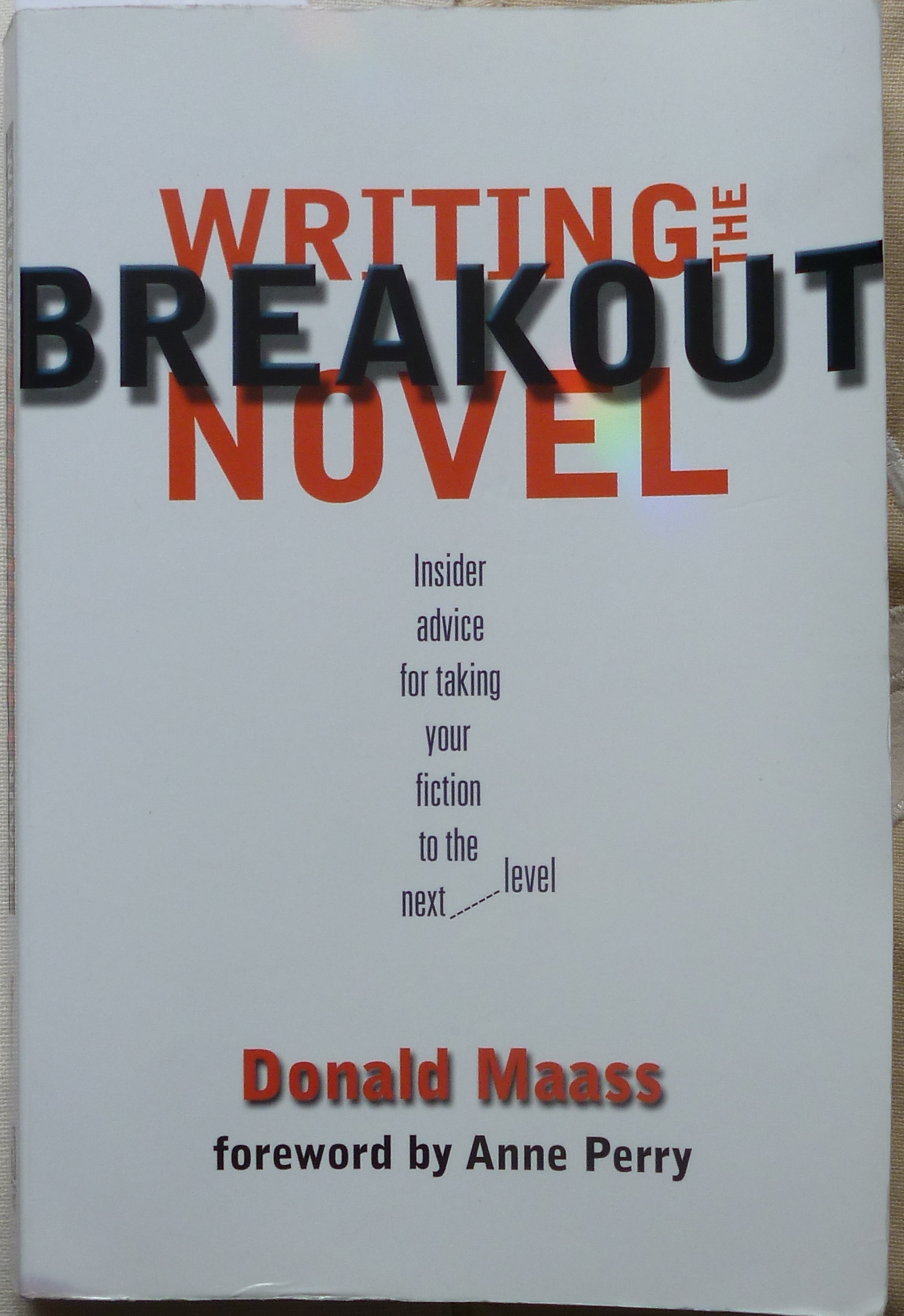
You can find an in-depth exploration into what gives fiction universal appeal in Donald Maass’s wonderful book, ‘Writing the Breakout Novel,’ which is addressed to experienced writers who may not yet have achieved great sales.

My well-thumbed copy of Maass’s thought-provoking book

Among other things, Maass invites us to consider our characters as part of their social and historical moment, not in a secondary way, but keeping this archetypal dimension in the forefront of our mind.

What makes a breakout novel memorable are conflicts that are deep, credible, complex and universal enough so a great number of readers can relate – Donald Maass

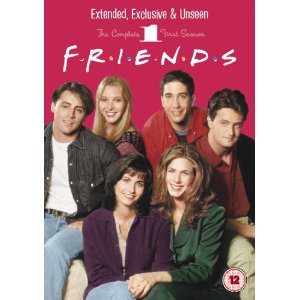
I’ll finish with a more recent example that springs to mind – the phenomenal success of ‘Friends.’ On the individual level, we’ve got six main characters each with their own life experiences.

Massive mega-hit, ‘Friends’

On the cultural level, the series hit at the moment when young people no longer stayed in the family home until they were married and ready to make a home of their own, but could enjoy a transitional time of sharing with a pseudo ‘family’ of their own contemporaries.

On a universal level, ‘Friends’ is a story of every person’s first steps into the adult world, now and back through the ages; when parents no longer provide, and we have to find out who we are and how we can cope without them.

August is going to be ‘archetypes month’ here in the House of Dreams, so sign up for email reminders if you don’t want to miss anything!

Do you have a daily practice?

Many of the best books on writing, and pretty much every book on dreaming, recommend establishing a daily practice.

The Artist’s Way by Julia Cameron, and Becoming a Writer by Dorothea Brande, both propose the idea of ‘morning pages’ – setting aside half an hour first thing in the morning to write stream-of-consciousness, before your mind gets distracted by the mundane  concerns of the day.

The wonderful Writing down the Bones, by Nathalie Goldberg, develops this idea, comparing writing with Buddhist meditation practice.

The daily practice approach focuses on the process of writing rather than the products. It’s not instead of your books and stories, but as well; it’s the seed-bed from which your finished creative pieces grow. 

In the same way, writing down any dreams and dream fragments you remember upon waking isn’t just about big dreams and insights – it’s about deepening your awareness of the continuous dream-life that runs parallel with your life in the dayworld.

As with morning pages, you have to set aside value judgements and simply write, whatever comes, because that’s how you find and develop the authentic writer or dreamer that you are.

Betty Edwards, in Drawing on the Right Side of the Brain, says it doesn’t make any difference what you do – the point of any daily practice is the experience of ‘flow.’ Knitting, jogging and gardening are all a form of meditation, as are writing and other creative activities.

Anything in which you are able to lose yourself and the world, will change and enrich your life, and doing it every day makes this out-of-time experience part of you; it grounds you in something bigger than yourself.

Do you have a daily practice? What are its benefits in your life?

3 writing tricks and how to make them convincing

The way we normally assume the world works is through cause-and-effect, but alongside this there is another pattern, which Carl Jung termed ‘synchronicity.’

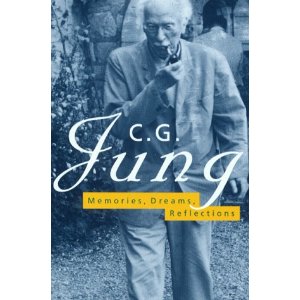
‘Memories, Dreams, Reflections’ – Jung’s wonderful memoir.
Synchronicity is sometimes defined as ‘meaningful coincidence.’ As opposed to causal links, which are objective and impersonal, synchronicity is personal and subjective. In synchronicity, the outer world reflects the inner world, as when, for example, you are thinking of someone and you bump into them on the street.

Most people only notice synchronicity in really striking coincidences. For example, a friend of mine was whiling away an hour at the office trying to plan a round-the-world cycling trip when, going out for a sandwich, he stepped over a book lying open on the pavement about… you guessed it… cycling round the world.

Or indeed the incidence I mentioned in last week’s post, about the pomegranate.

But synchronicity is part of the fabric of being, not just astonishing moments, and writers can use it in fiction without readers balking at it because, although people may not be conscious of it, it is part of everyone’s reality.

There are three ways writers may use synchronicity

1     Pathetic fallacy. This is where the environment reflects the mood of the characters or the atmosphere of the action.

A gathering storm…
…a still, rainy night…
…or a lovely sunny day – the weather will often reflect the mood of the characters

2     Coincidences. This is where the plot progresses in an unexpected or non-logical way.

3     Supernatural aid. If your character is troubled by doubts and indecision, they may see signs and portents in their environment. It’s like incubating a dream to help you make up your mind about something – you spot the answer much more readily when you know the question.

How can you use these devices in fiction in a way that feels natural and unobtrusive? By becoming more aware of synchronicity in your own life. Dream awareness will help with this, because synchronicity works in the same way as dreams; it’s a symbolic layer of reality which transforms objects and stories into symbols of the self.

The more you tune into synchronicities in your own life, the more freely and convincingly you will be able to integrate it in the lives of your characters.


Three times in my life, I’ve seen a sudden rainbow at a moment when I was agonising over a decision I had made, and felt reassured.

Have you ever felt you received a nudge/confirmation/warning from life?

Author Vanessa Harbour has added her thoughts about synchronicity on her blog – worth checking out 

Life after death – the way of the dreamer

James Hillman, in ‘Dreams and the Underworld,’ describes dreaming in terms of sinking down, of dropping below the surface of things, into the realm of death.

In our dreams, we completely identify with the dream ‘I’, and the waking ‘I’ is no more; the assumption that we are ourselves within the dream is an illusion.

The dream ‘I’ is not the self as we know it. In different dreams, it may be a different gender from the dreamer, or a different age; it may have a different job and skill-set; it may even have supernatural powers. The dream ‘I’ is one of myriad characters which inhabit the ‘inner self.’

Writing fiction is similar to dreaming. We enter the ‘writer’s trance’ and ‘become’ our characters. We live in their lives, and grapple with their circumstances. But it is less intense because we are still aware of our own physical body, sitting at our desk, dipping in and out of the writing dream to answer the phone, pick up email or make coffee.

Choosing to engage with dreams is like a kind of suicide. We let go of the waking ‘I’ and willingly become the dream ‘I’, walking the underworld. In this way, the dream ‘I’ is like the soul – it lives on after ego awareness is gone.

Some of my guests here have described dreams in which they have been or become animals, and some of my workshop participants have reported dreaming in the ‘I’ of characters from different places and times, ages and genders. Have you had a dream in which it’s obvious the dream ‘I’ is not your waking self?

‘Treat your dreams like lovers’ – talking to Toko-pa

Toko-pa Turner is an authority on dreams and dreamwork. I asked her to do an interview after watching her video tips on recalling dreams, in which she suggests, ‘Treat your dreams like lovers…’ I really liked that idea!

While I was pondering what I might ask her, I dreamt that she and I were in my living-room, with lots of people milling around at some kind of get-together; we were looking after someone’s baby, passing it between us in a delightful way, just like this process of question-and-answer.

Could you tell us a bit about your own personal journey in dreams, Toko-pa?

I grew up in a unique way, raised as a Sufi in a downtown Montreal commune. We lived in a giant but humble tenement with 18 rooms and 9 cats.  We ate vegetarian meals, practised yoga, meditation, did Sufi dancing and chanted zikr. As you can imagine, our bookshelves were crowded with poetry by Rumi and Tagore, herbal dictionaries, tomes on Tantra, crystals, Dreaming and endless manuals for spiritual enlightenment.

By the time I was 9 or 10, I was reading Carlos Casteneda and having out-of-body experiences. I remember being fixated with dreams – not just their significance, but that they emanated from a world beyond this world, from which beauty, monstrosity and intelligence were endlessly flowing.

When I was about 10, I was reading Journeys out of the Body by Robert Monroe and, while meditating with a quartz crystal, had my first astral projection. In the vision, I was shown an infinite hallway of doors, each marked with a different discipline or area of knowledge. I chose one at random and entered into a classroom where a teacher was waiting for me. He handed me a giant, ancient-looking book, not to read but to… download.

Metabolising the entirity of that teaching in a matter of seconds changed my life. While I have many times strayed off the Dreaming path, I have never forgotten that within each of us is a vast Innernet which contains the entire appendix of our experience as a species – maybe even our memories of the future.

What is the value of dream-recalling as part of everyday life?

In the Talmud, it is said that an uninterpreted dream is like a letter left unread. Dreams show us with staggering clarity and genius what we most need to bring to consciousness. They guide us to not only make excellent decisions in daily life but, like an acorn to the oak tree, they prompt us in the overall direction of our soul’s purpose.

When we are in alignment with our purpose, we are also making the greatest possible contribution to our tribe. Marion Woodman, a marvellous Jungian writer, teaches that the greatest tragedy we face as a culture is the loss of the symbolic life. So you see, each of us is grieving our own piece of that loss, whether we are aware of it or not.

As you forge a relationship with your dreams, that profound loneliness begins to dissipate, and you find your place in the ‘family of things.’ As a side-benefit, you’ll find synchronicity, love and other miracles start to line up to meet you.

I like your gentle approach to dreamwork – could you tell us a bit about your work with clients?

Well, it’s just about my favourite thing in the world. There’s nothing more intimate, fulfilling and magical that ‘touching souls’ with another being. Most people walk around for years without ever receiving a proper ‘Hello.’ What I mean by that, is that most of us have been taught from the earliest age to suppress and discount the tenderest, most creative part of ourselves. And while it is certainly possible to survive in this way, underneath the daily armour is an unabating hunger to be seen.

To connect, being-to-being, with that thing which is tired of fitting in, which wants to feel alive, which has something authentic to offer. Giving a proper Hello is to hold a subtle, unwavering presence for that thing to feel safe enough to emerge. Dreamwork is all about nurturing trust, not just between the Dreamer and Dreamworker, but between the Dreamer and his/her own soul.

Is all dream material related to the dreamer’s day-life, or are there different kinds of dreams?

While most dreams are responding to the events of our daily lives, occasionally one lucks out and gets a Big Dream. It has a tonal difference to it and feels more like an experience than a narrative. It is more vivid and sensual, and the characters & environments seem to exist independently of our being there. It’s as if these dreams are having us, instead of the other way around. Often in dreams like these, we receive transmissions or guidance which stays with us for a long time.

There are more kinds of dreams than I could ever cover in this interview, and likely more than I could even learn about. There are precognitive & premonitory dreams, creative dreams, visionary dreams, past-life dreams, healing & initiation dreams, recurring dreams, lucid dreams, telepathic dreams and many more.

But perhaps its most important to mention nightmares, because they are the reason most people choose not to remember their dreams. One of the most powerful things I get to witness in my work, is the moment when people realise that their nightmares are there to help them. Some spend a lifetime hiding shame and fear of their own dreams, believing they are broken or abnormal. But the truth is, nightmares are just dreams that have turned up their volume, trying devotedly to get our attention about something that is ready to be healed.

This blog is about using dreams as a creative resource. As an artist, writer and musician, how does your dreamlife feed your creativity?

Infinitely! As a songwriter and writer, I constantly use the symbols from my dreams to set the mood of a piece, or to convey a poetic paradox. For instance, I have a song called Medicine Music, whose chorus, “the poison is the medicine” came from a dream in which spiders were covering my arms and biting me. I was paralysed with fear but when the poison sunk into my bloodstream, I became filled with light and strength. This dream taught me that if I lean into those painful and scary places, they will no longer paralyse me, but become the source of my power.

What is your favourite book about dreams?

I love The Way of the Dream by Marie Louise von Franz, which is just a short transcript of an extraordinary ten hour film interview that von Franz did with fellow Jungian Fraser Boa. She has such a great mind and it is never at the expense of her feeling, so she simultaneously satisfies my inner mystic and nerd.

I always enjoy the quotations you post on your facebook page. Would you like to finish this interview with a quotation here?

From Marc Ian Barasch’s Healing Dreams: “Dreams uphold the soul’s values. They tell us that we — our ego selves — are not who we think we are. They encourage us to live truthfully, right now and always. Of course these messages might not be what we want to hear. Sometimes dreams may advocate for life changes that are challenging, to say the least. Dreams really have no time for niceties or for the stories we tell ourselves about who we are. In dreams our narrow selfhood is expanded — the dreams will not allow us to be so small.”

Toko-pa has a beautiful blog http://www.toko-pa.com and facebook page https://www.facebook.com/DreamworkWithTokopa

You can read another beautiful interview with Toko-pa here.

My spiritual path of dreams

I’m a guest on the inpsychotherapy blog today – talking about dreams as a spiritual path http://inpsychotherapy.org/2012/03/25/my-spiritual-path-of-dreams/

Book Review

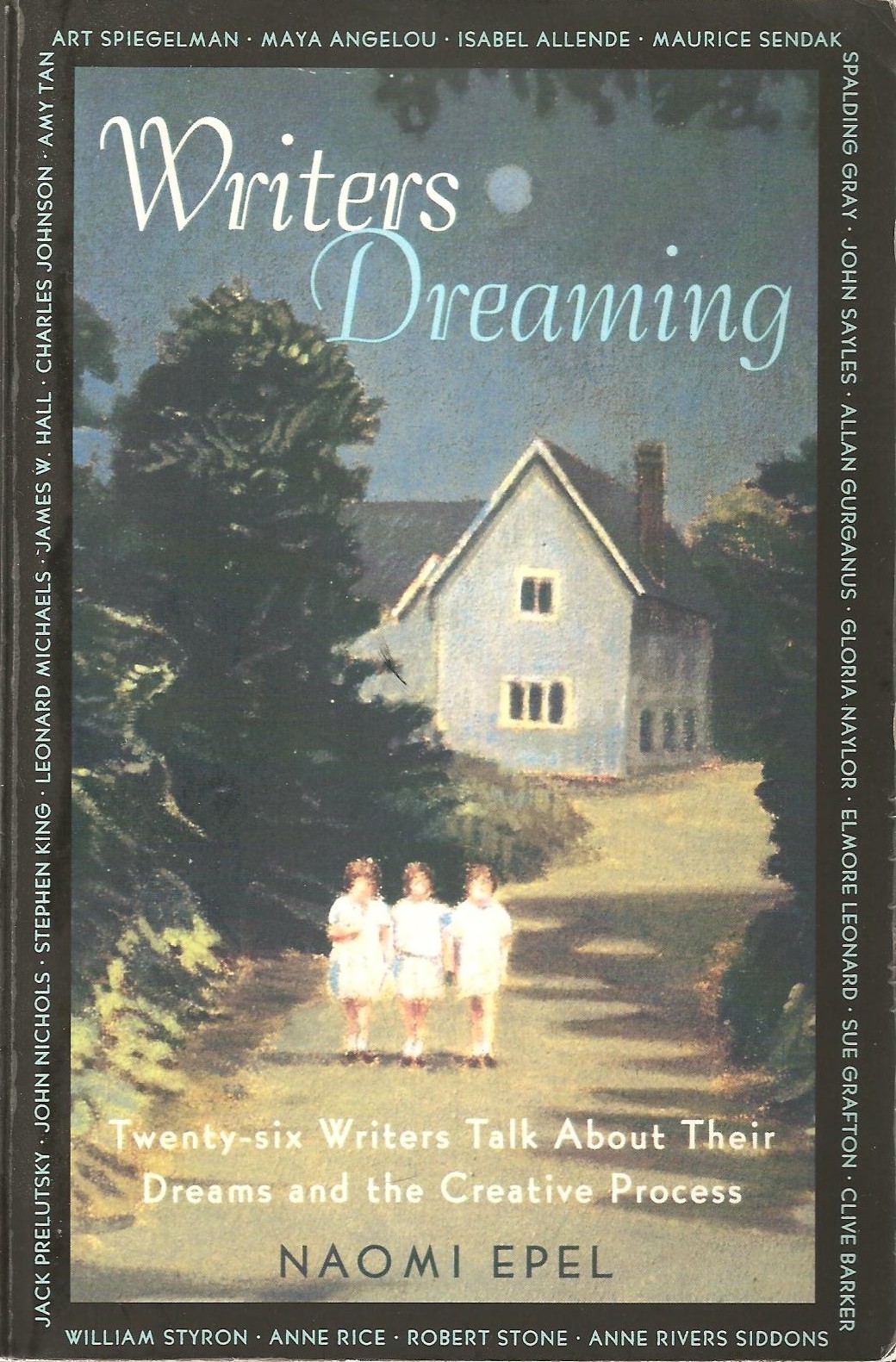
Writers Dreaming, by Naomi Epel

The Vintage paperback cover

You won’t be surprised to hear that I love this book. It consists of twenty-six interviews with high-profile authors, sharing their thoughts about dreams and the creative process.

Probably my favourite is Sue Grafton, because she talks about the edgy nature of dreams and creative work, the ‘sense of jeopardy’ that comes with handing yourself over completely to the inner world of imagination. She describes the feeling of something mystical powering the writing process. She does not believe that all dreams have psychological meaning.

I love the way Stephen King compares his writing process with dreaming. He talks about his preparations for writing being like a bedtime ritual; of entering the writing being like falling asleep to the world, and finishing like emerging from the dream state in the morning.

Maya Angelou talks about the small mind and the large mind, which is very much my experience of dreaming and writing. They both take you into worlds without limits, and add a new dimension to waking life that makes it feel feel much bigger.

There are so many fascinating insights in this book, and it’s one you can dip in and out of if you’re busy, although I have to say I was so gripped I read it over one sunny day in London, on trains and park benches and in cafes.

A five-star read for writers and dreamers.