Last week I was co-tutoring a ‘Writing for Children’ course with Malachy Doyle at Totleigh Barton, the Arvon Foundation’s house in Devon.
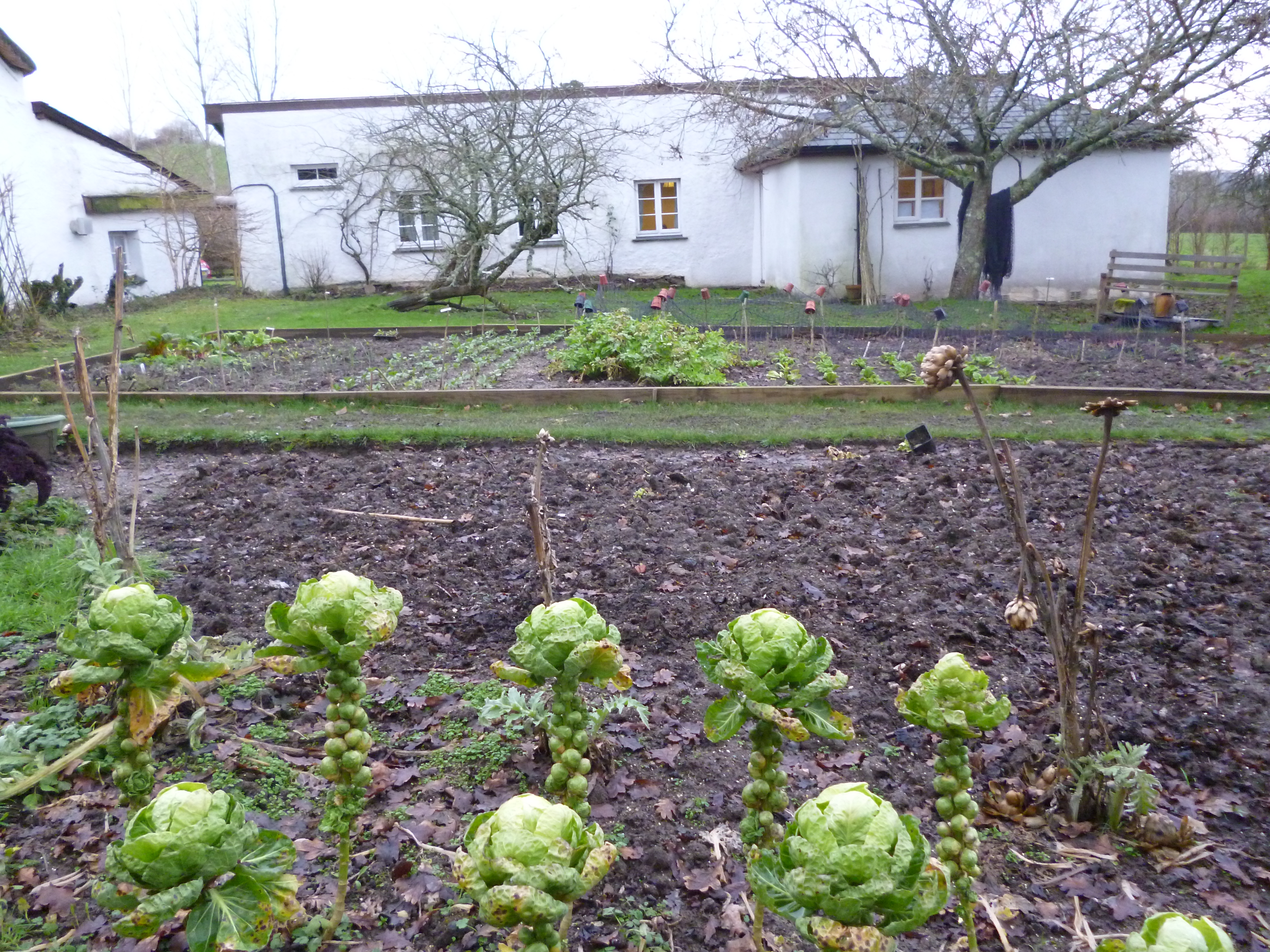
Totleigh Barton
Arvon courses run from Monday afternoon to Saturday morning and they follow a tried-and-tested format
a 3-hour writing workshop every morning
individual tutorials in the afternoons
talks and readings in the evenings from both the tutors, a visiting guest and on the final night, the course participants
free time for writing and socialising
Each participant helps with preparing a meal and washing up once during the week, using simple recipes and ingredients provided by the centre staff.
Meals at Totleigh include delicious local produce and vegetables from the garden
That’s the basic formula, but every course is different, depending on the group and the tutors. Ours included lots of things that weren’t in the programme, such as
extra tutorials, as the group was small due to people getting snowed in at home
long muddy walks in the beautiful surrounding countryside
an evening of very funny games and charades
a Burns supper with one of the centre’s directors reading ‘fair chieftain o’ the puddin’ race’ and Malachy regaling us at table with some of Rabbie’s songs
the reading to the whole group of a picture book written by two of the participants explaining what they had learnt during the week through the medium of story – the tragic, indeed shocking story of Milo the dog and Ben the chick
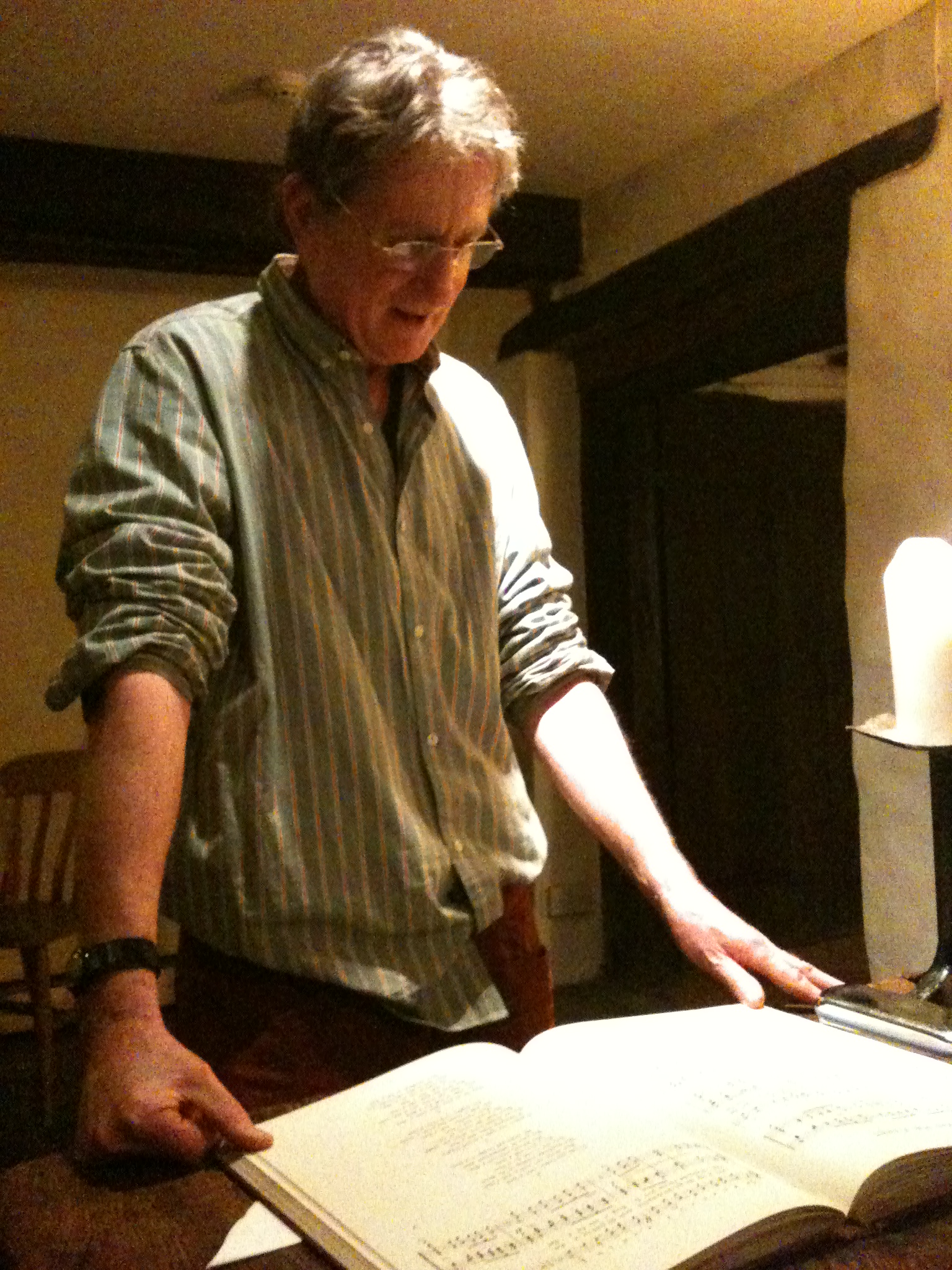
Malachy Doyle with his big book of Robbie Burns songs
You can learn an amazing amount in a single focused week, away from the work and worries of everyday life; you can enjoy conversations about writing with people who feel as passionately about it as you do yourself. You can also have a lot of fun.
If you get a chance to go on an Arvon course, I’d say grab it with both hands. I’ve been on two myself since my first book came out, and I’d recommend it to writers at every stage from complete beginners to published authors.
Have you ever been on an Arvon Foundation course? What were the best and worst things about it?
I’m absolutely delighted that ‘Writing in the House of Dreams’ has been nominated for ‘The Sunshine Award’
The Sunshine Award is ‘given and passed on to bloggers who positively and creatively inspire others in the blogosphere.’
‘Positively’ and ‘creatively’ are two of my favourite words!
Acceptance of the award comes with the following instructions:
Acknowledge the person who gave this award in a blog post.
Do the Q&A below.
Pass on the award to 10 deserving and inspiring bloggers, inform them and link to their blogs.
So first of all, my thanks to the lovely Carolyn Hughes – do check out her phenomenally popular blog The Hurt Healer which is always thoughtful and beautifully written
Second of all, here’s my Q&A:
1.Who is your favourite philosopher? Hmm… I don’t really have one. I do like Eckhart Tolle’s ‘The Power of Now’ and Susan Jeffers’ philosophy of ‘Whatever happens, I’ll handle it’ though
2. What is your favourite number? 4
3. What is your favourite animal? The owl – it knows the secrets of the night
4. What is your favourite time of day? I find they’re all enjoyable in different ways – it’s one of the benefits of insomnia that you get to know the full 24 hours really well
6. What is your favourite holiday? Camping in the far North of Scotland and the Northern Isles – breath-taking scenery, wonderful wildlife, absolute tranquillity
7. What is your favourite physical activity? Walking in wild places
8. What is your favourite non-alcoholic drink? Coffee in the morning, tea in the afternoon.
9. What is your passion? Writing and dreamworking (no surprises there then!) I love teaching workshops too
10. What is your favourite flower? Nasturtiums, geraniums and roses in the summer, Michaelmas daisies in the autumn, snowdrops in the winter, primroses and daffodils in the spring. Impossible to narrow it down any further!
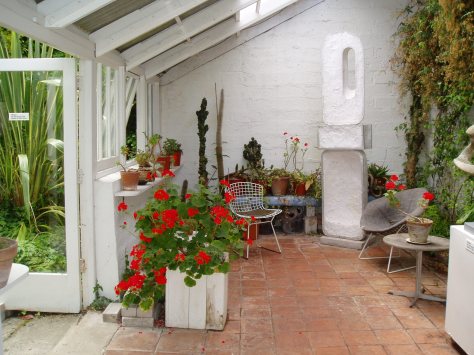
Gorgeous geraniums in Barbara Hepworth’s garden in St Ives
So now my nominations, in no particular order:
1. Toko-pa Artist, musician and dreamworker – a gentle, thoughtful blog and a beautiful voice
2. Writing SistersBetsy Duffey and Laurie Myers – creative inspiration from a Christian perspective, quotes and beautiful illustrations
3. Abi Burlingham Engaging and varied articles about a writer’s life
4 The Artist’s Road One of my favourite blogs about the craft of writing, by Patrick Ross
Lots of shadows in the House of Dreams lately, but before I leave this theme, an update from Toko-pa has prompted me to write a balancing article about the bright side of the Shadow.
I did mention the bright side in my article ‘It’s the seat of creativity – so how can you find your Shadow?’ but only in passing:
This is not to say the Shadow is only negative. Positive potentials which may have been strong in us can be lost. For example, a strong-willed child may learn to identify that strength as a bad thing, and grow to suppress and deny it.
The Shadow is everything we can’t see directly in ourselves. Toko-pa says 90% of that will be ‘pure gold’, but I feel the percentage will depend upon other aspects of your personality. A person with low self-esteem, for example, will be unconscious of many of their more positive qualities, strengths and potentials, whereas someone who feels they are ‘good’ may be suppressing or projecting out many of their own human weaknesses.
When we write, our protagonists express energies in our Self of which we may or may not be aware, and these are not only the dark energies of our villains but also the bright energies of our heroes.
In our heroes, we experience qualities we may not identify with in life, but which must exist in us because they are finding expression in our stories. My protagonists are usually resourceful, independent and brave, but I’ve only come to see where they are me through writing their stories. I used to think of myself as the very opposite of all that.
So there are bright lights hidden in these shadows which, if we follow them, can lead us into the most wonderful areas of the Self. The process may still feel challenging, because anything that shakes our beliefs about ourselves unsettles our world and forces a readjustment of both our memories and our future dreams.
And we have to walk this path lightly, not trying to understand or interpret, but listening for echoes, being aware.
Have you noticed key characteristics that run through most of your protagonists? Are they qualities you recognise in yourself?
Next week I’ll be giving my answer to a straightforward writing question: Is it easier to write for children?
So here we are, facing yet another shake-up of the English education system, with the emphasis still on core academic subjects and rigorous testing. Ahem and excuse me, but what about that non-transferable and non-testable vital ingredient of a successful life – creativity?
When I examine myself and my methods of thought I come to the conclusion that the gift of fantasy has meant more to me than my talent for absorbing knowledge ~ Albert Einstein
Little children learn to be adults through imaginative role-play, pretending to be mummies and daddies, doctors, teachers, engine-drivers, soldiers, window-cleaners, cafe-owners…
Older children and adults make important decisions by imagining different outcomes – ‘If I did that course, I might become a chemist… then I’d work in a laboratory… or I might be a teacher… I could do that anywhere, in a city centre or a remote island… I could work overseas… or be an independent tutor…’
We make the most trivial of decisions in the same way. ‘If I go shopping right now, I might bump into Donna… she might be angry with me because I got the job she was going for… or she might be happy for me, if she didn’t really want it anyway… or I could go later when she’ll be picking up the kids… but by then they might have sold out of saffron buns…’
We make up stories all the time, quite unconsciously. They give us direction and certainty. If we develop this innate ability further through creative activities, we can explore more complicated issues; we can try on other people’s stories, which helps us to develop empathy and a deeper understanding of what life is.
Creative writing gives us access to experiences we would never have in our own lives.We can imagine ever further, extending the limits of our self.
Imagination is more important than knowledge. Knowledge is limited. Imagination encircles the world ~ Albert Einstein
Creative dreaming is the same. If we unhook dreams from the shackles of interpretation, they also become experience for the self, just like waking life, opportunities to go to places and meet people and have adventures and insights beyond our normal range.
You don’t have to teach creativity – you have to allow it; you have to nurture and value it. You can’t measure and assess it, the way you can test academic knowledge.
But imagination is the start point of everything in life, including learning. We shouldn’t be trying to cut children off from their inner world, by loading the curriculum with academic subjects and stealing more and more of their free time for homework and extra tuition.
Children in the UK are among the least happy in the developed world, and they are also among the most tested. But even if happiness is low on our priorities, it makes no sense educationally to focus everything on academic subjects and intellectual skills, because the story-making mind is the seedbed from which knowledge and understanding grow.
The mind can proceed only so far upon what it knows and can prove. There comes a point where the mind takes a higher plane of knowledge, but can never prove how it got there. All great discoveries have involved such a leap ~ Albert Einstein
That’s it. I have nothing more to say. I’m completely fed up with politicians on both sides of the House narrowing our children’s abilities and aspirations, and harming their happiness, through their obsession with ‘rigour’, ‘standards’ and testing. But please feel free to add your own views in the comments!
Many of the best books on writing, and pretty much every book on dreaming, recommend establishing a daily practice.
The Artist’s Way by Julia Cameron, and Becoming a Writer by Dorothea Brande, both propose the idea of ‘morning pages’ – setting aside half an hour first thing in the morning to write stream-of-consciousness, before your mind gets distracted by the mundane concerns of the day.
The wonderful Writing down the Bones, by Nathalie Goldberg, develops this idea, comparing writing with Buddhist meditation practice.
The daily practice approach focuses on the process of writing rather than the products. It’s not instead of your books and stories, but as well; it’s the seed-bed from which your finished creative pieces grow.
In the same way, writing down any dreams and dream fragments you remember upon waking isn’t just about big dreams and insights – it’s about deepening your awareness of the continuous dream-life that runs parallel with your life in the dayworld.
As with morning pages, you have to set aside value judgements and simply write, whatever comes, because that’s how you find and develop the authentic writer or dreamer that you are.
Betty Edwards, in Drawing on the Right Side of the Brain, says it doesn’t make any difference what you do – the point of any daily practice is the experience of ‘flow.’ Knitting, jogging and gardening are all a form of meditation, as are writing and other creative activities.
Anything in which you are able to lose yourself and the world, will change and enrich your life, and doing it every day makes this out-of-time experience part of you; it grounds you in something bigger than yourself.
Do you have a daily practice? What are its benefits in your life?
A friend of mine was really pleased with herself the last time I saw her because, after a lifetime of writing, she had finally stepped into that space and owned it. She had told an events organiser, ‘I’m a local poet.’
It reminded me of another friend who had written several novels which absolutely no-one else knew about. She had only told me because she wanted my advice about how to find a publisher.
Coming out as a writer doesn’t sound as if it should be hard, but I think for many writers it can be. We may have to do it bit-by-bit, our family and close friends first, before going public enough to maybe join a writing group or sign up for some courses. Having confessed we’ve been writing, there’s another coming-out to do if we decide to try and be published.
Since I had wanted to be an author from a very early age, my family always knew, and I actually foisted my teenage efforts on school friends for a penny a chapter. So the fact that I wrote was never something I felt shy about confessing, and when the time came for me to try and earn a living from it, I was happy for everyone to know.
I reckoned that otherwise they’d just have thought I was a slacker anyway, sitting around at home when all my children were in school or playschool. On the whole, it seemed better to risk looking like someone with unrealistic expectations, wasting a lot of time and effort which was doomed to failure, than someone who wasn’t making any effort at all.
It came as a complete shock to me, therefore, when my first books came out, to find that I suddenly felt exposed. It wasn’t only my family and friends who knew any more – now everyone would know, and what’s more, they could read what I’d written.
I couldn’t understand at all why I was having such a problem – I mean, wasn’t that the point of being an author, to have people read what you’d written? So when I found myself on a psychodrama day with a group of counsellors, I told them I was totally up for exploring the reasons why.
In psychodrama, I went straight into a cave with all my writing and flatly refused to come out!
In a cave… and not coming out!
It turned out that the essence of my anxiety was about having things out there that I’d written, which I might find embarrassing further down the line. This did happen, a decade later, when I was revising my adults’ book on bullying for a new edition. I had completely changed my mind on the subject of forgiveness, and I realised that there might be any number of earlier opinions in others of my books that I’d long ago left behind in my life.
I was reassured to read, in John Fowles’ preface to a new edition of his first book, ‘The Magus,’ how he had wrestled with just this difficulty. Much of what was in the book, he no longer felt or even liked very much. He said he considered doing a total rewrite, because he felt embarrassed about what he now could see were the book’s shortcomings.
But in the end, he decided to leave the text just as it was, saying
All artists have to range the full extent of their own lives freely. The rest of the world can censor or bury their private past. We cannot, and so have to remain partly green till the day we die… callow green in the hope of becoming fertile green.
A lot of the books I enjoy reading are essays, memoirs and opinion pieces, and I like writing that kind of book too. Perhaps that’s why this was my particular stumbling block, when it came to coming out as a writer.
An enemy of self-reliance is consistency – we feel we can’t contradict our former ideas and utterances – but that’s just conforming to other people’s idea of who we are based on historical evidence. We think we may be misunderstood – but so what? We need to live and grow in the present, not be tied down by the past. Ralph Waldo Emerson
The book I’ve just written about dreams is full of my own ideas, experiences and opinions, and now I’m writing this blog… I guess you could say that I’m over it now!
If you’re a writer, did you find it hard to tell people about your writing, or writing ambitions? Did you have a particular block when it came to going public?
How a Dream Became a Fairy Tale – by Juanita Havill
I’ve kept dream journals for years and they provide inspiration, characters, and plots. One in particular, about a glass bed, led easily into a story…
The boy I was babysitting didn’t want to go to sleep. “I’m afraid,” he protested. He balked. I insisted. Still he wouldn’t move. So naturally I turned to an alternate bed, that is, a glass bed. I don’t recall exactly why I had the glass bed with me, but what a relief!
As soon as I rolled the heavy glass bed into his bedroom, he lay on it, stretched out, and fell asleep without the comfort of sheets, pillow, or blanket.
The headboard of the bed impressed me mightily. Thick glass, it was carved with images of children, youths, deer, rabbits, and foxes. I watched him snooze for a while to make sure that he was not feigning sleep. The warm glow from the little boy’s night light illuminated the glass carvings. Satisfied, I woke up.
I don’t always wake up from dreams satisfied. Often times I’m anxious, puzzled, or fearful, but not this time. I wrote a quick account of the dream in my journal, and a few years later I turned the dream into a short tale for a children’s magazine and “The Glass Bed” was published.
Such is the waking mind that the story became a fairy tale in which a young prince refuses to go to bed at night and neither king nor queen nor princess nor court wizard can come up with a solution.
Although the court jester’s idea of a glass bed is scoffed at, finally the transparent bed with its solid glass headboard is installed in the prince’s room.
The prince continues to have frightening dreams, but because he is no longer alone, he is able to sleep. Why isn’t he alone? Because everyone at court crowds into his bedroom to watch the prince’s scary dreams projected across the glass headboard.
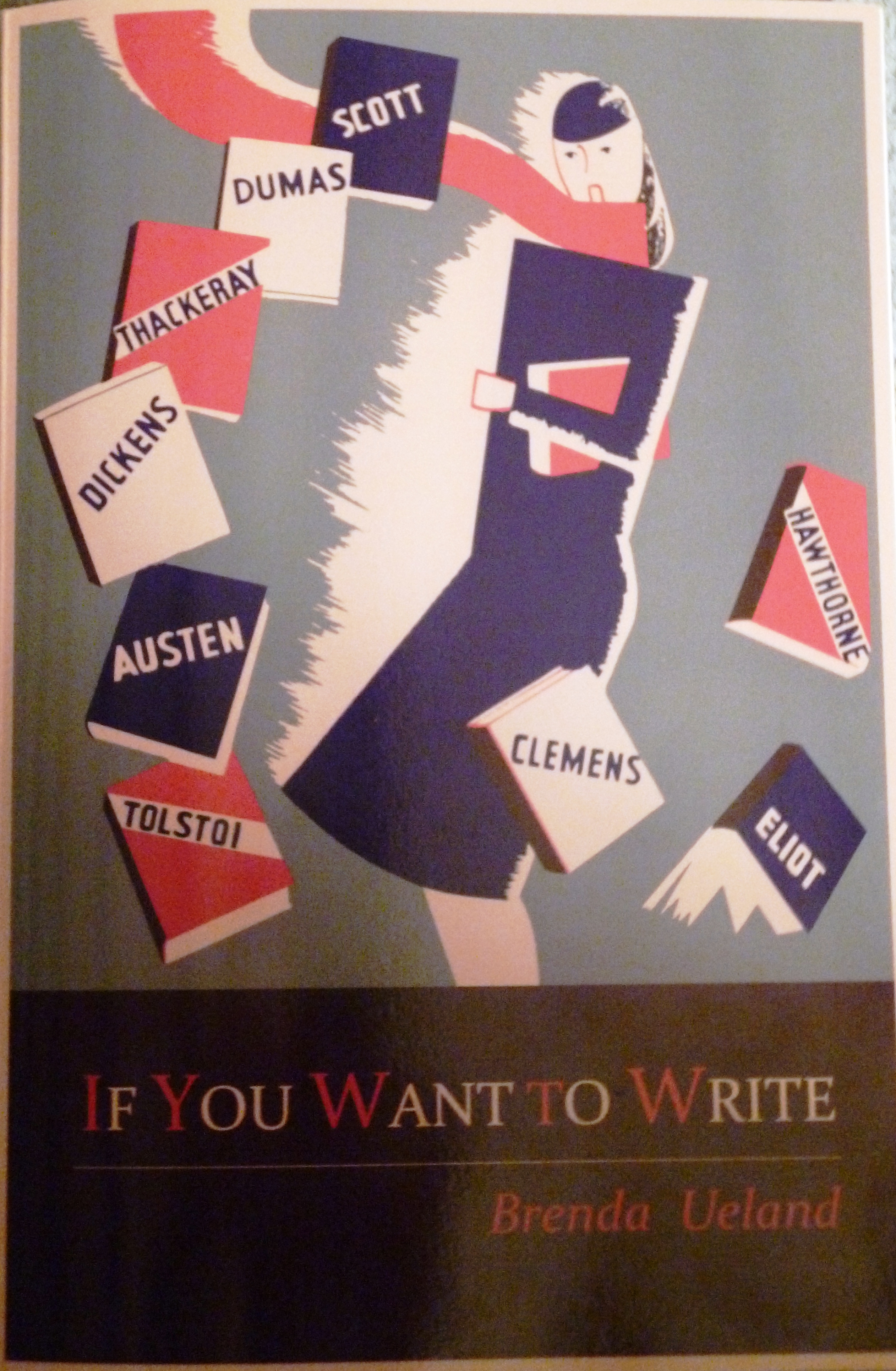
I like this book. I knew I would, as soon as I saw that the first chapter was called, ‘Everybody is talented, original and has something important to say.’ Brenda Ueland made this exciting, inspiring and humbling discovery, as I have, through teaching creative writing.
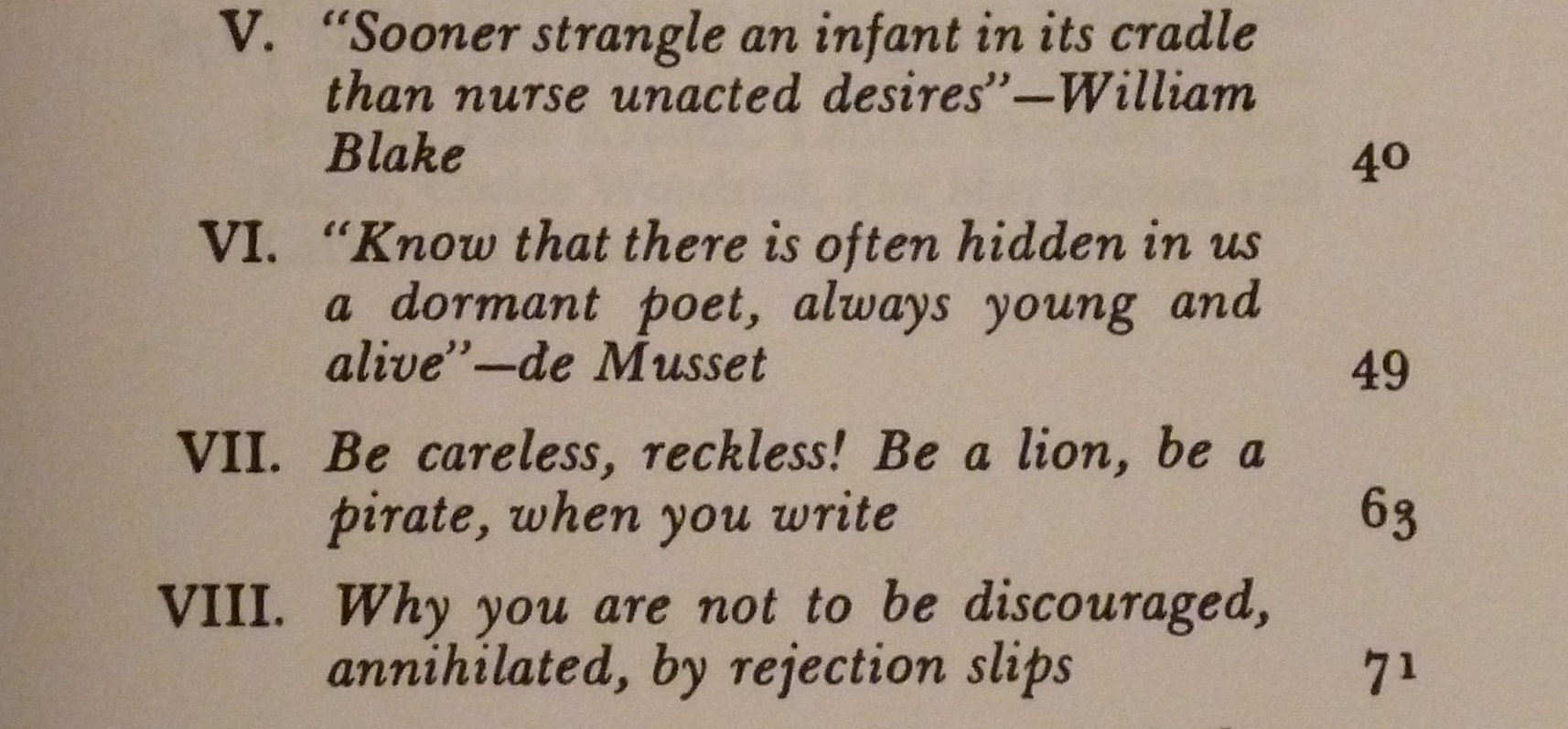
Her second chapter heading is a quotation from William Blake, ‘Imagination is the Divine Body in Every Man.’ So straight away, she is talking about the relationship between imagination and soul, and seeing creative writing as a spiritual undertaking.
Ueland has some cracking chapter headings!
We write because we love writing, and love is a transforming energy. Therefore, she says, writing is never a waste of time, whether we are published or not. Writing will make us feel ‘happier, more enlightened, alive, impassioned, light-hearted and generous…’
According to Ueland, writing can make us feel healthier too. ‘Colds will disappear,’ she assures us, ‘and all the other ailments of discouragement and boredom.’
The book is full of great quotations. I love this, for example, from Alfred de Musset: ‘There exists in most men a poet who died young, whom the man survived.’
At times in the book, as in the quotations, there are certain assumptions and attitudes that grate for the modern reader – all people referred to as ‘men’, for example, as in the de Musset quotation, and one or two casually racist remarks which sound quite shocking to us today.
It’s not surprising if some lines feel culturally unacceptable now in a book that was first published in 1938, but it seems a real shame someone didn’t edit them out, because the substance of what the author has to say is timeless, thoughtful and inspiring.
Writing, Ueland says, is a way to find your true self. ‘And why find it? Because it is, I think, your immortal soul and the life of the Spirit, and if we can only free it and respect it and not run it down, and let it move and work, it is the way to be happier and greater.’
When I wrote about talent before, I was thinking about the personal qualities a writer needs to develop if they want to be published and make a career of writing.
Recently, I read a quotation by Erica Jong which reminded me of a quality writers need whether they want to be published or not. She says, ‘Everyone has talent; what is rare is the courage to follow the talent to the dark place where it leads.’
A dark path to hidden places
You need courage to even embark upon the path of writing, let alone move towards publication, because when you write you are opening up to the hidden places of the self, and you can never be sure what you might find there.
People in workshops will often express surprise at where their writing has taken them – that’s part of the magical and sometimes mystical experience of any creative endeavour.
But occasionally that delighted surprise can give way to something much darker. Dismay, for example – ‘But I don’t want to write sad stories.’ Rejection – ‘That’s not really me!’ Even disgust – ‘I hate the character I’ve conjured into being.’
This is another reason the image Ted Hughes offers for writing as being like fishing is so apt; you might catch a tasty gorgeous trout, but you might equally snare a big angry pike or a grotty old shoe. There could even be alligators circling your bait, ready to pull you down.
What lies beneath the surface?
Again, dreaming with awareness is wonderful preparation for creative writing, because in dreams we will inevitably encounter our own darkness, as well as our light. In intending to recall our dreams, we willingly surrender; we undertake to engage with that inner world, whatever we might find there.
In dreaming, as in writing, we may find more than we might wish to find, but that is the lesson of any inner work; we are much more than what we want to be.
If you are a writer, has your writing ever taken you to dark places that you didn’t know were there?
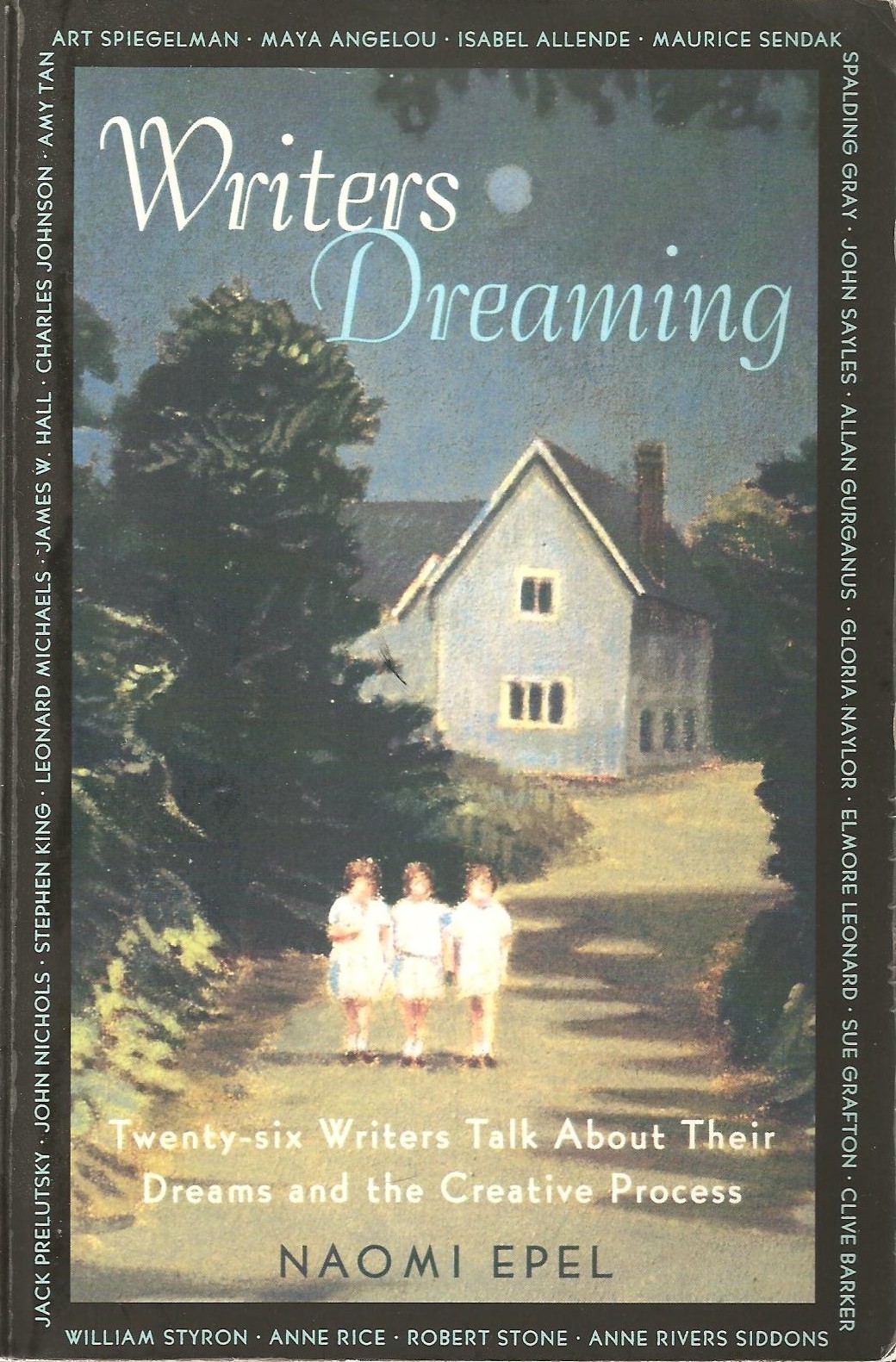
You won’t be surprised to hear that I love this book. It consists of twenty-six interviews with high-profile authors, sharing their thoughts about dreams and the creative process.
Probably my favourite is Sue Grafton, because she talks about the edgy nature of dreams and creative work, the ‘sense of jeopardy’ that comes with handing yourself over completely to the inner world of imagination. She describes the feeling of something mystical powering the writing process. She does not believe that all dreams have psychological meaning.
I love the way Stephen King compares his writing process with dreaming. He talks about his preparations for writing being like a bedtime ritual; of entering the writing being like falling asleep to the world, and finishing like emerging from the dream state in the morning.
Maya Angelou talks about the small mind and the large mind, which is very much my experience of dreaming and writing. They both take you into worlds without limits, and add a new dimension to waking life that makes it feel feel much bigger.
There are so many fascinating insights in this book, and it’s one you can dip in and out of if you’re busy, although I have to say I was so gripped I read it over one sunny day in London, on trains and park benches and in cafes.


![sunshine-award[1]](https://writinginthehouseofdreams.com/wp-content/uploads/2012/12/sunshine-award1.jpg?w=474)



 Jenny Alexander's blog: Writing in the House of Dreams