Category Archives: Dreams

Are you temperamentally suited to self-publishing?

Dream 4 in the countdown to publication! Last week’s dream highlighted how I felt when I started self-publishing; this week’s showed me why I felt that way. 

I’ve got on a bus to go to London and a few hours later the bus stops in the early morning mist and I see we’ve come to Camborne. Instead of going East, we’ve been going West. I get out and look at the misty hills of the far West, so wild and beautiful, but so much not where I expected to wake up, and I think having got up so early and set out so hopefully, now it’s too late to get to London.

Now I’m writing about an adventure on a train. I see other authors – Liz and Elen and some others – have got together to write adventures on trains, and get publicity, and they’ll sell much better – but the fact is, I prefer to work on my own.

When I finished Writing in the House of Dreams, the first thing I did was ‘go to London.’ I sent it to my agent, she liked it, she sent it out to major mind-body-spirit publishers.

When it didn’t get a contract I realised that where I had been heading all along was home, towards publishing it here, myself, and I experienced a mixture of feelings.

I was disappointed, certainly, having set off so hopefully, believing in the book, armed with wonderful feedback from my expert readers and feeling sure that it would find a publisher.

But I also felt excited about the ‘wild and beautiful’ vista of self-publishing that was opening up in front of me instead.

My dream went on to acknowledge that the mainstream way would certainly give me a higher profile and sales, but going it alone could actually suit me better.

In my career, fame and fortune have never been main drivers; my passion is the writing, and I’ve never sought the kind of success that would take me away from it on things like book tours and festivals.

My career goal, now as ever, is to make enough money from my writing to keep on doing it, without having to worry about the bills or trying to fit all my work into a marketable brand.

Last week, I asked whether you had ever self-published, and how you felt about it once you got started. Not everyone will feel the same; this dream suggests it might just suit my temperament and fit my writing goals.

Next week the countdown ends! Meet me back here to celebrate publication day and hear about dream number 5, which involves a sweet little furry animal and a curious crow.
Self-publishing – why every author should try it at least once.

‘Writing in the House of Dreams’, the book – dream 3 today on the countdown to publication! This one came when I was working out my publishing schedule. 

Before, you had to take your story and wait for them to see you, like waiting at the doctor’s. Hours, days you might be waiting there, because every story had to be checked and verified, and they might have questions for you.

Now, you can just post your story online, and if they’ve got questions, they can research online, and you don’t even have to go. It feels liberating!

When you’re thinking about trying something new, first you feel excited. Then anxieties flood in, to stop you acting impulsively and make sure your head is in line with your heart on the  adventure.

Once your hopes and fears are all in the mix, you can stir it up and see what rises to the surface. In the post before last, I described how  what was important to me when I was first thinking about self-publishing rose to the surface in a dream.

Weighing up the pros and cons can bring you to the threshold of a new venture, but you don’t know what it will feel like until you actually begin.

Before I decided to commit to self-publishing Writing in the House of Dreams I had viewed it purely as a fall-back if I couldn’t get a traditional publisher.  Although I was glad it was an option, I would not have chosen it.

But as soon as I got started on the work of self-publishing, I felt how different it was from my previous experience as a traditionally-published author, and it was a very positive difference.

Having a manuscript under consideration with traditional publishers you’re full of impatience, helplessness and anticipation about what they’re going to say, just like when you’re waiting to go in and see the doctor.

It usually takes months; it can take longer. One of my books got an offer a year after we started sending it out.

Now suddenly, with self-publishing, there’s no need to wait. You can crack on with it as soon as you want to, and that feels exhilarating.

Research is just data; what fires creativity is emotion, and until I experienced the emotional difference between that doctor’s waiting-room feeling  and that unexpected exhilaration, I would always have thought of self-publishing as second best.

I have no plan to submit my follow-up book When a Writer Isn’t Writing to traditional publishers. Although I still very much hope to go on being traditionally published, it no longer feels like the route of choice for every book, and I want to feel the buzz of doing it myself again.

I think that’s why Orna Ross, who set up the wonderful Alliance of Independent Authors says every author should try self-publishing at least once.

Have you ever tried self-publishing? How did it feel to you?


When your to-do list is freaking you out

Five posts to publication, five dreams – here’s the second. It came when I’d made some decisions and started the ball rolling with self-publishing Writing in the House of Dreams, and was worried about the enormity of the task I was taking on.

Sat 8th Feb, 2014

I’m in a cafe with my grown-up son. It’s a formica tables and plastic chairs kind of place, and he looks completely incongruous in a wide-shouldered, pale-coloured overcoat which makes him look like a cross between a fat-cat businessman and a mafia godfather.

I’m talking about Writing in the House of Dreams. ‘There have been times,’ I say, ‘when I would have loved to just give up and, if I hadn’t loved it so much, I would have done.’

He says, ‘What you need to do is pray!’ I see he’s also a preacher of some kind now. Before I can say, ‘I do pray. That’s how I’ve got this far,’ he whips a little music machine out of his pocket, puts on some loud gospel music and yells ‘Halleluyah!’ Everyone in the café jumps up and joins in, dancing, clapping and singing along.

This is one of those dreams that feels like a gift when you’ve gone to bed feeling anxious, because it wakes you up in the morning with a smile on your face. That, in itself, puts your anxieties in perspective, even before you get to the sense of the dream.

As an author who has always been traditionally published, one of the things that surprised me about self-publishing was how challenging it could be to keep up my stamina and confidence without the back-up of a hard-working and confident publisher.

Normally, I don’t have to think about the book once it’s with the publisher – I just get on with writing the next thing. But when you’re self-publishing, you have to go on working with the manuscript long after the decision to publish is made. You have a massive to-do list, and doubts can start to set in.

Have you got enough time and energy to see it through? Is the book actually worth all that time and energy? Are you capable anyway of doing a good enough job?

One way to get past worry is by lifting your focus from every individual problem to the bigger picture; from what you’ve got to do to why you want to do it; from yourself to what is bigger than yourself.

You can call it what you like, it doesn’t have to be God. You can call it Love. Whatever you love is bigger than yourself. It lifts you above selfishness and laziness and bends you to its work. The reason I write is because I love writing. I want to be better for writing. I’m willing to give up other things I’d like to do for the love of writing.

Prayer is perspective. My dream reminded me that I couldn’t give up, because of that love.

Laughter is perspective too. My dream told me not to take it all so seriously. I could only do my best, and the rest was down to luck, or grace, and out of my control. O happy day!

What helps you get a sense of perspective when your to-do list is freaking you out?


Self-publishing – what are the actual costs?

Five posts to publication, five dreams – here’s the first, which came at the very start of the process, when I’d done some research but was still feeling anxious about committing .

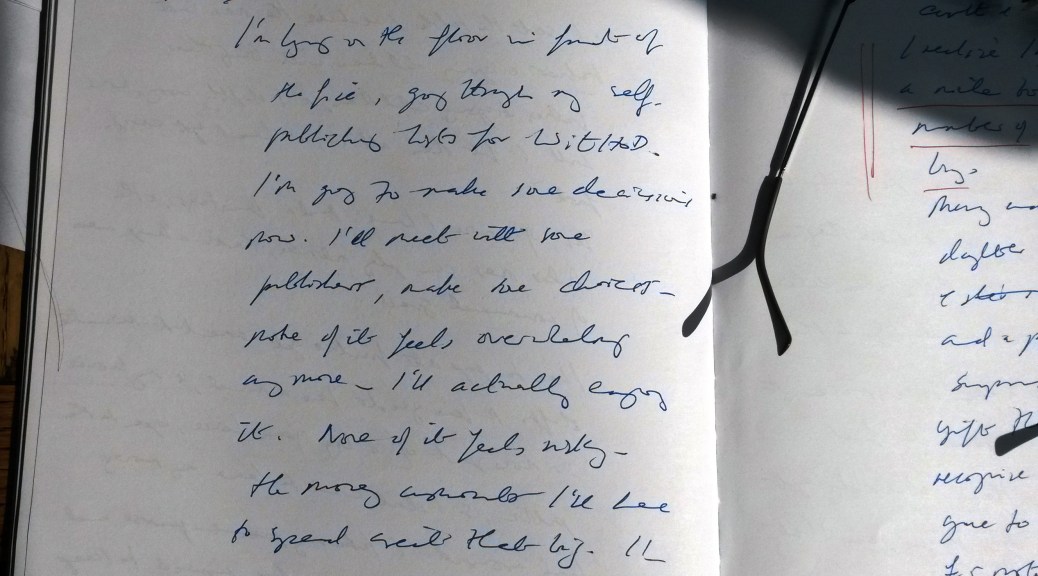
Weds 5th Feb, 2014

I’m lying on the floor in front of the fire, going through my self-publishing lists for Writing in the House of Dreams. I’m going to make some decisions now… None of it feels overwhelming any more…. None of it feels risky. The actual amounts I’ll have to spend are not that big…

2014-09-16 13.36.42yThis is one of those dreams that highlights what matters when you’re floundering in a sea of new information. The bottom line, when it came to worrying about self-publishing, was the actual costs, and my research had shown me that I could choose how much I wanted to spend, starting at zero if I did it all myself. It didn’t have to feel risky!

I’d looked into buying an inclusive package, but none of them seemed to me to offer good value, and I was leaning towards the idea of finding a professional editor and designer myself, and paying one-off fees rather than upfront costs plus a percentage on sales.

I’d discovered that a full edit for 300 pages would cost about £800 but I could get a line edit for around £500 and I felt that would be sufficient as in all my years as a published author I’d never needed more.

I knew I needed a designer for the layouts, because Writing in the House of Dreams is a complicated text with non-fiction features such as bullets and boxes, and I’d found designers who could produce the layouts for both the ebook and the paperback for about £200-300.

Screenshot 2014-09-16 14.17.41
Too complicated for me to format myself – I know my limits!

Finally, I wanted a professional cover, and that would cost around £150 plus the cost of any images I might use.

That meant the cost of producing my book to the standard I wanted would come in around £1000, tax deductible. I might not earn it back, but I would certainly earn something, so my maximum potential losses would be much smaller.

Experienced self-publisher Diana Kimpton’s advice on finance is ‘Don’t spend more than you could afford to lose’ and that seems sound to me.

My dream told me I wasn’t worried about that level of maximum loss, when weighed against the possibility of going into profit and selling on the longer term.

It told me, ‘I’m going to make some decisions now.’ And I did.

I chose an editor I knew personally and she did an amazing job for me, especially in giving instructions for the designer about such things as heading size, italics and indentations, which I’d got into quite a muddle over.

I chose a designer who was recommended to me by a friend, and she was very patient with me, which I needed, being so inexperienced.

I found an artist whose work I really liked, went on her website and discovered she had several linocuts that would be perfect for Writing in the House of Dreams and my follow-up book, When a Writer Isn’t Writing. She gave me permission to use them for a small fee.

By the time I’d done all the research I needed to do, I hadn’t been able to see the wood for the trees. I’d felt overwhelmed, but my dream got straight to the nitty gritty for me. The bottom line is, how much will it actually cost? Now, does that still feel too risky?

Have you ever had a dream which clarified the issue when you were suffering from information-overload?

Next week I’ll tell you about the funny dream that saved me from a confidence dip once the process was underway.

I do this every year!

Several people have contacted me recently to say they were missing my posts here in the House of Dreams and ask why I haven’t been blogging. Thank-you, bless you – you know who you are. It’s lovely to be missed 🙂

I always plan to blog throughout the summer but let’s face it, I go off the radar every year because when it’s fine I want to be at the beach. There are three reasons why this year’s break has been longer than usual.

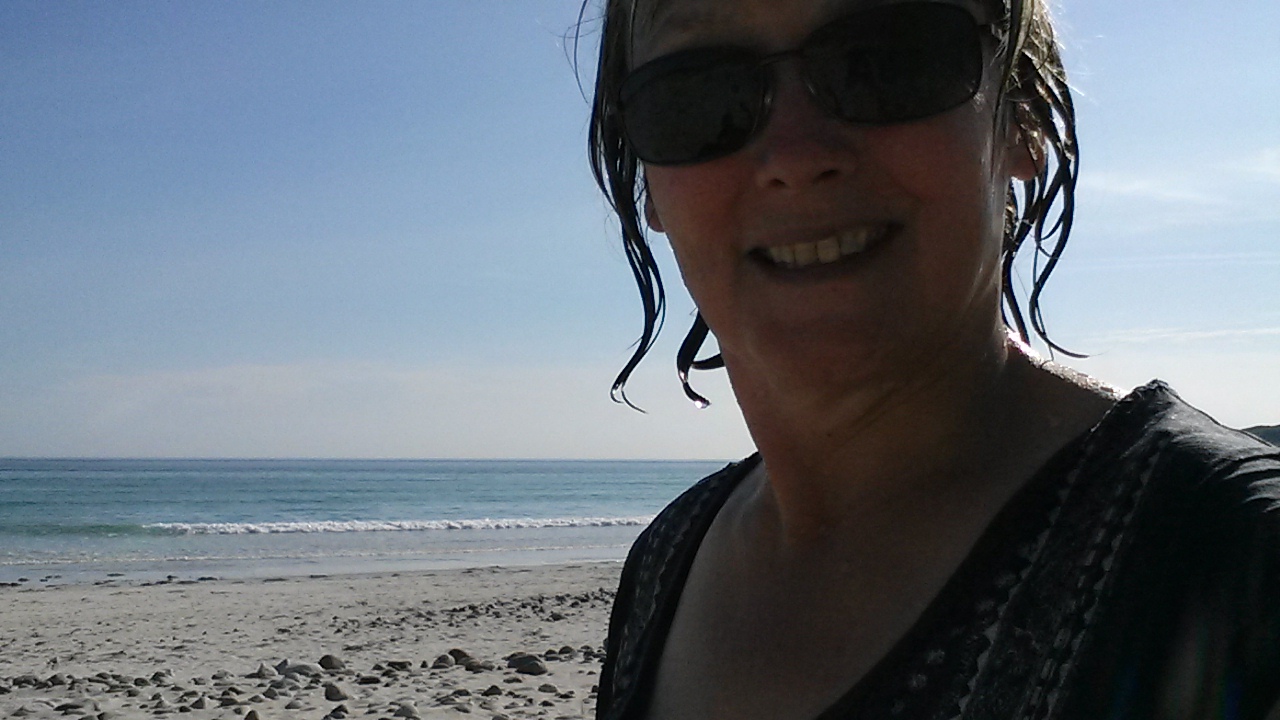
Swimming selfie in Tiree
  1. The weather’s been amazing, and I’ve had a total of five glorious weeks out and about with my little tent, mostly with no internet or mobile connection.
  2. Before I set off on my travels, I was working with a branding and marketing consultant to try and create a more unified web presence, instead of having a children’s author site and this completely different area for dreams, workshops and writing books. I was holding off until it was up and running, but that’s taking much longer than I hoped and I’ve been missing blogging, so I’m back!
  3. I’ve been super-busy doing last-minute things for Writing in the House of Dreams such as checking proofs, ordering copies, setting up a  Writing in the House of Dreams – the Book page here on the blog and sorting out some publicity before publication day on October 15th.

Yes, it’s that close – five weeks, and that means five posts to publication. What will be in these countdown posts? Dreams! Because I really do ‘write in the House of Dreams,’ I get guidance in my dream-life for all my work, and I’m going to tell you five dreams that have helped me overcome various anxieties I had about self-publishing and really come to love it.

This post is just to say ‘Hello – I’m back – is anyone there?’ My normal posting day is Wednesday, so come back tomorrow for the first of my five pre-publication posts and read about the dream that helped me focus on the money side of self-publishing.


Conquering death through writing and dreaming

I’ve recently been having a chat in a linkedin writers’ group about why we write, and someone said the point for him was to leave something of himself behind after he dies.

I said I wasn’t concerned at all about people reading my books after I’m gone, and someone else said surely there’s no point in writing if we don’t want readers. Which was going off the point a bit, I felt. I mean, of course writers want to find readers.

Knowing your work will be read enhances the experience of writing, but for me it’s about enhancing it now; I don’t think it’ll do much for me after I’m dead.

And yet I do feel that writing gives us a kind of immortality, in that it expands our experience of living beyond the here-and-now limitations of ordinary life. Where am I when I’m writing? I still exist, but I’m not entirely here. My soul is going walkabout among different lives and times.

Dreaming is the same, an experience that is mine yet goes beyond ‘me.’ In dreams, even more deeply than in writing, the dreamer lives on after consciousness is gone.

Writing and dreaming are experiences of soul, which is conscious immortality rather than the kind that might or might not happen after we die, through people reading our books.

Do you think of writing as a way of leaving something of yourself behind after you die?


Do we dream about past lives?

Babies in the womb display all the physical characteristics of dreaming, which begs the question, what could they possibly be dreaming about? With no experience at all in this life, could they be dreaming about lives they have had before?

I’ve believed in past lives since I was eleven or twelve years old because when I started learning French at school I just knew how to speak it. It felt familiar. I had never been to France, but I was certain I must have been a French person, once upon a time. The belief in past lives has become common in recent decades but back in the early sixties it was something you kept to yourself.

When I visited France for the first time, with an older cousin and her friends, it was not a good experience. I put that down to me being sixteen and them in their twenties. My second visit was also really bad, and my third, but again, there seemed to be logical reasons why I didn’t enjoy them.

It was only in my thirties that I realised this was not to do with individual visits but fundamental to my relationship with France. Every four or five years, driven by our friends’ huge enthusiasm for France, we would take the family across the channel for a few weeks in the summer, and whenever we did that, as the boat pulled out of Plymouth I would start to feel agitated and depressed.

In France, my head said, ‘This is nice. It’s warm and sunny. I like these al fresco cafes, and wonderful patisserie!’ but I felt a great tension inside me, as if I was holding my breath. I felt darkness like a cloud that only lifted when we came in sight of the English coast and I could start to breathe again.

By then, the New Age had arrived in Cornwall, and I saw a palm reader who told me I had lived in France in a previous life. I knew that – but how did she? I asked her for more information and she told me she saw me on the steps of a grand house, in a long blue dress. It was the eighteenth century and I was the lady of the manor.

This felt very disappointing. People always seemed to think that in past lives they had been royalty or had the kind of lives that are the stuff of historical fiction, but I couldn’t personally relate to the scene she described at all.

However, the fact that she had said I’d had a past life in France piqued my curiosity, and I went to see a past life therapist. She took me back to a dusty ditch in the North of France, during the last war. Immediately, I remembered a very vivid dream I had had as a small child, in which I was lying in a dry ditch, with ants crawling all over me.

But I was born less than a decade after the end of the war, and weren’t past lives supposed to be centuries ago? I did some research and discovered a theory that souls rebirthed more quickly after a massive and violent loss of life in war.

That’s as far as I’d taken it. Interesting ideas, thoughts, feelings, about past life possibilities. Then a few weeks ago an astrologer friend, the astro life coach, mentioned she had discovered how to find the date of your most recent past life in your birth chart. We had never spoken about past lives and she certainly didn’t know what I had been thinking about mine, so I was astonished when she told me I had died in 1941.

It’s all just musings and possibilities, but I like the intriguing idea that when we are very young some of our dreams may come from memories of forgotten worlds we lived in once before.

Do you believe in past lives? Have you had vivid dreams about places you’ve never been to in this life but feel you know really well?

If you enjoyed this you might also enjoy What’s the explanation for ‘deja vu’?


Is writing a gift or a curse?

I think the main gift writing brings me is escape from what is happening in my life at the time… I create a fantasy world instead, one which I can control. If I am happy and living life, I don’t feel the need to write so much. If I am writing a lot, I am not really living. There must be a balance somewhere but the writing does take over sometimes… which makes it less a gift, perhaps, and more of a curse?

If you read the comments on this blog you might remember this one from my ‘Three gifts of writing’ series of posts before Christmas. (If you don’t read the comments, you could be missing some thoughtful and thought-provoking responses)


I absolutely relate to the experience of writing as creating other worlds to escape to when this one feels too hard. It’s been a great blessing for me particularly at times when difficult thoughts and emotions are stopping me from sleeping. Then, I get up and make some tea, turn on my computer and slip into the world of stories just as easily as I would normally be slipping into the world of dreams.

All writing takes you away from everyday life to some extent. You can’t socialise and write simultaneously; at times, the world of the story feels far more exciting and interesting than the real world.

But that doesn’t feel to me as if I’m ‘not really living.’ It feels as if I am living, and very intensely, but in another life. The experiences I have in imagination – whether in stories I’m writing or in dreams when I’m asleep – are real experiences.

As the dreamer in our dreams or the protagonist in our story, we access experience through our senses and emotions, the same as in ‘real’ life. We encounter new people and situations, and we are changed by them.

Writing isn’t only an escape from ‘real’ life but also an escape to other lives, and it’s a gift that keeps on giving. Because the story will always, like dreams, be related in some way to whatever is happening in our ‘real’ life, writing is an opportunity to explore and resolve our emotional and practical difficulties in imagination.

Story is always an experience of triumph over adversity. That experience can give us faith and strength to face what has to be faced, and often strategies to deal with it.

What do you think? Is writing a gift or a curse for you?

Acquainted with the night, by Victoria Field

I’m delighted to welcome writer, poetry therapist and tutor Victoria Field into the House of Dreams today. I’ve attended several of her poetry therapy workshops over the past few years, which I can highly recommend, and I always look forward to reading her blog

Victoria Field
Victoria Field

I have always been aware of my dreams.  I still remember one from my pre-school years in which I went to watch a Punch and Judy show at the bottom of the hill where I lived.  I sat on my tricycle and was both drawn and repelled by what I saw happening on the stage of the booth and feared I’d be sucked in.  I’m not sure I’d ever seen Punch and Judy in real life.

It seems dreams are informed by more than direct experience.   I know that on residential courses, participants report shared dreams and that when I was married, my husband and I somehow occupied the same dream space as we shared a bed.  As a student, I often dreamed of tents.  I loved back-packing but there was also something mysterious about my dream tents and when I recently sat in a Bedouin tent in Kuwait, it felt familiar.

Many of my poems begin with a dream image and they find their way into prose too.  Several years ago, I began writing down an exceptionally vivid dream that centred around finding a white horse in my tiny kitchen in a terraced house in Chester.  As I wrote, the dream took on a life of its own and eventually turned into a novella of 16,000 words recounting what happened next.  The white horse can stand for many things in my life and like all dream images is mutable and outside time.  Writing happens in a liminal space and to my surprise, the horse surfaced again in a comic short story. 

I’m also aware that dream-work happens without our conscious mind being involved.  I often tell an anecdote when people ask how I became involved in poetry therapy.   My first encounter with the practice was when John Fox, an eminent practitioner based in the US gave a workshop in London in 1999. It was a two day workshop and on the second day, I felt utterly unable to keep my eyes open, in spite of being fascinated by the work.  I’d had a leg injury and was on pain-killers which I blamed for my sleepiness.  I excused myself and found somewhere to put my head down and went into a deep sleep for a couple of hours. I can’t recall any dreams but I woke up thinking utterly clearly, ‘I want to be a poetry therapist’.  And so began my journey of the past decade and more.

So, if people fall asleep on my courses, I never object.  Important work is being done as we sleep, whether we know it or not!

9781906742614
Victoria’s latest collection

Victoria Field is a writer and poetry therapist.  More information is available here http://www.poetrypf.co.uk/victoriafieldpage.shtml  and she blogs at www.poetrytherapynews.wordpress.com

How to have dreams that you can understand

Last week I described a dream I had when I was planning my writing projects for 2014, whose meaning was absolutely obvious. In that dream, I diverted from following Deborah Meaden on the path to the station and felt wonderfully happy on the beach.

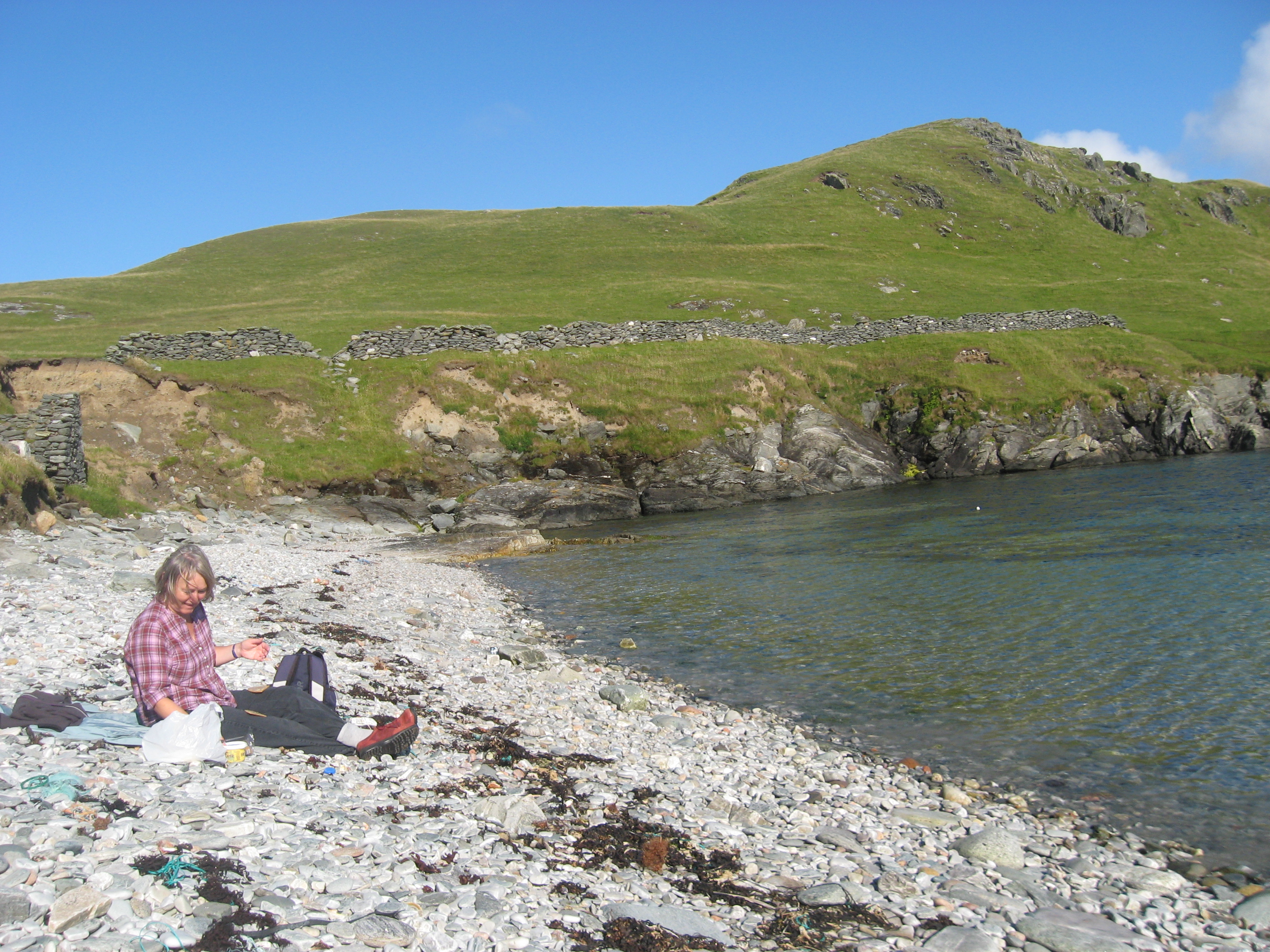
Happy on the beach
Happy on the beach

I’d been thinking I should pitch some projects for the market rather than follow my writer’s heart into probable penury with a self-publishing project and an idea for a book I almost certainly couldn’t sell to mainstream publishers, so the meaning of my dream was very clear.

Just to make sure I got the message, I had a second dream in which I woke up to find I had been sleeping on the beach, and as I lay there blinking in the bright morning sunshine I saw a baby playing on the sand right in front of me, happily absorbed, the two of us drawn together in a moment of pure magic.

Hearing a sudden sound of voices, I looked round in time to see the big double doors of the public hall at the top of the beach thrown open. A very successful author I know came out, surrounded by press people and fans. She had been doing an event at the literary festival in the hall. She was beaming under a truly fabulous blue hat.

I waved and shouted hello, and she waved back. I felt delighted for her, because she loved doing major events. A second author I know came out, also dressed beautifully and wreathed in smiles. I waved and felt happy for her too, but I was glad it wasn’t me doing festivals in fabulous hats. The sun was warm on my face, and I looked back at the baby, who was now watching me with intense interest. She had a pebble in her little fist that she held out to me.

It was very easy to understand where these dreams came from, as I was totally preoccupied in waking life with what direction to take with my writing this year. Most dreams are story versions of waking-life events and concerns, and if you have one thing in particular that’s occupying your mind the connection is often obvious. People involved in research or creative projects will commonly have dreams that develop and resolve problems they are working on.

In normal life we aren’t usually so intensely preoccupied with one major question or concern – our energies are more dispersed and the connection between the minor ups and downs of waking life and the world of our dreams can be more difficult to spot. One way of having dreams you can understand is if you narrow your focus through dream incubation.

Before you go to sleep, think back over your day and notice anything that’s been bothering you, any decisions you need to make, any problems you need to resolve. Choose one and ask for a dream about it. Promise yourself that whatever dreams you have, you will record in full, because often in the first moments of waking we’ll dismiss a dream without bothering to write it down if we can’t immediately see the meaning or importance of it.

Although the rational mind works instantly, in the symbolic mind, meaning takes time to unfold, and a dream that has seemed random on waking might, on re-reading later in the day, surprise us with its resonances.

Sometimes when you have incubated a dream it will be easy to see the connection between your daytime situation and the dream. Other times, you may ponder it, put the dream to one side and get the a-ha moment later. Or if you ask for another dream about it you may have one the next night that makes things clearer.

Incubating dreams in this way means you are thinking about your day life instead of just living it; you’re noticing the way your mind is organising experience into stories, so that it’s easier to see when dreams are carrying the story on.

Setting up dreaming intentions means your waking ‘I’ is communicating with your dream, and very soon you’ll find your dream is answering back.  If you want to understand the answer to what it means, it really helps to know the question in advance.

You can find a bit more about dream incubation here

Have you ever incubated a dream?