Category Archives: Symbols

The new year, synchronicity and my next book

I like to start every new year with a brand new piece of writing so every autumn I put together a short-list of ideas for my next book and then watch for synchronicities to help me decide which one to go with. This year, as usual, life has given me some prompts.

2013 got off to a cracking start for me when I tutored my first ever Arvon course on ‘Writing for Children.’ I had never previously taught children’s writing because it seemed to me that writing for children was pretty much the same as writing for adults – all the elements of fiction such as plot, settings and characters work in the same way, and whoever you’re writing for you have to target your particular reader.

But being asked to teach writing for children meant I had to really think about not only what is the same but also what is different, and teaching the course turned out to be pure pleasure. I enjoyed it so much that I wrote a new series of evening workshops on writing for children which I taught at the end of 2013.

At the first session, I dug out various books I thought people might like to read, including the very latest book on writing for children, by Linda Newbery and Yvonne Coppard.

008
Writing Children’s Fiction, by Yvonne Coppard and Linda Newbery

Flicking through the back matter for more ideas, I discovered that Writing in the House of Dreams is included in the recommended writing blogs, the only one by an individual among half a dozen group blogs. That felt most affirming!

007

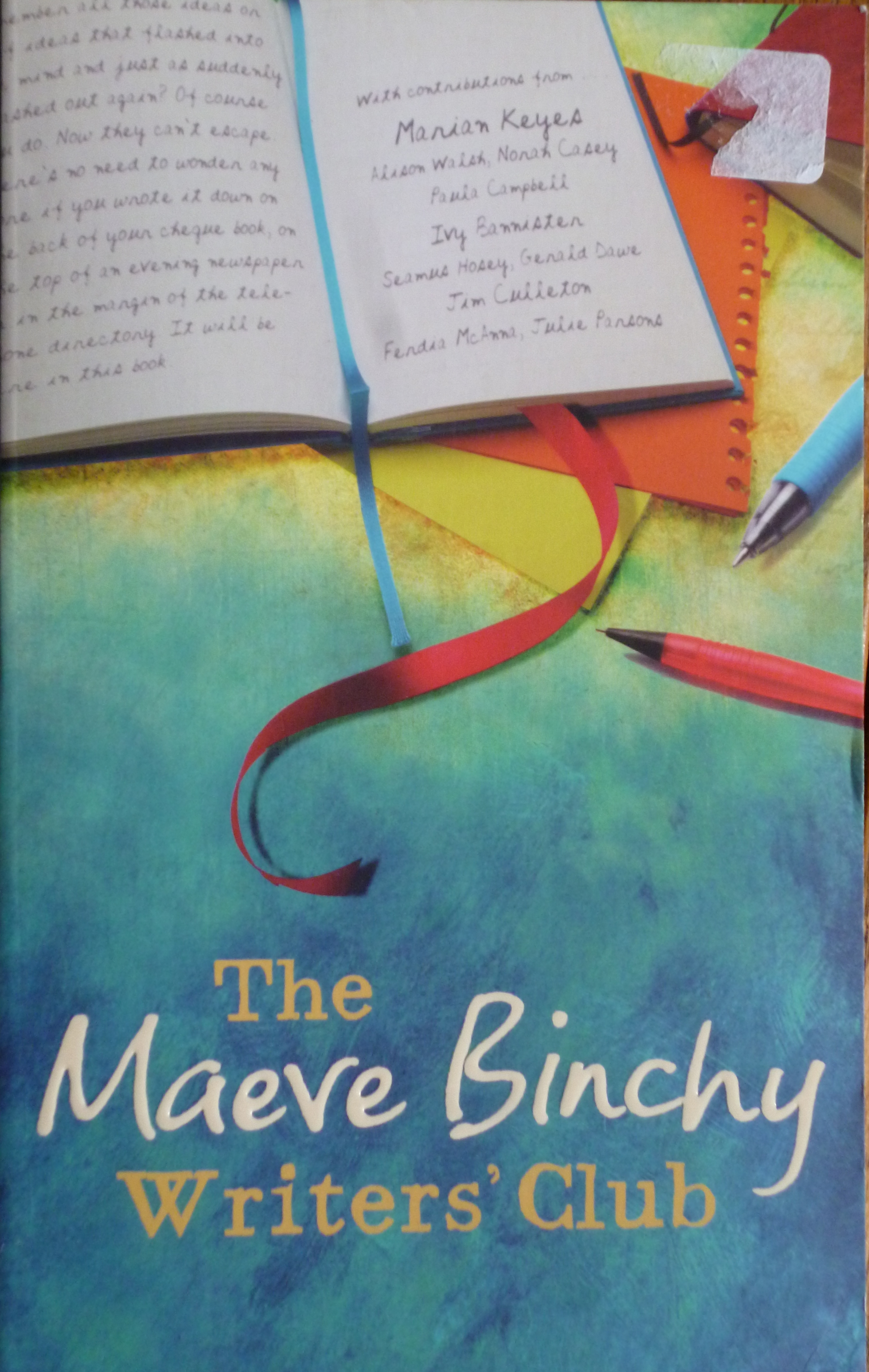
Then, at the last workshop session, one of the participants mentioned that she’d seen my children’s book, ‘How to be a Brilliant Writer’ in Maeve Binchy’s recommended reading list at the back of her book on writing.

004

The Maeve Binchy Writers' Club
The Maeve Binchy Writers’ Club

One of the ideas I’d been mulling over for my next project was a book for adults about writing – just writing, not in relation to dreams. But although I’d wanted to do that for ages, it didn’t seem sensible because there were already so many books out there by writers about writing .

I always follow life’s promptings, however, so with a gleeful click of the heels I’ll be up, up and away writing an adult book about writing to go with my children’s one in the New Year. The various other projects I’ve been mulling over will have to wait until their time is ripe.

What new projects are you looking forward to in 2014? Have you felt prompted by life?

Christmas archetypes – the dark intruder and the wondrous baby

I think of them as the nameless or faceless one – archetypal images which carry the pure power of a universal human experience. In pantheistic cultures they may be represented by gods and goddesses. In our secular world, we encounter them most directly in dreams.

A few weeks ago, I had a series of nightmares about an intruder in my house. I never saw his face because fear woke me up, but rather than feeling disturbed, I felt attentive, because like the Death card in tarot or the Tower, the dark intruder is a messenger of change.

Major changes are always unsettling and being unsettled is always unwelcome. Even if we’re actively seeking new ways of being and want to move forward into new areas of experience, there will still be resistance because change involves letting go of the familiar, and the outcome is never certain. Better the devil you know than the devil you don’t know.

These dark intruder dreams were swiftly followed by a series of dreams about babies. Like the dark intruder, the archetypal baby provokes a powerful emotional response, but rather than fear and anxiety, it’s an outpouring of love, hope and happiness.

It occurred to me to wonder whether baby dreams often follow dark intruders; they kind of should, because they are both aspects of change, the one full of initial fears and the other moving forward into joyfully anticipation.

Our major Christmas archetypes are Santa Claus, the intruder who brings gifts, and the Christian symbol of the wondrous baby who brings redemption, light after darkness at the turning of the year.

010

Happy Christmas everyone, and may all your challenges in 2014 bring blessed new beginnings.

Death and regeneration – an everyday tale of writing

Just across the road from where I live, there’s a piece of woodland where I often walk. This morning, when I reached the stile, I found warning notices that tree-felling was in progress, to clear diseased trees.

Warning notices
Warning notices

I was shocked when I saw the extent of the devastation, a long section of beautiful woodland around the path reduced to an ugly scar.

woods
Where once were tall majestic trees

Something about the angle of the felled tree trunks reminded me of the Tower card in tarot, and that made me feel better.

XVI - The Tower - 'Thunderbolt' in the Osho Zen Tarot
XVI – The Tower – ‘Thunderbolt’ in the Osho Zen Tarot

The card traditionally shows a tower being burned, destroyed or blown apart, with figures tumbling from the top. Angeles Arrien, my favourite tarot commentator, says, ‘Because this card looks so violent, it has often been misinterpreted.’ She says the Tower is actually ‘the universal principle of healing, renovation and restoration.’

I’ve been experiencing the Tower lately in my writing, with a story I wrote and submitted over a decade ago. Back then, it went as far as acquisitions with several publishers and was only rejected on grounds that they had already taken on new books on similar themes.

So coming back to it, I knew the book was of publishable standard, and I wasn’t planning to do anything radical,  just prepare the text for kindle. But on re-reading, I had a strong sense that I could write the whole thing better now, after this long delay of time.

I copied the file and started chopping out the dead wood and carving up the action; then I started all over again, strengthening the voice, deepening the characters and restructuring the plot.

For a while, I wondered whether I was actually just destroying a perfectly good story, but what’s grown from the wreckage is a far fresher, stronger and more satisfying novel.

Hopefully the woodland near my house will soon begin its own regeneration.

Have you ever had to ‘kill your darlings’ as a writer? Or been through a Tower time, when things have fallen apart but ultimately made way for something better?

Unravelling the mystery of the five-point character sketch

Years ago a tutor on a Society of Authors Arvon residential gave us a five-point character sketch, which I’ve used as a first way in ever since, although the fifth point always puzzled me.

Point 1: Name
Choose a name for your character, bearing in mind that names carry information about, for example, age and social background. They also carry more subtle nuances, suggesting a kind of personality and way of being.

Point 2: Their appearance
Age, hair colour, eyes, build, style… one or two points that give you a glimpse of your character

Point 3: Something they love
This might be any kind of thing, from dishonesty to travel, from football to cottage pie. Just the first thing that comes into your head

Point 4: Something they hate
As above

So far, so straightforward, but then there’s Point 5…

Point 5: Their special object
I interpreted this as meaning something you would always associate with them – maybe a physical mannerism such as a limp or an affectation of speech, or something they usually had with them like a dog or cat, or favourite piece of jewellery. But I don’t think most people have a special object such as that, so I always struggled to find one for my characters.

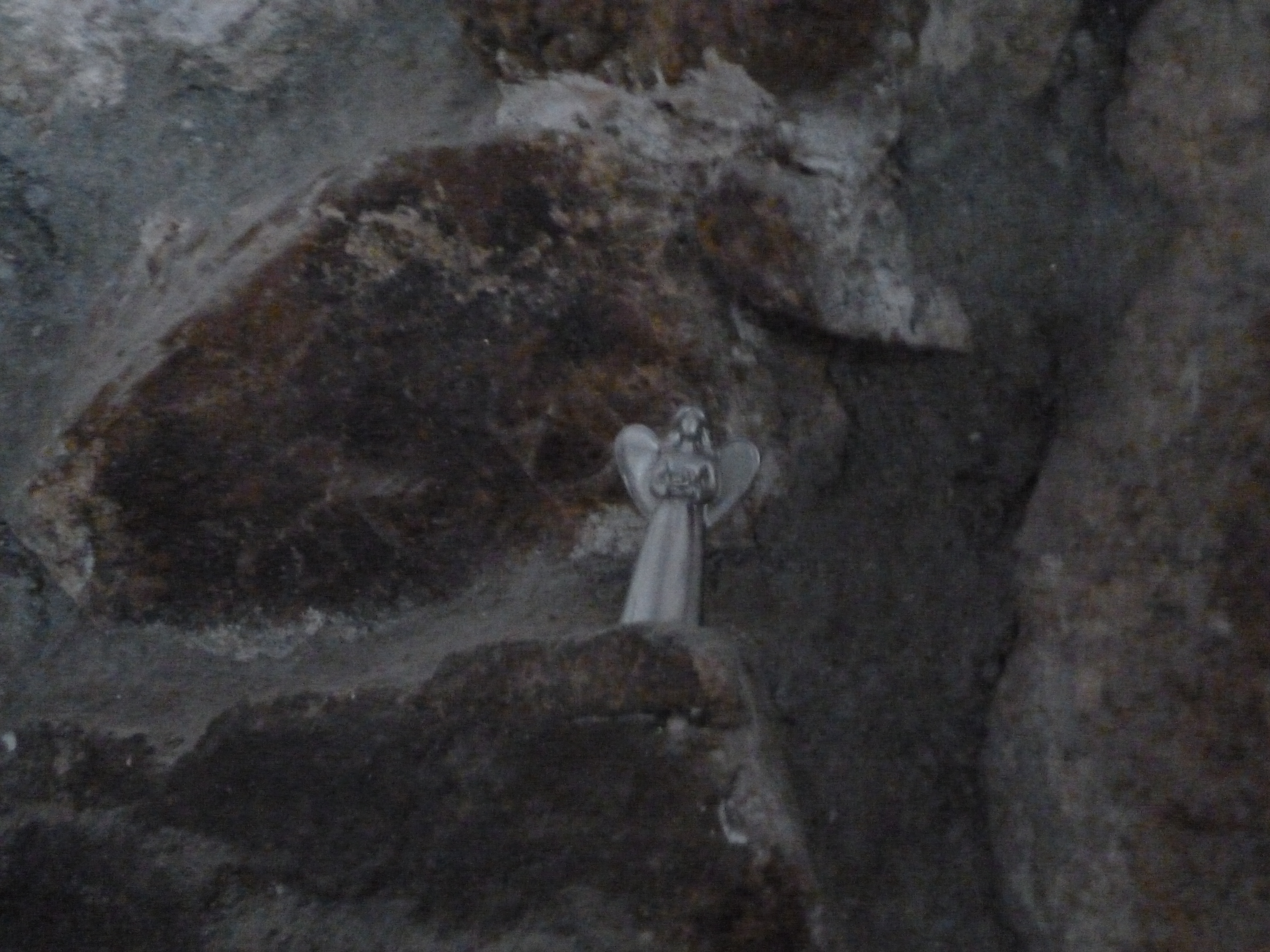
Then when I was tidying up after Christmas I was putting a fallen angel back into my fireplace wall when I suddenly thought, all these objects are special to me.

The angel that fell
The angel that fell

There’s the penny-size Thomas the Tank Engine I found in the edge of the sea the summer I spent in the beach cafe writing Peony Pinker. The Christmas cracker car one of my kids gave me when I was writing Car-mad Jack. The champagne bottle candle from a twenty-first birthday cake. The Incredible Hulk who was here in the house when I arrived, and the angel I found in a drawer in an empty house once when I was close to despair. The sewn heart a sweet friend I’ve never met sent to me last year. The teddy-bear my daughter won at the amusements arcade on a family day down at Looe. To mention but a few.

The little teddy bear from Looe

And I suddenly thought of the five-point character sketch, realising that it doesn’t have to be one definitive special object. It can be any object at all that has emotional resonance and meaning for you.

Any object my character feels is special to them will do for point number 5. Or a scattering of small objects like the ones in my fireplace wall, which tell so much of the story of me.

Why you should not spurn your daemon!

The award-winning author Susan Price and I are exchanging emails at the moment for a future entry on the ‘A conversation with’ page on her blog. By a delightful synchronicity, her latest response was a perfect illustration of the blog post I had just written last week, and she has agreed to let me publish it here.

Susan Price
 

There was a time in my life, when I was denying that ‘other’in my head, when I think my subconscious very deliberately worked against me.

I would say something quite innocent to someone – ‘Hello, how are you?’ for instance – and hear myself saying it in a tone, or with an inflexion that completely changed the meaning and made it insulting or aggressive. I had absolutely no conscious intention of insulting anyone, and would be as astonished as the person I’d just offended – but, of course, what could I say? – ‘I didn’t mean it like that! – That came out wrong!’

Sometimes people were polite, but I’d just bitten their heads off for no good reason. It was impossible to explain that the voice they’d just heard wasn’t mine. They would have thought I was mad. I occasionally thought I was mad.

I was at logger-heads with what I now call ‘my daemon’ because I was refusing to acknowledge that it existed, and so it fought me all the way. I would be writing something and would decide to make some change to the plot. What I now call the daemon would object, but I would refuse to listen because I didn’t recognise its voice. I put it down to a mere passing thought, and brushed it off because at that time I was certain that there was only one voice in my head: the ‘I’ voice, which I would now call ‘the editor’.

The daemon took its revenge by withdrawing. The piece of writing I was working on would turn to stone, or dry up, or fall over dead – whatever image you want to use. I had to learn that with writing – or, I think, any art – the daemon does the real work! The Editor may make some great editing decisions, once the real work is finished, but shouldn’t be allowed to interfere with the daemon.

A vengeful, spurned daemon is a dangerous thing, I think. Mine not only stymied my every effort at writing, it played those tricks to embarrass me. It was ingenious at finding ways to make such remarks as,“Yes, please,” and “Yes, I’ve heard of that,” nasty and cutting.

I had to learn that talk of ‘muses’ and ‘daemons’ was not the arty-farty nonsense I thought it, but simply a way of talking about something that we don’t quite understand, and don’t have an everyday vocabulary for. I began to solve problems with writing by summarising the problem and saying to the daemon,‘Solve this for me.’ And it did! The more I trusted it, the faster and more inventively it solved the problems.

I started to give way to it. If it insisted that a particular character should – or shouldn’t – die, I no longer argued, but humbly worked with it to make it so. I discovered that the more I worked with and trusted the daemon, the friendlier it became. It stopped playing those tricks on me!

As a result, I paid it more attention and ‘heard’ it more clearly. I started to see how a piece of writing that I’d ‘made up as I went along’ had sub-texts planted in it, and other subtleties that ‘I’ hadn’t written – so who had? And then I read Kipling’s description of his ‘daemon’ and knew what he was talking about right away.

If you’ve enjoyed reading this taster, watch out for our full conversation on Susan’s blog in the coming weeks. You may also like to check out her ‘Muse Monday’ guest post on Katherine Roberts’ lovely blog, Reclusive Muse, where she descibes her daemon and quotes the passage from Rudyard Kipling she refers to here.

The Shadow and Jimmy Savile’s dirty secret

In Jungian psychology, the Shadow is one of the major archetypes of the Self. It represents all the things you have identified as ‘not me’ during your formative years, when you were building your sense of who you are. It’s the other side of the Persona archetype, which is your identity, or how you see yourself and expect other people to see you.

The classic Shadow story, which came to RL Stevenson in a dream

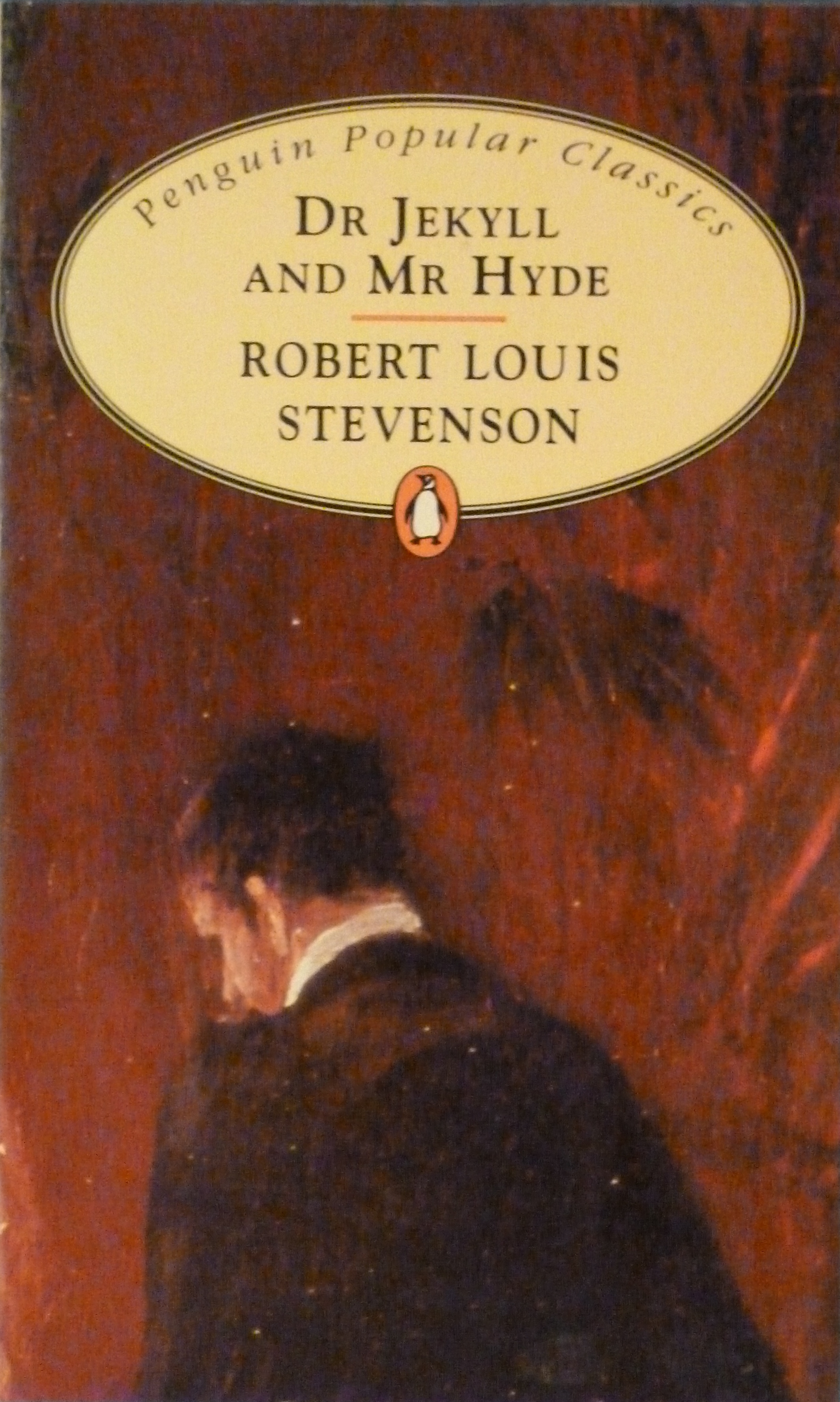
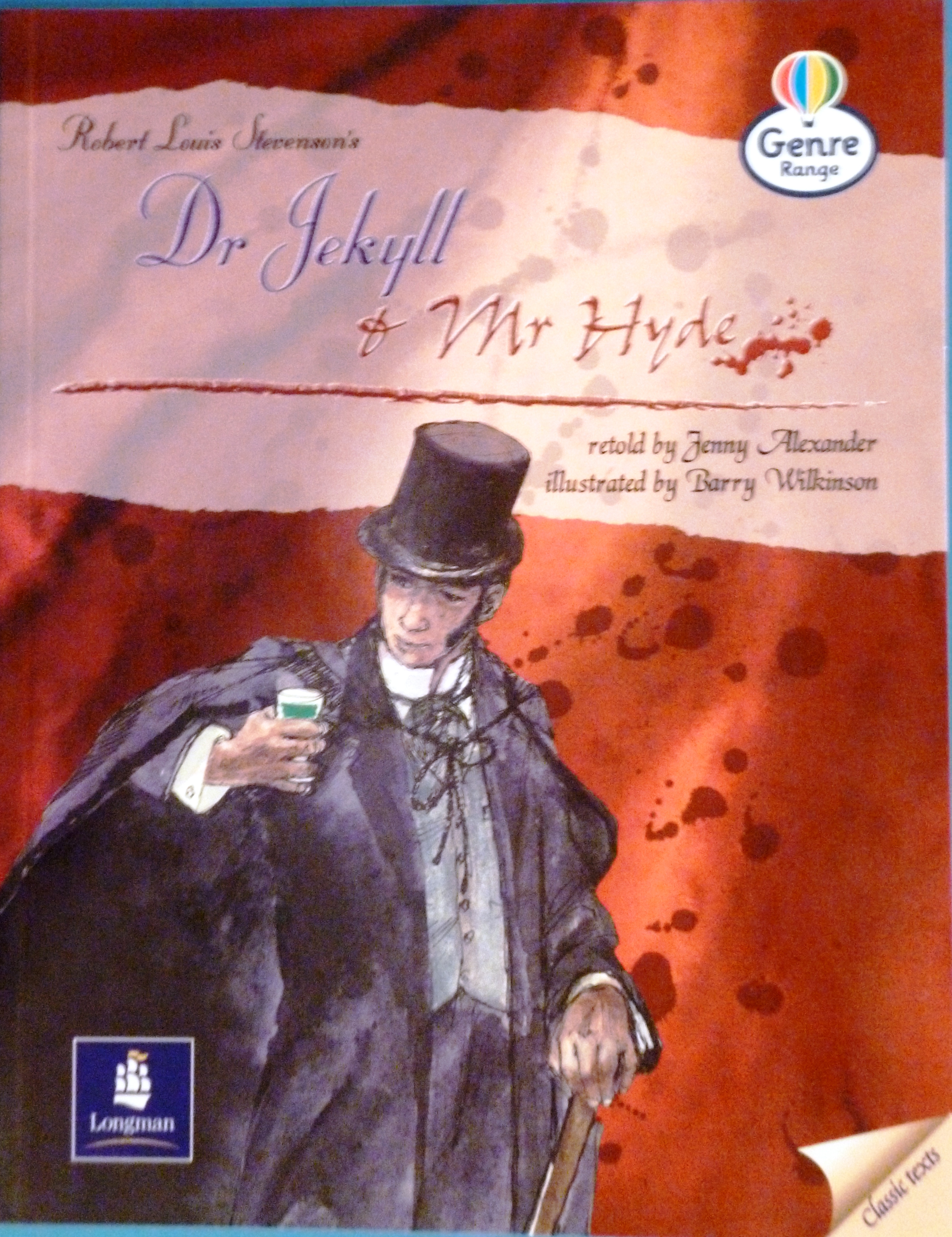
A classic depiction of the conflict between Persona and Shadow is ‘Dr Jekyll and Mr Hyde,’ by Robert Louis Stevenson, which came to him in a dream. In the story, Dr Jekyll is a respectable pillar of the community, but he has a secret other side – at night, he is addicted to the pleasures of debauchery.

He invents a potion which can completely change his physical appearance so that, as Mr Hyde, he is able to go out on the town and not worry about being discovered. Effectively, he turns himself into two people, one embodying his Persona, and the other his Shadow.

My version, for children – what can I say? I love that story!

Whatever we don’t identify with as ‘me’, we project out. We may disown it so completely that we can’t recognise it in ourselves at all. We can only see it in the mirror of the world.

One way we project undeveloped aspects of our Self is onto the people around us. A person who thinks of himself as hard-working and high-achieving may find other people lazy and unambitious. A person who thinks of herself as ugly may feel that virtually everyone else is good-looking.

In a couple, the tasks of personality are often shared out. One partner may be good with money, so the other can enjoy financial security without having to develop good money-sense themselves. One might be fun-loving and dizzy so the other can be sensible and steady, yet still enjoy a party lifestyle.

On a collective level, cultures, countries and sub-sections of society also have a Persona and a Shadow. In families, for example, it may mean one person becomes the black sheep, with all the family’s unacknowledged problems projected onto them.

Where there is Shadow projection, there is always emotion, because we’re defending our very existence, insofar as that is our idea of ourselves. Which brings me on to Jimmy Savile.

This was a man who appeared to be helping the young and vulnerable but was actually hurting and abusing them in secret. Quite rightly, there’s been huge public outrage, because nobody should have the slightest doubt that what he’s alleged to have done was heinous and wrong.

According to Jung, there may be another dimension to this natural disgust and condemnation – extreme public outcries of the dig-up-his-bones, may-he-rot-in-hell variety may be intensified by Shadow energy. ‘We’re not like that! We’re the opposite of that! We protect children from sexual abuse!’

So, do we? Young children are regularly exposed to highly sexualised music videos on daytime television, and sexual story-lines before the watershed. Magazines and video games which are targeted at children contain sexual content, and children’s clothing which could be seen as sexually provocative is sold in high street shops. A large proportion of primary age children have seen internet pornography. If you google ‘sexualising of children’ you’ll find page after page of examples.

Jung called the Shadow ‘the seat of creativity.’ Embracing the Shadow means letting go of fixed ideas about who we are and the way life is, opening to unconsidered possiblities and engaging with complications, so to create something new.

Something new is happening because of these horrific revelations. People who have kept their own experience of abuse to themselves for many years are suddenly speaking out. Not just the hundreds who were allegedly abused by Savile, but thousands more are flooding helplines with their stories. That in itself is the beginning of a major change.

I hope the high profile and new openness given to the problem of child sexual abuse because of this case will mean that the sexualising of children by adult society in recent years will come under proper scrutiny and be seen for what it is.

Jimmy Savile’s dirty secret may be holding the mirror up to ours,  showing us something about our society that we prefer not to acknowledge. Like all Shadow work, simply to acknowledge it is to begin the transformation.

More about the personal Shadow next week – where to look, and how to see it

What are the best writing prompts for daily practice?

The idea for this post was suggested to me by a comment about a previous article ‘Do you have a daily practice?’ 

lyndart wrote, ‘I have difficulty giving myself permission to let those creative juices flow… Any suggestion for a topic?’

Trees

You can use any random word such as ‘trees’ or ‘motor-bikes’ or ‘dinner-time’ for a writing prompt, and there are many sites which offer a fresh suggestion every day. I do this myself for warm-ups with groups, giving a random word and asking them to write freely about it, keeping the pen moving on the paper even if at times they find themselves writing things like, ‘I have absolutely nothing else to say on this topic, I don’t know why I’m doing this,’ until their mind finds its way back to the theme.

But the very best prompts for daily practice are the ones you come up with for yourself because, like dream images, whatever emerges spontaneously from your own relaxed mind will have emotional resonance and personal significance for you right now, whether it’s immediately obvious or not.

To find images which are active in you at the moment, sit comfortably with your notepad or laptop, close your eyes and take a few slow, steady breaths. Clear your mind. 

Think of an object – the first thing that comes to you. Don’t censor or try to find something ‘better.’ Write for five minutes, stream-of-consciousness, without pausing. Change direction when one stream runs out, allowing yourself to go where your thoughts take you, even if you stray from your starting-out point.

If you prefer, you can write a list of the first five things you think of, then choose one from your list to write about. You can write for ten or fifteen or even twenty minutes in this way if that’s your daily practice.

I love… my garden

Another way of finding prompts that have particular resonance for you is beginning with a phrase such as ‘I remember’ or ‘I wish’ or ‘I love’ or ‘I hate’ because these will take you immediately into areas that you care about.

I often use this kind of prompt in workshops, especially about childhood, which is the living root of every life. I give a topic such as ‘my mother’s kitchen’ or ‘my childhood bedroom.’ I’ve written about this on the wonderful girlsheartbooks blog, ‘What was your favourite toy when you were little?’ 

The key with daily writing practice, as with all creative endeavours, is pleasure. Writing about themes and topics which have personal resonance is always pleasurable and over time, it will deepen your understanding of yourself as a writer.

Have you got any suggestions for good writing prompts? Please share!

Dream gateways – how the gods get in

I was talking last week about the faceless ones in my dreams, figures who had no individual characteristics but represented the pure power of the archetype. Other words for these pure powers might be energies, or spirits.

When peoples throughout the ages have sought to engage with these spirits, they have given them faces and names. Different traditions choose different faces and names, according to their culture, to represent the same essential qualities.

So, for example, in Ancient Greece Demeter was the goddess of harvest, but in Ancient Egypt this essence of harvest/mother/nature was called Isis.

After my first encounters with the faceless ones, I began to dream about gods and goddesses. Often, their names were unfamiliar to me in waking life, so it felt as if I was dipping a deeper stream. This experience will be familiar to a lot of dreamers, of words we have no conscious knowledge of coming to us for the first time in dreams.

One night I dreamt that Thoth was in my study. I had a vague notion that Thoth sounded like some kind of devil, so it spooked me. But when I looked him up, I found he was, amongst other things, the Ancient Egyptian god of scribes. The universal spirit of writing, in the shape of Thoth, had taken up residence in my writing room. Sweet!

A week later, by a happy synchronicity, I found a figurine of Thoth in a seaside nick-nacks shop, amongst the beach mats and sunglasses. I brought him home and now, if I ever feel disheartened or directionless as a writer, he inspires me with the pure power of writing.

Have you ever dreamt about gods, goddesses or other religious symbols?

Dreaming the faceless ones

I first discovered the concept of archetypes in the early seventies, when I was starting to try and understand my dreams. At that time, there were few books about symbols, and most of them were not very accessible to the general reader.

My symbols dictionary gave ‘archetype’ meanings for some symbols, which I found completely puzzling. Why did some symbols have two definitions, and which one should I apply to my individual dream?

Because my dictionary only offered archetypal meanings for certain symbols, I thought some symbols were archetypes and some were not; it was only a decade later that I began to understand the archetypal as a layer of meaning behind everything. Just as behind every object in waking life there are layers of personal symbolic significance, so beyond that there are layers of group/cultural/universal meaning.

Jung said you could not understand archetypes in a theoretical way; they were ‘pieces of life itself’, which you could only understand through direct experience. My first experience of archetypes was in my dreams.

I thought of them as the faceless ones, because they seemed to have no individual identity, they were generic – an old man, an old woman, a baby; a doctor, a teacher, a guide. These dream figures had a different quality about them – I felt drawn to them because of their mystery.

I gradually understood that these faceless figures represented the pure spirit of , say, wisdom or adventure, healing or learning. Meeting them showed me how the archetypes worked in more ordinary dream figures – if I dreamt about a friend who was a doctor, for example, he would be appearing both as himself, as what he personally represents to me and also as the universal figure of the healer.

The faceless ones gave me experience of archetypal energies at work in my dreams, and this layer of meaning brought deeper resonance to every dream experience, and every part of daily life.

The encounter with the archetypes is a spiritual experience, and I’ll be exploring that idea in my post next week.