The prolific Belgian author, Georges Simenon, famously said, ‘Writing is not a profession but a vocation of unhappiness.’
Writing is certainly a vocation. Many professional authors have been doing it for years on top of the nine to five before they start to make any money from it, and most say they’d continue to write even if their income from it completely dried up.
Like any other vocation, this hunger to create comes at a cost; it takes time and energy away from social life and other interests, and puts personal challenges upon us which we might otherwise prefer to avoid, such as developing the ability to deal with criticism and rejection.
But because it’s a vocation, that inner drive enables us to overcome our setbacks and difficulties and keeps us moving forward towards a growing sense of doing what we were born to do.
I used to think that dreaming was a vocation of unhappiness too. It felt like a compulsion which had me in its grip. Over the years, it has taken me to all sorts of places where I’ve felt confused and frightened, and out of my depth. It has given me insights and information I did not want to know.
Ignorance is bliss, and dreams are a road to understanding. Writing is hard, and for most of us it will not lead to a life of material abundance. But if you have a vocation you have to find and follow your inner compass, because that is the only way to achieve the supreme happiness of coming home to the self.
A year ago I set up a facebook page for Writing in the House of Dreams, but then I didn’t do anything about it. I didn’t start posting updates, or drawing people’s attention to it, because I wasn’t sure what the value-added would be when I already had – and loved – this blog.
readers can initiate topics and conversations rather than just responding to the content
readers can post pictures as well as comments
I can flag up news such as this blog getting a mention in Victoria Field’s excellent poetrytherapynews last week
you can flag up your own relevant news – Victoria could have posted her link on my fb page herself
it’s a great place for me to share quotes, brief insights and even dreams
it’s somewhere you can share your own quotes, brief insights and even dreams
it’s more immediate, especially for a once-a-week blogger like me
A limitation with facebook pages is that ‘likers’ no longer see all the updates in their timeline unless the admin pays a fee, whereas every email follower of a blog will receive notification whenever a new post goes up.
So my conclusion is that neither is best – facebook pages and blogging can simply do different things. That’s the theory, and now I’m ready to try it out in practice, so I’ve added the link to my Writing in the House of Dreams facebook page to the widgets at the right hand side of this blog.
I do hope you’ll ‘like’ the new page and go on to become part of its active community. If you really do like it, please tell your friends!
Last week I was talking about the comfort of dreams, and how dreaming can provide pleasurable experiences for the self which may be ‘only dreams’ in waking life.
This happens spontaneously, but we can replay and deliberately go back into such dreams either in daytime fantasies or as we fall asleep.
Writing can work in the same way, which I’m particularly thankful for at times when I’m not sleeping well. If I feel out of sorts with the world for any reason, and maybe my mind’s gone into overdrive, I’ll get up and write for two or three hours in the middle of the night.
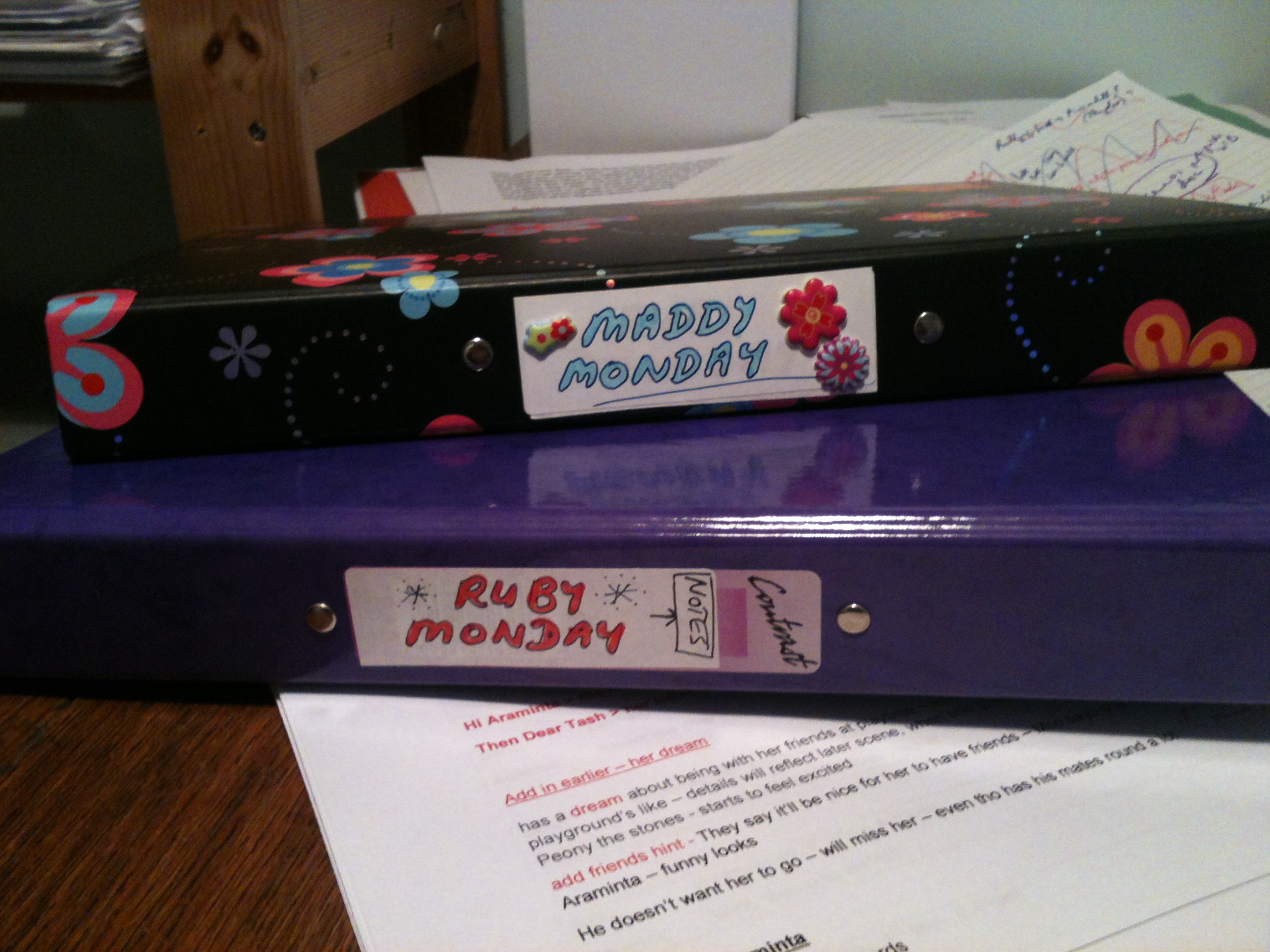
I’ve had a couple of nights like that this week, when I’ve made myself a cup of tea and left the cares and irritations of my daily life to immerse myself in Maddy Monday’s, whose world is colourful, lively and distracting.
My bright and delightful work-in-progress
The joy of writing is that we can choose the worlds we wish to inhabit during the writing time, and even though we will meet all sorts of challenges and difficulties in those worlds – no problem, no story – we are always able to solve them.
Sweet dreams everyone, this week – or failing that, happy writing!
I work and teach in the practice school of writing. This means that rather than studying technique and trying to apply it, as we mostly learn to do in mainstream education, we start from just doing it and allowing our own unique style to develop through practice.
Obviously, this approach depends upon doing lots of writing and, as no-one keeps going for long with things they don’t enjoy, the first rule of writing is enjoyment.
If you can’t enjoy it, it’s better to take a step back and wait until the mood or the ideas or the psychological space for writing comes back.
Work is love made visible. And if you cannot work with love but only with distaste, it is better that you should leave your work and sit at the gate of the temple and take alms of those who work with joy ~ Khalil Gibran, ‘The Prophet’
The paradoxical effect of this approach is that being prepared to wait means you never have to. When the impulse is pleasure, work is alligned with instinct, and you are flowing with life.
This is not to say you don’t have to work at your writing, but only that as long as you’re writing things which fully engage you, it’s work you want to do and therefore, however hard it may sometimes be, it never feels like a chore.
And what is it to work with love? It is to weave a cloth with threads drawn from your heart, even as if your beloved were to wear that cloth ~ Khalil Gibran, ‘The Prophet’
You may have noticed that although I normally blog every Wednesday, I’ve skipped a few weeks since Christmas. This is because I’ve been immersed in my work-in-progress and would have resented spending time on other writing.
I didn’t want to short-change myself, or you, or the spirit of writing by publishing something which felt like homework. So I took a break last week and the usual thing happened – lots of new ideas came into my head which are engaging enough for me to want to set aside other writing for an hour or so and explore them in the House of Dreams.
Last week, I delivered a children’s book to my agent which I first conceived more than ten years ago. It had been through several complete versions, one of which a previous agent had actually sent to a publisher, as much as anything in the hope of getting some useful feedback, as she and I agreed that it probably wasn’t quite there, though we couldn’t see what was missing.
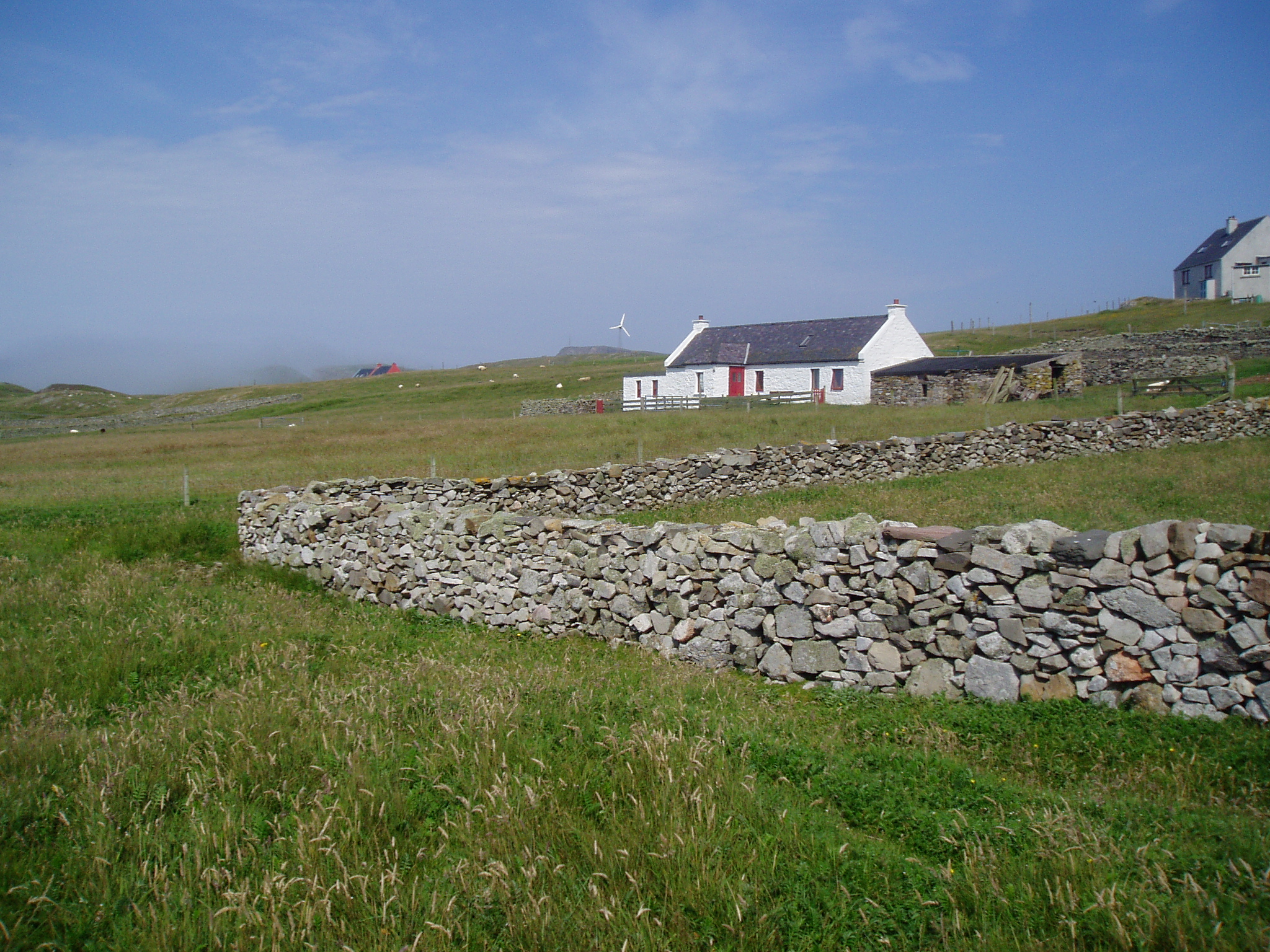
The book was set on a small island – research took me to Foula and Fair Isle in 2003
It wasn’t quite there, but it didn’t go away, and when I had flu before Christmas, it re-emerged quite unexpectedly, to announce that it was ready.
I had lost all my previous notes and versions, but I knew the story, and this time the planning and writing came easy and complete, like a jigsaw falling into place, all the missing pieces found.
Now, starting work on another new book, I’ve discovered that this story also took root in me more than a decade ago, and the same thing is happening. Where it once felt stuck and abandoned, now it’s emerging fully-formed, and all I’m having to do is write it down.
Two versions, ten years between
Last night I dreamt I was at a Scattered Authors conference, talking to other authors about this moment in a piece of work, when the book is inside you, fully-formed, like a shadow book, and your task is to bring it out, not harming or disturbing it, but as whole, which it already is.
You change yourself, your face, your mouth, stretching it wide, until gradually the book emerges out of your mouth, transforming from shadow to solid and real. I demonstrate it. I say how exciting this is, knowing the book is there, then opening yourself up and allowing it to come into the world so that everyone can see what it is.
I thought, ‘What if a life is like a book? Already complete in shadow form, and gradually emerging into the world, a little misshapen in its birthing, perhaps, a few edges knocked off in its early years, but still… when nature is ready, the matter inhabits the shadow.
Jerome Bruner’s thoughtful autobiography
Then I woke up and saw the book I’d been reading before I fell asleep, ‘In Search of Mind: Essays in Autobiography’ by Jerome Bruner, which begins with his thoughts about whether it is our history which shapes us or our destiny, and I smiled.
I love this layering-up of daytime activity, dreams and ideas. The material, the imaginal and the rational, playing alongside each other; themes and variations, music of the mind.
Have you ever had a book or story that took years between the first spark and the final realisation?
Last week I was co-tutoring a ‘Writing for Children’ course with Malachy Doyle at Totleigh Barton, the Arvon Foundation’s house in Devon.
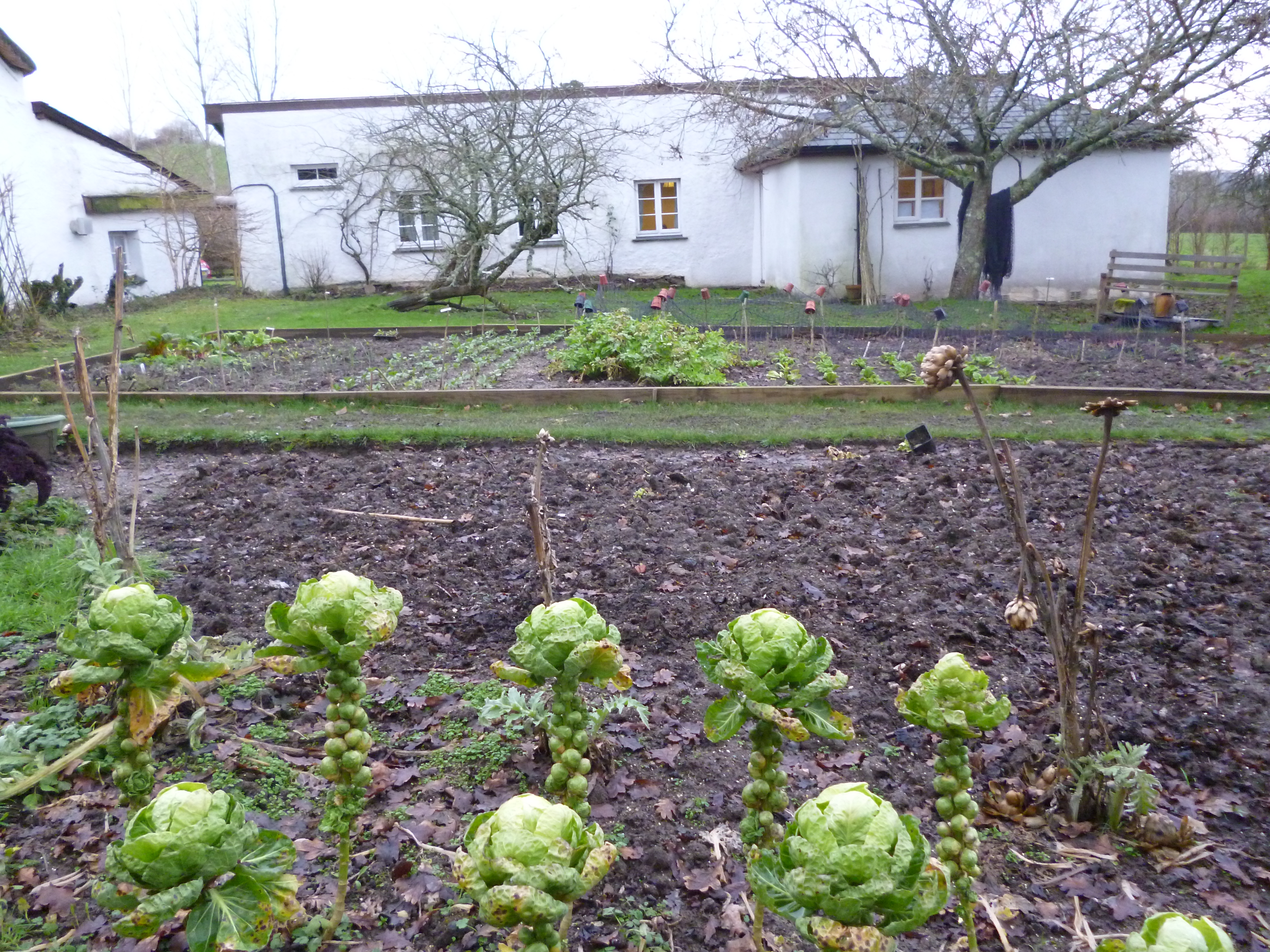
Totleigh Barton
Arvon courses run from Monday afternoon to Saturday morning and they follow a tried-and-tested format
a 3-hour writing workshop every morning
individual tutorials in the afternoons
talks and readings in the evenings from both the tutors, a visiting guest and on the final night, the course participants
free time for writing and socialising
Each participant helps with preparing a meal and washing up once during the week, using simple recipes and ingredients provided by the centre staff.
Meals at Totleigh include delicious local produce and vegetables from the garden
That’s the basic formula, but every course is different, depending on the group and the tutors. Ours included lots of things that weren’t in the programme, such as
extra tutorials, as the group was small due to people getting snowed in at home
long muddy walks in the beautiful surrounding countryside
an evening of very funny games and charades
a Burns supper with one of the centre’s directors reading ‘fair chieftain o’ the puddin’ race’ and Malachy regaling us at table with some of Rabbie’s songs
the reading to the whole group of a picture book written by two of the participants explaining what they had learnt during the week through the medium of story – the tragic, indeed shocking story of Milo the dog and Ben the chick
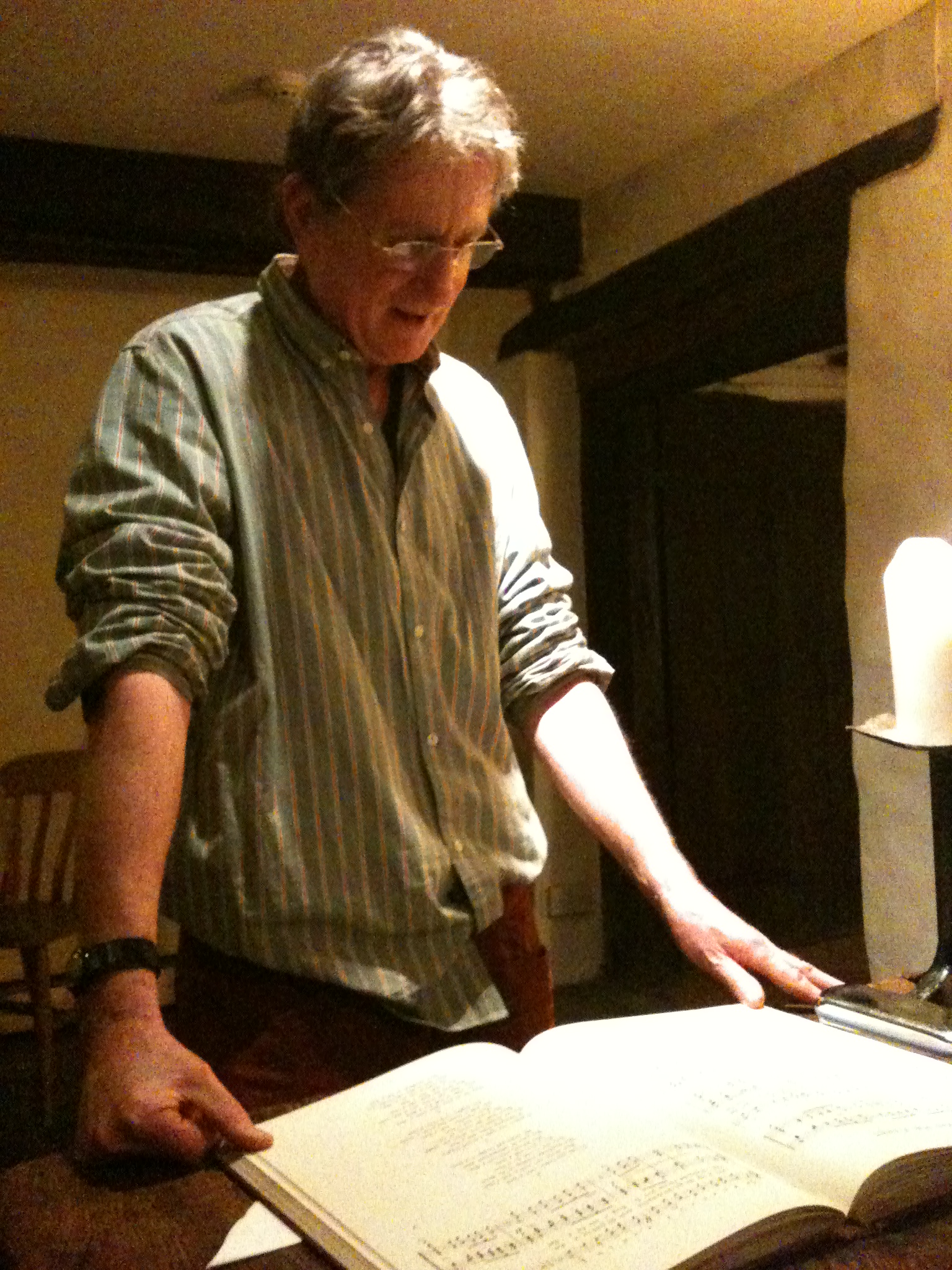
Malachy Doyle with his big book of Robbie Burns songs
You can learn an amazing amount in a single focused week, away from the work and worries of everyday life; you can enjoy conversations about writing with people who feel as passionately about it as you do yourself. You can also have a lot of fun.
If you get a chance to go on an Arvon course, I’d say grab it with both hands. I’ve been on two myself since my first book came out, and I’d recommend it to writers at every stage from complete beginners to published authors.
Have you ever been on an Arvon Foundation course? What were the best and worst things about it?
Years ago a tutor on a Society of Authors Arvon residential gave us a five-point character sketch, which I’ve used as a first way in ever since, although the fifth point always puzzled me.
Point 1: Name
Choose a name for your character, bearing in mind that names carry information about, for example, age and social background. They also carry more subtle nuances, suggesting a kind of personality and way of being.
Point 2: Their appearance
Age, hair colour, eyes, build, style… one or two points that give you a glimpse of your character
Point 3: Something they love
This might be any kind of thing, from dishonesty to travel, from football to cottage pie. Just the first thing that comes into your head
Point 4: Something they hate
As above
So far, so straightforward, but then there’s Point 5…
Point 5: Their special object
I interpreted this as meaning something you would always associate with them – maybe a physical mannerism such as a limp or an affectation of speech, or something they usually had with them like a dog or cat, or favourite piece of jewellery. But I don’t think most people have a special object such as that, so I always struggled to find one for my characters.
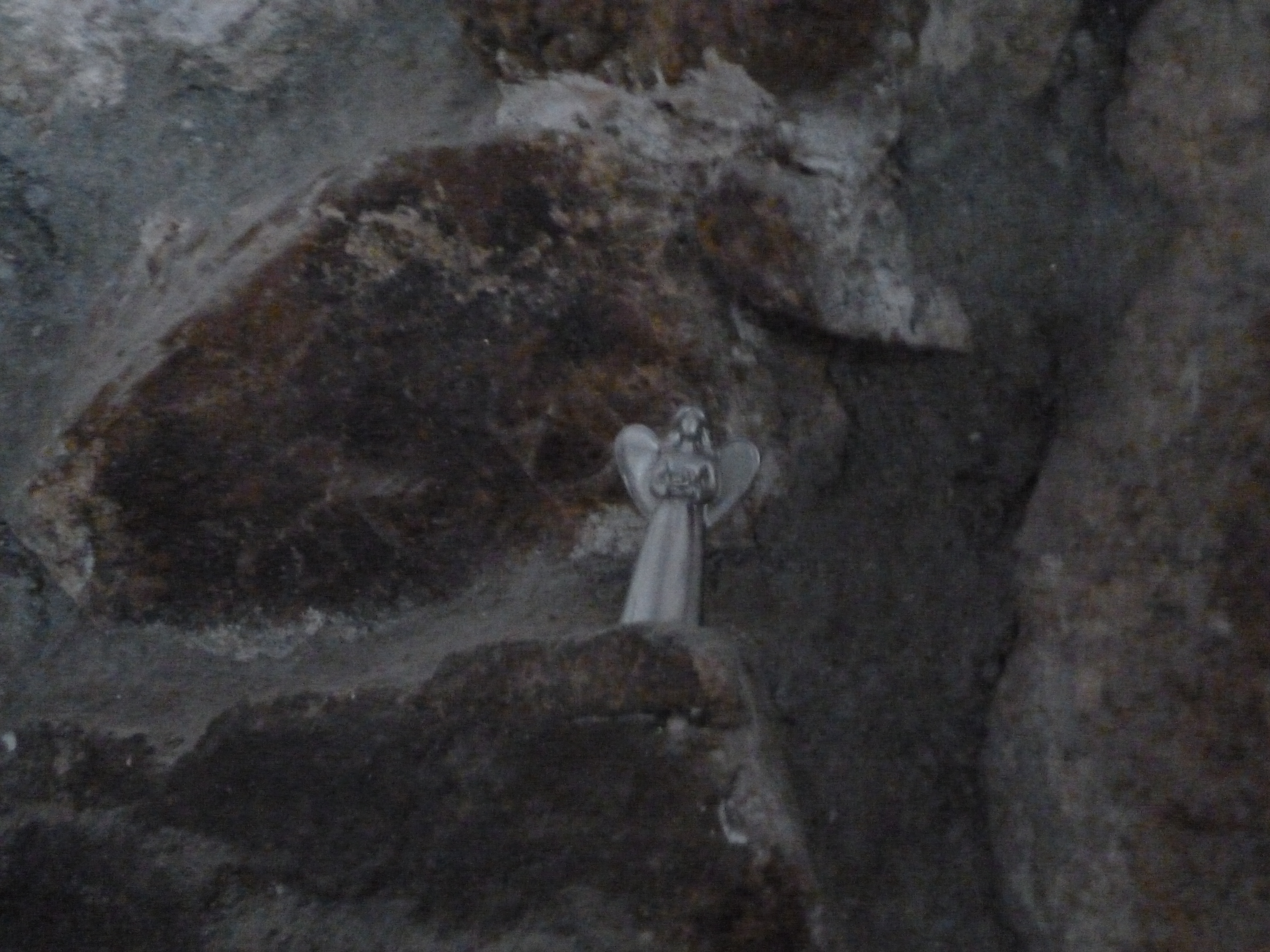
Then when I was tidying up after Christmas I was putting a fallen angel back into my fireplace wall when I suddenly thought, all these objects are special to me.
The angel that fell
There’s the penny-size Thomas the Tank Engine I found in the edge of the sea the summer I spent in the beach cafe writing Peony Pinker. The Christmas cracker car one of my kids gave me when I was writing Car-mad Jack. The champagne bottle candle from a twenty-first birthday cake. The Incredible Hulk who was here in the house when I arrived, and the angel I found in a drawer in an empty house once when I was close to despair. The sewn heart a sweet friend I’ve never met sent to me last year. The teddy-bear my daughter won at the amusements arcade on a family day down at Looe. To mention but a few.
The little teddy bear from Looe
And I suddenly thought of the five-point character sketch, realising that it doesn’t have to be one definitive special object. It can be any object at all that has emotional resonance and meaning for you.
Any object my character feels is special to them will do for point number 5. Or a scattering of small objects like the ones in my fireplace wall, which tell so much of the story of me.
Last week, I posted the picture Paul Farrington gave me before Christmas. Somebody else has given me a gift recently that I’ve been contemplating, and that was the dream therapist, Brenda Mallon. She generously read the MS of my book, ‘Writing in the House of Dreams’ and gave me some really helpful feedback.
‘The dream Experience’ by Brenda Mallon
Brenda’s feedback was helpful largely because it focused on what I had said about using dreams therapeutically – which I hadn’t even noticed I had talked about. It’s one of the mysteries of writing that you often don’t see everything that’s in a piece until it gradually reveals itself through other people’s reading.
I had thought my book was purely about using dream material for creative inspiration, because that’s what my workshops are. In dreaming-and-writing workshops we don’t relate the dreams we share in any way to our waking life – that would feel intrusive and be as creatively inhibiting as setting out to write fiction by first trying to analyse where it’s coming from in ourselves and our lives. We use dreams purely as a creative resource.
In this blog I’ve tried to steer away from interpretation and focus on dreams as creative resources too, but Brenda’s feedback has shown me that although I can easily narrow the focus in workshops, I haven’t done it in my book, I don’t do it in my life and I’m not really holding that line here on the blog.
So I’m throwing open the gates. This year, I’ll be writing about dreams from every angle, including some thoughts on interpretation and an interview with Brenda on using dreams in therapy. I’ll be doing some more general articles about writing too.
After all, it doesn’t matter what we write – we’re always writing in the House of Dreams.
Has a reader ever found something in your writing that you didn’t intend or realise were there?
I’m absolutely delighted that ‘Writing in the House of Dreams’ has been nominated for ‘The Sunshine Award’
The Sunshine Award is ‘given and passed on to bloggers who positively and creatively inspire others in the blogosphere.’
‘Positively’ and ‘creatively’ are two of my favourite words!
Acceptance of the award comes with the following instructions:
Acknowledge the person who gave this award in a blog post.
Do the Q&A below.
Pass on the award to 10 deserving and inspiring bloggers, inform them and link to their blogs.
So first of all, my thanks to the lovely Carolyn Hughes – do check out her phenomenally popular blog The Hurt Healer which is always thoughtful and beautifully written
Second of all, here’s my Q&A:
1.Who is your favourite philosopher? Hmm… I don’t really have one. I do like Eckhart Tolle’s ‘The Power of Now’ and Susan Jeffers’ philosophy of ‘Whatever happens, I’ll handle it’ though
2. What is your favourite number? 4
3. What is your favourite animal? The owl – it knows the secrets of the night
4. What is your favourite time of day? I find they’re all enjoyable in different ways – it’s one of the benefits of insomnia that you get to know the full 24 hours really well
6. What is your favourite holiday? Camping in the far North of Scotland and the Northern Isles – breath-taking scenery, wonderful wildlife, absolute tranquillity
7. What is your favourite physical activity? Walking in wild places
8. What is your favourite non-alcoholic drink? Coffee in the morning, tea in the afternoon.
9. What is your passion? Writing and dreamworking (no surprises there then!) I love teaching workshops too
10. What is your favourite flower? Nasturtiums, geraniums and roses in the summer, Michaelmas daisies in the autumn, snowdrops in the winter, primroses and daffodils in the spring. Impossible to narrow it down any further!
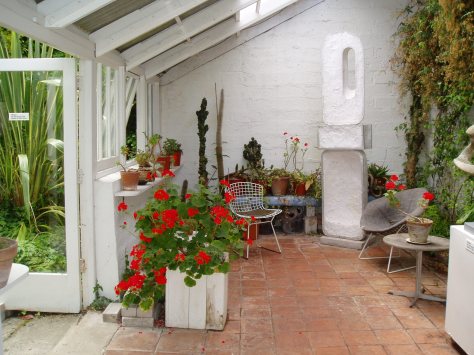
Gorgeous geraniums in Barbara Hepworth’s garden in St Ives
So now my nominations, in no particular order:
1. Toko-pa Artist, musician and dreamworker – a gentle, thoughtful blog and a beautiful voice
2. Writing SistersBetsy Duffey and Laurie Myers – creative inspiration from a Christian perspective, quotes and beautiful illustrations
3. Abi Burlingham Engaging and varied articles about a writer’s life
4 The Artist’s Road One of my favourite blogs about the craft of writing, by Patrick Ross
My guest in the House of Dreams this month is the author Alison Boyle, who attended one of my workshops a while ago. I love the idea of ‘writing in the space between sleeping and waking.’
Alison Boyle
In the space between sleeping and waking I found a way of expressing the internal voice of a main character in my latest book ‘from Pakistan to Preston’.
‘From Pakistan to Preston’
Most of the narrative is in the third person, and I’d been looking for a convincing internal voice for Tommy O’Reilly that exposed the indecisions whirring round his head. Tommy’s self-expressive flights, which I scribbled on scraps of paper at the moment they occurred to me and not a moment later, bring a change of tone and perspective to the story. Through this voice I hope that readers feel they understand – and feel – Tommy’s struggles in loving Sunehri Saleem.
The rest of the book is quite grounded, featuring the unusual work setting of an artificial silk factory in the North of England.
I found that the signposts in Jenny’s dream workshop allowed me to travel a little more confidently down some imaginative pathways I had only tentatively explored through my writing before. The biggest surprise was finding that her workshop didn’t activate a warning beep on my ‘Is this new age nonsense?’ monitor.
At the Manchester Literature Festival, Northern Debuts






![sunshine-award[1]](https://writinginthehouseofdreams.com/wp-content/uploads/2012/12/sunshine-award1.jpg?w=474)


 Jenny Alexander's blog: Writing in the House of Dreams