Christmas archetypes – the dark intruder and the wondrous baby

I think of them as the nameless or faceless one – archetypal images which carry the pure power of a universal human experience. In pantheistic cultures they may be represented by gods and goddesses. In our secular world, we encounter them most directly in dreams.

A few weeks ago, I had a series of nightmares about an intruder in my house. I never saw his face because fear woke me up, but rather than feeling disturbed, I felt attentive, because like the Death card in tarot or the Tower, the dark intruder is a messenger of change.

Major changes are always unsettling and being unsettled is always unwelcome. Even if we’re actively seeking new ways of being and want to move forward into new areas of experience, there will still be resistance because change involves letting go of the familiar, and the outcome is never certain. Better the devil you know than the devil you don’t know.

These dark intruder dreams were swiftly followed by a series of dreams about babies. Like the dark intruder, the archetypal baby provokes a powerful emotional response, but rather than fear and anxiety, it’s an outpouring of love, hope and happiness.

It occurred to me to wonder whether baby dreams often follow dark intruders; they kind of should, because they are both aspects of change, the one full of initial fears and the other moving forward into joyfully anticipation.

Our major Christmas archetypes are Santa Claus, the intruder who brings gifts, and the Christian symbol of the wondrous baby who brings redemption, light after darkness at the turning of the year.

010

Happy Christmas everyone, and may all your challenges in 2014 bring blessed new beginnings.
The gifts of writing – 3

So Christmas is nearly here, this great celebration of loving and giving – the perfect time to talk about the third gift that writing gives us, the gift of empathy.

When I wrote my children’s book about writing, How to be a Brilliant Writer, I asked my friends in the Scattered Authors Society if they would like to send me a few sentences on what they loved about writing. This is what Enid Richmont sent me:

A writing game I sometimes play when I’m trying to bring one of my characters to life is body-swapping! I pick a stranger – in the bus perhaps, or the supermarket – then I try to become that person. I feel the wrinkles on my skin, I walk with a limp, I look at my long scarlet fingernails or I run my fingers over my shiny bald head. Right now, I’m being a squirrel! I like to think, as well, that ‘becoming’ other people, or creatures, also helps me to understand them.

In fiction, we create characters and give them big problems to deal with. There’s always going to be struggle, conflict, pain because if everyone’s happy there’s no impulse for change, no movement, no story.

As we imagine what it feels like to be homeless, or orphaned, or bullied, or bereft, we feel everything our character is feeling – we have to, because otherwise we can’t know how they will behave, and our story will feel hollow and unconvincing.

It takes emotional toughness to do this work, and everyone has to find their own way. I personally have usually opted to put my characters in situations that are difficult but not overwhelming, and I use humour to leaven the hard parts. If my reader – and I – feel like crying at times, I want to make them feel like laughing too.

Other authors I know are braver and tougher than me, going into dark areas of experience such as criminal gangs, drugs, self-harming, eating disorders, abuse – which are part of real life that older children need to know about, and reading serious fiction by responsible authors is probably the safest way of gaining this knowledge.

Writers are used to imagining another person’s story, looking beneath the surface, feeling their joys and pains.  We do it in imagination, and that spills over into real life. I think that’s why most writers I know enjoy hanging out in cafes on their own, people-watching.

I like to think, as Enid says, that ‘becoming’ other people might help us to learn to be less quick to judge and more aware that sometimes it can take real courage and faith to get through the vicissitudes of even an ordinary life.

So there they are – stillness, awareness, empathy –  the three greatest gifts I think I get from writing. What does writing give to you?          

The gifts of writing – 2

In this, the second of my pre-Christmas posts on the three gifts of writing, I’m thinking about the gift of awareness.

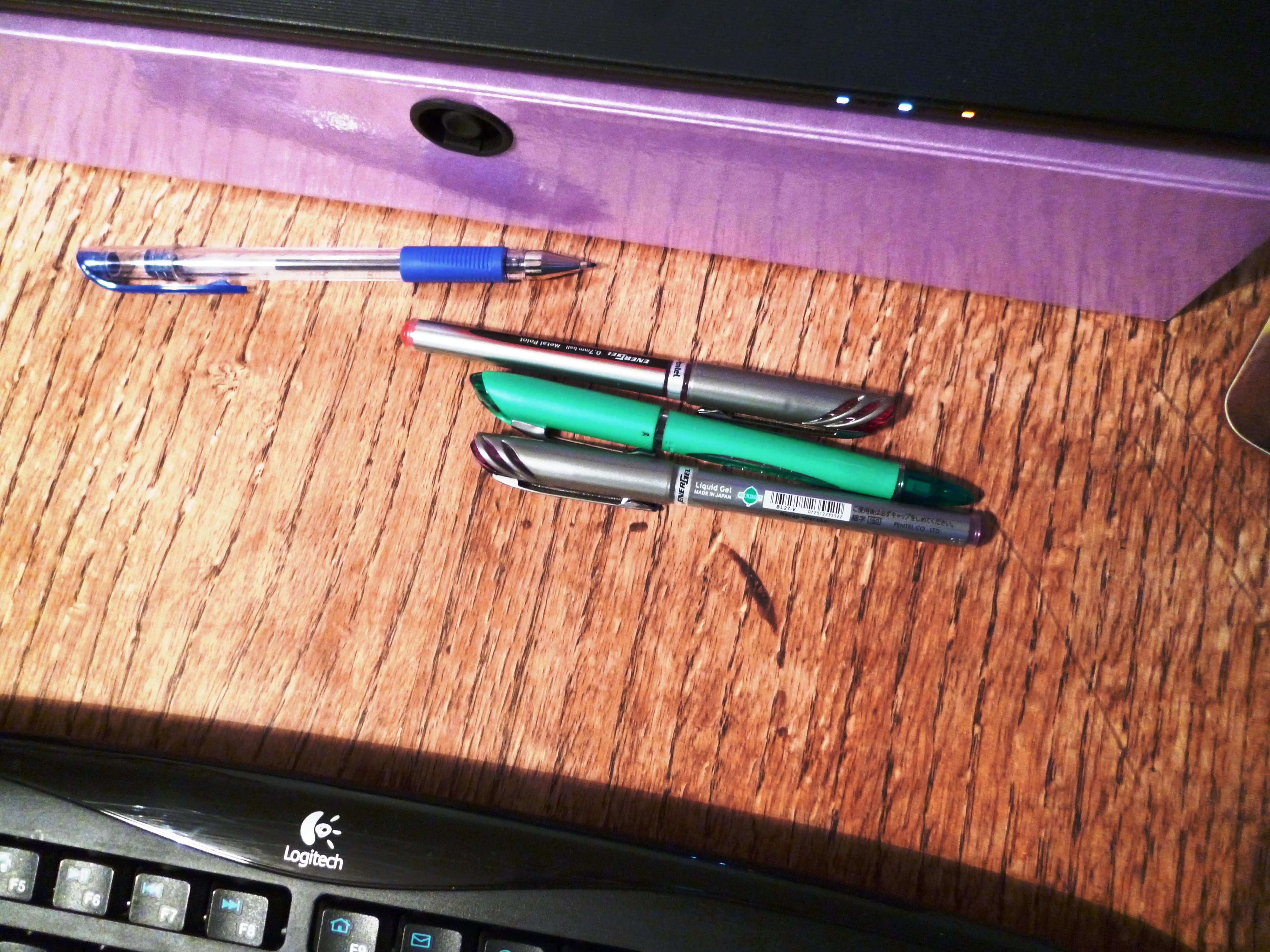
In ordinary life, a lot of what we experience is subliminal. We engage with the world through our senses, but barely notice what we are feeling. For example, sitting here at my computer I’m only really seeing the keyboard and screen, unless I take a moment to deliberately notice the four different colours of gel pen right in front of me, one of them a very vibrant green, the particular blue of the walls, the dark grain of the old table, the torn or crumpled bits of paper in the basket beside my chair.

pens

When we write, we picture the scene. We use all our senses to fully imagine it. We notice the detail of our protagonist’s clothing, the colour of their eyes, the quality of their voice. We notice the smell of the air, sharp and clear on a winter’s morning, close and musty in an old drawing-room, or wafting from a warm kitchen carrying cinnamon, or cabbage, or toast.

Our senses are the gateway to the world of our story, and describing what we can see, touch, hear, taste and smell there is how we bring our readers in too.

In writing, in imagination, we can experience life more fully and intensely, and that vibrancy spills over into our experience of real life.

Another thing that we do in writing, which is part of show-don’t-tell, is to notice and describe our characters’ emotions through their bodily sensations. When they are angry, we imagine where they might feel that in their body, and so experience it in our own. Again, this habit in imagination spills over into real life, and we become more aware of how emotion is expressed in the body.


Writing non-fiction also brings an increased awareness, not of what we experience through the body but of what we know, the life of the mind. When you write non-fiction, you become aware of knowledge you don’t normally notice or think about – it’s just there, part of the scenery, like the background details I never notice when I’m working in my study.

How to look after a rabbit; how to write a biography; how to grow plants from pips – these are some of the subjects I’ve written about. Others include the skills you learn just by being alive for a long time, such as cultivating happiness, building self-esteem and handling bullying. I’ve never done much research because I write the things I know about through my own experience, and in writing them, I notice what I know.

Shintie -sweet source of all the know-how in my little book, 'Rabbittalk - How to make friends with your Rabbit'
Shintie -sweet source of all the know-how in my little book, ‘Rabbittalk – How to make friends with your Rabbit’

This increased awareness of the knowledge and experience we normally take for granted and stop noticing is my second great gift of writing. Next week, I’ll close this little series with Gift Number Three.

Do Negative Emotions Sharpen Perception?

Here’s a lovely post by Sharon Rawlette which came out of chatting here in the comments in the House of Dreams

Sharon Rawlette's avatarSharon Hewitt Rawlette, PhD

Blurry LightsLots of people carry in their heads the image of the tortured artist: the writer/painter/musician whose brilliant artistic achievements spring from a soil rich with personal failures, miseries, addictions, and/or mental illnesses. Writing guru Julia Cameron persuasively argues that creativity does not require depression. Or agony. That well-adjusted artists are, actually, quite successful and productive–maybe even more so than the sorry cases the media likes to latch onto. And I do think that Cameron is right that building a career in a creative field requires a substantial level of mental health. It’s one’s rationally optimistic side that keeps one sitting down to work day after day, gives pep talks when needed, and also makes sure that one is well-fed, well-rested, and otherwise fueled for the creative act.

But I am not quite ready to let go of the tortured artist archetype. I am glowing with mental health these days (or so it seems to me), and I have been…

View original post 653 more words

The gifts of writing – 1

I’m constantly aware of the ways that being a writer enriches my experience of life, and the run-up to Christmas feels like a great time to think about three gifts of writing in the House of Dreams. Today, the gift of stillness.  

Years ago, a friend of mine told me she’d seen me in the supermarket, but hadn’t said hello. She said I was just looking at the apples, but with such a quality of stillness and concentration that she didn’t want to break the spell.

When she said it, I remembered that moment. I had been looking at the apples, but I wasn’t thinking about them. Their shapes and colours had caught my eye and held me there, but my mind was open, unfocused, receptive.

The great American writer, Henry Miller, said that an artist was someone who had antennae, who knew how to ‘hook up to the cosmos.’ The elements that made up a poem or novel or any work of art were already in the air, waiting to be given voice, and that explained why themes and discoveries tended to break at the same time in different parts of the world.

Writing teaches you to be receptive. The more you do it, the more sensitive your antennae become. In dreams and daydreams we can more easily ‘hook up to the cosmos’ but it can happen any time, even when we’re doing the most ordinary things, such as supermarket shopping.

In these moments, time disappears; there is nothing but openness, and presence. You are completely ‘in the now,’ not thinking about the past or the future or your shopping list; not thinking about other people, or yourself. Not thinking about your writing, or work, or any of the things that usually anchor your mind.

You would not want this to happen all the time – that would be madness – but in this busy, busy world, for a lot of people it never happens at all. If you want to be happier, they say, ‘Slow down,’ be more ‘in the now.’ When a writer’s mind puts its antennae up, that is a little bit of bliss.

Next week I’ll be giving thanks for another of the gifts of writing. I do hope you’ll call by.

In the meantime, writers, do you have these ‘apple’ moments too?

When do authors need to seek permission, and how do you go about it?

Copyright is an important protection for authors’ creative property but the rules are hard to fathom, especially in the internet age. I’ve been doing some research…

The first task I’m having to tackle in self-publishing ‘Writing in the House of Dreams’ is gaining permission to include quotations from other books.

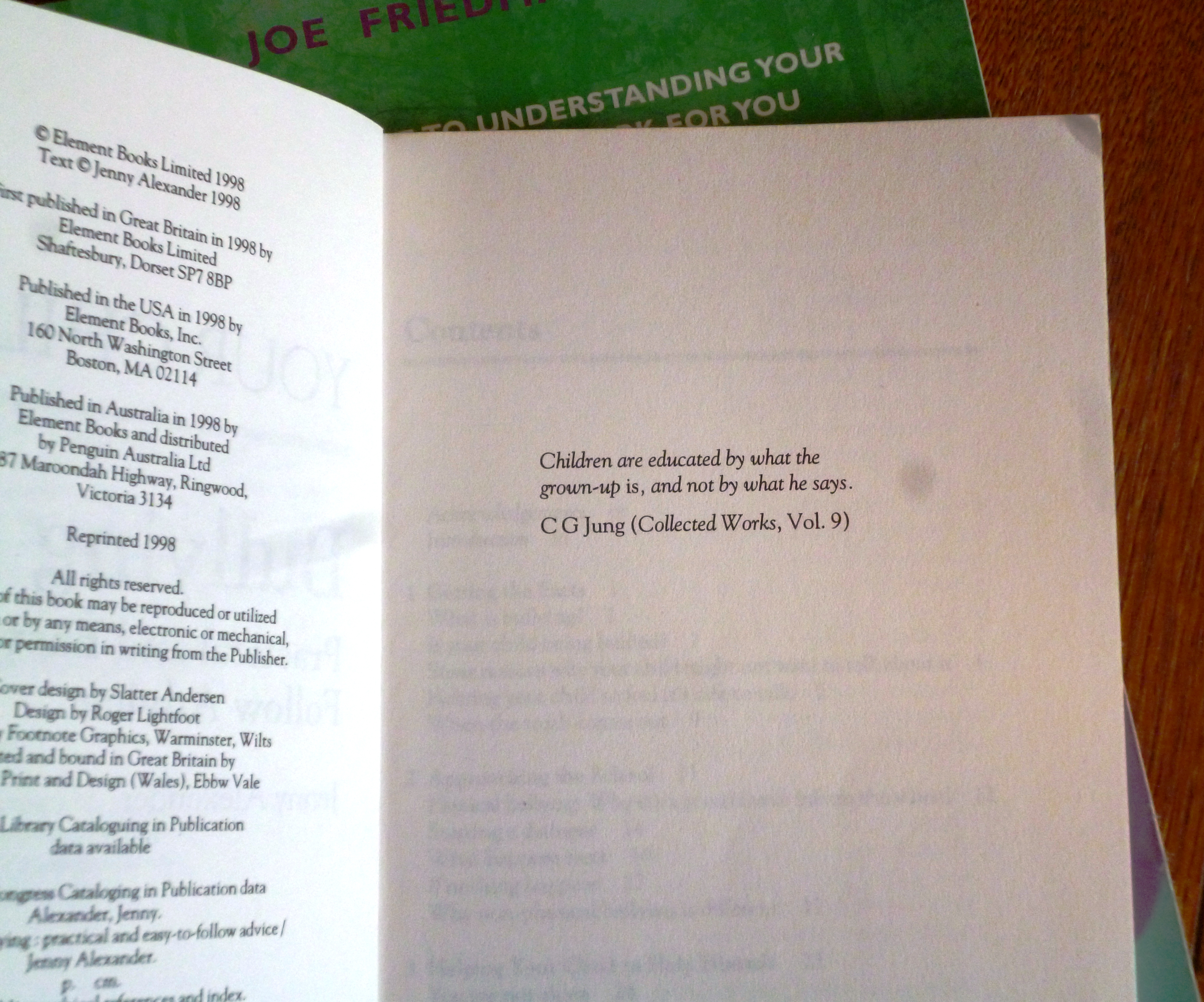
I’ve only had to do this once before, when I wanted to use a sentence from the work of CG Jung in my book for adults about bullying. Permission was granted, but there was a fee of £40 to pay, and this was a decade ago. Other authors have approached my agent for permission to use extracts from my books and the fees we have charged have been between £75 and £150, but these were for quite sizeable chunks.

The only permission I've sought before now, for my book, 'Your Child: Bullying' back in 1998
The only permission I’ve sought before now, for my book, ‘Your Child: Bullying’ back in 1998

My dream book includes forty-seven quotations of varying lengths, so having whipped out my trusty calculator and updated the likely fees to take into account inflation I considered abandoning the idea of including quotations at all, or at least cutting the number right down.

But the quotations I’ve chosen are all wonderful and I didn’t want to lose a single one of them, so I did some research. It seemed to me that perhaps copyright laws might be less rigid now with the internet, where loads of people use quotations freely in blogs and fb pages. I asked several of the most high-profile bloggers and fb pages I follow whether they sought permission for the quotations they use, but not a single one of them replied.

So I looked up copyright permissions in the Writers’ and Artists’ Yearbook, and discovered that here in the UK you don’t need permission to quote from someone who has been dead for more than 70 years, although the cut-off time may vary in other territories. That straight away meant I could take eight of the quotations off my list. I felt encouraged!

One of the quotes I can use freely, being outside copyright (Rilke died in 1926)

Unfortunately, most of the rest of the information felt frustratingly vague, so I then emailed the Society of Authors with a list of questions. Since most of my quotations were very short, I thought I might not need to seek permission at all because a big issue seemed to be how much you wanted to use, and there was something called ‘fair use’ for little snippets.

I’ve since discovered that different publishers have different interpretations of the term ‘fair use’, and there’s no actual rule about how many words you want to use before you have to seek permission.

My agent advised me to seek permission for everything, even if it was only a few words, and hope that publishers would not charge me a fee for quotations that were barely more than a name-drop for their authors.

When you seek permission, you have to contact the first publisher of the book you want to quote from. I found this wasn’t always easy especially when the publisher had gone out of business or the author had died and I couldn’t easily find out who owned their copyrights. But everyone I contacted was very helpful, pointing me towards agents or in some cases individuals who might be able to grant the permissions I was seeking.

It’s felt like detective work – long-winded but rewarding. I’ve sent dozens of email enquiries, one postal enquiry where I couldn’t track down an email address and another one where the rights-holder didn’t possess a computer or use the internet.  I’ve had to fill in complicated forms for larger publishers and send  sections of my book to publishers who have wanted to vet it before granting permission for their authors’ work to be included. Sometimes I’ve had to contact separate rights-holders who hold different rights in the same work, say e-book rights or paperback rights, world rights or only certain territories.

Straightforward it is not. But so far, thirty or so rights-holders have granted my request and only six of them have charged me a fee, so it looks as if I’ll be able to include most of the quotations I want to use in ‘Writing in the House of Dreams.’

There have been unexpected bonuses in having to seek all these permissions, which initially seemed such a chore

  • because I’m a scribble-in-the-margins kind of reader rather than an organised note-taker, it’s meant flicking through some books I haven’t read for years in order to track down quotations and realising how deeply their wisdom has since affected my life
  • it’s drawn my attention to related organisations and further reading that I now want to investigate
  • it’s meant I’ve had interesting email exchanges with lots of different people, including one of my all-time dream-heroes, Patricia Garfield
  • one publisher I sought permission from has asked to see my whole MS

Have you ever had to seek or grant permissions? Can you add to my understanding of copyright?

Using Freewriting to Take Down Writers Block, by Bryan Cohen

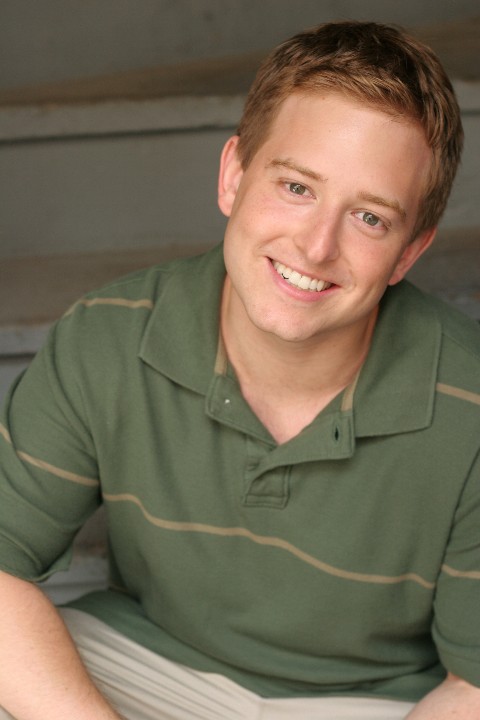
I’m delighted to welcome my guest today, successful self-publisher, creativity coach and actor, Bryan Cohen, who is tapping the unconscious in the House of Dreams.

Bryan Cohen
Bryan Cohen

The unconscious mind has ways of making you stop. You have a deadline and only a certain number of hours to write a certain number of words. And yet, despite all that pressure, the cursor or blank page is staring at you with all its emptiness. It’s writer’s block, that all encompassing, vague term describing why you can’t get the thoughts you know are in your head onto the page. Writer’s block can strike, even when you’re in a seemingly perfect writing situation. You can have writer’s block even when you have a comfortable chair, a mahogany writing desk and a closed door to keep out all the distractions. The problem of writer’s block seems to exist in the unconscious mind.

In writing and self-publishing 32 books to Amazon, I’ve found one of the tricks to unearthing this unconscious problem. The trick to stopping your unconscious hurdles to writing is to go into your unconscious to determine how to knock them down.

People use freewriting or stream-of-consciousness writing for all sorts of purposes. Freewriting can be an emotional release or it can be a way to capture your thoughts at a particular moment. This activity can also be used to answer a question. If you’re experiencing writer’s block at a subconscious level, you can use freewriting to ask yourself how to defeat the problem.

Setup your freewriting session by sitting in a quiet place with as few distractions as possible. Turn off your phone and switch off the internet on your laptop. Set a timer for 15 minutes (though you can always write longer if desired). Start with a simple question or a “prompt” if you will. For instance, you can ask something along the lines of, “Why do I have issues writing in the afternoon?” Write the first thing that comes into your mind over and continue to write down the thoughts that naturally follow the first thought. Don’t edit yourself, even to correct spelling errors. Let one thought flow into the other. Even if you get off the topic of writers block, let yourself take the trip to keep yourself in stream-of-consciousness mode. If you find yourself looking at the timer or otherwise not writing, get yourself back in the game as quickly as possible. Don’t stop. Push yourself. Even if what you’re writing doesn’t make any sense, keep going at least until the timer goes off.

Here’s what I find happens in nearly all my free writing sessions that begin with a question. I take at least 3 tangents. I also retread a lot of what I’ve said out loud on that particular subject. But in all of that, I find at least one actionable step I can take to solve the problem. It’s a banner day when I come up with three or four possible solutions, but even one method for solving my issue is good enough. Besides, it’s easier to put just one idea into practice anyway.

When I put one of these steam-of-consciousness-generated solutions into practice, it almost always makes an immediate impact. In my opinion, this proves that most unconscious issues have an unconscious solution lying around in your brain alongside it. You just need to do a little digging.

Try starting a free writing session with a question that’s been nagging at you. It could be about writer’s block, weight loss, your relationships, your bank statement or anything at all. As long as you trust yourself to write without censorship during your session, you’re bound to find at least one solution to your unconscious issue.

Try a session on for size and discuss what you come up with in the comments!

About the Author

Bryan Cohen is an author, a creativity coach and an actor. His new book, 1,000 Creative Writing Prompts, Volume 2: More Ideas for Blogs, Scripts, Stories and More is now available on Amazon in digital and paperback format. His other books include 1,000 Creative Writing Prompts, The Post-College Guide to Happiness, and Ted Saves the World. He has published over 30 books, which have sold more than 20,000 copies in total. Connect with him on his website, Build Creative Writing Ideas, on Facebook or on Twitter

1,000 Creative Writing Prompts Volume 2 Cover

In honor of his new book, Bryan is hosting the “1,000 Prompts, 1,000 Dollars” Writing Contest on his website. Click the link to find out how to enter!  Click the next link to check out the rest of Cohen’s blog tour!


How to write an introduction

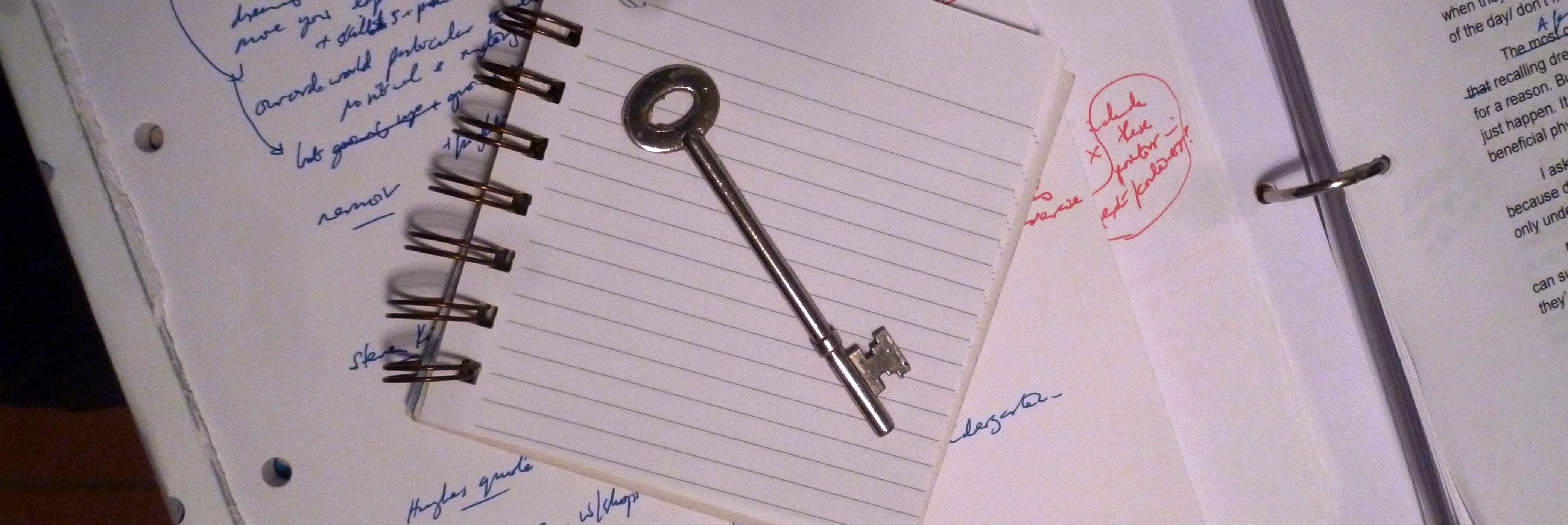
a) What’s it about? b) Who’s it for? c) Why should they trust me? Writing an introduction should be as easy as abc, but if you get stuck with yours like I did, I think I’ve found the key.

key

For a while now, I’ve been working on the final draft of ‘Writing in the House of Dreams.’ It took me three weeks to go through the whole text, making tweaks and adjustments, so when I decided to re-write the introduction I thought it would take me a few days at most.

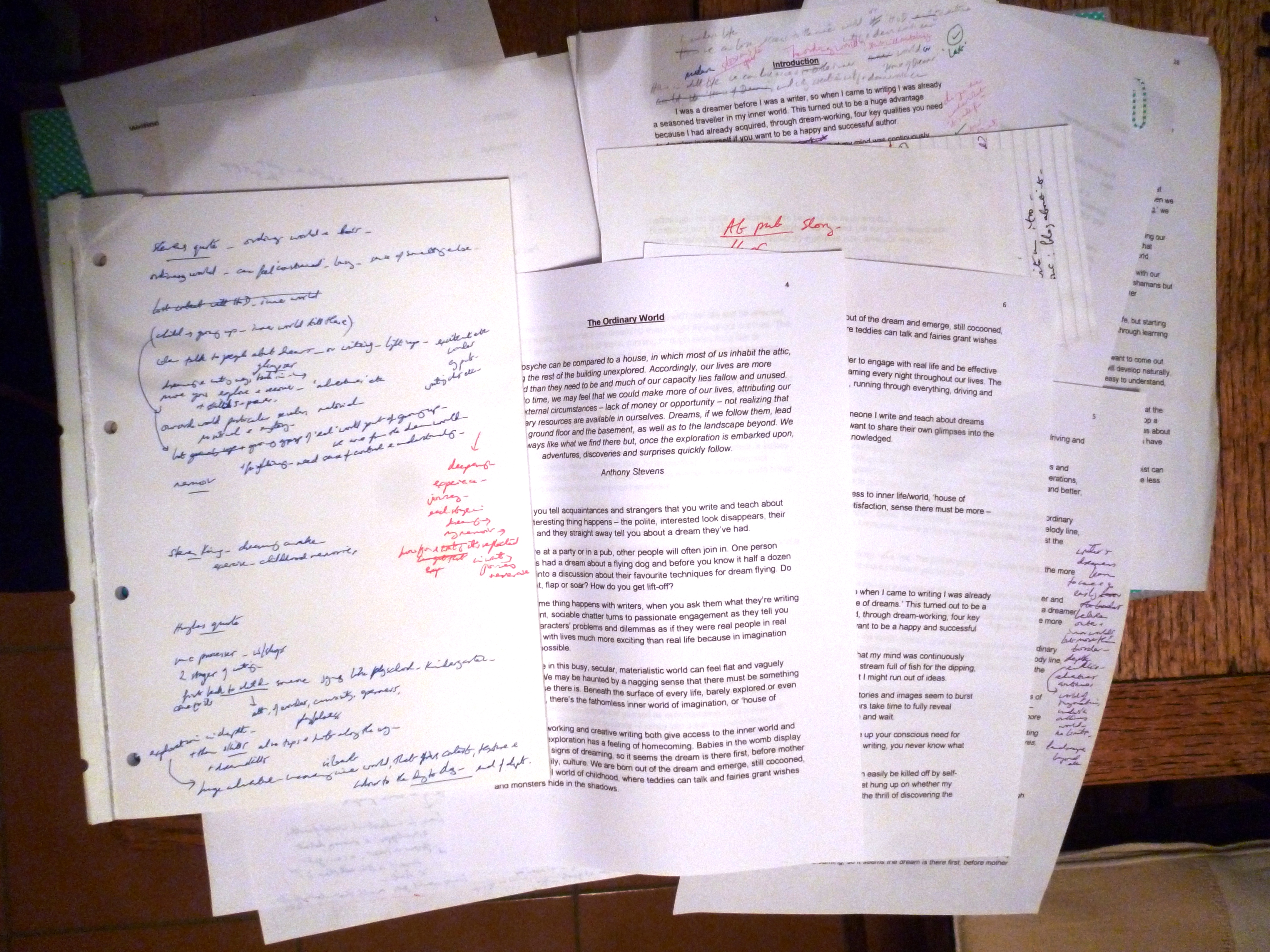
Ten days later, I had a huge and growing heap of notes and a brain like knotted spaghetti.

A growing heap of notes

When I thought about who my book was for, the answer was obvious – dreamers and writers. But what do dreamers and writers want to read about? It seemed to me that the answer to that was interpretations and publishing deals.

When I thought about what my book was about, it certainly wasn’t mainly interpreting and writing techniques, although those did come into it.

What I’m most interested in, what makes my book so ‘niche’, is how dream-awareness and writing can transform your reality, because they both mean learning to come and go easily between the inner and outer world, making ordinary life feel bigger, more exciting, more resonant.

I’m interested in how that ability to come and go across the border can take you ever deeper and wider, because imagination has no limits. I like that the more you understand, the more your sense of mystery grows.

I love the feeling that you can take your explorations as far as you want to go, into layers of myth and beyond, pushing back the limits of your courage, curiosity and skills.

So what is my book about? Adventures in the inner world. Discoveries. Secrets and treasures we can bring back to enrich and inspire our everyday life.

Who is it for? Dreamers and writers, at every level of experience, who are interested in the adventure for its own sake, and not only in writing as a career or dreaming as a source of insights into waking life.

That sounds pretty clear, doesn’t it? That sounds succinct and honest. But I had to come here to my blog, in order to unravel all the strands and identify what the main ones were. On a blog, you haven’t got 75,000 words to explore your themes; you’ve got a few paragraphs to make a point.

When you blog, you’re very conscious of your readers because they’re real people, individuals who might comment on what you’ve written as soon as it goes up.

Yesterday I got the essence of the book by drafting this blog post, and then a happy synchronicity this morning affirmed the focus for the rest of the opening chapter, which is about the leaving the magical world of childhood and learning later to engage with it again.

Someone had posted a comment on my article ‘The dream and the writer’s trance’ which said, ‘I used to slip into the writer’s trance rather easily when I was a child but now I find it harder to get to that state’ (thank-you, Sehena)

So if you know the abc of writing an introduction but you just can’t seem to boil it down, write a blog. That was the key for me.

Thank you for reading and joining in 🙂

What’s the point in self-publishing?

Someone in the book business recently asked me ‘What’s the point in self-publishing a book, when it won’t get any promotion without a major publisher behind it?’ For me, as a much-published author, this is the point… 

I’ve had scores of books published and worked with a dozen different publishers in the course of my writing career but I’m currently in the throes of self-publishing ‘Writing in the House of Dreams.’

Earlier in the year, my agent sent the MS out to publishers, and their feed-back was overwhelmingly positive. ‘An inspirational idea’ said one; ‘a rich feast that sets off all sorts of sparks and recognitions in the reader’ said another; ‘very readable indeed’ said a third, ‘I read it in one sitting.’

So here are the reasons they didn’t take it on (although it went to an acquisitions meeting with one publisher and another said, ‘It was close.’)

‘Too niche’, ‘Too tough for us to sell enough copies’, ‘with such a niche topic we’d struggle to get a good number of copies into shops’, ‘the sales would be too modest’,’a company the size of ours can’t make enough of a go of books on this subject as they would need to.’

One of the big changes I’ve seen since I started in this business is that where previously the decision to take on a book lay with editors, who were generally driven by a passion for reading and discovering interesting writers, now it rests firmly with marketing departments.

I first came to this realisation a few years ago when I proposed an idea for a children’s series to an editor I’d worked with, and she was blown away by it. Bursting with enthusiasm, she asked for six story outlines, then for twelve, to take to the acquisitions meeting, but the series was not taken up because she couldn’t persuade the marketing department. When she told me how disappointed she felt I realised how tough this situation might be for editors as well as authors.

The thing to bear in mind is that marketing people will not usually have read your manuscript, so your book succeeds or fails on how well they think the concept and title will sell. A yes or no doesn’t necessarily reflect the quality of your writing, but just how easily it will fit into the market.

I know ‘Writing in the House of Dreams’ is a bit off-the-wall and ‘in many ways a brave book’ as one publisher rather unnervingly remarked, but I also feel that it’s good. I’ve worked for a reading agency and have a lot of writing experience now, and my own judgement has been backed up by the half-dozen authors, psychologists and dream-workers who have read it.

I’ve been working on it alongside my children’s books ever since I was first published; it’s my child-of-the-heart book, the secret pearl I’ve been feeding with all the writing skills and experience I’ve worked so hard to build up.

I know my book won’t appeal to millions of readers but hopefully it will appeal to some. Five years ago, no-one would ever have got to read it if no major publisher had taken it on and the MS would have stayed on my shelf forever, gathering dust. It would have felt devastating.

It’s better to have some readers than no readers at all – that is the point of self-publishing. It’s also better to carry on show-casing your work to publishers who may happen upon it on the web, rather than putting it away for several years before sending it out again.

Now that authors can be publishers too we can write our passion in the reassuring knowledge that our work may still bloom surprisingly at the edge of a difficult market like a  little poppy at the edge of a big field of corn.

615px-Poppies_by_field_gate_-_geograph.org.uk_-_846634[1]

If you’re interested in self-publishing, Nicola Morgan (who was one of my lovely readers) is doing a series of interviews with authors who have gone down that road on her blog – well worth a look 

It’s about love

Stephen Fry kept saying in his recent TV programmes Out There ‘It’s about love.’ Today’s post is about love rather than my normal themes of dreams or writing, but I felt I had to write it. You’ll see why.

Last week-end I went to the civil ceremony of two dear friends. The venue was wonderful; the celebrations went on all day and deep into the night.

999513_10151664615150925_1993257362_a

Watching these two beautiful brides make their promises to each other, I felt proud and grateful to live in a country where marriage is now an option for everyone.

Although some people argue against gay marriage on religious grounds, I’m personally pretty sure God enjoyed the occasion as much as me. I mean, as God is love it stands to reason that every expression and celebration of love is naturally attuned to the divine vibration.

Some people worry that gay marriage undermines our social values. Any change can spark a reaction of fear, which can turn into aggression, but this change is something we should not fear. Love is good news for society. It’s easier for people who love and feel loved to be generous and kind in their behaviour towards others.

All of us who believe in love, whether we’re gay or straight,  need to speak up for gay rights because, as Stephen Fry warned in his piece about Russia, progress can be reversed.

In Russia, recent anti-gay legislation has lead to a huge increase in homophobic violence, and now they’re debating whether the children of gay couples should be taken away on grounds that growing up in an orphanage would be better.

Progress is a fragile thing. It needs careful nurturing in the early days. That’s why I wanted to write this piece today, and add my small voice of support.

Did you see Stephen Fry’s TV programme? What did you think?