Are you a proper writer?

Years ago, I was on a Society of Authors retreat at Totleigh Barton, the Arvon centre in Devon. It wasn’t a taught course, but an opportunity to explore our writing ambitions as a group and with individual tutors.

Totleigh Barton

The group was made up of successful authors from every area of writing – medical books, Black Lace, children’s fiction, ELT, poetry… Without exception – well, except me, because I wanted to have a go at poetry – they all harboured a secret ambition to write a literary novel. They said they wouldn’t feel like a proper writer unless they could achieve it.

I was struck by this hierarchical view of writing. It reminded me of a conversation I’d had with a prominent commentator in the children’s book world at a conference, which went:

Him: So what are you working on at the moment?

Me: I’m mostly writing for educational publishers

He gives me a disparaging look. I give him an enquiring frown. 

Him: Well, it’s second grade, isn’t it? Educational books are never so good.

I was cross and astonished. I’d written for both trade and education, and had always given both my absolute best. I was the same writer, whatever I was writing.

Until that moment, it had not occurred to me that mainstream authors might look down their noses at educational writers; they were just different kinds of writing, and demanded different skills.

I had taken, and still take, a holistic view of writing, rather than a hierarchical one. I write all kinds of things for publication and for my own entertainment, including childrens’s and adults’ fiction and non-fiction, educational books, self-help, poetry, magazine articles and blog posts, and every single line I write feels fruitful and worthwhile, whether it finds a publisher or not, because it is helping to develop the writer that I am.
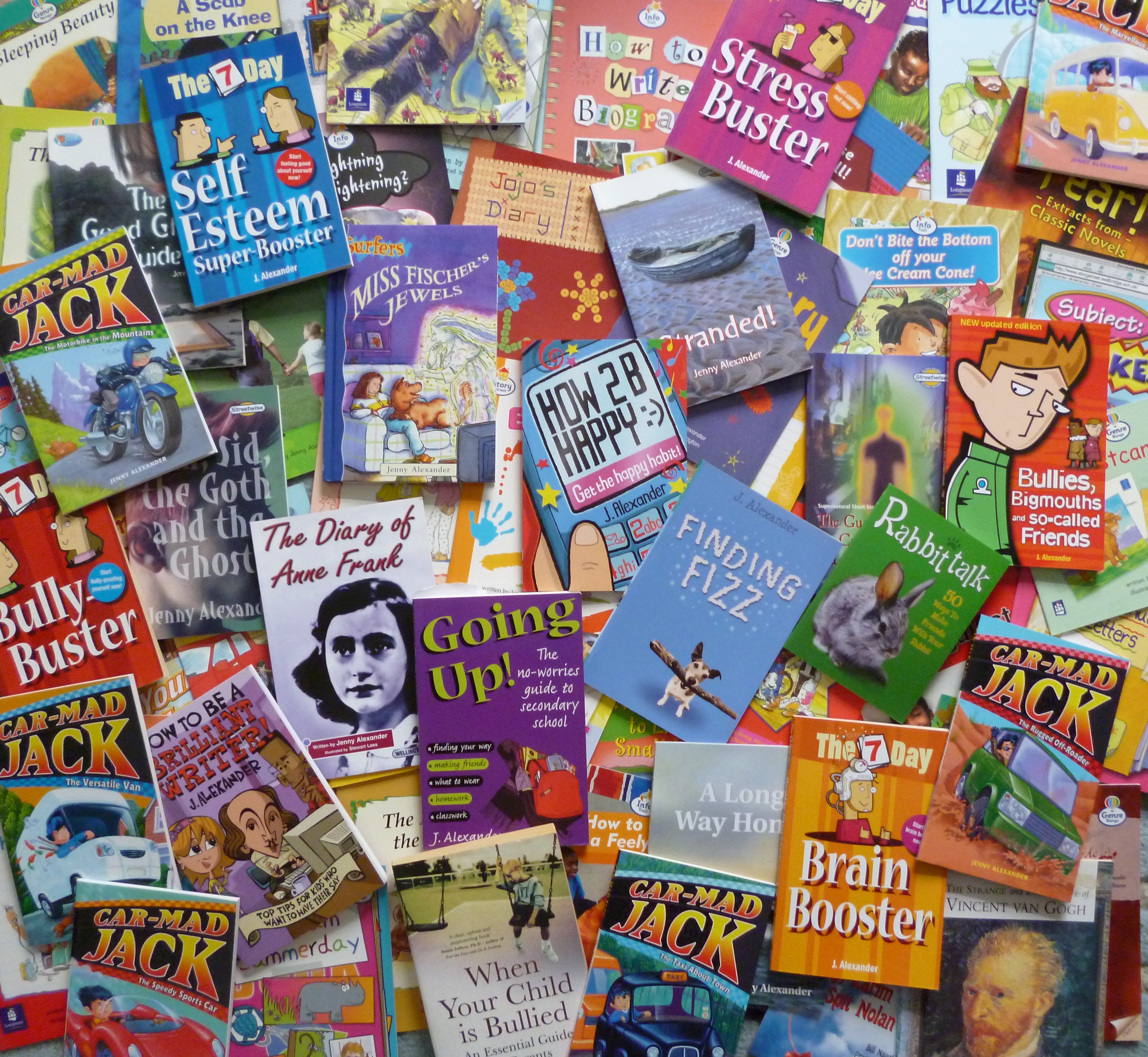
Of course, you could say I simply lack focus!

The holistic approach makes for a joyful writing life. You aren’t trying to hit goals set by the market, or other people’s judgements. You’re open to experiment because the goal is self-discovery, and every new discovery involves an element of adventure.

That’s how I view my writing life –  I’m a proper writer simply by virtue of the fact that I write, as are all the people who gather round my table for writing workshops.

How about you? Are you a proper writer, and if not, what would make you feel as if you were?
What’s the explanation for ‘deja vu’?

‘Deja vu’ means ‘already seen’ or ‘seen before.’ It’s when we feel a strong sense of recognition in a new place, as if we’ve been there before but can’t remember when.

It can occur even in places we know for certain we have never visited in the past. We may actually find that we know the layout of the rooms, or what’s round the corner in the road.

Often, ‘deja vu’ is accompanied by a strong emotional reaction to the place we recognise – perhaps a warm sense of belonging, or a feeling of sadness, or a desire to get away.

A scientific explanation of this phenomenon is that it’s some kind of blip in the brain – a disturbance in the electrical activity which causes a momentary illusion that we’ve seen the place previously when in fact we’re seeing it for the first time.

A more metaphysical explanation is that ‘deja vu’ is connected with past lives – we recognise a place because we were there in a former life. But how could that account for feelings of ‘deja vu’ which arise in a modern environment?

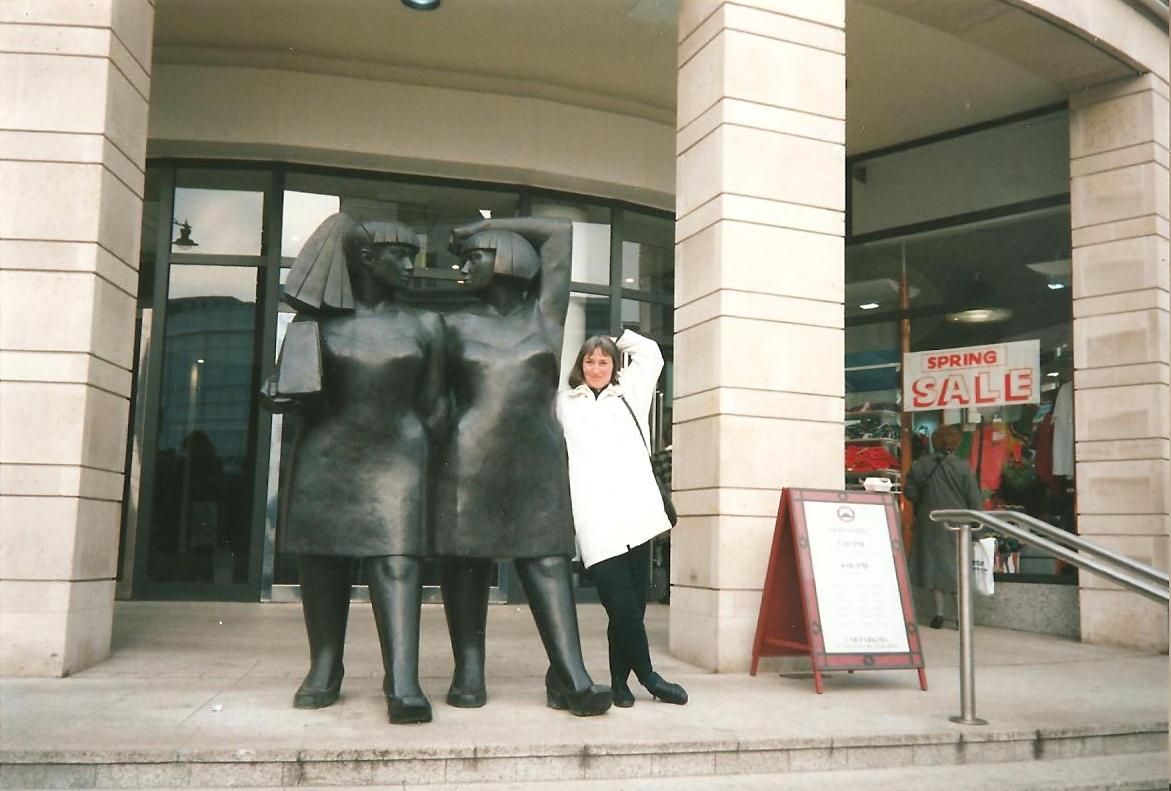
Larking around outside the old Town Hall in Wimbledon – part of a shopping centre now

Years ago, I revisited the town I grew up in, Wimbledon, with an old friend from school. Before the visit, I dreamt I was walking from my childhood home into the town centre, and when I got there, I was surprised to find the old Town Hall was now a shopping centre.

When we arrived, I found the town centre was exactly as I had dreamt it. You may say I must have heard about the redevelopment in the media or something, and simply forgotten. But this sort of thing happens quite often, in relation to places which have never been in the media.

Five years ago, I wanted to move house, and I was looking at cul-de-sac bungalows within a certain area. I happened upon the house I eventually found quite by chance, on an evening out – it was in the wrong place, but I viewed it on a whim, and as soon as I walked in the door, it just felt like my house.

Recently, reading back through some old dream diaries, I discovered that I had dreamt I took a detour on a house-finding mission, to view a little miner’s cottage in the middle of a terrace on the edge of the moor – I had actually dreamt about this house.

I don’t know if there is a definitive explanation for ‘deja vu’, but my own experience suggests that when we feel we have been in a place before, we have – in our dreams.

Have you ever experienced ‘deja vu’? What do you think is the explanantion?

Gove levels – give me strength!

So here we are, facing yet another shake-up of the English education system, with the emphasis still on core academic subjects and rigorous testing. Ahem and excuse me, but what about that non-transferable and non-testable vital ingredient of a successful life – creativity?

When I examine myself and my methods of thought I come to the conclusion that the gift of fantasy has meant more to me than my talent for absorbing knowledge ~ Albert Einstein

Little children learn to be adults through imaginative role-play, pretending to be mummies and daddies, doctors, teachers, engine-drivers, soldiers, window-cleaners, cafe-owners…

Older children and adults make important decisions by imagining different outcomes – ‘If I did that course, I might become a chemist… then I’d work in a laboratory… or I might be a teacher… I could do that anywhere, in a city centre or a remote island… I could work overseas… or be an independent tutor…’

We make the most trivial of decisions in the same way. ‘If I go shopping right now, I might bump into Donna… she might be angry with me because I got the job she was going for… or she might be happy for me, if she didn’t really want it anyway… or I could go later when she’ll be picking up the kids… but by then they might have sold out of saffron buns…’

We make up stories all the time, quite unconsciously. They give us direction and certainty. If we develop this innate ability further through creative activities, we can explore more complicated issues; we can try on other people’s stories, which helps us to develop empathy and a deeper understanding of what life is.

Creative writing gives us access to experiences we would never have in our own lives.We can imagine ever further, extending the limits of our self.

Imagination is more important than knowledge. Knowledge is limited. Imagination encircles the world ~ Albert Einstein

Creative dreaming is the same. If we unhook dreams from the shackles of interpretation, they also become experience for the self, just like waking life, opportunities to go to places and meet people and have adventures and insights beyond our normal range.

You don’t have to teach creativity – you have to allow it; you have to nurture and value it. You can’t measure and assess it, the way you can test academic knowledge.

But imagination is the start point of everything in life, including learning. We shouldn’t be trying to cut children off from their inner world, by loading the curriculum with academic subjects and stealing more and more of their free time for homework and extra tuition. 

Children in the UK are among the least happy in the developed world, and they are also among the most tested. But even if happiness is low on our priorities, it makes no sense educationally to focus everything on academic subjects and intellectual skills, because the story-making mind is the seedbed from which knowledge and understanding grow.

The mind can proceed only so far upon what it knows and can prove. There comes a point where the mind takes a higher plane of knowledge, but can never prove how it got there. All great discoveries have involved such a leap ~ Albert Einstein

That’s it. I have nothing more to say. I’m completely fed up with politicians on both sides of the House narrowing our children’s abilities and aspirations, and harming their happiness, through their obsession with  ‘rigour’, ‘standards’ and testing. But please feel free to add your own views in the comments!

What are the best writing prompts for daily practice?

The idea for this post was suggested to me by a comment about a previous article ‘Do you have a daily practice?’ 

lyndart wrote, ‘I have difficulty giving myself permission to let those creative juices flow… Any suggestion for a topic?’

Trees

You can use any random word such as ‘trees’ or ‘motor-bikes’ or ‘dinner-time’ for a writing prompt, and there are many sites which offer a fresh suggestion every day. I do this myself for warm-ups with groups, giving a random word and asking them to write freely about it, keeping the pen moving on the paper even if at times they find themselves writing things like, ‘I have absolutely nothing else to say on this topic, I don’t know why I’m doing this,’ until their mind finds its way back to the theme.

But the very best prompts for daily practice are the ones you come up with for yourself because, like dream images, whatever emerges spontaneously from your own relaxed mind will have emotional resonance and personal significance for you right now, whether it’s immediately obvious or not.

To find images which are active in you at the moment, sit comfortably with your notepad or laptop, close your eyes and take a few slow, steady breaths. Clear your mind. 

Think of an object – the first thing that comes to you. Don’t censor or try to find something ‘better.’ Write for five minutes, stream-of-consciousness, without pausing. Change direction when one stream runs out, allowing yourself to go where your thoughts take you, even if you stray from your starting-out point.

If you prefer, you can write a list of the first five things you think of, then choose one from your list to write about. You can write for ten or fifteen or even twenty minutes in this way if that’s your daily practice.

I love… my garden

Another way of finding prompts that have particular resonance for you is beginning with a phrase such as ‘I remember’ or ‘I wish’ or ‘I love’ or ‘I hate’ because these will take you immediately into areas that you care about.

I often use this kind of prompt in workshops, especially about childhood, which is the living root of every life. I give a topic such as ‘my mother’s kitchen’ or ‘my childhood bedroom.’ I’ve written about this on the wonderful girlsheartbooks blog, ‘What was your favourite toy when you were little?’ 

The key with daily writing practice, as with all creative endeavours, is pleasure. Writing about themes and topics which have personal resonance is always pleasurable and over time, it will deepen your understanding of yourself as a writer.

Have you got any suggestions for good writing prompts? Please share!

If the doors of perception were cleansed

To round off my blog birthday celebrations, here is ‘the one that got away’ – an article about my spiritual path of dreams which was published on another blog earlier in the year  

When people talk about dreams as spiritual experience, they usually seem to be thinking in terms of what Jung called ‘numinous’ dreams – that is, dreams which have an unmistakably spiritual quality, inspiring awe and wonder, and often bringing revelations.

These ‘big’ dreams do indeed feel like wonderful gifts from outside the self, and they stay vividly with you across the decades, lighting your life. But dreams which feel quite ordinary can also be a doorway to profound changes in consciousness.


For example, I once dreamt I was having coffee with my neighbour. I was fully aware that I was dreaming – lucidity is very common in experienced dreamers.

Normally, in lucid dreams, my waking ‘I’ might be there as an observer or commentator, and occasionally if I didn’t like the way things were going, I might intervene and change the action of the dream.

But this dream didn’t have any action at all. It didn’t have any narrative to distract me – I was just sitting there, drinking coffee, and I was bored. There was a silky cushion beside me, and I ran my hand absent-mindedly across it. I noticed how smooth the fabric felt; I ran my fingers along the hard ridge of the trim.

I thought, ‘Hold on a minute – this is a dream!’ Since nothing much else was going on, I went on testing the evidence of my senses and yes, I really could smell the coffee; I really could feel the crumbly biscuit between my fingers and taste its light vanilla on my tongue. I could hear my neighbour’s voice, talking to me. I knew it was a dream, but it felt exactly the same as ‘real’ life.


When I woke up, I could feel the quilt resting lightly across my body; I could see the light from the gap in the curtains ribboning across it; I could hear my husband’s gentle breathing and smell the warmth of our two bodies. But now I knew that my mind could create a whole different reality which felt as real to my senses as this one. So the senses were unreliable witnesses, and waking life a reality no more substantial than the dream.

When you read back over old dream diaries, you will also find that seemingly ordinary dreams can be precisely predictive, and you may find so many of these that it’s impossible to dismiss them all as flukes and coincidences.

According to our normal understanding of time, it should not be possible to predict the future, but the experience of predictive dreaming shows irrefutably that it is.

So gradually, actively engaging with dreams can dissolve the narrow rational and materialistic viewpoint, through which we normally understand life. In the words of William Blake, ‘man has closed himself up, ’til he sees things thro’ narrow chinks of his cavern.’

The practical, experiential path of dreaming can lead to a falling-away of ideas and illusions, and open you up to the mind-blowing reality. ‘If the doors of perception were cleansed everything would appear to man as it is, infinite.’


Why would an author want to write a blog?

This week, I’m celebrating a whole year of Writing in the House of Dreams.

I asked fuelyourblogging – a really useful site for bloggers – for an end-of-year assessment, and they said

Your blog is a great example of balancing both a personal focus and a focus on others with similar experiences. As a writer, I see a lot of value and insight on your blog that I can use on my own path, so I’m engaged right off the bat.

The personal stories add that unique perspective people look for, as mentioned above.

Keep up the great work!

Woo hoo! *happy dance*

‘Writing in the House of Dreams’ has a hundred fantastic followers, including some who bring in lots of casual visitors through tweeting about my posts and sharing on facebook (special big huge thank-you – you know who you are!)

But writing a blog is undeniably very time-consuming, and for an author that’s time doing your normal work, but without getting paid. So why would an author want to write a blog?

The short answer is, because it’s a whole new adventure in writing. It might take time away from your work-in-progress, but it doesn’t take away any writing-time.

The time I spend writing my blog makes the writer-in-me feel happy because

  1. It have total creative freedom – there’s no pressure to try and make what I write here attractive to a mass market
  2. I get instant feedback from readers – this has given me many insights, especially through people sharing their personal stories
  3. It brings me the generous gift of guest posts from some fabulous interesting people
  4. Its reach is global – I have readers from every continent, some of them reading my blog in translation
  5. It engages me in the blogosphere as a reader – I’ve discovered some great new writers and had lots of interactions on other people’s blogs
  6. It makes me engage more fully with networks such as twitter, linkedin and facebook – which I enjoy

I’m going to tweet and fb one of my fave posts each day this week, as part of my blog birthday celebrations.

So gather round, dear friends, grab a glass and help yourselves to a slice of virtual cake… and thank you for coming to the party 🙂

Dream gateways – how the gods get in

I was talking last week about the faceless ones in my dreams, figures who had no individual characteristics but represented the pure power of the archetype. Other words for these pure powers might be energies, or spirits.

When peoples throughout the ages have sought to engage with these spirits, they have given them faces and names. Different traditions choose different faces and names, according to their culture, to represent the same essential qualities.

So, for example, in Ancient Greece Demeter was the goddess of harvest, but in Ancient Egypt this essence of harvest/mother/nature was called Isis.

After my first encounters with the faceless ones, I began to dream about gods and goddesses. Often, their names were unfamiliar to me in waking life, so it felt as if I was dipping a deeper stream. This experience will be familiar to a lot of dreamers, of words we have no conscious knowledge of coming to us for the first time in dreams.

One night I dreamt that Thoth was in my study. I had a vague notion that Thoth sounded like some kind of devil, so it spooked me. But when I looked him up, I found he was, amongst other things, the Ancient Egyptian god of scribes. The universal spirit of writing, in the shape of Thoth, had taken up residence in my writing room. Sweet!

A week later, by a happy synchronicity, I found a figurine of Thoth in a seaside nick-nacks shop, amongst the beach mats and sunglasses. I brought him home and now, if I ever feel disheartened or directionless as a writer, he inspires me with the pure power of writing.

Have you ever dreamt about gods, goddesses or other religious symbols?

Dreaming the faceless ones

I first discovered the concept of archetypes in the early seventies, when I was starting to try and understand my dreams. At that time, there were few books about symbols, and most of them were not very accessible to the general reader.

My symbols dictionary gave ‘archetype’ meanings for some symbols, which I found completely puzzling. Why did some symbols have two definitions, and which one should I apply to my individual dream?

Because my dictionary only offered archetypal meanings for certain symbols, I thought some symbols were archetypes and some were not; it was only a decade later that I began to understand the archetypal as a layer of meaning behind everything. Just as behind every object in waking life there are layers of personal symbolic significance, so beyond that there are layers of group/cultural/universal meaning.

Jung said you could not understand archetypes in a theoretical way; they were ‘pieces of life itself’, which you could only understand through direct experience. My first experience of archetypes was in my dreams.

I thought of them as the faceless ones, because they seemed to have no individual identity, they were generic – an old man, an old woman, a baby; a doctor, a teacher, a guide. These dream figures had a different quality about them – I felt drawn to them because of their mystery.

I gradually understood that these faceless figures represented the pure spirit of , say, wisdom or adventure, healing or learning. Meeting them showed me how the archetypes worked in more ordinary dream figures – if I dreamt about a friend who was a doctor, for example, he would be appearing both as himself, as what he personally represents to me and also as the universal figure of the healer.

The faceless ones gave me experience of archetypal energies at work in my dreams, and this layer of meaning brought deeper resonance to every dream experience, and every part of daily life.

The encounter with the archetypes is a spiritual experience, and I’ll be exploring that idea in my post next week.

Create great plots by harnessing the power of myth

In our culture, because we have broken our conscious connection with myth, we tend to see our lives as separate and unique.

But every individual life follows paths and patterns which are universal. Each life story is built on a template of all human stories.

Through mythology, we can connect with the essence of our own life experience, and walk with greater consciousness the mythic pathways where we all are one.

Being aware of the archetypal dimension of experience can be particularly useful for writers. You can use mythic templates quite deliberately to help you construct stories which will have resonance with your readers.

I like to use the Hero’s Journey, the master-myth explored at length in Joseph Campbell’s book, ‘The Hero with a Thousand Faces’

In this story

  • the hero hears the call to adventure, which he at first refuses
  • something helps him to engage with the adventure and he sets out into the unfamiliar world
  • he meets allies and enemies
  • he’s tested
  • he has to muster all his inner resources to face his supreme ordeal
  • he finally claims his reward and takes it back to his community

This is a master myth because it isn’t limited to one area of human experience, such as becoming a mother or making the transition between middle and older age.

The Hero’s Journey explored through mythology and in the lives of women and writers – it is capable of endless applications

The Hero’s Journey describes every challenge we may have to face, however small or large; from the daily challenge of getting out of bed or learning something new to a greater challenge such as finding a new job or coming to terms with the death of a loved one.

Life continuously presents us with challenges, which we at first refuse, because we don’t want the effort and disruption of change. If we refuse, we get a nudge. We may seek the help and support of friends or strangers, books or teachers, and we may encounter unhelpful people who stand in the way.

Every time we engage with a challenge, we win a reward – new strength, new insight, new effectiveness in our world, which we can then ‘bring home’ and incorporate in our life.

You can use mythic templates in a deliberate way to construct strong stories, but simply being aware of the universal dimension in your characters’ stories will give them depth and new dimensions. As Dorothea Brande says, ninety percent of writing happens unconsciously, with us often finding things in our writing we did not consciously put there.

If you want to explore the Hero’s Journey in more depth, I’d recommend ‘The Writer’s Journey’ by Christopher Vogler, where he looks at various Hollywood blockbusters as versions of the hero myth.

August is all about archetypes here in the House of Dreams – next week, I’ll be telling you how I first encountered the archetypes in my dreams