Years ago, I was on a Society of Authors retreat at Totleigh Barton, the Arvon centre in Devon. It wasn’t a taught course, but an opportunity to explore our writing ambitions as a group and with individual tutors.
Totleigh Barton
The group was made up of successful authors from every area of writing – medical books, Black Lace, children’s fiction, ELT, poetry… Without exception – well, except me, because I wanted to have a go at poetry – they all harboured a secret ambition to write a literary novel. They said they wouldn’t feel like a proper writer unless they could achieve it.
I was struck by this hierarchical view of writing. It reminded me of a conversation I’d had with a prominent commentator in the children’s book world at a conference, which went:
Him: So what are you working on at the moment?
Me: I’m mostly writing for educational publishers
He gives me a disparaging look. I give him an enquiring frown.
Him: Well, it’s second grade, isn’t it? Educational books are never so good.
I was cross and astonished. I’d written for both trade and education, and had always given both my absolute best. I was the same writer, whatever I was writing.
Until that moment, it had not occurred to me that mainstream authors might look down their noses at educational writers; they were just different kinds of writing, and demanded different skills.
I had taken, and still take, a holistic view of writing, rather than a hierarchical one. I write all kinds of things for publication and for my own entertainment, including childrens’s and adults’ fiction and non-fiction, educational books, self-help, poetry, magazine articles and blog posts, and every single line I write feels fruitful and worthwhile, whether it finds a publisher or not, because it is helping to develop the writer that I am.
Of course, you could say I simply lack focus!
The holistic approach makes for a joyful writing life. You aren’t trying to hit goals set by the market, or other people’s judgements. You’re open to experiment because the goal is self-discovery, and every new discovery involves an element of adventure.
That’s how I view my writing life – I’m a proper writer simply by virtue of the fact that I write, as are all the people who gather round my table for writing workshops.
How about you? Are you a proper writer, and if not, what would make you feel as if you were?
In our culture, because we have broken our conscious connection with myth, we tend to see our lives as separate and unique.
But every individual life follows paths and patterns which are universal. Each life story is built on a template of all human stories.
Through mythology, we can connect with the essence of our own life experience, and walk with greater consciousness the mythic pathways where we all are one.
Being aware of the archetypal dimension of experience can be particularly useful for writers. You can use mythic templates quite deliberately to help you construct stories which will have resonance with your readers.
I like to use the Hero’s Journey, the master-myth explored at length in Joseph Campbell’s book, ‘The Hero with a Thousand Faces’
In this story
the hero hears the call to adventure, which he at first refuses
something helps him to engage with the adventure and he sets out into the unfamiliar world
he meets allies and enemies
he’s tested
he has to muster all his inner resources to face his supreme ordeal
he finally claims his reward and takes it back to his community
This is a master myth because it isn’t limited to one area of human experience, such as becoming a mother or making the transition between middle and older age.
The Hero’s Journey explored through mythology and in the lives of women and writers – it is capable of endless applications
The Hero’s Journey describes every challenge we may have to face, however small or large; from the daily challenge of getting out of bed or learning something new to a greater challenge such as finding a new job or coming to terms with the death of a loved one.
Life continuously presents us with challenges, which we at first refuse, because we don’t want the effort and disruption of change. If we refuse, we get a nudge. We may seek the help and support of friends or strangers, books or teachers, and we may encounter unhelpful people who stand in the way.
Every time we engage with a challenge, we win a reward – new strength, new insight, new effectiveness in our world, which we can then ‘bring home’ and incorporate in our life.
You can use mythic templates in a deliberate way to construct strong stories, but simply being aware of the universal dimension in your characters’ stories will give them depth and new dimensions. As Dorothea Brande says, ninety percent of writing happens unconsciously, with us often finding things in our writing we did not consciously put there.
If you want to explore the Hero’s Journey in more depth, I’d recommend ‘The Writer’s Journey’ by Christopher Vogler, where he looks at various Hollywood blockbusters as versions of the hero myth.
August is all about archetypes here in the House of Dreams – next week, I’ll be telling you how I first encountered the archetypes in my dreams
What is the difference between a good story and a great one? Why do some characters stay with you for a couple of weeks or months, and others for a lifetime?
It’s all about archetypes.
Your characters are first and foremost individual people with their own personal histories, hopes and personalities, but beyond that they are also part of something bigger – a family, a country, a culture, each of which will also have its own history, values and aspirations.
At the deepest level of collective consciousness, we share a common humanity. People in every time and place know what it is to feel anger, pride, distress, delight; we all have archetypal relationships, such as those between children and parents,siblings, lovers, enemies and friends.
Great stories tap into these archetypal layers. Their characters have a larger-than-life feel, because they embody more than their own personal story, and yet they feel completely convincing because we recognise in them something universal in ourselves.
Shakespeare’s characters have this archetypal quality. King Lear is more than a foolish old King at the end of his reign – his story resonates on deeper levels, as a story of political power, every when and where; on the deepest levels it’s a story of family dynamics and the process of growing older.
Lear’s daughters, likewise, show us different aspects of the universal experience of shifting power within the family, when children grow up and become effective in the world just as their parents begin to lose their effectiveness.
King Lear is like the very embodiment of an old man’s folly; in the same way, Lady Macbeth seems to embody the pure spirit of ambition and Othello the spirit of jealousy.
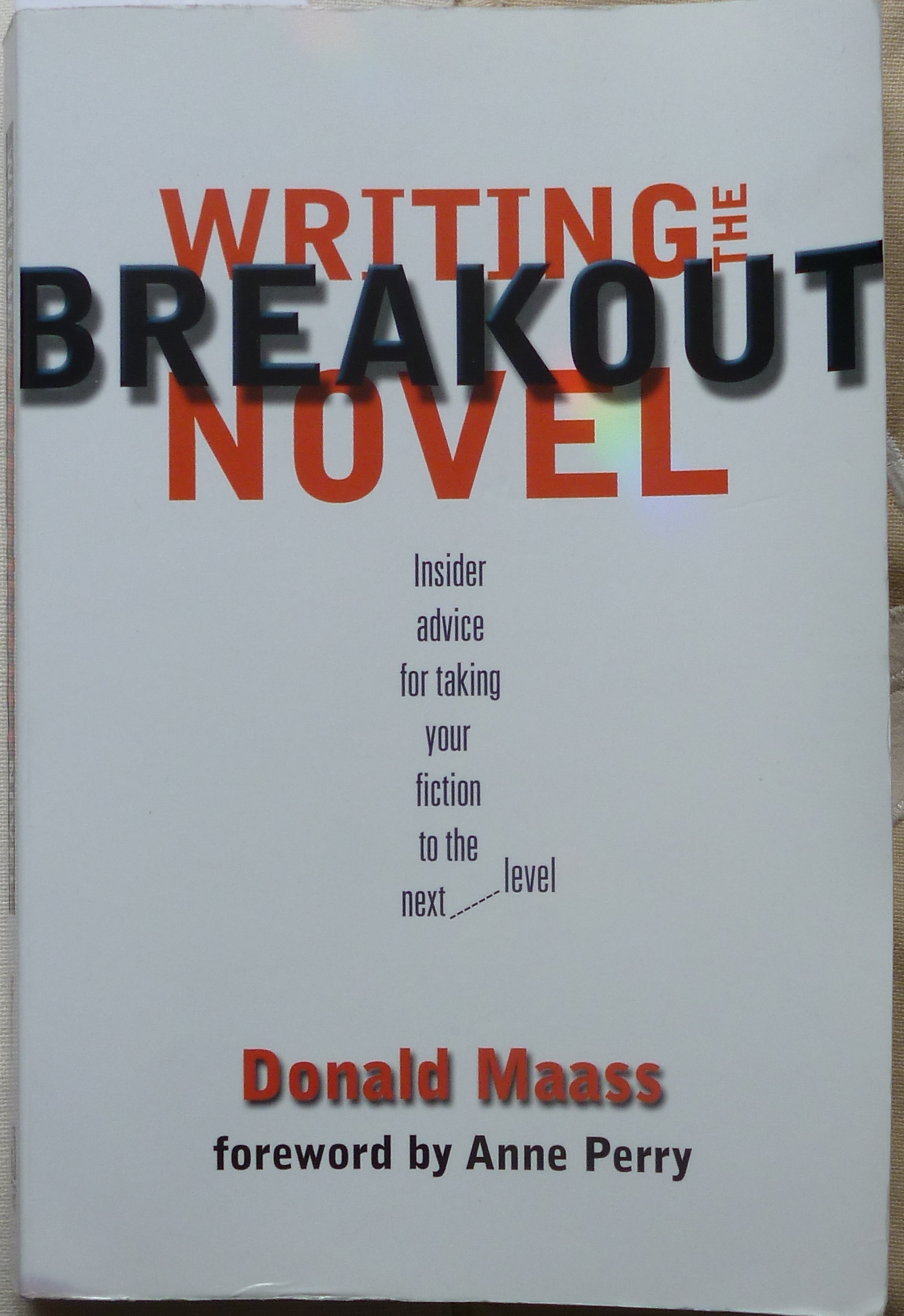
You can find an in-depth exploration into what gives fiction universal appeal in Donald Maass’s wonderful book, ‘Writing the Breakout Novel,’ which is addressed to experienced writers who may not yet have achieved great sales.
My well-thumbed copy of Maass’s thought-provoking book
Among other things, Maass invites us to consider our characters as part of their social and historical moment, not in a secondary way, but keeping this archetypal dimension in the forefront of our mind.
What makes a breakout novel memorable are conflicts that are deep, credible, complex and universal enough so a great number of readers can relate – Donald Maass
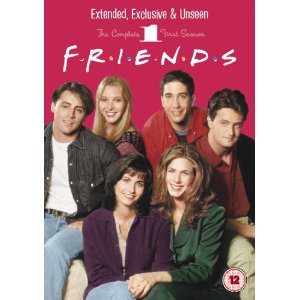
I’ll finish with a more recent example that springs to mind – the phenomenal success of ‘Friends.’ On the individual level, we’ve got six main characters each with their own life experiences.
Massive mega-hit, ‘Friends’
On the cultural level, the series hit at the moment when young people no longer stayed in the family home until they were married and ready to make a home of their own, but could enjoy a transitional time of sharing with a pseudo ‘family’ of their own contemporaries.
On a universal level, ‘Friends’ is a story of every person’s first steps into the adult world, now and back through the ages; when parents no longer provide, and we have to find out who we are and how we can cope without them.
August is going to be ‘archetypes month’ here in the House of Dreams, so sign up for email reminders if you don’t want to miss anything!
We can analyze our dreams for what they say about us, fear them for what they might mean, take them for more than they are, merely enjoy them or follow them into the worlds where they may take us.
My book “Flying with Fairies” is this last. Born of a single brilliant full-color image, the first chapter turned into a second and then into a novel and then into a series. This book was a departure from what I had written previously and is unlike anything I have written since. But then, the dream that inspired it stood out from the other dreams for its visual clarity and symbolic obscurity. It was an opportunity to be exploited and a challenge to be faced. It spoke of pleasure and of hard work at the same time.
“Gatorbait”, a short story published in a Florida based regional publication, was also based on a single image. Where “Fairies” was based on a mid-air collision between a fairy and a flying human, “Gatorbait” was based on a young rodeo competitor and her flying horse.
I have a first chapter of a spy thriller that was so completely formed in my mind when I woke up, I could wait two days before writing it down. I have no idea what I will do with that chapter, but it’s there in case of whatever.
Everyone dreams, but remembering and exploiting dreams takes a willingness to step into a place where few of us are comfortable going. If you wish to write, go there. Take the risk. Exorcise the demons by writing them down and capturing them on the printed page where they can no longer do you any harm.
Do not work for your dreams. Make them work for you.
My thanks to Bob for this glimpse into a wonderful dreaming and writing life, and for his insightful comments about exorcising personal demons by capturing them on the printed page.
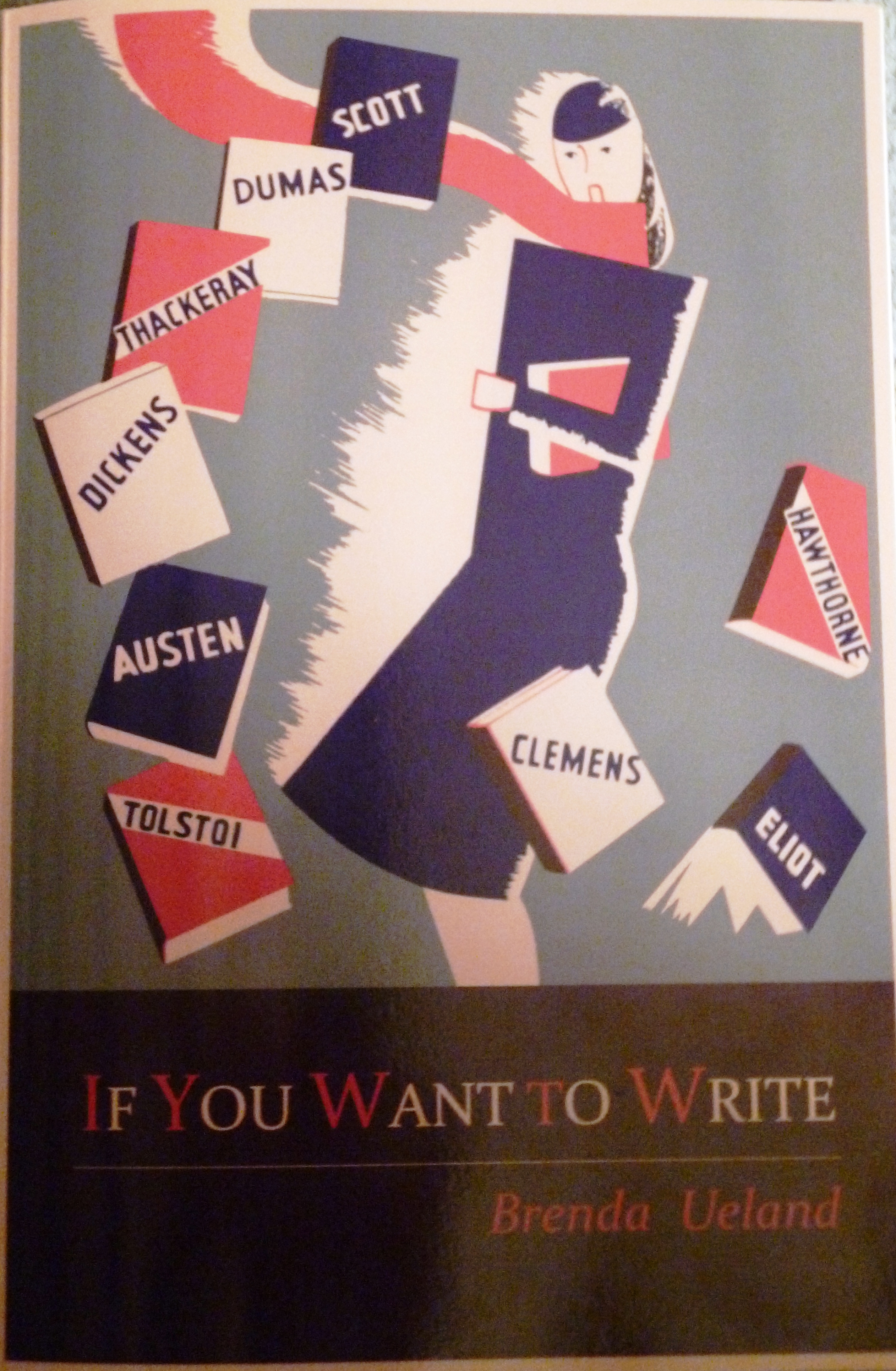
I like this book. I knew I would, as soon as I saw that the first chapter was called, ‘Everybody is talented, original and has something important to say.’ Brenda Ueland made this exciting, inspiring and humbling discovery, as I have, through teaching creative writing.
Her second chapter heading is a quotation from William Blake, ‘Imagination is the Divine Body in Every Man.’ So straight away, she is talking about the relationship between imagination and soul, and seeing creative writing as a spiritual undertaking.
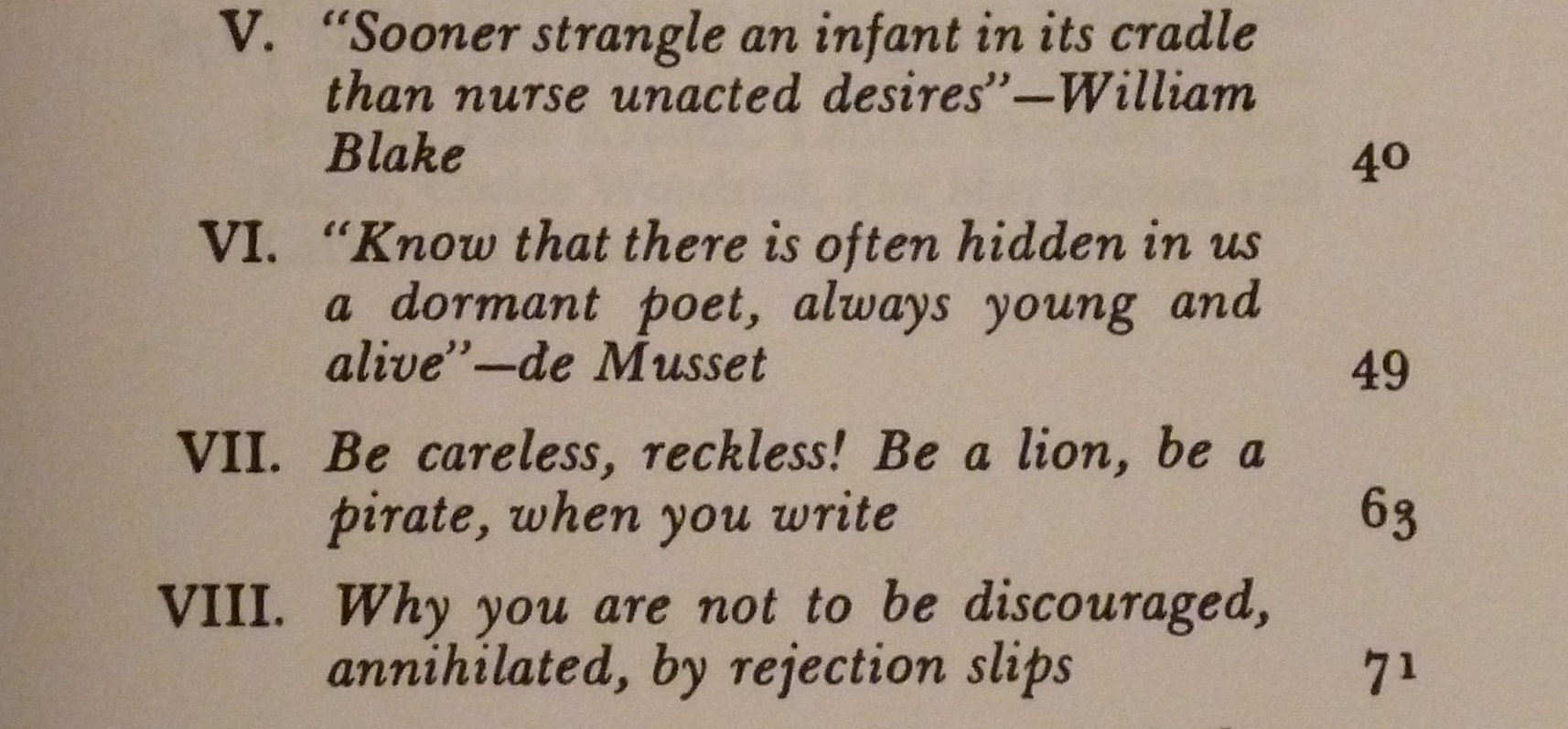
Ueland has some cracking chapter headings!
We write because we love writing, and love is a transforming energy. Therefore, she says, writing is never a waste of time, whether we are published or not. Writing will make us feel ‘happier, more enlightened, alive, impassioned, light-hearted and generous…’
According to Ueland, writing can make us feel healthier too. ‘Colds will disappear,’ she assures us, ‘and all the other ailments of discouragement and boredom.’
The book is full of great quotations. I love this, for example, from Alfred de Musset: ‘There exists in most men a poet who died young, whom the man survived.’
At times in the book, as in the quotations, there are certain assumptions and attitudes that grate for the modern reader – all people referred to as ‘men’, for example, as in the de Musset quotation, and one or two casually racist remarks which sound quite shocking to us today.
It’s not surprising if some lines feel culturally unacceptable now in a book that was first published in 1938, but it seems a real shame someone didn’t edit them out, because the substance of what the author has to say is timeless, thoughtful and inspiring.
Writing, Ueland says, is a way to find your true self. ‘And why find it? Because it is, I think, your immortal soul and the life of the Spirit, and if we can only free it and respect it and not run it down, and let it move and work, it is the way to be happier and greater.’
On the morning of July 26, 2010, something quite unexpected happened to me. I had published five novels, the most recent in 2005. Since then I had turned my attention to nonfiction projects. I thought I’d told all the stories I had in me, except for one half-finished and dead-in-the-water novel.
That’s why I was surprised to wake up from a dream that July morning with a rough, but complete, narrative arc in my head, plus three strong characters who would carry the story from beginning to end. I even had a working title, A Train to Bruges (later discarded).
For the next six weeks, I continued to awaken most mornings with additional snippets of story and characterization, all of which I scribbled in a notebook I keep by my bedside, just in case (rarely) I think of something brilliant during the night.
As always, writing the first draft was exhilarating. My “dreamed-up” characters came to life. My villain was insanely evil. Best of all, I knew from Day 1 how the story would end.
Studying the completed first draft, I realized as most novelists do in that situation, that all I had in hand was a skeleton. My story needed flesh, which came only with grinding effort through subsequent drafts.
I embarked on the research I needed to make the settings ( Brussels , Bruges , and Florenville , Belgium ) and my characters (an American priest, a Belgian nun, a young female reporter, and a psychopathic villain) jump off the page.
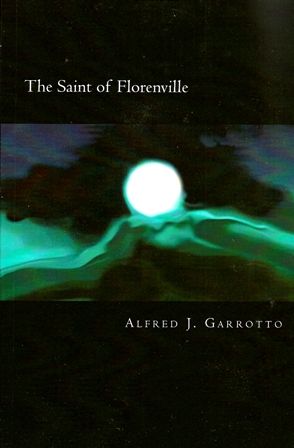
By mid-July, 2011, I had arrived at Draft 9 and could finally add the # # # symbols, indicating that I had come to “The End.”Somewhere along the way, my working title had yielded to the published title, The Saint of Florenville: A Love Story.
As I was writing the introduction to Katherine Roberts’ guest post last week, I suddenly remembered that a workshop exercise I did with the Scattered Authors Society on another occasion had in fact previously appeared in a book*
I called that workshop ‘Busting through blocks,’ and it explored a basic collage technique I use a lot in my own writing practice. You can use it to create characters, examine relationships between your characters, develop settings, find titles, spark stories… pretty much anything.
Creating a character using collage
Whatever the issue is, hold it in the back of your mind as you flick through some magazines. Don’t think about which images, colours, patterns, words you need, or how they will relate to your project; just tear out the ones that draw you, and trust they will be the right ones, the ones you need.
This works through synchronicity, like tarot or other divinatory practices; the outer world reflects what is going on in your inner world.
You can use collage to spark a story
Limit the time you spend on tearing out pictures to 10 minutes max, because you don’t want to overthink it. The whole process should feel instinctual.
Now get a pritt stick and a piece of plain paper or card. Again, follow your instincts and don’t overthink it, as you put your collage together. Take 10 minutes max for this stage, too.
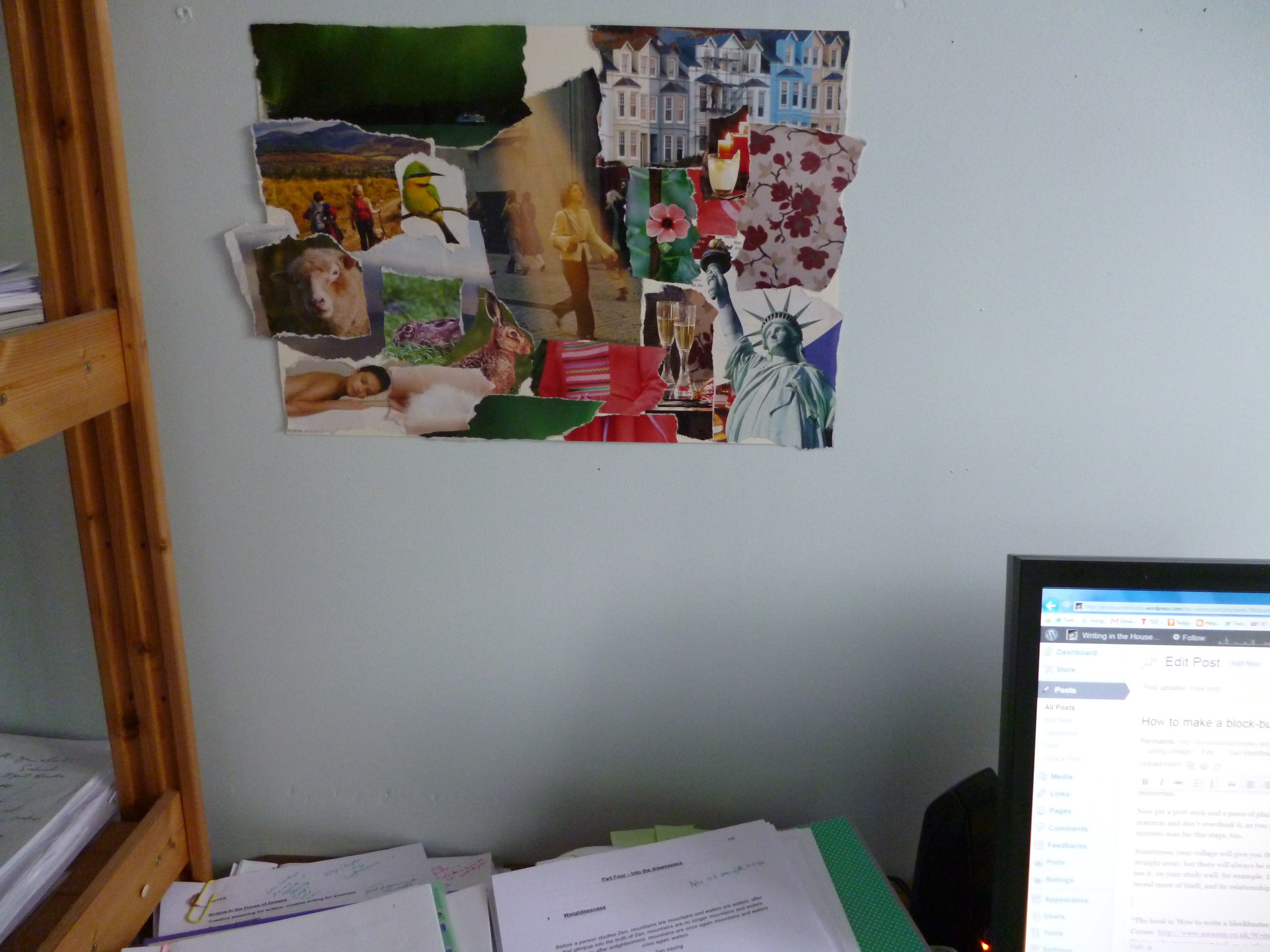
Sometimes, your collage will give you the inspiration you’re looking for straight away, but there will always be more, so put it somewhere you will see it, on your study wall, for example. Look at it often. It will gradually reveal more of itself, and its relationship with your writing project.
There are always work-in-progress collages up on the wall in my study!
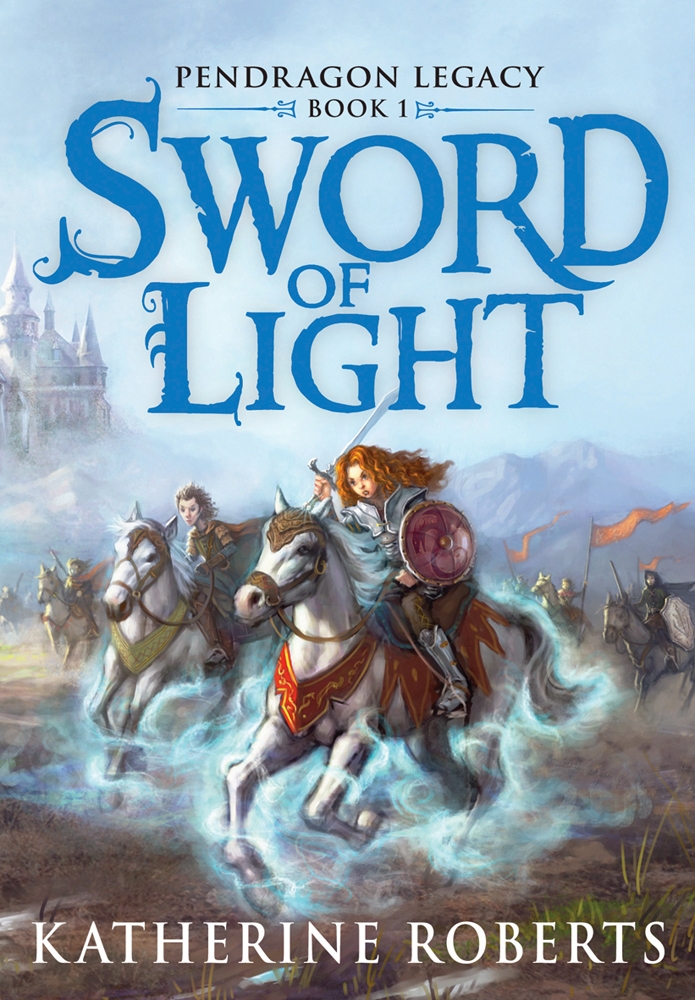
Today, I’m delighted to welcome children’s author, Katherine Roberts, to the House of Dreams, on her blog-tour to celebrate her new book ‘Sword of Light.’
It’s especially exciting for me because this is the first time, as far as I know, that a book has been published which was helped along by one of my workshops, in this case, for the Scattered Authors Society http://www.scatteredauthors.org/
My Heroine’s Journey for SWORD OF LIGHT, by Katherine Roberts
Katherine Roberts
My inspiration for ‘Sword of Light’ came in a waking dream, when I attended a workshop led by the lovely Jenny Alexander, who guided a few of us children’s authors on a ‘Hero’s Journey’ along our personal writing paths. It went like this.
Imagine you are walking in a familiar place, when you see a sign saying, ‘To the Treasure…’
I am in the local wood on the boardwalk, and it is raining so no-one else is walking today. The trees are dripping and the bluebells are out. All smells green and garlicky. I am approaching my favourite bridge over a stream, where I often imagine fairies, when I see a new path twisting through the trees where there are no marked trails. A sign says TO THE TREASURE. I think it is one of the farm’s treasure hunts for children, so I hesitate because it might be something tacky and disappointing. But since no-one is around to laugh at me, I decide to take a look.
You find the path blocked…
I push through some ivy and find the path blocked by a monstrous dragon that some local artists have strung up in the trees by the boardwalk for the annual Arts Trail. It is a fantasy creature made of old grey canvas, black feathers, and a scary triangular beak/snout. It is meant to be a future people’s idea of a bird they have never seen because birds are extinct in the future, and it has come alive. It hisses at me. It has been tied in the trees long enough, and now it has escaped. But it can’t fly because its wings have not been made the right way, and they are soggy with the rain. Also, it has no eyes, so it is blind.
How do you get past the block…?
The ‘future-bird’ cannot see me so I freeze, trying to make no sound. I think about going around it, but the undergrowth is too thick. Also, it’s boggy because I am off the boardwalk. I am too afraid of its huge sharp beak and its powerful claws to try climbing over it, so I decide to fool it. I pick up a stick and throw it into the undergrowth. The dragon hears the stick land and flaps off after it, getting its wings entangled in the bushes and shrieking as it flounders in the bog. I hurry past before it can get free, a bit afraid of meeting it again on the way back.
You find the treasure…
As I leave the dragon behind, the sun comes out and the path emerges in a clearing where there is a barrow covered by greenery. I push aside some leaves and crawl inside, where I find a gleaming sword. This is the treasure! I take the sword, thinking it might be useful if I have to fight the dragon, although I don’t really want to soil the beautiful blade with its blood, nor hurt the ‘future-bird’ because it is the last of its kind. Also, I doubt my fighting skills because I have not been trained to use a blade. So I venture back warily along the dripping path, where the sun now sparkles through the leaves and gleams off my treasure.
What do you do next…?
The dragon is still stuck in the bog, but it has exhausted itself and the sun is drying its feathers. It steams gently, its wings spread in the warmth. It still cannot see me, but the sword is magic so it can see the light coming off it. It crawls towards me, as if hypnotised. It seems less afraid now, maybe because it is no longer lost and alone. I stroke its beak and it does not attack. Murmuring to the creatuire, I climb on its back, and since the sun has dried out its wings it can now fly. Although it is still blind, my eyes will guide us. As we take off and circle above the trees in the sunshine, I see the glint of water below where fairies live. We both feel amazingly free. As long as we continue to trust each other, we can fly anywhere in the world, and my sword of light will defend us from enemies, past or future.
Sword of Light
I was writing the first draft of ‘Sword of Light’ at the time of this workshop, and am quite spooked by how many elements have ended up in the book:
The sword – Excalibur, the Sword of Light that was forged in Avalon.
The dragon/’future-bird’ – a shadrake, a dark dragon from the underworld of Annwn which breathes ice instead of fire.
The heroine – Rhianna Pendragon, King Arthur’s daughter.
***
SWORD OF LIGHT is published this month by Templar in hardcover, and you can follow Rhianna Pendragon on Twitter at www.twitter.com/PendragonGirl
Well, I didn’t see it coming. When I finally finished my dream book last week, I was planning to break open the bubbly, but I just felt bereft.
Before I was ever published, I knew I wanted to write a book about dreams, and for twenty years, that book has been the heart of my writing life, at first a secret addiction, later an open obsession.
There have been various versions along the way, non-fiction, autobiography, novel, work-book… each new one rising like a phoenix from the ashes of the one before. I liked them all – my agents liked them too – but none of them felt exactly right.
The dream book defined me to myself, as a writer, far more than my growing body of children’s books. I’ve loved it, felt impatient with it, hated it in equal measure. I’ve wished I could put it down and get on with my proper writing career.
And now I can. It feels like a death, but all week, I’ve been dreaming about babies. This reminds me of the Death card in Tarot, which is sometimes called Death and Rebirth.
Death in Tarot is deep change. As one situation ends, a new one begins. I don’t know what kind of writer I will be now that a third of my writing life won’t be channelled off into this dream book any more.
So farewell and thank you, grand passion of my writing life, and hello and welcome dream-babies of whatever is coming next.
Bubbly wine, anyone?
Next week – great excitement in the House of Dreams – Katherine Roberts will be calling in on her ‘Sword of Light’ blog tour to tell us how a workshop session she did with me helped her to find the story
Can dreams inspire a writer to write a novel? Mine did – and they still do.
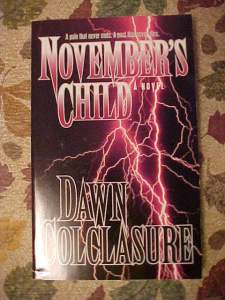
When I was 16 years old, I started having dreams about a man named Jonathan. These dreams happened almost every night and lasted for many years. Two years after the dreams started, I dreamt that all of the dreams combined were turned into a novel titled, ‘November’s Child.’ I even saw the title of the novel in this one dream!
I was 19 years old when I finally completed that novel. During this time, I had to work out how to make the dream ‘story’ work as a believable story. After all, I had no idea what kind of connection Jonathan had to me, the dreamer, so I had to think of what kind of connection he would have to my story’s main character, Malissa.
This name did not come from my dreams; I needed a name for a character that represented ‘me’ in the story, and I decided to use an alternative version of my sister, Melissa’s, name.
As to the connection dilemma, I discussed this with one of my other sisters, who happened to have just seen a movie about Druid characters. She suggested I turn Jonathan into a Druid. After researching Driudism and reading about their belief in the transmigration of souls, I decided that, yes, that could work. Voila! I had my story figured out.
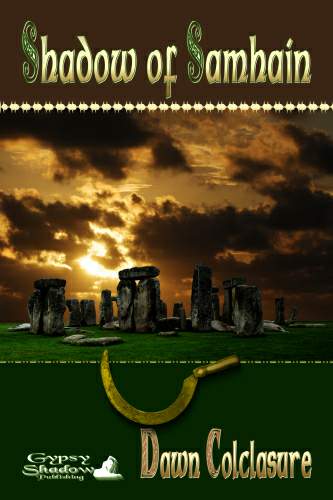
My novel was published when I was 20 years old. Shortly afterward, my publisher went bankrupt and the book went out of print. I rewrote the book and gave it a new title: ‘Shadow of Samhain.’ This new version of my ‘dream novel’ will soon be published by Gypsy Shadow Publishing.







 Jenny Alexander's blog: Writing in the House of Dreams