Tag Archives: inspiration

What is your purpose? Try this experiment and see!

When I read Tzivia Gover’s blog post a few days ago about asking a dream symbol, ‘What is your purpose?’ it felt timely for me because I had just dreamt about an image that recurs fairly frequently in my dreams, so I had an obvious one to try the technique on.

In the dream, I was walking along a cliff path, looking out across the clear blue water. I felt happy and full of energy. As I came down towards the bay, I saw a woman in a bright floral summer’s dress  lying languidly in a wide shallow boat, gently rocking.

I noticed an enormous fish, almost as big as the boat, swimming around in the water  nearby. There was no sense of danger. It was, as I recorded in my dream diary, simply ‘extraordinary and remarkable.’

I walked on, and saw several more of these huge colourful fish, as I came down onto the beach and crossed a wide rushing stream.

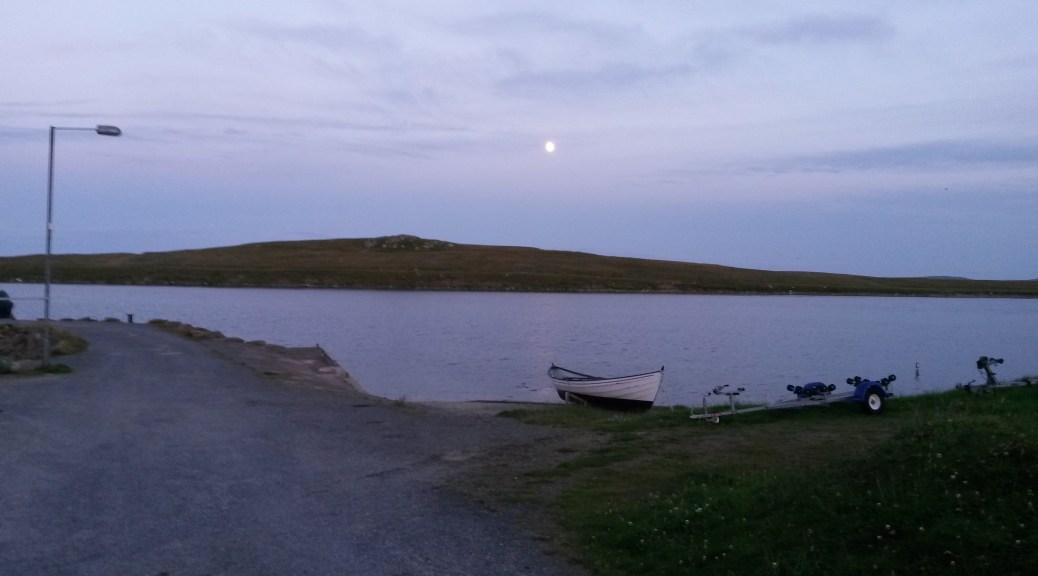
2013-06-08 18.35.09

These days, I don’t usually try to interpret individual symbols in my dreams, I just enjoy them, but today I asked the enormous fish, ‘What is your purpose?’

Nothing came to me immediately, so while I was waiting for a reply I pondered, ‘What is it about this enormous fish? It’s not scary, it’s just swimming around in its natural element of water. Yet it is a remarkable fish.’

Then I realised, ‘What is the purpose of this remarkable fish? To be remarkable!’

I feel my life is remarkable, as anyone who has close contact with their dreams and imaginary worlds will feel. I seek the remarkable in my work, always trying to break new ground.

My book Bullies, Bigmouths and So-called Friendswas identified by the Independent critic as the first real self-help book for children; Writing in the House of Dreams and the book I’m working on at the moment, When a Writer Isn’t Writing: How to beat your blocks and find your flow, both mix themes to make unusual hybrids.

My fish is an ordinary fish in its ordinary element and yet it feels remarkable. My life is an ordinary life but my purpose is to find the extra-ordinary within it. That’s what brings me pleasure, the same as  when these enormous fishes swim into my dreams.

You can find your symbol too; you don’t have to wait for a dream. Simply sit quietly for a few moments and take a few slow breaths. Still your mind.

Lower or close your eyes, and move into your inner space. Ask, ‘What is my life’s purpose?’ and let the question float away, as you take a few more slow easy breaths.

Now think of an object, and accept the very first thing that drops into your mind. Don’t judge or rationalise it away.

Examine your object from every angle, noticing its particular characteristics. I notice that my huge fish is always brightly coloured, always swimming in clear water and always on its own.

Ask your object, ‘What is your purpose?’

Again, don’t censor or rationalise; go with the first answer that pops into your head.

If you try this, because my purpose is to find and celebrate remarkable things, please share! What was your symbol, and what insight did it bring?


I do this every year!

Several people have contacted me recently to say they were missing my posts here in the House of Dreams and ask why I haven’t been blogging. Thank-you, bless you – you know who you are. It’s lovely to be missed 🙂

I always plan to blog throughout the summer but let’s face it, I go off the radar every year because when it’s fine I want to be at the beach. There are three reasons why this year’s break has been longer than usual.

Swimming selfie in Tiree
  1. The weather’s been amazing, and I’ve had a total of five glorious weeks out and about with my little tent, mostly with no internet or mobile connection.
  2. Before I set off on my travels, I was working with a branding and marketing consultant to try and create a more unified web presence, instead of having a children’s author site and this completely different area for dreams, workshops and writing books. I was holding off until it was up and running, but that’s taking much longer than I hoped and I’ve been missing blogging, so I’m back!
  3. I’ve been super-busy doing last-minute things for Writing in the House of Dreams such as checking proofs, ordering copies, setting up a  Writing in the House of Dreams – the Book page here on the blog and sorting out some publicity before publication day on October 15th.

Yes, it’s that close – five weeks, and that means five posts to publication. What will be in these countdown posts? Dreams! Because I really do ‘write in the House of Dreams,’ I get guidance in my dream-life for all my work, and I’m going to tell you five dreams that have helped me overcome various anxieties I had about self-publishing and really come to love it.

This post is just to say ‘Hello – I’m back – is anyone there?’ My normal posting day is Wednesday, so come back tomorrow for the first of my five pre-publication posts and read about the dream that helped me focus on the money side of self-publishing.


Do antidepressants help or hinder creativity?

A while ago, I stumbled upon an interesting article by the novelist, Alex Preston Does Prozac help artists be creative? and reading it reminded me of my own experience of prescription drugs in my teens and twenties.

In his article, Alex Preston interviews a number of successful writers about their experience of taking anti-depressants and one thing that comes to light is that although the pills might help people to overcome blocks and inhibitions so that they can start writing again, that doesn’t mean they’re necessarily producing very good work.

I first experienced depression as a young child and I was receiving treatment by the time I was twelve. Before I started taking the pills I had always thought of my extremes of emotion as being like the weather, some days dark and overcast, some bright and sunny. Sometimes, with a sense of dread, I could feel the storm clouds gathering; other times I could feel the dark clouds lifting away.

Storm clouds gathering

How I dealt with the darkness was through drawing, painting and writing poems. One time, I designed the cover of a poetry book which I called ‘Poems of the Darkness and the Light,’ and my teacher didn’t believe I had made the title up. As if children could not feel the darkness as well as the light.

My darkness and light were part of my nature, they were my micro-climate, and after I started taking anti-depressants I stopped feeling like me. It felt as if someone else was living my life, but doing a better job of it than I would have done in terms of passing exams and doing the work at university.

I stopped taking anti-depressants some ten years after I started, because when my older sister killed herself with prescription drugs it seemed clear to me that they weren’t any kind of cure at all. The withdrawal was terrible.

But in time, I started to write again. I learnt to flow with my own rhythm of highs and lows. It felt like the difference between trying to find your way in the dark within the narrow beam of a torch, then switching it off and waiting until your eyes acclimatise and gradually the dark is less dark, there are stars and glimmers, a faint smudge of hedges, a pale ribbon of road.

All these years later, I remember what it felt like to be numbed out of my own life on a diet of pills. If I hadn’t been shocked out of it by my sister’s suicide I probably would have stayed like that, and never discovered the fertile darkness, or come home to myself.

Walking in the dark
Walking in the dark

The Uses of Sorrow – by Mary Oliver

(In my sleep I dreamed this poem)

Someone I loved once gave me a box full of darkness.
It took me years to understand that this, too, was a gift.

My feelings about anti-depressants have come out of my personal experience and I’m sure other people will have very different views and stories. Have you ever taken anti-depressants? Did you feel they helped or hindered your creativity?

Matt Haig (Reasons to Stay Alive) has written a moving and thoughtful article about depression here. Like me, he believes there isn’t any one size fits all solution.

If you think you may be suffering from depression there’s a balanced guide that’s well worth reading here

You may also like to read Carolyn Hughes’ moving account of her own experience and treatment in The Hurt Healer


You and your writing – true love or passing passion?

It’s easy to fall in love with writing, but can you take it to the next level?

A lot of people love the idea of writing, and hold it in their heart for years as ‘a one day when I’ve got  time’ dream. And when they engage, perhaps in workshops or inspired by a book such as Writing down the Bones by Nathalie Goldberg or Julia Cameron’s The Artist’s Way, writing does not disappoint.

Because it really is exhilarating to discover that all you have to do is open the door, and ideas will come pouring through. Characters, settings, stories… it’s astonishing and wonderful what you find inside that you never even knew was there.

This is the honeymoon period. It’s bright, fun and exciting, but it doesn’t last forever. You can abandon it for a while and then start all over again, with another course, another book, loving the romance but not committing, or you can surrender to it fully, and fall properly in love.

002

Love is not easy. As Khalil Gibran says in The Prophet, ‘Even as love crowns you so shall he crucify you. Even as he is for your growth so is he for your pruning.’

When you fall in love with writing, just as when you fall in love with another person, your centre of gravity changes. You are not the only important thing. You are willing to learn, to strive and to make sacrifices in the service of your love.

Loving your writing means making yourself the best possible writer that you can be. It means studying and practising all the skills of writing, so that you can properly honour the wonderful flow of ideas you have found.

Sometimes it might mean giving up things you really liked – ‘killing your darlings’ – if a clever image you were pleased with doesn’t sit well in the larger piece, for example, or if a descriptive passage you’ve worked really hard on has got in the way of the action.

It means curbing your annoying habits, such as using too many abstract nouns or adverbs, or peppering your text with a few favourite words. What you like is not important; you want to do what the writing needs.

Writing is a labour of love – labour and love, both. When you have setbacks, as every writer does – a book idea that doesn’t work after months and months of trying, a rejection from a publisher or agent, an e-book that’s barely sold a copy – it’s only your love for the art and craft of writing that stops you walking away and giving up completely.

I’ve had times when I’ve felt like packing it in, but writing always brings me back. It’s part of who I am now, not just a thing I do. As Khalil Gibran says, ‘think not you can direct the course of love, for love, if it finds you worthy, directs your course.’

What is your relationship with writing? Would you like to commit yourself more fully? Would you like to be able to walk away?


Acquainted with the night, by Victoria Field

I’m delighted to welcome writer, poetry therapist and tutor Victoria Field into the House of Dreams today. I’ve attended several of her poetry therapy workshops over the past few years, which I can highly recommend, and I always look forward to reading her blog

Victoria Field
Victoria Field

I have always been aware of my dreams.  I still remember one from my pre-school years in which I went to watch a Punch and Judy show at the bottom of the hill where I lived.  I sat on my tricycle and was both drawn and repelled by what I saw happening on the stage of the booth and feared I’d be sucked in.  I’m not sure I’d ever seen Punch and Judy in real life.

It seems dreams are informed by more than direct experience.   I know that on residential courses, participants report shared dreams and that when I was married, my husband and I somehow occupied the same dream space as we shared a bed.  As a student, I often dreamed of tents.  I loved back-packing but there was also something mysterious about my dream tents and when I recently sat in a Bedouin tent in Kuwait, it felt familiar.

Many of my poems begin with a dream image and they find their way into prose too.  Several years ago, I began writing down an exceptionally vivid dream that centred around finding a white horse in my tiny kitchen in a terraced house in Chester.  As I wrote, the dream took on a life of its own and eventually turned into a novella of 16,000 words recounting what happened next.  The white horse can stand for many things in my life and like all dream images is mutable and outside time.  Writing happens in a liminal space and to my surprise, the horse surfaced again in a comic short story. 

I’m also aware that dream-work happens without our conscious mind being involved.  I often tell an anecdote when people ask how I became involved in poetry therapy.   My first encounter with the practice was when John Fox, an eminent practitioner based in the US gave a workshop in London in 1999. It was a two day workshop and on the second day, I felt utterly unable to keep my eyes open, in spite of being fascinated by the work.  I’d had a leg injury and was on pain-killers which I blamed for my sleepiness.  I excused myself and found somewhere to put my head down and went into a deep sleep for a couple of hours. I can’t recall any dreams but I woke up thinking utterly clearly, ‘I want to be a poetry therapist’.  And so began my journey of the past decade and more.

So, if people fall asleep on my courses, I never object.  Important work is being done as we sleep, whether we know it or not!

9781906742614
Victoria’s latest collection

Victoria Field is a writer and poetry therapist.  More information is available here http://www.poetrypf.co.uk/victoriafieldpage.shtml  and she blogs at www.poetrytherapynews.wordpress.com

Mind-magic for writers – harnessing the power of the circle

The circle is an archetype for wholeness and integration, a universal pattern in nature and the human psyche which is also a template for the stories of life and fiction. You can use the  power of the circle archetype in writing, deliberately placing it in your mind by making mandalas.

The Power of the World always works in circles, and everything tries to be round. The sky is round, and I have heard that the earth is round like a ball, and so are all the stars. The wind, in its greatest power, whirls. Birds make their nests in circles, for theirs is the same religion as ours. Even the seasons form a great circle in their changing, and always come back again to where they were. The life of a man is a circle from childhood to childhood, and so it is in everything where power moves ~ Black Elk

003
Ice in a circular hollow

Stories naturally make circles. The protagonist sets off, achieves or learns something in the course of the action, and returns changed. Often the work of redrafting is about refining the beginning and ending to tie everything into a satisfying whole. The crafting of a story is a process of perfecting the circle.

Dorothea Brande (‘Becoming a Writer’) says the unconscious is not only the source of our creativity, but also the home of form. This is why, when you have plot problems, new ways of fitting things together can naturally spring up in your mind as soon as you stop consciously trying to force them.

When I’m planning or redrafting a story I will often draw mandalas while I ponder.

One of my working mandalas

‘Mandala’ comes from the Sanskrit word meaning ‘circle.’ It signifies a geometrical pattern based on a circle, and it’s used in every spiritual tradition as a focus for contemplation, meditation, protection, healing or prayer.

In its most basic form, the mandala is a simple circle, and if you’d like to try making some you can start by drawing circles. I recommend you do this free-hand, although your first attempts may look like lumpy lozenges. Keep working at it until you can do one that looks reasonably round. The process of this will anyway help attune your mind to the archetype.

When you have drawn your circle, you can incorporate other geometrical forms into it and around it. You could put a triangle inside it, crossed by another triangle to make a six-pointed star. You could put your circle inside a square, or squares inside your circle.

Choose any geometrical shapes you like, but try to achieve balance, so that the sides and segments of the circle are the same. Drawing geometric shapes also settles your mind into the beautiful reality of numbers. 

Treat the whole process like doodling, not trying to create art, but simply to play and allow your mind to idle. Keep building mandalas until you get one you really like.

Shading or colouring your mandala is a way of staying with the archetype for longer, and allowing it to work upon you. When you have finished, bring the energy of the circle with you into your writing. Bear it in mind as a template for your story, and see whether it gives you a greater sense of direction and clarity.

 What creative activities do you use as part of your writing process?

Check out these lovely prayer-flag mandalas by Toko-pa Turner http://toko-pa.com/2013/11/29/mandalas/

The new year, synchronicity and my next book

I like to start every new year with a brand new piece of writing so every autumn I put together a short-list of ideas for my next book and then watch for synchronicities to help me decide which one to go with. This year, as usual, life has given me some prompts.

2013 got off to a cracking start for me when I tutored my first ever Arvon course on ‘Writing for Children.’ I had never previously taught children’s writing because it seemed to me that writing for children was pretty much the same as writing for adults – all the elements of fiction such as plot, settings and characters work in the same way, and whoever you’re writing for you have to target your particular reader.

But being asked to teach writing for children meant I had to really think about not only what is the same but also what is different, and teaching the course turned out to be pure pleasure. I enjoyed it so much that I wrote a new series of evening workshops on writing for children which I taught at the end of 2013.

At the first session, I dug out various books I thought people might like to read, including the very latest book on writing for children, by Linda Newbery and Yvonne Coppard.

008
Writing Children’s Fiction, by Yvonne Coppard and Linda Newbery

Flicking through the back matter for more ideas, I discovered that Writing in the House of Dreams is included in the recommended writing blogs, the only one by an individual among half a dozen group blogs. That felt most affirming!

007

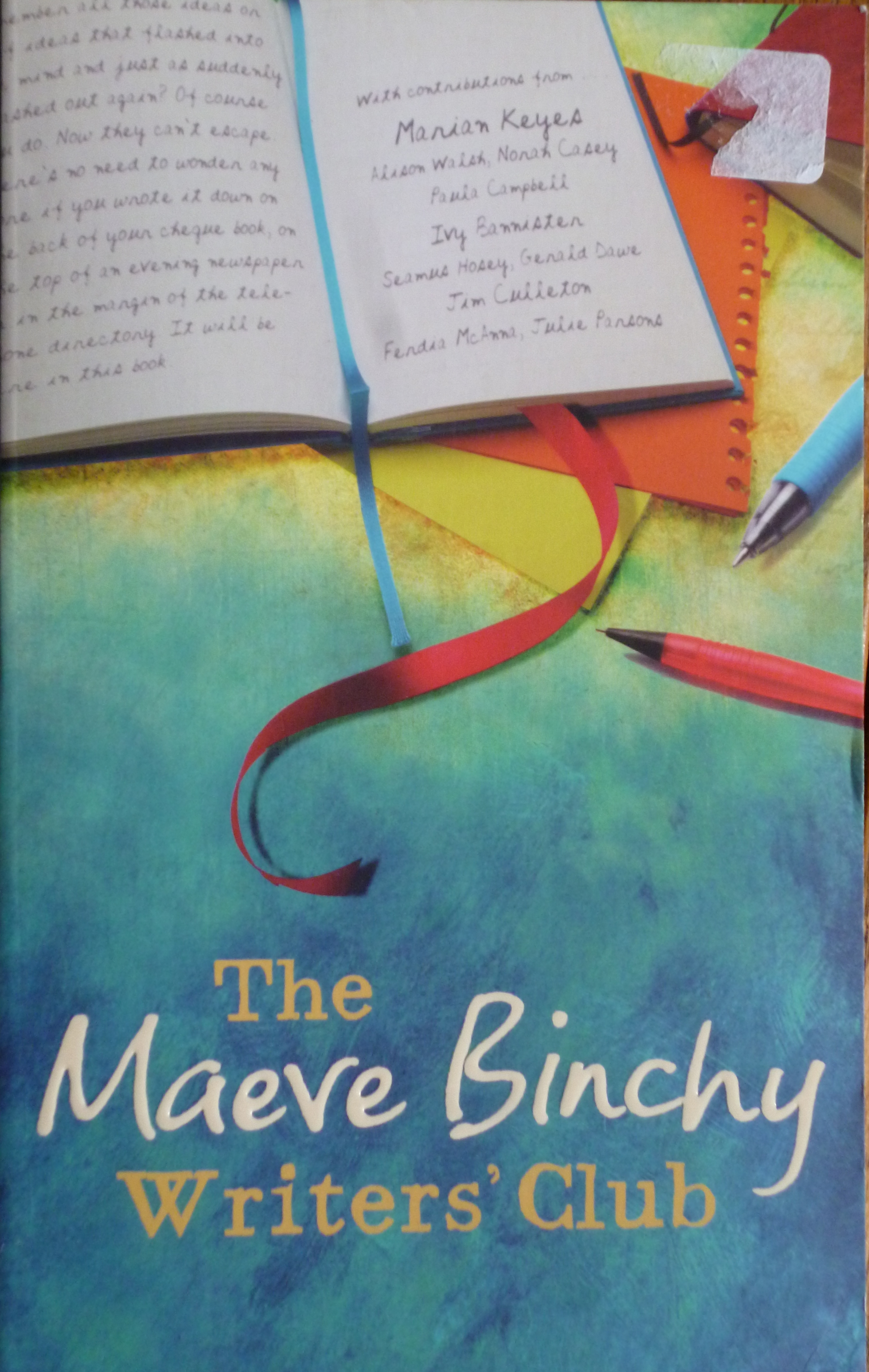
Then, at the last workshop session, one of the participants mentioned that she’d seen my children’s book, ‘How to be a Brilliant Writer’ in Maeve Binchy’s recommended reading list at the back of her book on writing.

004

The Maeve Binchy Writers' Club
The Maeve Binchy Writers’ Club

One of the ideas I’d been mulling over for my next project was a book for adults about writing – just writing, not in relation to dreams. But although I’d wanted to do that for ages, it didn’t seem sensible because there were already so many books out there by writers about writing .

I always follow life’s promptings, however, so with a gleeful click of the heels I’ll be up, up and away writing an adult book about writing to go with my children’s one in the New Year. The various other projects I’ve been mulling over will have to wait until their time is ripe.

What new projects are you looking forward to in 2014? Have you felt prompted by life?

The gifts of writing – 2

In this, the second of my pre-Christmas posts on the three gifts of writing, I’m thinking about the gift of awareness.

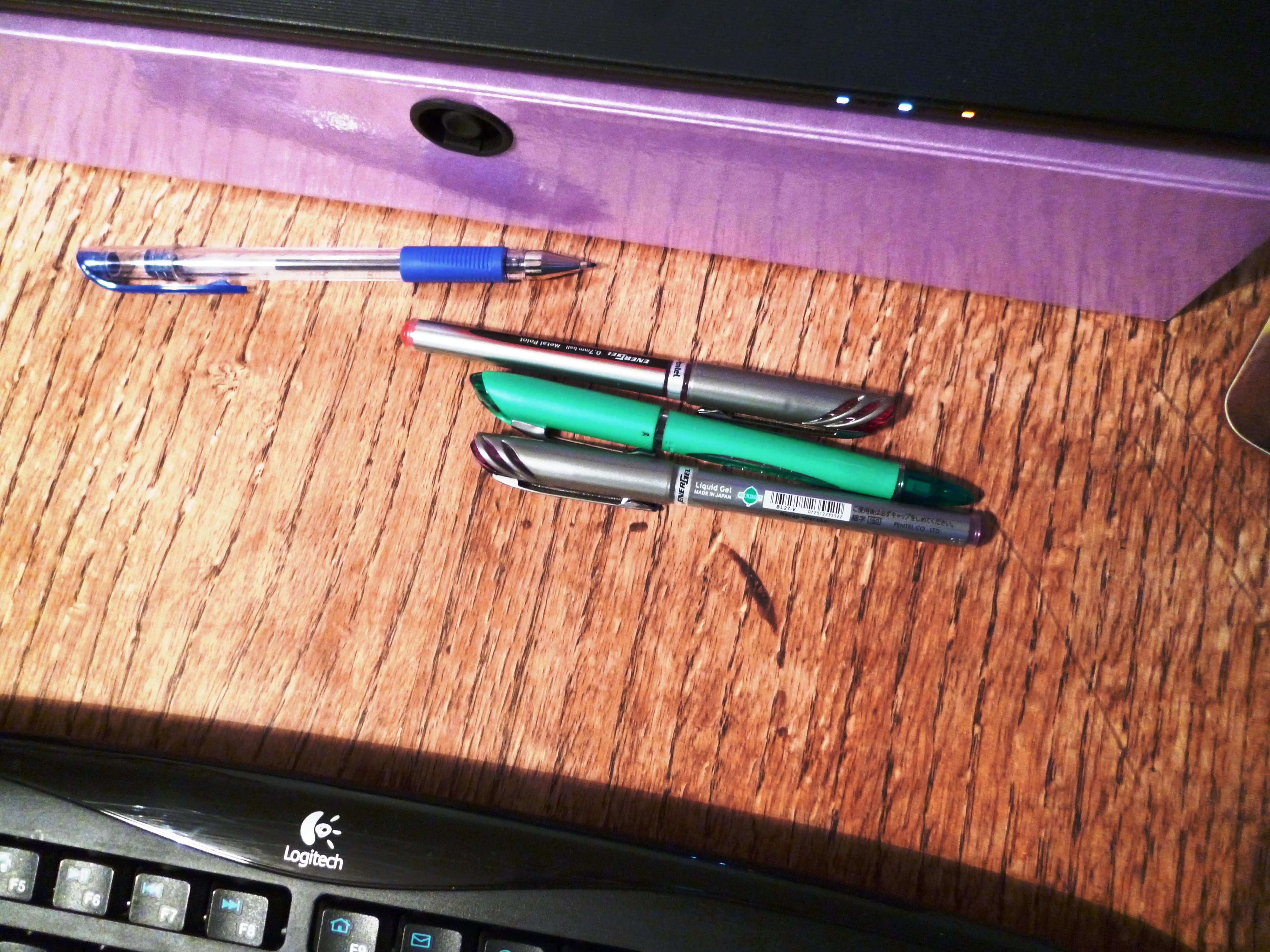
In ordinary life, a lot of what we experience is subliminal. We engage with the world through our senses, but barely notice what we are feeling. For example, sitting here at my computer I’m only really seeing the keyboard and screen, unless I take a moment to deliberately notice the four different colours of gel pen right in front of me, one of them a very vibrant green, the particular blue of the walls, the dark grain of the old table, the torn or crumpled bits of paper in the basket beside my chair.

pens

When we write, we picture the scene. We use all our senses to fully imagine it. We notice the detail of our protagonist’s clothing, the colour of their eyes, the quality of their voice. We notice the smell of the air, sharp and clear on a winter’s morning, close and musty in an old drawing-room, or wafting from a warm kitchen carrying cinnamon, or cabbage, or toast.

Our senses are the gateway to the world of our story, and describing what we can see, touch, hear, taste and smell there is how we bring our readers in too.

In writing, in imagination, we can experience life more fully and intensely, and that vibrancy spills over into our experience of real life.

Another thing that we do in writing, which is part of show-don’t-tell, is to notice and describe our characters’ emotions through their bodily sensations. When they are angry, we imagine where they might feel that in their body, and so experience it in our own. Again, this habit in imagination spills over into real life, and we become more aware of how emotion is expressed in the body.


Writing non-fiction also brings an increased awareness, not of what we experience through the body but of what we know, the life of the mind. When you write non-fiction, you become aware of knowledge you don’t normally notice or think about – it’s just there, part of the scenery, like the background details I never notice when I’m working in my study.

How to look after a rabbit; how to write a biography; how to grow plants from pips – these are some of the subjects I’ve written about. Others include the skills you learn just by being alive for a long time, such as cultivating happiness, building self-esteem and handling bullying. I’ve never done much research because I write the things I know about through my own experience, and in writing them, I notice what I know.

Shintie -sweet source of all the know-how in my little book, 'Rabbittalk - How to make friends with your Rabbit'
Shintie -sweet source of all the know-how in my little book, ‘Rabbittalk – How to make friends with your Rabbit’

This increased awareness of the knowledge and experience we normally take for granted and stop noticing is my second great gift of writing. Next week, I’ll close this little series with Gift Number Three.

Too sunny to blog!

The title says it all – I’ve decided to take the whole of August off from blogging/facebookpaging/tweeting and everything else that keeps me at the computer.

desk

I worked 24:7 redrafting my YA novel when the sun was shining last week, and now it’s delivered I intend to get some serious beach time!

019

It’s important for writers to ‘go down to the well’ and allow fallow time between projects, and being out and about with a notepad and pen is pure joy when the weather’s so warm.

A stroll from Looe to Polperro brought me ‘Peony Pinker’ a few years ago, and camping on a Shetland beach last summer brought me back to ‘The Binding.’ I wonder what this summer’s time out will bring.

I’ll be back in House of Dreams in September, starting with my blog birthday on the 4th, when I’ll be reflecting on my second full year of blogging.

In the meantime, happy holidays everyone. May the sun shine on you, wherever you are!

See you in September 🙂

What children’s authors get up to on retreat

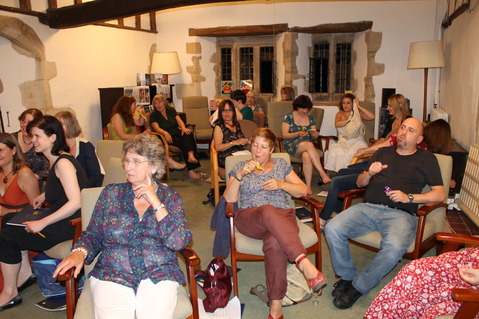
I didn’t post last week because I was on retreat at Charney Manor in deepest Oxfordshire with the Scattered Authors Society.

Pimms o'clock in the Charney garden
Pimms o’clock in the Charney garden

As retreats go, this annual adventure is a very lively one – among this year’s sessions we had comedy improv, yoga, e-publishing, drawing, developing the work-in-progress, searching for the iron-age fort and the traditional Charney Quiz.

It's got to be around here somewhere!
It’s got to be around here somewhere!
Quiz night - my team was The Naughty Corner (we lost by less than usual)
Quiz night – my team was The Naughty Corner (we lost by less than usual)

One of my offerings was an afternoon workshop on writing the tarot. Tarot is useful, like dreams, because the cards you draw will be synchronistically connected with your current emotions and preoccupations, so the themes and characters they suggest will feel relevant and immediate to explore in your writing.

However, in an introductory workshop it can be easier if everyone’s working on the same image, so I like to start at the beginning with number 0, The Fool. Katherine Roberts has described the session on her lovely blog, Riding the Unicorn, if you’d like to find out more.

I’ll be offering a one-day workshop in Cornwall on writing the tarot in the autumn. In the meantime, check out the workshops page on this blog if you think you might fancy some dreaming-and-writing in Surrey this October, and please spread the word if you know anyone else who might be interested.

Cheers!

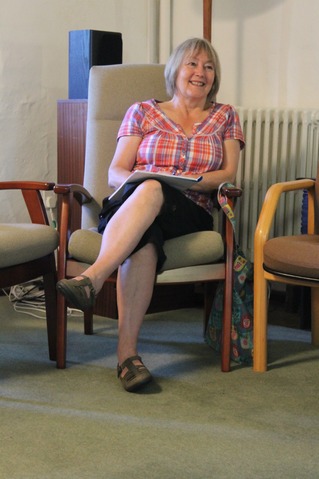
My session, with Celia Rees, on steering a happy course in a difficult market