Category Archives: Creativity

Daily pages vs dreams

A few of my lovely dream diaries

One of my favourite books about writing is Dorothea Brande’s ‘Becoming a writer.’ It was published in the 1930’s and is still in print, which attests to just how good it is.

Brande says we should treat our writer self as two people, the creative, playful child and the business-like, grown-up critic. We should develop and nurture both sides of our writer self, and teach them to work in harmony.

She refers to the creative side as the unconscious, and suggests one way of opening to it through the practice of daily pages, an idea which later formed the core of another writing bestseller, ‘The Artist’s Way’ by Julia Cameron.

The concept of daily pages is that you write stream-of-consciousness for twenty minutes a day, ideally first thing in the morning before the concerns of the day have a chance to intrude. You keep the pen moving on the paper, even if all you can think of is along the lines of, ‘I don’t want to do this, I can’t think of anything to say, it’s a bit rainy outside…’

One effect of this is to help you let go of the idea you have to wait for inspiration before you can write anything – you can write your way in. Another is that you learn to allow unconscious products to emerge when the mind is relaxed and receptive.

Many of my writing friends have found writing daily pages really useful, but it didn’t really do anything for me. It occurred to me that the reason why was because I already wrote first thing in the morning, recording my dreams, and rather than my conscious mind idling and allowing random stuff to come up, I had been fully immersed in this amazing inner world. So, unlike daily pages, my dream diary was full of interesting incidents and images.

Check out my ‘Tips’ page for information about how to start recalling and recording your dreams

The key to good writing

A lot of people who come to writing workshops express feelings of anxiety in case they won’t be able to write something ‘good.’ I imagine this is because most of us learn to write at school, where everything is judged and graded.

Learning to identify ‘good’ writing at school and university completely cured me of the wish to write. It ebbed away from being a passion in childhood to a listless ghost. But how can you say what makes ‘good’ writing? I personally like a story which rattles along, without too much description or depth, so for me Agatha Christie is a much better writer than Virginia Woolf. Seriously.

You won’t please everybody with your writing, so don’t try. Let the kind of thing you enjoy reading be your compass and write to please yourself, because that’s the surest way to develop your own authentic voice.

I’m firmly in the practice school of writing which, instead of starting from theory and technique, starts from finding out you want to say. If you write whatever you want to write, uncritically, you will enjoy it more; you will do it more often, and your writing style will improve through practice.

So the key to good writing is love. Love your ideas, love writing them down, love the adventure. Don’t let the critic in until you have something you like so much that you will love the work of redrafting.
Guest spot: The story of the picture

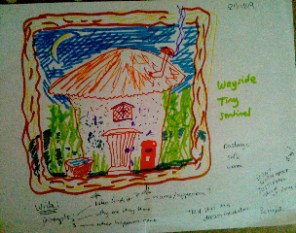
Would you like to know where the dream house picture at the top of this blog came from? I’ll let Mooncakelizzie explain… Picturing the House of Dreams, by Mooncakelizzie I’ve been interested in creative writing for the past eleven years. Attending a multitude of classes and groups freed up a rabble of short stories and some novels, jointly written with someone who’s now a friend, met at one of Jen’s workshop series. These have not the rigidly defined tick-box ‘outcomes’ of formal courses, but are absolutely absorbing and simply fun to take part in. In particular, ‘Writing in the House of Dreams’ opened up a kind of secret garden I’d lived alongside almost unaware. There, for example, I could meet myself at younger ages, and also a hidden self who was growing, maybe pupating under a cabbage-leaf in a homely but boundless place.

Liz's first dream hut picture

The first dream house drawing I made was during a workshop. We all told a dream, and then chose an image from one person’s dream to draw. We wrote three words to describe it. Then we asked three questions to spark a story – ‘Who finds it? Why are they there? What happens next?’

Liz's second hut

At home, I did more drawings. I began to put daydreams in, of living near the sea in a beautiful Oast conversion. A bit of Kentish beach; a view imagined from my little house.

Then a night scene, an isolated hut on a wild headland with distant lights of other houses far away across the water. I don’t consciously know what’s inside.

Here, I can hold dreams, experiences, events and things I’ve picked up or eavesdropped on while careering openly in and out of that world behind the ‘hedge.’

Guest spot: the dream that sparked the book

The dream behind ‘One Wolf Howls,’ by Scotti Cohn.

I have always had an active dream life. The content of my dreams ranges from the mundane to the bizarre. Many of my dreams are lucid or ‘conscious’ dreams.

About fifteen years ago, I had ‘the wolf dream.’

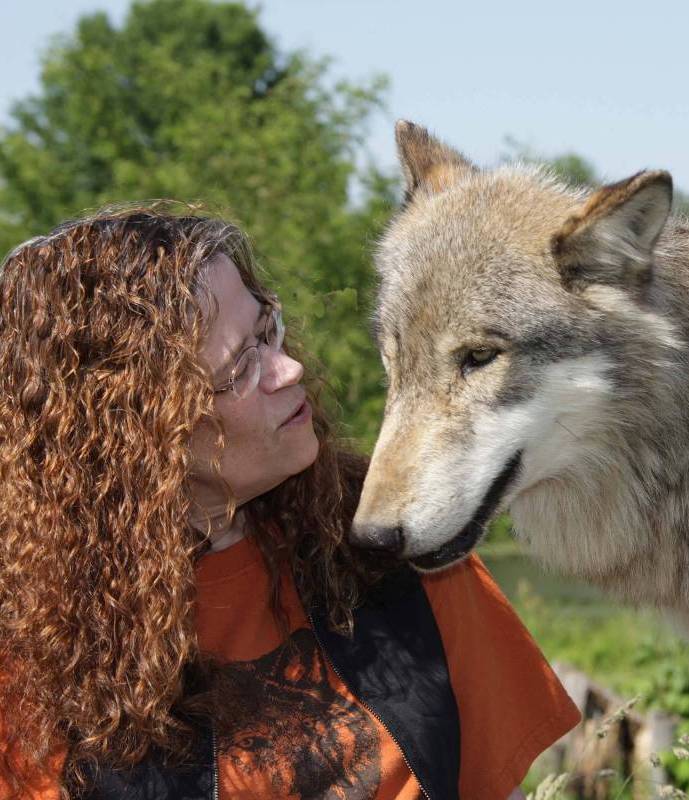
Scotti with a wolf called Wotan
Scotti with a wolf called Wotan. A percentage of the royalties from ‘One Wolf Howls’ goes to Wolf Park, Indiana, where he lives

In the dream, I am running on a paved road in a rural area. I can feel each of my four paws striking the road as I run. I realize that I am a wolf – specifically, a black, female wolf. Up ahead, I see three or four men with rifles. I immediately veer off into the tall grass. I creep closer, crouched low, watching them warily. I am very much in the body and mind of the wolf.

Animals of all kinds fascinate and delight me. In addition, I am intrigued by the idea of totem animals. This dream made me wonder if the wolf was my totem animal. I sought out pictures and books about wolves and watched television specials about them.

One night in 2003 I was about to fall asleep when an image formed in my mind: a lone wolf howling, with a full moon in the sky above. My mind began to play with the image, and produced the lines: ‘One wolf howls in the winter moonlight… Night light, dim light, midnight soon.’ The word ‘winter’ felt too general, so I tried ‘January moonlight,’ and liked it. I continued to create lines in my head, moving from ‘one wolf’ in January to ‘two wolves’ in February, ‘three wolves’ in March, and so forth.’

After many revisions and submissions to editors, my children’s book, ‘One Wolf Howls’ was published by Sylvan Dell Publishing in 2009, with marvellous illustrations by Susan Detwiler.

I dreamed of being a children’s book author my whole life. It seemed fitting that my first published children’s book was inspired by a dream.

www.scotticohn.com  http://onewolfhowls.blogspot.com/

Your dream animals

When you don’t remember many dreams, the ones you do remember can seem weird and random, but most people find that as soon as they start to recall and record dreams regularly their dreamlife settles.

It’s like when you first start writing. It feels as if you could write absolutely anything, but gradually you discover your own inner landscape with its particular themes, characters and environments.

Each person’s dream-world is surprisingly consistent. It is characterised by certain landscapes, flora and fauna. The open spaces in my dreams are invariably coastlines and mountains – I can’t remember ever dreaming about woods or jungles. The built environments are parks and gardens with ponds and statuary, old houses, churches and castles.

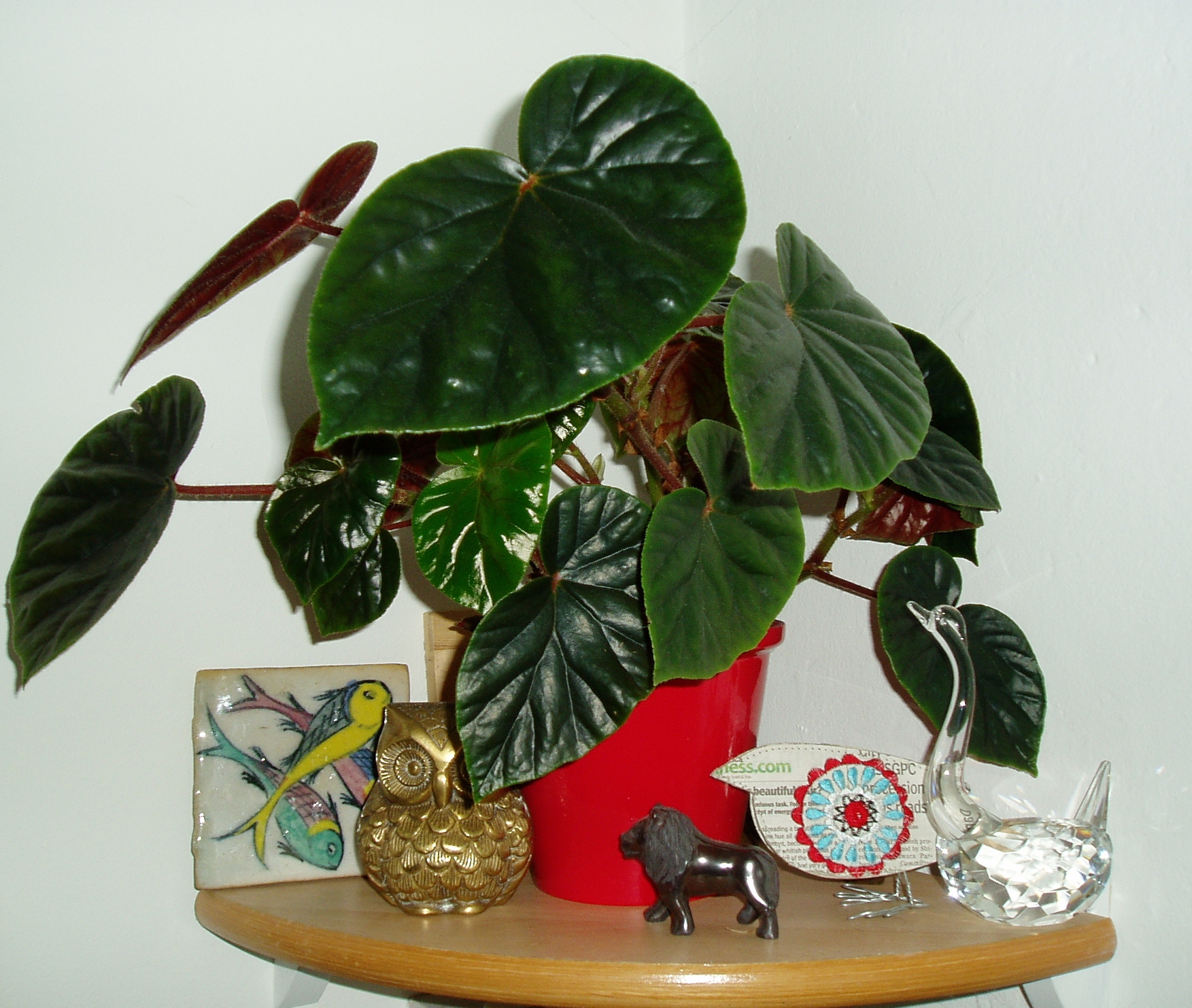
The flora fits with the dreamscapes so, for me, there are very few trees in my dreams but lots of cultivated flowers, open grassland, mosses and lichens. My animals are mostly fishes and birds, but I have occasional visits from lions and tigers, lizards and snakes. I have never once dreamt about sheep, goats, cows or elephants.

The animals you dream about are like companions, or daimons, to use Philip Pullman’s word in ‘Northern Lights.’ Your favourite animal is probably your life-long guide, but others may be with you for a season. You can find your dream animals without waiting for dreams.

Simply take a slow breath to centre yourself. Close your eyes or look down. Relax your mind, and enter your inner world. The first animal you see in there is the one that has something for you right now. Run with that one, whatever it is.

Draw your animal with your non-dominant hand. Consider its qualities. Collect some pictures of your animal, and possibly a model or ornament of it. Look up more information about it online. Have these things around, so that you are living alongside them for a while. Allow your animal to reveal itself to you.

This is what my guest Scotti did, after she dreamt about wolves, and out of that process came a beautiful children’s book.

Read Scotti’s story tomorrow

I had this amazing dream!

At the end of the first series of creative dreaming-and-writing workshops I did, my favourite feedback was from someone who said she felt as if she had been walking past the same opening in the hedge every day of her life, but never stopped to look over the gate. Now she had looked, she was astonished to find there was a whole new world on the other side to explore, which had been there all the time, unobserved.

The world of the unconscious mind on the other side of the gate is a treasure-trove for writers, and many do get ideas and inspiration from their dreams. (If you’re a writer with a dream story please get in touch – I’ll be inviting guest bloggers to share ‘The dream that sparked the book’)

But even people who value dreams and get inspiration from them usually do it in a fairly random way, rather than deliberately and consistently using their dream-life as part of their writing practice.

Creative dreaming and writing are both ways of opening to the hidden places of the psyche. You can use one to magnify the other. In my writing life, I use dreams for gathering material and for finding structures that work. I harness the currents of imagination and emotion at work in my unconscious mind in the moment to energise my writing.

In my dreamlife, I use creative writing to further explore and enhance my experience of dreaming.

This approach works brilliantly for me. I love sharing it in workshops and now I want to share it with readers too. I’m working on a book called, ‘Writing in the House of Dreams – creative dreaming for writers, creative writing for dreamers,’ which should be on publishers’ desks by the end of the year.

files

At parties or the pub, when I tell people I’m writing a book about dreams, they always say, ‘I had this amazing/weird/hilarious/alarming dream…’ And then they go on to recount it. I love that!

If you’ve had a memorable dream, please share!

Next week, I’ll be blogging about the thing people always say when they have finished telling their dream, ‘I don’t know what it means…’