Category Archives: Dreams

Day-life, dreams, ideas – the music of the mind

Last week, I delivered a children’s book to my agent which I first conceived more than ten years ago. It had been through several complete versions, one of which a previous agent had actually sent to a publisher, as much as anything in the hope of getting some useful feedback, as she and I agreed that it probably wasn’t quite there, though we couldn’t see what was missing.
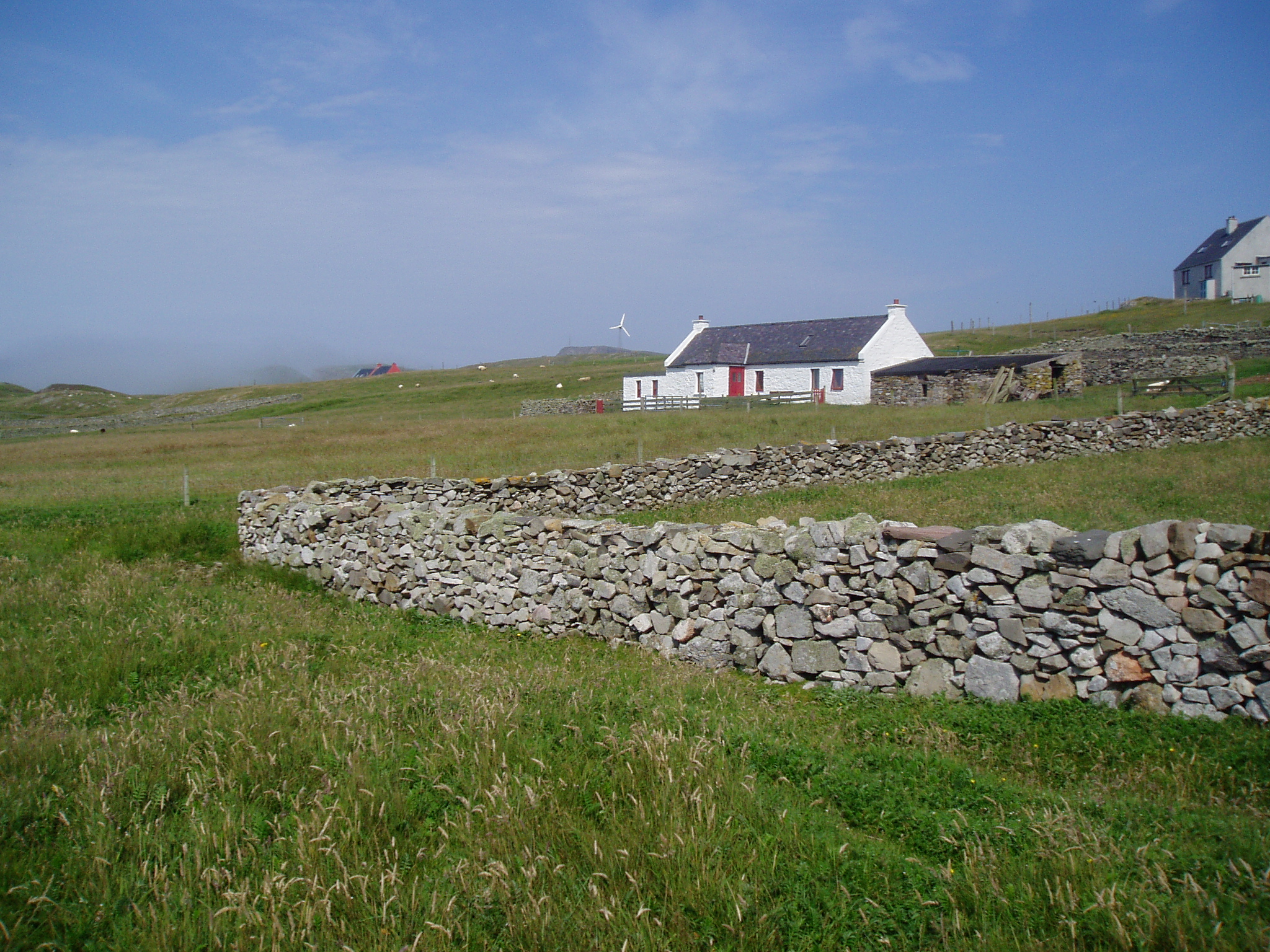
The book was set on a small island - research took me to Fair Isle in 2003
The book was set on a small island – research took me to Foula and Fair Isle in 2003

It wasn’t quite there, but it didn’t go away, and when I had flu before Christmas, it re-emerged quite unexpectedly, to announce that it was ready.

I had lost all my previous notes and versions, but I knew the story, and this time the planning and writing came easy and complete, like a jigsaw falling into place, all the missing pieces found.

Now, starting work on another new book, I’ve discovered that this story also took root in me more than a decade ago, and the same thing is happening. Where it once felt stuck and abandoned, now it’s emerging fully-formed, and all I’m having to do is write it down.
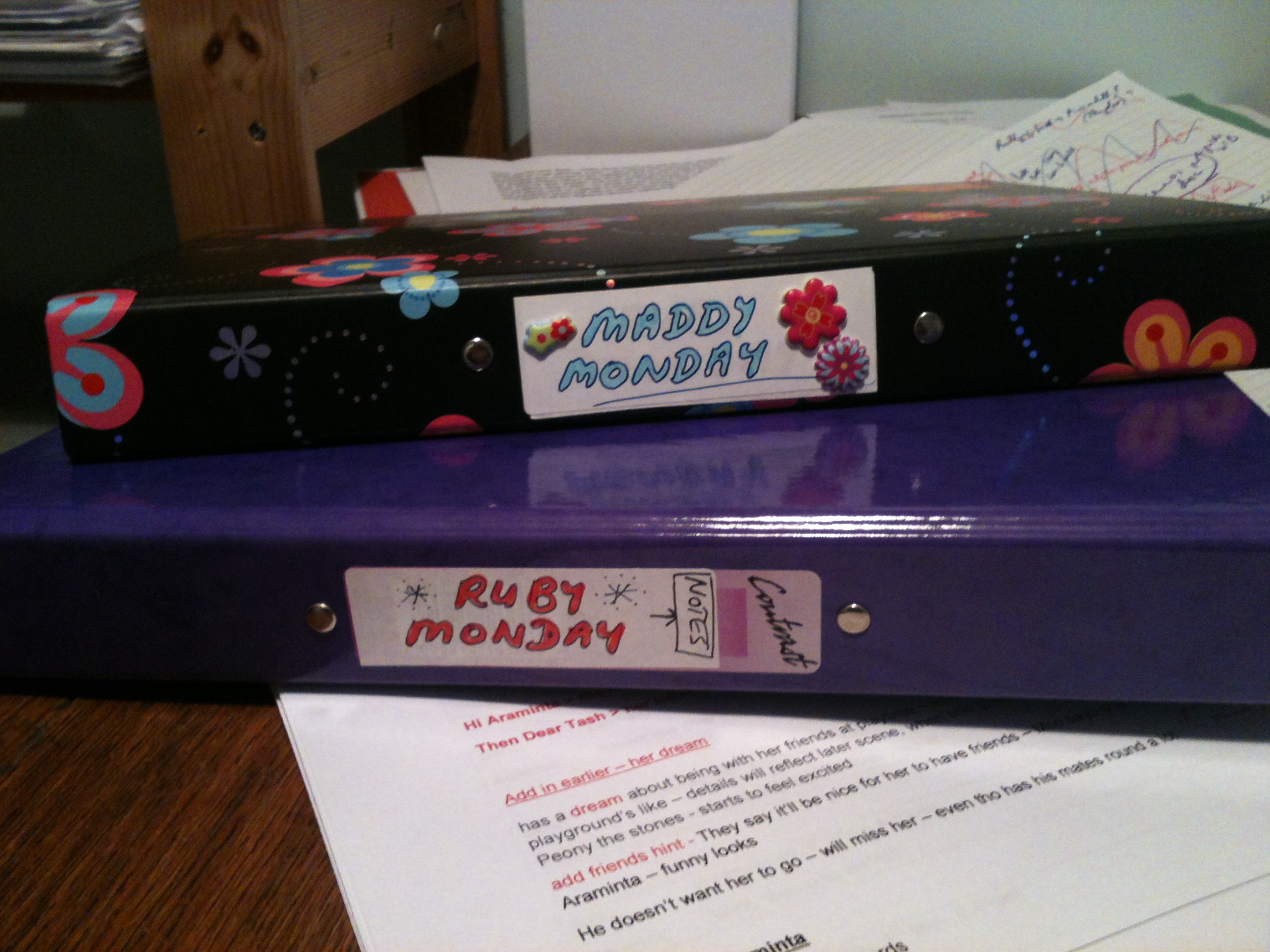
003
Two versions, ten years between

Last night I dreamt I was at a Scattered Authors conference, talking to other authors about this moment in a piece of work, when the book is inside you, fully-formed, like a shadow book, and your task is to bring it out, not harming or disturbing it, but as whole, which it already is.

You change yourself, your face, your mouth, stretching it wide, until gradually the book emerges out of your mouth, transforming from shadow to solid and real. I demonstrate it. I say how exciting this is, knowing the book is there, then opening yourself up and allowing it to come into the world so that everyone can see what it is.

I thought, ‘What if a life is like a book? Already complete in shadow form, and gradually emerging into the world, a little misshapen in its birthing, perhaps, a few edges knocked off in its early years, but still… when nature is ready, the matter inhabits the shadow.

Jerome Bruner's thoughtful autobiography
Jerome Bruner’s thoughtful autobiography

Then I woke up and saw the book I’d been reading before I fell asleep, ‘In Search of Mind: Essays in Autobiography’ by Jerome Bruner, which begins with his thoughts about whether it is our history which shapes us or our destiny, and I smiled.

I love this layering-up of daytime activity, dreams and ideas. The material, the imaginal and the rational, playing alongside each other; themes and variations, music of the mind.

Have you ever had a book or story that took years between the first spark and the final realisation?

One of the mysteries of writing

Last week, I posted the picture Paul Farrington gave me before Christmas. Somebody else has given me a gift recently that I’ve been contemplating, and that was the dream therapist, Brenda Mallon. She generously read the MS of my book, ‘Writing in the House of Dreams’ and gave me some really helpful feedback.

'The dream Experience' by Brenda Mallon
‘The dream Experience’ by Brenda Mallon

Brenda’s feedback was helpful largely because it focused  on what I had said about using dreams therapeutically – which I hadn’t even noticed I had talked about. It’s one of the mysteries of writing that you often don’t see everything that’s in a piece until it gradually reveals itself through other people’s reading.

I had thought my book was purely about using dream material for creative inspiration, because that’s what my workshops are. In dreaming-and-writing workshops we don’t relate the dreams we share in any way to our waking life – that would feel intrusive and be as creatively inhibiting as setting out to write fiction by first trying to analyse where it’s coming from in ourselves and our lives. We use dreams purely as a creative resource.

In this blog I’ve tried to steer away from interpretation and focus on dreams as creative resources too, but Brenda’s feedback has shown me that although I can easily narrow the focus in workshops, I haven’t done it in my book, I don’t do it in my life and I’m not really holding that line here on the blog.

So I’m throwing open the gates. This year, I’ll be writing about dreams from every angle, including some thoughts on interpretation and an interview with Brenda on using dreams in therapy. I’ll be doing some more general articles about writing too.

After all, it doesn’t matter what we write – we’re always writing in the House of Dreams.

Has a reader ever found something in your writing that you didn’t intend or realise were there?

We are the House of Dreams

One of the great things about teaching workshops is that you get to meet some very talented, interesting and likeable people. With the kind of workshops I do, such as ‘Writing the Tarot’ and ‘Writing in the House of Dreams’, most of the people who come also have a real sense of adventure.

Cue Paul Farrington, a keen traveller and talented young writer and photographer, who has done a number of courses with me now. At the last workshop before Christmas, Paul brought me a present, and here it is – a large print of a photo he took in America.

Dream house photo by Paul Farrington

I’ve been contemplating this picture over the holidays – how we can see the outside in wonderful detail, but we can only imagine what lies inside that spacious interior. The dark windows reveal nothing; they only reflect back the world outside.

We are the House of Dreams – the outer life so clear and familiar, the inner world often caught only in glimpses, or sometimes completely ignored. Dream-recalling and creative work of every kind are keys to getting right inside, having a proper look around and making yourself at home.

That’s the great joy of writing for me. It enables you to inhabit more of your Self. Dreamworking does the same thing.

Thank-you for following, commenting, tweeting and sharing on facebook throughout 2012, and may your 2013 be rich with wonderful dreams and writing.

‘Your dreams were trying to kill you!’

My complete conversation with award-winning author Susan Price – she of the vengeful, spurned daemon – has gone live on her blog today. It’s got darkness and daemons, death and delight… all the stuff you’d expect in a chat about writing and dreaming. Take a look!

Plus the added bonus with Susan’s lovely blog, you get Blott 🙂

Do you notice the hidden connections?

In interpreting dreams, we’re looking for the hidden connections between the dream and waking life. The clue is often in the emotional quality of the dream, which may resonate with the dreamer’s feelings about a waking life situation.

When we find the emotional echoes, we will often notice that the dream is a kind of alternative story-version of a daytime event or situation. ‘I felt shocked and anxious to stumble upon a shallow grave in my dream when I was wandering through a dark wood… and, come to think of it, I felt shocked and anxious to discover something I had previously been in the dark about…’

Wandering through a dark wood

The events of the dream are so different, we won’t usually notice the hidden connections unless we go looking for them, and it’s the same with writing.

The stories we write come from the same layers of the self as dreams, and like dreams they are usually symbolic versions of the stories we’re living in our ordinary life.

If we notice this at all, it will often be years later when we’ve gained some distance on both the real-life events and the story we’ve written. But it can be instant, as I experienced this week with the book I’m working on. I suddenly thought, ‘This character is me!’ and it was not a very sympathetic character (hello Shadow!)

Having clocked the mirror she was holding up to me, I really examined my attitude towards a situation I was struggling with. Then she was free and I changed her in the story.

I think there is a psychologically healing or self-developmental purpose to creative work in exactly the same way as there is to dreaming. Through these imagined stories, we rehearse our real-life problems and dilemmas; we experiment with different paths and processes in imagination, and explore all the possible outcomes.

I’ve used creative writing with children in schools in a deliberately problem-solving way to explore the issue of bullying, where the children will create a character who is being bullied and then develop their story by asking, ‘What can they do to make it stop?’

The character will try lots of ideas, until they find one that works. In the writing, the children are exploring a difficult real-life situation and imagining strategies they might use if they had to deal with it themselves.

When writing is free, and not a directed exercise like in my bullying workshops, writers will naturally put their protagonists in situations where they will be faced with emotional challenges and find solutions which might blaze a trail for the writer in real life.

Does this mean we should feel exposed by what we write? Not at all. Like dreams, our stories have hidden connections only we can see, because only we know the secret processes of our hearts and minds. Even people who know me well would not be able to identify the link between my shadow-character and what I had been thinking about during the week.

As Jung said, an interpretation tells more about the interpreter’s current state of mind than the dreamer’s, and any hidden connections readers might find in your stories will be connections with their own lives, not yours.

Have you ever had one of those a-ha moments about a piece of writing, when you suddenly realise, like waking from an obvious dream, ‘I know what that was about!’

Guest post: From making sense… to exploring the unconscious

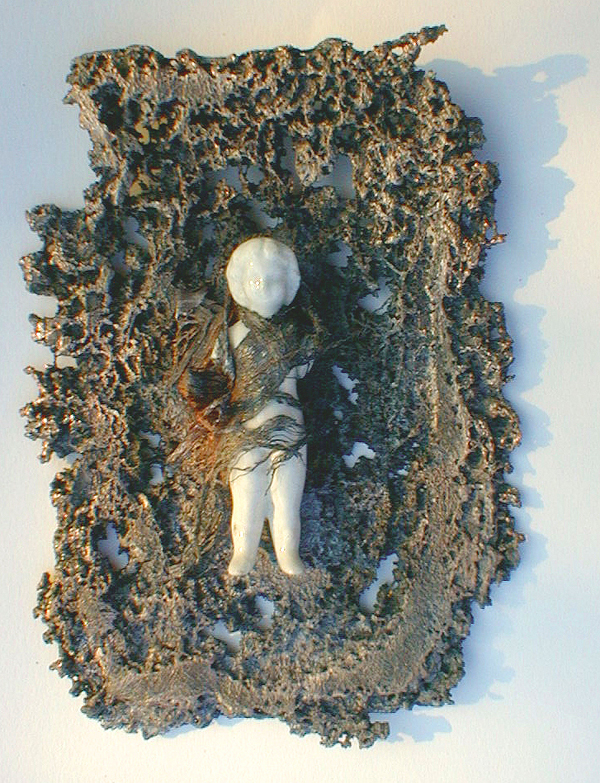
Penny Babies, by Melanie Benn

Melanie Benn

I love to dream, whether I’m asleep or looking out of a window. My dreams range from the mundane, as if sifting through a cupboard of the day’s events, to something more arcane. Sometimes I see an image or a scene, coupled with a strong emotion.

Once I dreamt I was standing on a shore at night, surrounded by rocks and watching tiny mouths in the water, gasping for air. I tried to scoop them out by turning my skirt into a cradle. I struggled to save them.

St Mary’s Church, Reculver
Some time later a local BBC radio station runs a competition and offers up the first line of a story: ‘Even now, the local historians speak of strange occurrences at St. Mary’s Church, Reculver’. I remember seeing the tall towers of this well-known landmark, standing next to the sea and I go off to do some research. I find reports of it being haunted, something more than wind sweeping round the church walls but babies crying.  I remember my dream and the second line comes to me: ‘sounds of crying or cooing they say, depending on your state of mind’.

Soon I start to weave the tale of shipwrecked babies, floating on the tide. ‘When they washed up on the shore they looked just like dolls,’ my Grandmother told me. ‘Like penny babies. Their bodies white and shiny, like alabaster, tied up in those long thin strips of cloth; not much bigger than the apron on my dress.’

‘Their bodies white and shiny, like alabaster…’

The story’s chosen and broadcast and then later produced for a stage version by a storytelling group in London. It occurs to me that our minds do more than just function when they are able to make connections; they begin to create. We’re able to move from just making sense of everyday events to exploring the unconscious.

Robert Moss, a writer and fascinating dream weaver says that dreams provide an ‘open vista’ of possibilities and for me, the way a story can come together feels like magic! But maybe it’s also the ability to re-imagine that holds the key. My dream brought with it an incredible feeling of sadness as I tried in vain to help the young lives drowning in the water. It spoke to me on another level and started me on a path to transform that feeling. A short story is just one way we might use our imagination to fuse different ideas together and bring something forward.

Melanie has an MA in Writing for Children and has been a previous winner of the London Writer’s Competition. She’s published in several anthologies and Penny Baby is now available to download from the short story mobile platform, Ether Books.

http://www.thewhiterabbit.org.uk/projects/are-you-sitting-comfortably/

http://etherbooks.com/

Here’s a dream question for you

A few nights ago, I dreamt about a row of old shops which had been boarded up with huge sheets of brown cardboard. Along the top, there was a big bright Tesco banner.

In my dream, I realised that when my dreams are set in man-made environments, they are always up-to-date. I very rarely dream about my own personal past, let alone further back in history.

I reflected that I’m a person who isn’t drawn to the past – I don’t write on historical themes, and I’m not fired by antiques, or costume dramas, or classical novels or paintings. Only last week, I bought a limited edition print of the Lidl in Brixton. It felt fresh and different – mean, how much Lidl-related art do you see?

Lidl in Brixton

Even when I did a few past-life regressions, they didn’t go further back than wartime Europe, but that’s another story.

I wondered about other people – antiques collectors, historical novelists, family archivists. People my spiritualist friend used to call ‘old souls.’ Did they have more dreams set in the past?

At the end of the dream, I dreamt I was recording this as a blog-post rather than an entry in my dream diary – and that’s what I’ve just done!

So this is my dream question – if you love old things, if you read or write historical books, do you have dreams that are set in the past? Or if, like me, you love the new, is that reflected in your dreams and writing too?

What’s the explanation for ‘deja vu’?

‘Deja vu’ means ‘already seen’ or ‘seen before.’ It’s when we feel a strong sense of recognition in a new place, as if we’ve been there before but can’t remember when.

It can occur even in places we know for certain we have never visited in the past. We may actually find that we know the layout of the rooms, or what’s round the corner in the road.

Often, ‘deja vu’ is accompanied by a strong emotional reaction to the place we recognise – perhaps a warm sense of belonging, or a feeling of sadness, or a desire to get away.

A scientific explanation of this phenomenon is that it’s some kind of blip in the brain – a disturbance in the electrical activity which causes a momentary illusion that we’ve seen the place previously when in fact we’re seeing it for the first time.

A more metaphysical explanation is that ‘deja vu’ is connected with past lives – we recognise a place because we were there in a former life. But how could that account for feelings of ‘deja vu’ which arise in a modern environment?

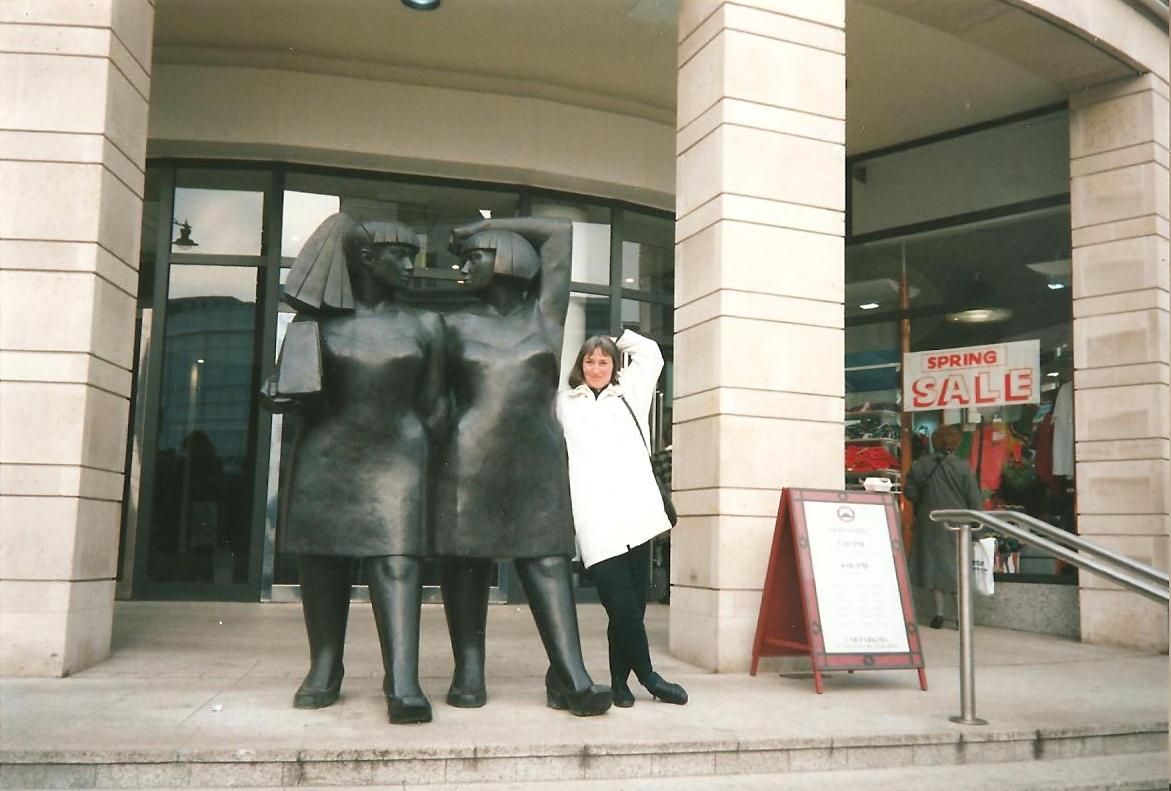
Larking around outside the old Town Hall in Wimbledon – part of a shopping centre now

Years ago, I revisited the town I grew up in, Wimbledon, with an old friend from school. Before the visit, I dreamt I was walking from my childhood home into the town centre, and when I got there, I was surprised to find the old Town Hall was now a shopping centre.

When we arrived, I found the town centre was exactly as I had dreamt it. You may say I must have heard about the redevelopment in the media or something, and simply forgotten. But this sort of thing happens quite often, in relation to places which have never been in the media.

Five years ago, I wanted to move house, and I was looking at cul-de-sac bungalows within a certain area. I happened upon the house I eventually found quite by chance, on an evening out – it was in the wrong place, but I viewed it on a whim, and as soon as I walked in the door, it just felt like my house.

Recently, reading back through some old dream diaries, I discovered that I had dreamt I took a detour on a house-finding mission, to view a little miner’s cottage in the middle of a terrace on the edge of the moor – I had actually dreamt about this house.

I don’t know if there is a definitive explanation for ‘deja vu’, but my own experience suggests that when we feel we have been in a place before, we have – in our dreams.

Have you ever experienced ‘deja vu’? What do you think is the explanantion?

Gove levels – give me strength!

So here we are, facing yet another shake-up of the English education system, with the emphasis still on core academic subjects and rigorous testing. Ahem and excuse me, but what about that non-transferable and non-testable vital ingredient of a successful life – creativity?

When I examine myself and my methods of thought I come to the conclusion that the gift of fantasy has meant more to me than my talent for absorbing knowledge ~ Albert Einstein

Little children learn to be adults through imaginative role-play, pretending to be mummies and daddies, doctors, teachers, engine-drivers, soldiers, window-cleaners, cafe-owners…

Older children and adults make important decisions by imagining different outcomes – ‘If I did that course, I might become a chemist… then I’d work in a laboratory… or I might be a teacher… I could do that anywhere, in a city centre or a remote island… I could work overseas… or be an independent tutor…’

We make the most trivial of decisions in the same way. ‘If I go shopping right now, I might bump into Donna… she might be angry with me because I got the job she was going for… or she might be happy for me, if she didn’t really want it anyway… or I could go later when she’ll be picking up the kids… but by then they might have sold out of saffron buns…’

We make up stories all the time, quite unconsciously. They give us direction and certainty. If we develop this innate ability further through creative activities, we can explore more complicated issues; we can try on other people’s stories, which helps us to develop empathy and a deeper understanding of what life is.

Creative writing gives us access to experiences we would never have in our own lives.We can imagine ever further, extending the limits of our self.

Imagination is more important than knowledge. Knowledge is limited. Imagination encircles the world ~ Albert Einstein

Creative dreaming is the same. If we unhook dreams from the shackles of interpretation, they also become experience for the self, just like waking life, opportunities to go to places and meet people and have adventures and insights beyond our normal range.

You don’t have to teach creativity – you have to allow it; you have to nurture and value it. You can’t measure and assess it, the way you can test academic knowledge.

But imagination is the start point of everything in life, including learning. We shouldn’t be trying to cut children off from their inner world, by loading the curriculum with academic subjects and stealing more and more of their free time for homework and extra tuition. 

Children in the UK are among the least happy in the developed world, and they are also among the most tested. But even if happiness is low on our priorities, it makes no sense educationally to focus everything on academic subjects and intellectual skills, because the story-making mind is the seedbed from which knowledge and understanding grow.

The mind can proceed only so far upon what it knows and can prove. There comes a point where the mind takes a higher plane of knowledge, but can never prove how it got there. All great discoveries have involved such a leap ~ Albert Einstein

That’s it. I have nothing more to say. I’m completely fed up with politicians on both sides of the House narrowing our children’s abilities and aspirations, and harming their happiness, through their obsession with  ‘rigour’, ‘standards’ and testing. But please feel free to add your own views in the comments!

What are the best writing prompts for daily practice?

The idea for this post was suggested to me by a comment about a previous article ‘Do you have a daily practice?’ 

lyndart wrote, ‘I have difficulty giving myself permission to let those creative juices flow… Any suggestion for a topic?’

Trees

You can use any random word such as ‘trees’ or ‘motor-bikes’ or ‘dinner-time’ for a writing prompt, and there are many sites which offer a fresh suggestion every day. I do this myself for warm-ups with groups, giving a random word and asking them to write freely about it, keeping the pen moving on the paper even if at times they find themselves writing things like, ‘I have absolutely nothing else to say on this topic, I don’t know why I’m doing this,’ until their mind finds its way back to the theme.

But the very best prompts for daily practice are the ones you come up with for yourself because, like dream images, whatever emerges spontaneously from your own relaxed mind will have emotional resonance and personal significance for you right now, whether it’s immediately obvious or not.

To find images which are active in you at the moment, sit comfortably with your notepad or laptop, close your eyes and take a few slow, steady breaths. Clear your mind. 

Think of an object – the first thing that comes to you. Don’t censor or try to find something ‘better.’ Write for five minutes, stream-of-consciousness, without pausing. Change direction when one stream runs out, allowing yourself to go where your thoughts take you, even if you stray from your starting-out point.

If you prefer, you can write a list of the first five things you think of, then choose one from your list to write about. You can write for ten or fifteen or even twenty minutes in this way if that’s your daily practice.

I love… my garden

Another way of finding prompts that have particular resonance for you is beginning with a phrase such as ‘I remember’ or ‘I wish’ or ‘I love’ or ‘I hate’ because these will take you immediately into areas that you care about.

I often use this kind of prompt in workshops, especially about childhood, which is the living root of every life. I give a topic such as ‘my mother’s kitchen’ or ‘my childhood bedroom.’ I’ve written about this on the wonderful girlsheartbooks blog, ‘What was your favourite toy when you were little?’ 

The key with daily writing practice, as with all creative endeavours, is pleasure. Writing about themes and topics which have personal resonance is always pleasurable and over time, it will deepen your understanding of yourself as a writer.

Have you got any suggestions for good writing prompts? Please share!