Category Archives: Symbols

Have you spotted your guiding symbols and scenes?

Any experienced dreamer will recognise the recurring symbols and scenes that characterise their personal dreamworld, but have you noticed how that happens in your writing life as well?

This has been an unfolding awareness for me because with writing as with dreams, we enter the unconscious world and only see the patterns as they emerge,  often weeks, months or even years later.

I’d written several books before I noticed that there always seemed to be an old person who played an important role, in giving support or guidance to my young protagonist.

In my first book, Looking After Auntie,  it was Great Aunt Fontaine, and in my second, Miss Fischer’s Jewels, it was the lovely old lady who lived next door. In Car-mad Jack, it’s Grannie Bright, and in Peony Pinker, another lovely neighbour, old Mr Kaminski.

I’d noticed also that my protagonists always had certain character traits in common; they often felt disempowered and had to find ways of gaining control. A lot of my stories present some kind of bullying situation, although I wasn’t thinking about bullying as such at the time of writing.

These big ticket items are easy to spot, but this week I’ve been thinking about covers for my YA novel ‘Drift’ and trying to choose an iconic image from one of the scenes or settings.

In doing so, I noticed how even very particular images recur in my writing. In Miss Fischer’s Jewels there is a run down potting shed where the protagonist goes when she feels upset. In ‘Drift’, which I wrote more than 20 years later, there is also an old potting shed. In both books, key scenes are set in the potting shed.

In ‘Drift’ there is a big scene involving a bonfire, where symbolic objects are burnt. Symbolic objects are also put on a bonfire in my upcoming children’s novel, The Binding.

My burning bin
My burning bin

I realise as I’m writing this that in my life as well, I’ve marked endings in the same way, by placing symbolic objects in the flames.

In Writing in the House of DreamsI talk about these recurring symbols as the guiding structure rather than random ornaments in dreams, writing and our individual lives.

I knew from trying to write my autobiography, that life wasn’t a tidy line of events. It was a pattern of themes and characters, plots and subplots, twists and coincidences; of past, present and future, all interwoven.
It was a fabric with a scattering of strong images that stood out from the rest – a dusty ditch, a dead rat, a dancing ballerina. Threads and specks of pink, a jacket, a strawberry. Patches of brilliant aquamarine. An iridescent fleck of dragonfly.

Symbols are not static, but develop in the developing psyche, so uncovering and working with our guiding symbols is a life-long journey, full of new discoveries.

Have you noticed the big and little scenes and symbols that guide your life and writing?

What is your purpose? Try this experiment and see!

When I read Tzivia Gover’s blog post a few days ago about asking a dream symbol, ‘What is your purpose?’ it felt timely for me because I had just dreamt about an image that recurs fairly frequently in my dreams, so I had an obvious one to try the technique on.

In the dream, I was walking along a cliff path, looking out across the clear blue water. I felt happy and full of energy. As I came down towards the bay, I saw a woman in a bright floral summer’s dress  lying languidly in a wide shallow boat, gently rocking.

I noticed an enormous fish, almost as big as the boat, swimming around in the water  nearby. There was no sense of danger. It was, as I recorded in my dream diary, simply ‘extraordinary and remarkable.’

I walked on, and saw several more of these huge colourful fish, as I came down onto the beach and crossed a wide rushing stream.

2013-06-08 18.35.09

These days, I don’t usually try to interpret individual symbols in my dreams, I just enjoy them, but today I asked the enormous fish, ‘What is your purpose?’

Nothing came to me immediately, so while I was waiting for a reply I pondered, ‘What is it about this enormous fish? It’s not scary, it’s just swimming around in its natural element of water. Yet it is a remarkable fish.’

Then I realised, ‘What is the purpose of this remarkable fish? To be remarkable!’

I feel my life is remarkable, as anyone who has close contact with their dreams and imaginary worlds will feel. I seek the remarkable in my work, always trying to break new ground.

My book Bullies, Bigmouths and So-called Friendswas identified by the Independent critic as the first real self-help book for children; Writing in the House of Dreams and the book I’m working on at the moment, When a Writer Isn’t Writing: How to beat your blocks and find your flow, both mix themes to make unusual hybrids.

My fish is an ordinary fish in its ordinary element and yet it feels remarkable. My life is an ordinary life but my purpose is to find the extra-ordinary within it. That’s what brings me pleasure, the same as  when these enormous fishes swim into my dreams.

You can find your symbol too; you don’t have to wait for a dream. Simply sit quietly for a few moments and take a few slow breaths. Still your mind.

Lower or close your eyes, and move into your inner space. Ask, ‘What is my life’s purpose?’ and let the question float away, as you take a few more slow easy breaths.

Now think of an object, and accept the very first thing that drops into your mind. Don’t judge or rationalise it away.

Examine your object from every angle, noticing its particular characteristics. I notice that my huge fish is always brightly coloured, always swimming in clear water and always on its own.

Ask your object, ‘What is your purpose?’

Again, don’t censor or rationalise; go with the first answer that pops into your head.

If you try this, because my purpose is to find and celebrate remarkable things, please share! What was your symbol, and what insight did it bring?


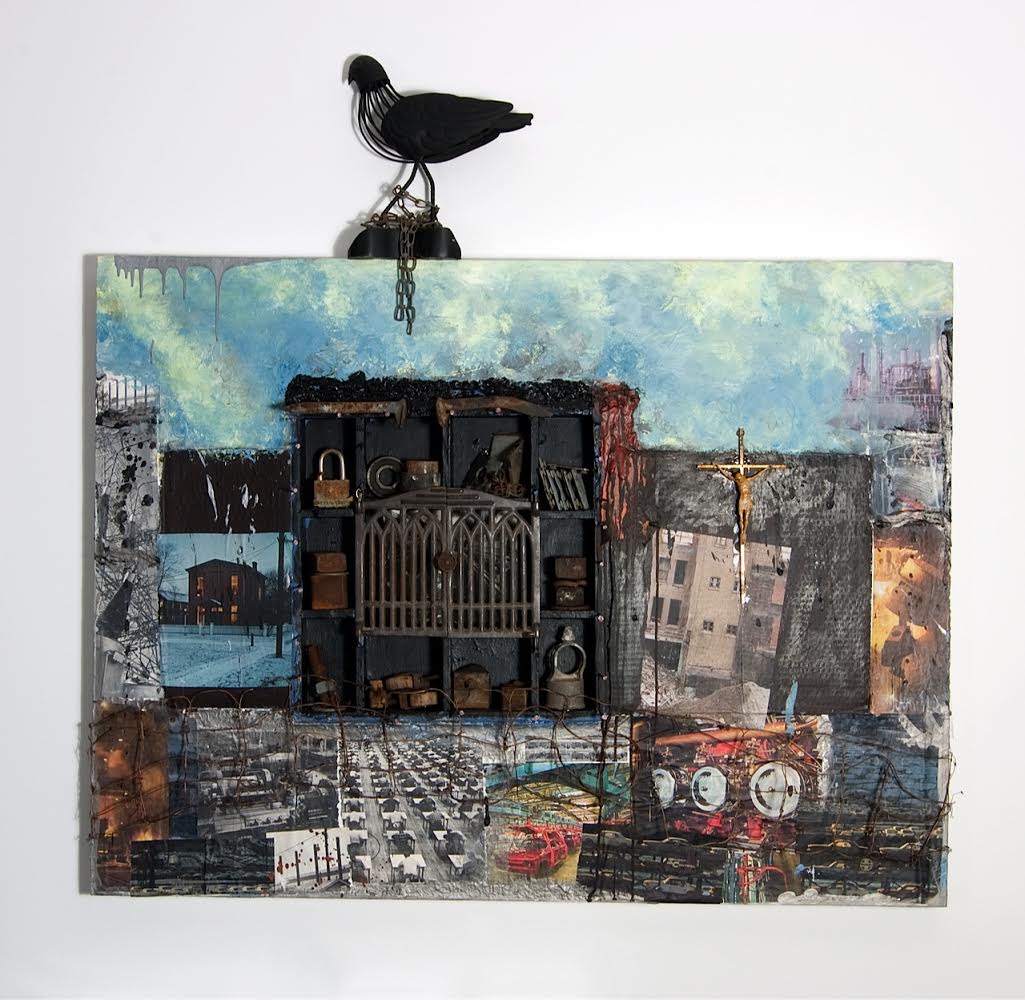
Making art from a dream, by Susan Levin

Yesterday, I reviewed Susan Levin’s book, ‘Art from Dreams’ and I’m delighted to welcome  her into the House of Dreams to talk about the dream behind her artwork, ‘Home.’

HomeI am writing about the piece titled “Home” and the accompanying dream.

Dream: I am on a boat in the Detroit River headed for summer camp. I talk to someone about Detroit—how the city is out of money. We dock briefly along the city’s shore. I go for a walk, barefoot, through the muddy streets. I see little children in slum housing. I walk up the steps to the bank. I clean my feet with water so they will be less muddy.

Dream interpretation: I have to get down with uncovered feet to get close to the truth of my difficult childhood, growing up in a dysfunctional family in Detroit. The city of Detroit is bankrupt—it’s losing its libido for me. I walk barefoot, slogging through the mud of my past. With my uncovered feet, I get close to the truth. The slum of my childhood. Boats are a womb-like container that carry us on our life’s voyage. We all need a sense of security to help us navigate.

Being sent away to summer camp, where I don’t want to go, adds to my sense of being an outcast. By cleaning my feet as I go up to the bank, I am relinquishing my feeling of impoverishment. Something in me has money in the bank. I am coming to a part of myself that is substantial. I have my own resources—my own currency in the bank. I am approaching the SELF, going upstairs to a higher level of understanding.

Cleaning the feet has religious overtones, a rite of purification. I was destined to be barefoot in the mud, living in a slum, when I instead deserve to be in a bank with clean feet and access to money. My inner resources, which were never acknowledged or nurtured, are now accessible.

Have you ever been moved to create a visual image by memories, thoughts and feelings that have been stirred  up in a dream?

Book Review: ‘Art from Dreams’ by Susan Levin

Today, it’s my pleasure to review this new book by Susan Levin, ‘Art from Dreams: My Jungian Journey in Collage, Assemblage and Poetry.’

As a seasoned traveller in the inner world myself, I love reading about other people’s dream adventures, and one of my all-time favourite books is CG Jung’s Memories, Dreams, Reflections, for that  reason.

There isn’t very much to read in Susan Levin’s book,  just a one-page introduction and ten short poems, but I really like the way the brevity of the text brings the focus strongly back to the images and makes the book, in itself, a dreamlike experience. Levin lets the pictures tell their own stories, and give an impression of the  journey overall.

The first half of the book is called ‘My Jungian Dreams.’ Here the poems expand on the images, exploring the artist’s thoughts about consciousness and experience in an open, direct way.

2014-11-05 10.21.00

In the second half of the book, ‘Nocturnes,’ there are no poems, just a set of striking images with intriguing titles such as ‘Message from horse and snake’ and ‘Ship of souls.’

2014-11-05 11.07.49

The mixed media and collage approach feels to me an exactly appropriate way of conveying the quality of a dream, this bringing together of disparate objects into a unified experience of colour, tone and feeling.

The night after I read Art from Dreams I had a very visual dream which reminded me of one of Susan’s collages. At the bottom of the picture, me with a glass of sparkling wine; above that my Writing in the House of Dreams book launch cake, and flying above that in the clear blue sky, a young woman on a brightly-coloured hang-glider.

The book is beautifully produced and bound, a lovely object which readers will return to, and take inspiration.

Tomorrow, Susan will talk about the process of one of the artworks in the book here in the House of Dreams. Don’t miss it!


On becoming a fully-fledged hybrid author

It’s been a steep learning curve, but I’ve finally arrived – it’s publication day! In this, the last of the five dreams I’ve shared here about my self-publishing journey, I’m looking at the road ahead.

I’ve done a talk about being an author, including the difficulties of getting stocked in bookshops and making enough sales. Not that I’m complaining – I do have enough. As I chat outside with the organisers, they’re waiting for the next author – and it’s a really famous one.

Here she comes in her little yellow car. She’s a friend and I’m delighted to see her, delighted to see the eager anticipation in her young fans’ faces.

As she walks towards us, I notice the little creature I’ve found and been looking after has caught the attention of a crow-like bird. The creature is small and furry, some kind of hybrid, strange and very sweet. And feisty! He isn’t afraid of the crow, although it’s much bigger than him.

I shoo the crow-like bird away and pick up the creature – he isn’t hurt or even shaken. It’s happened before – cats have chased him as well as birds, foxes too – but I think they’re more curious about him, than wanting to eat him.

It’s odd how he’s come into my cave, but I’m glad, because he’s a lovely little thing and I like looking after him. 

It’s been stressful, it’s been full-on, it’s been emotional. I won’t lie. Learning how to self-publish has taken up most of my energies these last six months, one way and another.

If you’ve read my last four posts, you’ll see that having embarked upon it, I soon learnt to love it though. I even came to choose it for the book I’m working on now, When a Writer Isn’t Writing.

I got swept up in the buzz of being free to make my own choices and decisions, and push forward in my own time and at my own pace. I felt like William Blake, inventing his very own printing system to publish his own books, but without even having to be a genius or inventor.

I felt like the child I once was, never happier than when I was writing projects and making them into books, doing all my own binding and illustrations.

In my dream, it felt odd the way this funny little creature had come into my cave. As a technophobe, I would never have had a strong enough desire to learn how to self-publish if I hadn’t had a book I cared so much about that didn’t have anywhere else to go.

I protected my little fledgling hybrid from every attack – crows, cats, foxes; other people’s judgements and my own self-doubts.

But what I also learnt, in the course of self-publishing, was how much traditional publishers do that we authors tend to take for granted.

I discovered how much I still wanted that to be part of my writing career. Looking forward to 2015, I’m delighted to have a book coming out in February with A and C Black, as well my self-published writing book.

This funny, furry little creature was the beginning of my new career as a hybrid author, and I’ve blogged about it in a post called Why I’m a Happy Hybrid for An Awfully Big Blog Adventure, where I lay out my pros and cons of self-publishing vs being traditionally published.

So now it just remains for me to ask you to raise your glasses please to Writing in the House of Dreams. If you buy it and enjoy it, please review it, but if you think it stinks, please don’t!


Are you temperamentally suited to self-publishing?

Dream 4 in the countdown to publication! Last week’s dream highlighted how I felt when I started self-publishing; this week’s showed me why I felt that way. 

I’ve got on a bus to go to London and a few hours later the bus stops in the early morning mist and I see we’ve come to Camborne. Instead of going East, we’ve been going West. I get out and look at the misty hills of the far West, so wild and beautiful, but so much not where I expected to wake up, and I think having got up so early and set out so hopefully, now it’s too late to get to London.

Now I’m writing about an adventure on a train. I see other authors – Liz and Elen and some others – have got together to write adventures on trains, and get publicity, and they’ll sell much better – but the fact is, I prefer to work on my own.

When I finished Writing in the House of Dreams, the first thing I did was ‘go to London.’ I sent it to my agent, she liked it, she sent it out to major mind-body-spirit publishers.

When it didn’t get a contract I realised that where I had been heading all along was home, towards publishing it here, myself, and I experienced a mixture of feelings.

I was disappointed, certainly, having set off so hopefully, believing in the book, armed with wonderful feedback from my expert readers and feeling sure that it would find a publisher.

But I also felt excited about the ‘wild and beautiful’ vista of self-publishing that was opening up in front of me instead.

My dream went on to acknowledge that the mainstream way would certainly give me a higher profile and sales, but going it alone could actually suit me better.

In my career, fame and fortune have never been main drivers; my passion is the writing, and I’ve never sought the kind of success that would take me away from it on things like book tours and festivals.

My career goal, now as ever, is to make enough money from my writing to keep on doing it, without having to worry about the bills or trying to fit all my work into a marketable brand.

Last week, I asked whether you had ever self-published, and how you felt about it once you got started. Not everyone will feel the same; this dream suggests it might just suit my temperament and fit my writing goals.

Next week the countdown ends! Meet me back here to celebrate publication day and hear about dream number 5, which involves a sweet little furry animal and a curious crow.

Self-publishing – why every author should try it at least once.

‘Writing in the House of Dreams’, the book – dream 3 today on the countdown to publication! This one came when I was working out my publishing schedule. 

Before, you had to take your story and wait for them to see you, like waiting at the doctor’s. Hours, days you might be waiting there, because every story had to be checked and verified, and they might have questions for you.

Now, you can just post your story online, and if they’ve got questions, they can research online, and you don’t even have to go. It feels liberating!

When you’re thinking about trying something new, first you feel excited. Then anxieties flood in, to stop you acting impulsively and make sure your head is in line with your heart on the  adventure.

Once your hopes and fears are all in the mix, you can stir it up and see what rises to the surface. In the post before last, I described how  what was important to me when I was first thinking about self-publishing rose to the surface in a dream.

Weighing up the pros and cons can bring you to the threshold of a new venture, but you don’t know what it will feel like until you actually begin.

Before I decided to commit to self-publishing Writing in the House of Dreams I had viewed it purely as a fall-back if I couldn’t get a traditional publisher.  Although I was glad it was an option, I would not have chosen it.

But as soon as I got started on the work of self-publishing, I felt how different it was from my previous experience as a traditionally-published author, and it was a very positive difference.

Having a manuscript under consideration with traditional publishers you’re full of impatience, helplessness and anticipation about what they’re going to say, just like when you’re waiting to go in and see the doctor.

It usually takes months; it can take longer. One of my books got an offer a year after we started sending it out.

Now suddenly, with self-publishing, there’s no need to wait. You can crack on with it as soon as you want to, and that feels exhilarating.

Research is just data; what fires creativity is emotion, and until I experienced the emotional difference between that doctor’s waiting-room feeling  and that unexpected exhilaration, I would always have thought of self-publishing as second best.

I have no plan to submit my follow-up book When a Writer Isn’t Writing to traditional publishers. Although I still very much hope to go on being traditionally published, it no longer feels like the route of choice for every book, and I want to feel the buzz of doing it myself again.

I think that’s why Orna Ross, who set up the wonderful Alliance of Independent Authors says every author should try self-publishing at least once.

Have you ever tried self-publishing? How did it feel to you?


When this happens you know you’re on the right track!

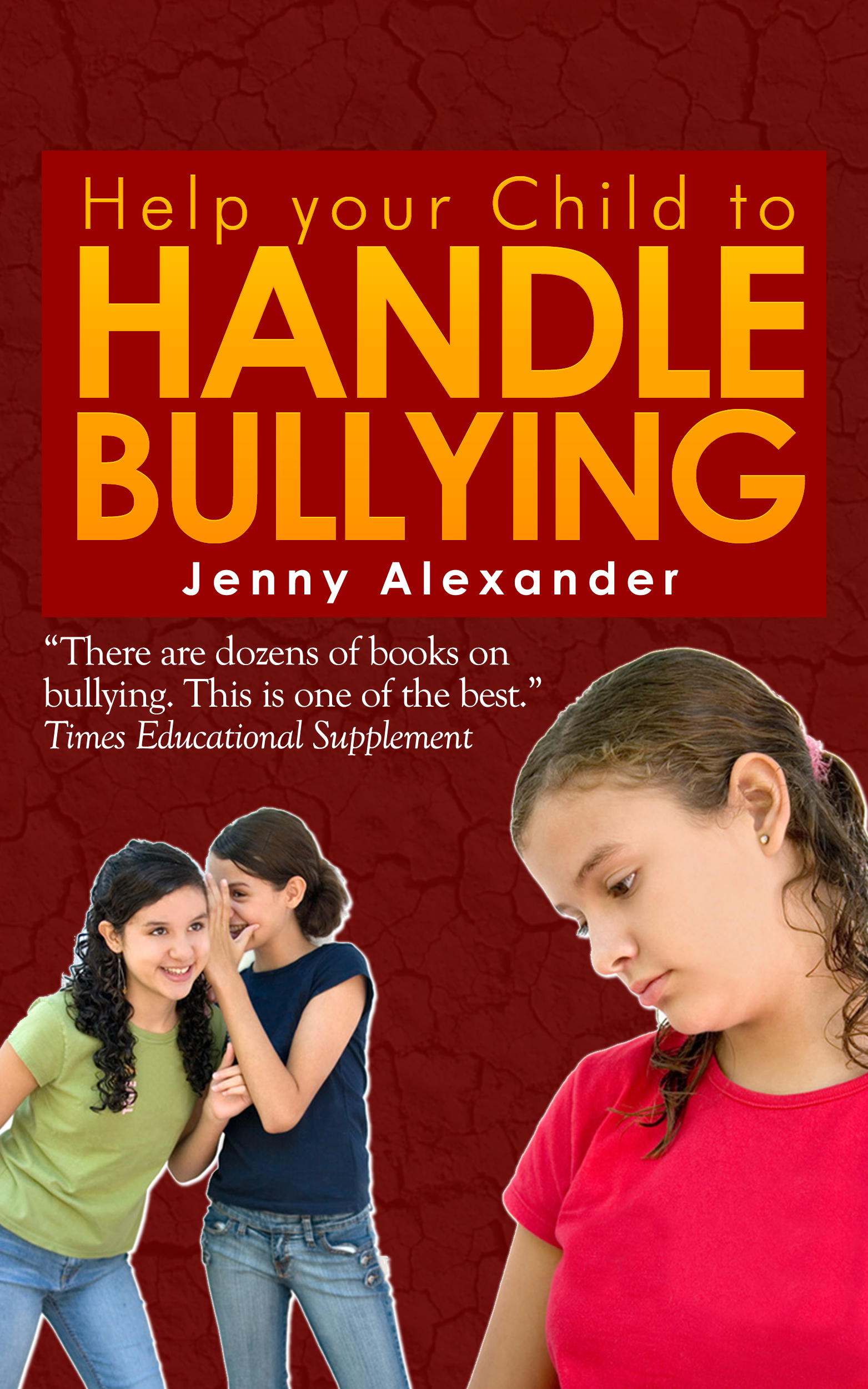
The first book I kindled, just to get a sense of what was involved, was my out-of-print parenting book, ‘When your Child is Bullied.’ I up-dated the text, gave it a new title and sent it to draft2digital, who formatted it and made it available on various platforms. I found a designer for the cover on the budget services site, fiverr, and it cost me literally a fiver.

My first adventure in self-publishing

But that was a book I wrote seventeen years ago, it had been published by three mainstream publishers and translated into half a dozen languages, so all I really wanted to do was make it still available for parents struggling to support a bullied child.

‘Writing in the House of Dreams’ is different. It’s never been published before, and because I only finished the writing last year, publishing feels like a continuation of the creative process, which is about honing and refining, nurturing and developing your unique idea.

So I’ve hired an editor to look at the text and a freelance designer to create a cover, because I want the book to be as good as I can possibly make it.

But never having worked with a designer before I had too little confidence in my own ideas, and too little clarity, to be able to give her much of a steer as to what kind of cover I wanted, and when her first sample arrived I was disappointed. I had wanted my cover to be colourful and creative, and beautiful too, but this cover was grey and kind of business-like.

While I was wondering whether to just accept the cover I didn’t like because I didn’t know exactly what else to suggest, I had a birthday, and one of my daughters bought me a beautiful ceramic piece by Hilke MacIntyre that I had admired in the Fowey River Gallery. There was an information sheet with it, and out of curiosity I went to Hilke’s website.

'The Visit' by Hilke MacIntyre - my birthday present from visiting daughter and her partner
‘The Visit’ by Hilke MacIntyre – my birthday present from visiting daughter and her partner

There I found a whole page of linocuts, one of which felt exactly right for my book. I sent the link to my designer and she was very keen on designing a new cover around it. Having seen the image, she had a much better idea of what kind of things I wanted my cover to say.

So I contacted Hilke and asked if I could use the image, and we agreed terms with no difficulty at all over a friendly email chat.

When you’re in a quandary and have no idea what to do, and then life places something right at your feet like a great big arrow saying ‘Go this way!’ I reckon you can move forward confidently, knowing you’re on the right track.

Has life ever answered your question when you’ve been wondering what to do?


How to have dreams that you can understand

Last week I described a dream I had when I was planning my writing projects for 2014, whose meaning was absolutely obvious. In that dream, I diverted from following Deborah Meaden on the path to the station and felt wonderfully happy on the beach.

Happy on the beach
Happy on the beach

I’d been thinking I should pitch some projects for the market rather than follow my writer’s heart into probable penury with a self-publishing project and an idea for a book I almost certainly couldn’t sell to mainstream publishers, so the meaning of my dream was very clear.

Just to make sure I got the message, I had a second dream in which I woke up to find I had been sleeping on the beach, and as I lay there blinking in the bright morning sunshine I saw a baby playing on the sand right in front of me, happily absorbed, the two of us drawn together in a moment of pure magic.

Hearing a sudden sound of voices, I looked round in time to see the big double doors of the public hall at the top of the beach thrown open. A very successful author I know came out, surrounded by press people and fans. She had been doing an event at the literary festival in the hall. She was beaming under a truly fabulous blue hat.

I waved and shouted hello, and she waved back. I felt delighted for her, because she loved doing major events. A second author I know came out, also dressed beautifully and wreathed in smiles. I waved and felt happy for her too, but I was glad it wasn’t me doing festivals in fabulous hats. The sun was warm on my face, and I looked back at the baby, who was now watching me with intense interest. She had a pebble in her little fist that she held out to me.

It was very easy to understand where these dreams came from, as I was totally preoccupied in waking life with what direction to take with my writing this year. Most dreams are story versions of waking-life events and concerns, and if you have one thing in particular that’s occupying your mind the connection is often obvious. People involved in research or creative projects will commonly have dreams that develop and resolve problems they are working on.

In normal life we aren’t usually so intensely preoccupied with one major question or concern – our energies are more dispersed and the connection between the minor ups and downs of waking life and the world of our dreams can be more difficult to spot. One way of having dreams you can understand is if you narrow your focus through dream incubation.

Before you go to sleep, think back over your day and notice anything that’s been bothering you, any decisions you need to make, any problems you need to resolve. Choose one and ask for a dream about it. Promise yourself that whatever dreams you have, you will record in full, because often in the first moments of waking we’ll dismiss a dream without bothering to write it down if we can’t immediately see the meaning or importance of it.

Although the rational mind works instantly, in the symbolic mind, meaning takes time to unfold, and a dream that has seemed random on waking might, on re-reading later in the day, surprise us with its resonances.

Sometimes when you have incubated a dream it will be easy to see the connection between your daytime situation and the dream. Other times, you may ponder it, put the dream to one side and get the a-ha moment later. Or if you ask for another dream about it you may have one the next night that makes things clearer.

Incubating dreams in this way means you are thinking about your day life instead of just living it; you’re noticing the way your mind is organising experience into stories, so that it’s easier to see when dreams are carrying the story on.

Setting up dreaming intentions means your waking ‘I’ is communicating with your dream, and very soon you’ll find your dream is answering back.  If you want to understand the answer to what it means, it really helps to know the question in advance.

You can find a bit more about dream incubation here

Have you ever incubated a dream?

Mind-magic for writers – harnessing the power of the circle

The circle is an archetype for wholeness and integration, a universal pattern in nature and the human psyche which is also a template for the stories of life and fiction. You can use the  power of the circle archetype in writing, deliberately placing it in your mind by making mandalas.

The Power of the World always works in circles, and everything tries to be round. The sky is round, and I have heard that the earth is round like a ball, and so are all the stars. The wind, in its greatest power, whirls. Birds make their nests in circles, for theirs is the same religion as ours. Even the seasons form a great circle in their changing, and always come back again to where they were. The life of a man is a circle from childhood to childhood, and so it is in everything where power moves ~ Black Elk

003
Ice in a circular hollow

Stories naturally make circles. The protagonist sets off, achieves or learns something in the course of the action, and returns changed. Often the work of redrafting is about refining the beginning and ending to tie everything into a satisfying whole. The crafting of a story is a process of perfecting the circle.

Dorothea Brande (‘Becoming a Writer’) says the unconscious is not only the source of our creativity, but also the home of form. This is why, when you have plot problems, new ways of fitting things together can naturally spring up in your mind as soon as you stop consciously trying to force them.

When I’m planning or redrafting a story I will often draw mandalas while I ponder.

One of my working mandalas

‘Mandala’ comes from the Sanskrit word meaning ‘circle.’ It signifies a geometrical pattern based on a circle, and it’s used in every spiritual tradition as a focus for contemplation, meditation, protection, healing or prayer.

In its most basic form, the mandala is a simple circle, and if you’d like to try making some you can start by drawing circles. I recommend you do this free-hand, although your first attempts may look like lumpy lozenges. Keep working at it until you can do one that looks reasonably round. The process of this will anyway help attune your mind to the archetype.

When you have drawn your circle, you can incorporate other geometrical forms into it and around it. You could put a triangle inside it, crossed by another triangle to make a six-pointed star. You could put your circle inside a square, or squares inside your circle.

Choose any geometrical shapes you like, but try to achieve balance, so that the sides and segments of the circle are the same. Drawing geometric shapes also settles your mind into the beautiful reality of numbers. 

Treat the whole process like doodling, not trying to create art, but simply to play and allow your mind to idle. Keep building mandalas until you get one you really like.

Shading or colouring your mandala is a way of staying with the archetype for longer, and allowing it to work upon you. When you have finished, bring the energy of the circle with you into your writing. Bear it in mind as a template for your story, and see whether it gives you a greater sense of direction and clarity.

 What creative activities do you use as part of your writing process?

Check out these lovely prayer-flag mandalas by Toko-pa Turner http://toko-pa.com/2013/11/29/mandalas/