My last post was about the royal garden party, which I mentioned was right outside my comfort zone. When I got my invitation, I didn’t even possess a dress, let alone a hat or fascinator, so the dress code felt quite challenging!
But I like going outside my comfort zone – its expansive. Going outside your comfort zone makes your comfort zone bigger.
Trying new things is also the key to living creatively because creativity is, by definition, making something that didn’t exist before and, when we try new things, we create brand new experiences.
Quite often, we may be reluctant to try new things – a different kind of food, book, activity or TV show – and there is indeed a good chance we won’t like the new one as much as our old favourite. But if that’s the worst that could happen, I reckon it’s worth the risk.
My current notebook – a gift from my ex husband, who knows me well!
It doesn’t have to be a giant leap into the unknown – shaking up the little things can start a creative wave. When was the last time you parked in a different spot at the supermarket, took a different route to work, sat in a different chair in the evening, went out for a walk at a time of day when you usually stay home?
Living creatively by seeking out new experiences puts energy into all your creative work because you carry those attitudes of openness and adventurousness, and also that buzz of pleasure and excitement, into your writing or painting or gardening, or whatever creative activity floats your boat.
Lots of creative teachers talk about the importance of taking time out from your normal routines and doing new things, to refresh your creative energy. It’s commonly called ‘going down to the well.’
I was way outside my normal routine last week at the Buckingham Palace garden party – frocks and fascinators are not really my thing! In case you’re wondering, my invitation came through the Society of Authors – I’ve been a member for most of my writing career and taught several creative blockbusting workshops for them.
The afternoon progressed like a well-oiled machine. The queues moved very quickly through the gates, despite the huge number of guests.
The National Anthem announced the Queen’s arrival and, while the band played and everyone was upstanding, she came out onto the steps, flanked by Beefeaters.
The Beefeaters accompanied her as she walked among the crowds so, although we couldn’t see her, we knew where she was by the tips of their pikes.
The cakes were divine! After tea my friend and I had a stroll round the gardens, coming back to find staff moving among the guests with trays of lemon barley water and little tubs of ice cream.
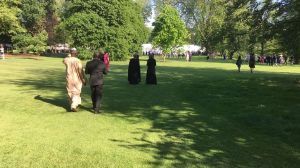
It was a brilliant opportunity to enjoy that most favourite of writerly pastimes, people-watching. A clutch of Bishops, a pair of robed academics, a scattering of groups in African dress, a gaggle of jovial mayors.
Even the Ladies’ Lavatories were an experience, set as they were beside the big lake, and attended by a woman who checked each cubicle as it became vacant, presumably to make sure the bowl was clean and there was plenty of toilet paper, before personally ushering the next person in.
Very few people actually got to speak to the Queen yet the surprising thing, for me, was that it felt quite personal. Buckingham Palace didn’t feel like a massive public building, but somebody’s home, and the party was just in their garden.
I realise I may be sounding like a royalist, but I’m not. I’m not a republican either. I think there are good arguments both for and against having a monarchy.
But as a dreamer, it seems to me that kings and queens, princes and princesses do something quite extraordinary. They are like living archetypes, symbolising for us universal qualities, even though they may not, in their own personal lives, be any less complicated, flawed and human than the ordinary person in the street.
I was first struck by this in the outpouring of grief when Princess Diana died. It was so surprising and disproportionate, I felt we were not grieving the person she was but what she symbolised – a quality of caring kindness that seemed to be slipping away in the post-Thatcher era.
It’s the same with the royal wedding last week. We don’t know what Prince Harry and Meghan are like as individuals, whether they row and bicker behind closed doors – but thousands of people enjoyed their wedding because there they stood before a nation as the representing the romantic Hero in all of us, the perfect Princess and the possibility of lifelong romantic love.
Seeing the Queen standing there on the steps of her home, I was really aware of the strangeness of her existence. Through the doors behind her lay her domestic life, where she is just a person like the rest of us, but as soon as she steps outside she is no longer a woman; she becomes absolutely her role, as Queen.
The dreamer in me, like the writer, found the whole experience intriguing.
A new author asked me recently whether I thought it would be worth her while to set up a website. ‘I like the thought of having a platform out there, but obviously if nobody is going to look at it then there’s no point…’
I would ask, is there any point in NOT having a website? It doesn’t cost anything and with platforms like this one (wordpress) it isn’t difficult to set one up, even for someone as technically challenged as me.
Your website is like your shop window. You can point people towards it via your social networking profiles, email signatures, business cards and any other promos you can think of, such as bookmarks, and show them what you do.
You can install ‘buy now’ buttons, so they can instantly order your book from you if they like what they see (but be careful not to undercut amazon on price, or they’ll delist it).
The job of writing the text and adding images is entirely pleasurable if you love writing – and I’m guessing you must, as you’ve actually managed to complete a whole novel.
You’re trying to convey a sense of you as the author – your style, as well as the style of your book. You want your website visitors to know, from reading your site, what kind of reading experience they might expect to find in your books.
The content you choose to include will also probably reflect the kind of books you write. For example, I’ve got a fair amount of personal information on my website’s ‘About’ page, because I share my own experiences in my non-fiction, and write in a personal kind of voice.
In the separate area on my site for my children’s books, the content and voice is aimed at younger readers, including a second ‘About’ page with different information on.
Just as with the content and voice of the text, the visual style of your blog should have the same feel as your books. A romantic novelist, for example, needs a style that’s completely different from a lit fic writer.
Setting up your own website makes keeping it updated really easy – you’re not having to send a batch of updates to a web designer every couple of weeks or months – and it evolves like any other kind of creative work.
As well as being a shop window for you and your work, your website can be a hub for all your networks. You can add links to your blog, if you have one, to your social media profiles and also a sign-up button to your mailing list (I use mailchimp for mine – definitely worth checking out).
If you’re new to all this, it can feel daunting setting up a website, but remember no one can see anything until you press ‘publish.’ Even then, you can just publish to a few people if you like, and get their feedback first, rather than going public straight away. So play around and enjoy it!
Rather like when your book is published, when you publish your website it won’t suddenly mean gazillions of people are flocking to read it. For almost everyone, it’s a slow build. But you don’t need gazillions of people to like your work.
If you can get a couple of hundred people who like it enough to tell their friends, with any luck that could set the snowball rolling, and your readership will begin to grow.
So friends, if you liked this post, please tweet, fb or share it. The buttons are all here below, for your convenience!
I get a fair few emails from people who have completed their first novel and want some advice on how to get it published. It’s really time consuming to keep repeating the same things, so I’ve decided to put my thoughts in a blog post – then all I’ll have to do when I reply is send them the link!
The first thing to say is ‘Well done!’ Seriously. I mean it. Writing a novel is a huge undertaking. People who’ve never tried it have no idea how hard it is, and a lot of people who do try find they can’t go the distance.
Having said that, make sure you actually have finished it. Getting the story down is only the start. Once you’ve completed your first draft, you need to redraft and keep redrafting until the book is as good as you can possibly make it.
I’m not going to go into the issues with redrafting here, because it would take too long, and I’ve already written about crafting your novel at some length in my book Happy Writing: Beat your blocks, be published and find your flow, whereyou can find loads of tips and advice.
When you’ve written your novel, crafted it, got it as good as you can get it, then you have three choices:
Decide not to publish
Try to find a traditional publisher
Publish it yourself.
You’ll have discovered, having reached this stage, that publication isn’t the only point in writing a book. The process itself is intensely challenging, and intensely rewarding. That’s another thing that people who have never written a novel may not understand.
So although publication is certainly an option, it isn’t the only reason why you might decide to write and keep writing.
Option 2 is still the route most new authors want to start with, and I think that’s a good idea, unless you’re writing something you know you can find readers for yourself.
There are no short cuts that I’m aware of. Most major publishers will only read agented manuscripts, so you need to check out agents’ websites and look carefully at which books and authors they represent, or check out authors writing the same kind of story as you, and find out who their agent is.
When you’ve got 4-6 agents who seem like a possible fit, contact them, following their guidelines for new submissions. Some prefer email, some letters. Keep it brief, don’t big yourself up – ‘My book’s better than Harry Potter and I’m going to be bigger than JK Rowling!’ (Somebody actually wrote exactly that in their covering letter when I worked for a reading agency).
Also, avoid mentioning that your mum/friends/children love your stories so they must be good. Of course your mum/friends/children love your stories – they love you!
If you want to take a punt at approaching publishers direct, find books similar to yours and check out their publishers’ websites. They may say they accept un-agented manuscripts and, if so, make sure you follow their submissions guidelines.
The wheels move exceeding slow in traditional publishing, so don’t be surprised if you have to wait weeks for a response. It’s also incredibly competitive, so don’t feel too disheartened if you can’t get any takers.
That would once have been the end of the road for your novel but now we’ve got Option 3 – self-publishing. My advice if you’re considering this route is to check out the Alliance of Independent Authors – they have a fantastic blog and, for members, a really useful fb group where you can always find people who know the answers to any questions you may have concerning any aspect of the self-publishing process.
Again, I’ve written about the various routes to publication in Happy Writing, so I won’t go into it at any more length here.
Happy Writing – it’s all here!
Whichever route you take, you’ll have to learn how to use social media and be willing to get out there and promote yourself and your book. Also, whichever route you take, you’re very unlikely to be able to give up the day job and earn your living from writing.
Most authors have to supplement their income from books by doing some teaching, editing, mentoring or a different kind of work that isn’t related to writing at all.
There’s one other thing people sometimes ask me – do I have any contacts that might be helpful to them? I personally probably don’t but anyway, I obviously wouldn’t want to recommend someone’s book without having first read it, and I simply don’t have time to read manuscripts for people I don’t know.
I used to work for a reading agency, Cornerstones, but I gave it up for precisely that reason – reading manuscripts takes a long time, and writing appraisals even longer. If you’re a new author, please don’t ask authors you’ve never met to do this work for nothing. It’s simply not a reasonable request.
An agency like Cornerstones will do a brilliant job of that for you and, if they spot publishing potential in your manuscript, they can help you try to find an agent. But obviously it will cost you.
So there it is! Well done, good luck, and I hope I’ve been able to be helpful. In my next post, I’ll address another question people often email me about – whether writers need a blog or website and how to set one up.
Have you got any experiences or advice you’d like to share with someone who has just finished writing their book?
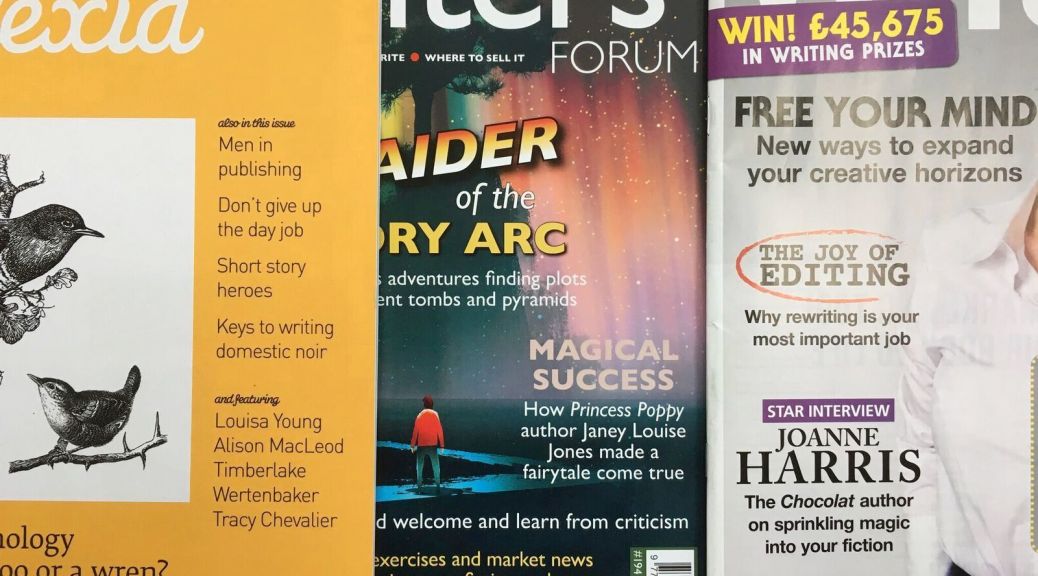
It’s the start of a new year, and the perfect time to take out a new writing magazine subscription. Writing magazines, which these days usually have online communities built around them, are an excellent resource for both building your skills and finding a public outlet for them.
Writing Magazine is the biggest one in the UK, with an active online network and blog (you can see one of my articles on having a creative Christmas here). As well as practical advice about the craft of writing you’ll find readers’ contributions and regular writing competitions. I advertise my workshops and courses in their annual guide.
I recently wrote about the craft of writing in Writing Magazine
Like Writing Magazine, Writers’ Forum provides a wealth of information and opportunities for writers at every stage of their writing journey, from complete beginners to published authors. Look out for my article in next month’s issue, called What kind of writer are you? Why it helps to understand your author brand.
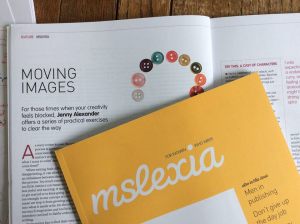
As the name suggests, the target reader is women writers. Mslexia has a strong community-of-writers feel, with the articles in each edition being chosen by a guest editor, on a theme, rather than the same editorial team.
Mslexia is read by top authors and absolute beginners. A quarterly masterclass in the business and psychology of writing, it’s the essential magazine for women who write.
So there you have my great writing reads – now, what about the fantastic freebie?
All my previous book launches have been nibbles-and-bubbles parties, with a lot of mingling, a spot of reading and somebody lovely raising a toast.
Usually, it’s mostly mingling
I’ve held them in my garden, my local library, the back room of the village pub, an art gallery, the Sterts open air theatre… Every book is different, and so is every launch.
When I discovered that the Looe Literary Festival coincided with publication week I really wanted to launch my new book there. It’s a festival that truly celebrates local writing and grass-roots creativity as well as big name authors, and that’s very much the spirit of Free-Range Writing.
There are readings from the Looe Writing Group and the Liskeard Poets, whose book launch I attended recently, having been invited to select the poems for their anthology. Alongside talks by famous authors like Lord Owen, Adam Hart-Davis and Dr Susan Blackmore, there are lesser-known writers of fiction and non-fiction. There are panels and discussions on topics as various as fisheries policy and self-publishing. There’s plenty for children as well.
I’ve been in the green room at the Cheltenham litfest, mingling with TV stars who’ve written a book and hawk-eyed photographers trying to get photos of them, and felt curiously detached from the whole business. For me, writing is about all of us, ordinary people; we all have something interesting and beautiful to say.
Thinking only famous writing is good writing is a mistake, as anyone who has any experience of writing workshops will know. It’s also harmful because it can make us feel discouraged and reluctant to explore our own innate abilities. My new book is about freeing up your thinking, venturing into every area of your writer self and being surprised by what you find.
So this book is all about the writing, and I’ll be launching it in a different way, with a free-range writing talk at 12.00 on Sunday 19th November and then a workshop after lunch, at 2 o’clock.
I love doing these community workshops, partly because they’re a chance to work with writers of all ages. They’re not just for children, or for adults, or for families – they’re for everyone age 8+. We all have something interesting to say and we so rarely have the chance to write together. (Participants under 18 must be accompanied by an adult).
Looe island
The Looe Literary Festival is a great event in a gorgeous location and it’s the perfect place to hear about Free-Range Writing, so please come along and help me celebrate if you can. I will hope to see you there!
We were discussing the Senoi method for tackling nightmares in last week’s session of Writing in the House of Dreams, when someone said, ‘We ought to be teaching this to children in schools!’
The Senoi technique is described by Patricia Garfield in her fascinating book, Creative Dreaming – that’s where I first came across it. When you go to sleep, you intend that if you have a bad dream you will confront the difficulty, face down the enemy, and claim a reward.
If you wake before your dream has reached a positive outcome, you either go back to sleep and continue the dream or else complete it in imagination.
You don’t need to be lucid within the dream, so it’s a very easy practice that anyone can begin, and if you always bring your dreams to a positive outcome you set a track in your mind that your dreams will soon automatically follow, resolving themselves before you awake.
It’s obvious that not having unresolved nightmares is a way of making your dream experience better, but the goal of Senoi dreaming isn’t just to make your dream life better – it’s to make your waking life better as well. So how does that work?
When you deliberately face up to challenges and create positive outcomes in your dreams or imagination, you experience yourself as an effective and courageous person. Then when you’re faced with challenges in waking life, that’s the person you know you can be – someone whose first response to difficulties is ‘I can sort this!’
I shouldn’t think we’ll ever see creative dream skills in the national curriculum but I believe children could get the same benefits from learning to write stories.
The Senoi approach is basically the Hero’s Journey. The hero crosses the threshold into the unfamiliar world, meets enemies and falters, before finally facing up to them and claiming her reward to bring back to the ordinary world.
This story is the mythic template for all our stories. Every new experience starts with crossing the threshold into the unfamiliar and making the hero journey, from starting a new relationship or job to small things such as making a phone call or trying a new restaurant.
In the past, creative writing was part of the school curriculum – I don’t mean analysing styles and all that kind of thing, but properly diving into imagination, every child different, every story unique.
Writing stories is joyful, exciting and empowering. I wish we could have more truly creative writing on the curriculum because, in my view, it wouldn’t only make children’s experience of school better – it would, like creative dreaming, make the rest of their life better too.
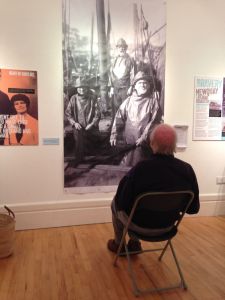
I came across this quote from Pablo Neruda when I was preparing my workshop for Bridging Arts at the Truro Museum in June, and it was very much in my mind as I watched the writers who came to the workshop engaging on a deep emotional level with the stories in the ‘Heart of Conflict’ exhibition, about the Cornish experience in wartime.
Poetry is an act of peace. Peace goes into the making of a poet as flour goes into the making of bread. Pablo Neruda
Writing is always about connection, whether we’re writing poetry or prose, fiction or non-fiction. In stories, we connect with the characters we create; they come alive for us because of the way they make us feel. In non-fiction, we connect with the ideas and experiences that spark our interest and passion; in poetry, we connect with the symbolic layer of the psyche, where meaning is not objective and exact, but something the heart understands.
Every kind of writing connects us with our shared humanity and helps us feel and appreciate the rich complicatedness of our shared human condition.
I’m thinking about this quotation again today because we seem to be bombarded in the news with reports of appalling acts of ignorance and cruelty, from the vicious suppression of citizens in Catalonia to the treatment of the poor and disabled by our government here. The maverick gunman in Las Vegas. Kim Jong Un and Donald Trump… well I really have no words for them.
What we have, on the side of civilisation, is books. Reading, like writing, strengthens empathy, creates connection. It’s frightening to me that communities are losing public libraries, and schools are losing libraries too. Children are not encouraged and taught to read for pleasure, but rather to analyse and imitate, in order to gain good marks.
In my familiar world of children’s writing, the World Book Day list has just been announced. It’s full of books by celebrities, as if books by wonderful authors are somehow of less value than those that carry a famous name on the cover. We are not teaching children to value writing, but only to value fame.
Sometimes in the madness that seems to have the world in its grip, it can feel as if our civilisation is going to Hell in a handcart. Writing and reading are small acts of rebellion against a dominant ideology of greed and division.
I was really keen to teach the poetry workshop in the ‘Heart of Conflict’ exhibition – it felt like a privilege to have that opportunity. It felt like something really good to do, and I loved the ethos of Bridging Arts, which is all about creating connections.
I’m delighted to say that I’ve just heard from Bridging Arts that they would like me to run some more writing workshops next year in the run-up to the centenary of the end of WW1.
Write, read, remember. It doesn’t seem like much, but it’s important.
What do you think? Does reading and writing feel, to you, like ‘an act of peace’?
I often think writing is a kind of coming out; we are always revealed in what we write, whether we are aware of it or not.
Simply setting pen to paper is a self-revealing act, which may make us aware of thoughts and feelings moving through us that we were not aware of before. Certain themes that recur time and again, certain characters and patterns of relationship.
Telling other people that you write is another stage in the coming out. I’ve had participants at workshops who have written whole novels and never told a soul, not even their nearest and dearest.
Sharing writing with friends or family pushes this coming out as a writer a little further, but reading to strangers in a workshop situation is another whole layer of boldness.
So how wonderful is it for me to hear from a workshop participant that she’s plucked up the courage to press send on a travel article, and again on a competition piece?
Her article, she tells me, has been accepted for a travel website with a membership of 40,000; her story will be published in an anthology of competition winners.
But as she says in her emails, it isn’t about payment or recognition – though that would be nice, of course. The real buzz is having had the courage to be heard.
I had a crisis point in my coming out as a writer. You can read about it here.
What about you? Have you come out as a writer? How hard was it for you?
I wasn’t going to write any more posts about depression and suicide, but I’ve been thinking this week about a writer I knew, Jonny Zucker, who killed himself last year.
Jonny’s family have just announced the Striker Boy campaign, in which they are donating all proceeds of a new edition of one of his books to the mental health charity, Mind.
When Jonny died, the tributes and memories that poured in all said very similar things. How generous he was, how full of energy and enthusiasm, how funny, and how very loved.
So often, those who take their own lives seem to be bright stars like him, people who have touched other people’s lives in one way or another, but don’t seem to have understood how amazing they are.
So here I am, thinking and talking about suicide again, wishing like everyone must, that there was some way of reaching across the dreadful chasm that can open up around a person and swallow them down.
I don’t think we can convince somebody thinking about suicide how wonderful and loved they are, or how much they matter. Even if we could, would that be enough to reach across the chasm and hold onto them?
Certainly, we can make sure the people around us know we are there for them, and will listen in a non-judging way, if they ever need someone to turn to. We can avoid saying unhelpful things that will make the person feel even worse, such as ‘I don’t know why you’re so hard on yourself’ or ‘Why don’t you just snap out of it?’ But not everyone is actually able to talk about it when they’re struggling with depression.
My feeling is that the biggest thing we can do for each other is be honest and not hide our own darkness. Sadness, feelings of pointlessness, even despair, are all part of the human condition, although that goes against our cultural assumptions.
We think we should be able to be happy all the time and every kind of pain is – or certainly should be – fixable. In our culture, unhappiness feels like failure, and we’re ashamed of owning up to it.
But the golden life is an illusion. We shouldn’t be claiming it while hiding our own darkness, because that make the darkness even more terrifying and lonely for people currently going through it.
What we need to recognise and especially to teach our children is that everyone experiences sadness, fear, despair… it’s natural. Life can be hard, but we can learn to handle it. This is the message in all my kids’ self-help books, including How 2B Happy.
I don’t mean I think we should bang on about our problems all the time, but just be real with each other. Real life stories belong to all of us; they lift us above our own situation and show us our wider human condition. They give us a sense of belonging.
A member of Jonny’s family commented, ‘Mental health needs to be discussed in the open and these personal stories need to be shared.’
I could not agree more.
If you would like to buy a copy of Jonny’s book, the new special edition comes out on October 6th.










 Jenny Alexander's blog: Writing in the House of Dreams