Death and regeneration – an everyday tale of writing

Just across the road from where I live, there’s a piece of woodland where I often walk. This morning, when I reached the stile, I found warning notices that tree-felling was in progress, to clear diseased trees.

Warning notices
Warning notices

I was shocked when I saw the extent of the devastation, a long section of beautiful woodland around the path reduced to an ugly scar.

woods
Where once were tall majestic trees

Something about the angle of the felled tree trunks reminded me of the Tower card in tarot, and that made me feel better.

XVI - The Tower - 'Thunderbolt' in the Osho Zen Tarot
XVI – The Tower – ‘Thunderbolt’ in the Osho Zen Tarot

The card traditionally shows a tower being burned, destroyed or blown apart, with figures tumbling from the top. Angeles Arrien, my favourite tarot commentator, says, ‘Because this card looks so violent, it has often been misinterpreted.’ She says the Tower is actually ‘the universal principle of healing, renovation and restoration.’

I’ve been experiencing the Tower lately in my writing, with a story I wrote and submitted over a decade ago. Back then, it went as far as acquisitions with several publishers and was only rejected on grounds that they had already taken on new books on similar themes.

So coming back to it, I knew the book was of publishable standard, and I wasn’t planning to do anything radical,  just prepare the text for kindle. But on re-reading, I had a strong sense that I could write the whole thing better now, after this long delay of time.

I copied the file and started chopping out the dead wood and carving up the action; then I started all over again, strengthening the voice, deepening the characters and restructuring the plot.

For a while, I wondered whether I was actually just destroying a perfectly good story, but what’s grown from the wreckage is a far fresher, stronger and more satisfying novel.

Hopefully the woodland near my house will soon begin its own regeneration.

Have you ever had to ‘kill your darlings’ as a writer? Or been through a Tower time, when things have fallen apart but ultimately made way for something better?

Sigmund Freud and the writer’s gift

The creative writer does the same as the child at play. He creates a world of phantasy which he takes very seriously — that is, which he invests with large amounts of emotion — while separating it sharply from reality ~ Sigmund Freud

Over the years, several people coming new to writing workshops have remarked that they feel like they’re in playschool, when they had been expecting something much more difficult and demanding. ‘It’s very enjoyable,’ they say, ‘but when are we going to get to the nitty gritty?’

The ability to be playful is the nitty gritty – it’s the key to creating the dreamlike fantasies of fiction, and it’s an ability that many of us lose as part of the natural process of growing up and engaging with the ‘real’ world.

Freud says we actually distance ourselves from the fantasies of our inner lives to the extent of feeling fearful and ashamed. The writer’s gift may be that in being able to sustain the playful attention and emotional attachment that children do to their dreams and fantasies, he or she provides an acceptable way for readers to indulge in the same activity vicariously.

And there’s more.

…our actual enjoyment of an imaginative work proceeds from a liberation of tensions in our minds. It may even be that not a little of this effect is due to the writer’s enabling us thenceforward to enjoy our own day-dreams without self-reproach or shame ~ Sigmund Freud

In overcoming their ‘grown-up’ rejection of the dreams and fantasies of their inner world, writers may also be giving a kind of permission for readers to explore and engage with their own.

Some sound, if neglected, writing advice

People often ask me for writing advice, and they’re surprised when the first thing I tell them is to keep a dream journal… keeping a dream journal is perfectly sound, if neglected, writing advice ~Andrew Blackman on writetodone

This extract is from a blog post I read last week which had me punching the air – yes! The author says even people who don’t normally remember their dreams can become dream-recallers through practice. He recommends

  • recording whatever you can remember immediately upon waking
  • not trying to judge or analyse your dreams

Then he outlines the advantages for authors in keeping a dream journal, which boil down to inspiration, breaking through blocks and seeing the world differently.

I couldn’t have put it better, but there are a few things I might add about the dream journal itself.

My two most recent journals - they have to look and feel beautiful!
My two most recent journals – they have to look and feel beautiful!

When I first started recording my dreams over forty years ago, I wrote them in school exercise books, just the dreams, packed together with no extra content except the date. I’m not knocking it – that’s all you need in order to establish great dream-recall.

Then I studied dream interpretation using the Western psychological model, and began to include some brief details about what was going on in my waking life, so in effect my journal recorded two parallel lives, waking and dreaming. This threw up some real insights into how both dreams and waking life work, but I wouldn’t necessarily recommend it if you’re looking to use your dreams as a creative resource.

Interpreting comes naturally with experience, in the same way as experience of life deepens our understanding, but if we approach dreams with this primary focus it’s easy to lose the bigger picture. Understanding dreams only as expressions of the waking life would be like understanding every piece of fiction you write as autobiography. It might be, but if you examine that too closely you can lose sight of the story and its own life.

My diaries have evolved: dreams, drawings, bits stuck in...
My diaries have evolved: dreams, drawings, bits stuck in…

Gradually, my dream journals have evolved so that although the core of them is my daily record of my dreams, and brief notes about events and preoccupations in my waking like, I’m also recording lots of other stuff such as

  • thoughts and observations that have engaged me during the day
  • sketches
  • plans
  • story ideas
  • tarot readings
  • notes on books I’m reading
  • quotations
  • scraps of paper stuck in with cellotape if I’ve jotted ideas down when I’m away from the house

This may sound like a mess, but it’s actually rather lovely, because I use different colour gel pens for the various different kinds of entry.

It may also sound like a major commitment of time but it isn’t. The only regular writing I do is the dreams – all the rest is random, and I’d be doing it anyway, only previously it was scattered about in various nooks and notebooks.

Pulling it all together means it adds up to a rich and satisfying record of my life, both inner and outer, which seems to provide a rich seed-bed in which my various writing projects can easily root and grow.

Six Very Inspiring Bloggers for you!

Great news today – Writing in the House of Dreams has received the Very Inspiring Blogger Award from the lovely Katherine Langrish, writer and story-teller extraordinaire. You may have heard her on Radio 4’s Open Book programme recently, discussing dystopian fiction.

The very beautiful very inspiring blog award

Katherine’s interesting and inspiring blog is called Seven Miles of Steel Thistles

Under the conditions of the  award, I have to tell you seven things about myself, and as it’s spring, I’m giving you seven pictures from my garden, which is always a source of happy ponderings for me:

1. My garden is loooong, so even on a day when it’s too cold to sit out, I like to walk up and down on breaks from my computer

026

2. When it’s warm, you can’t beat a swing seat for sunning

swing seat

3. Coffee at the table under the trees is good when there are notes or MSS to read

003 (2)

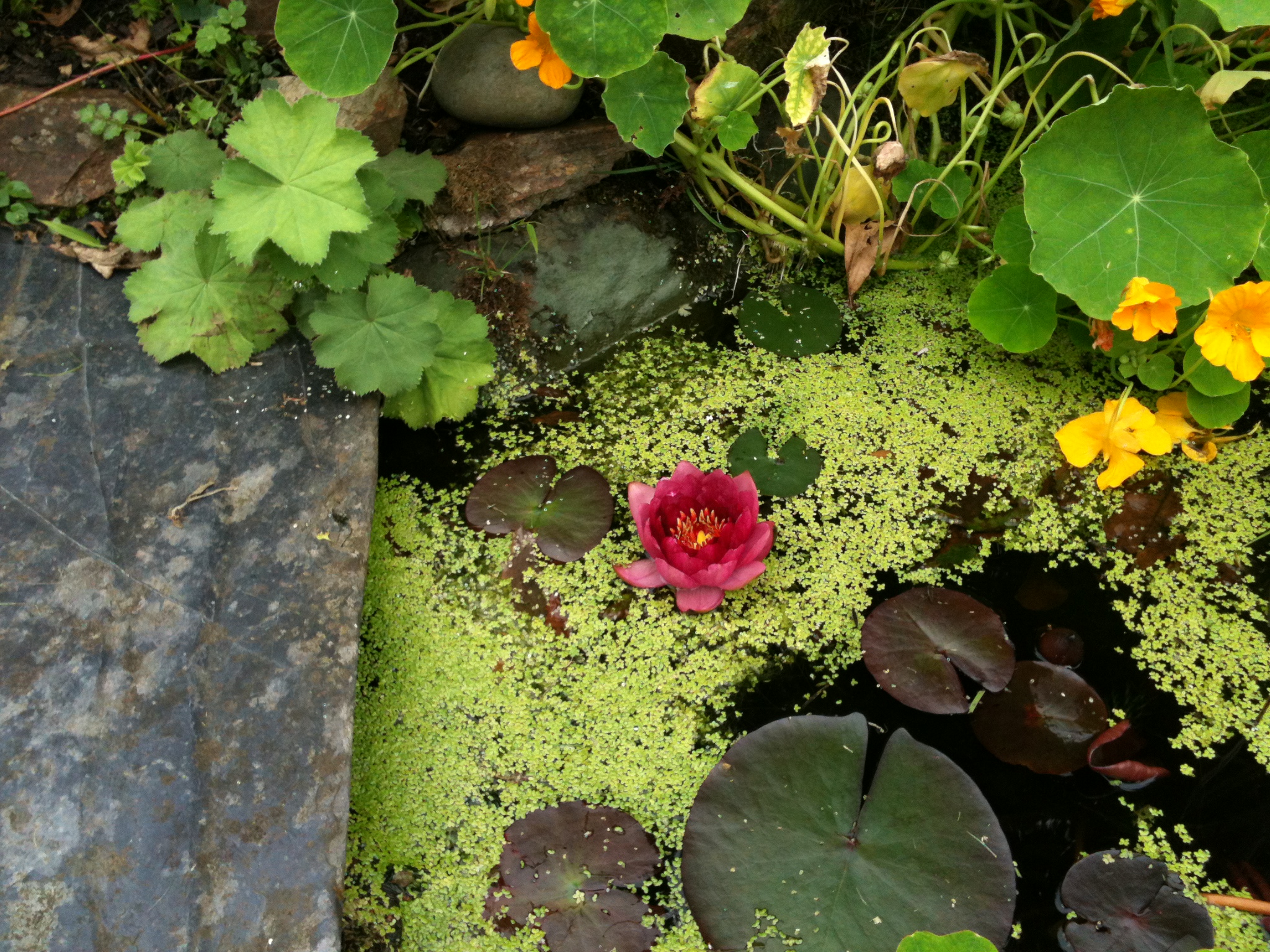
4. For contemplation, a nice peaceful pond

001

5. Flowers, obviously…

OLYMPUS DIGITAL CAMERA

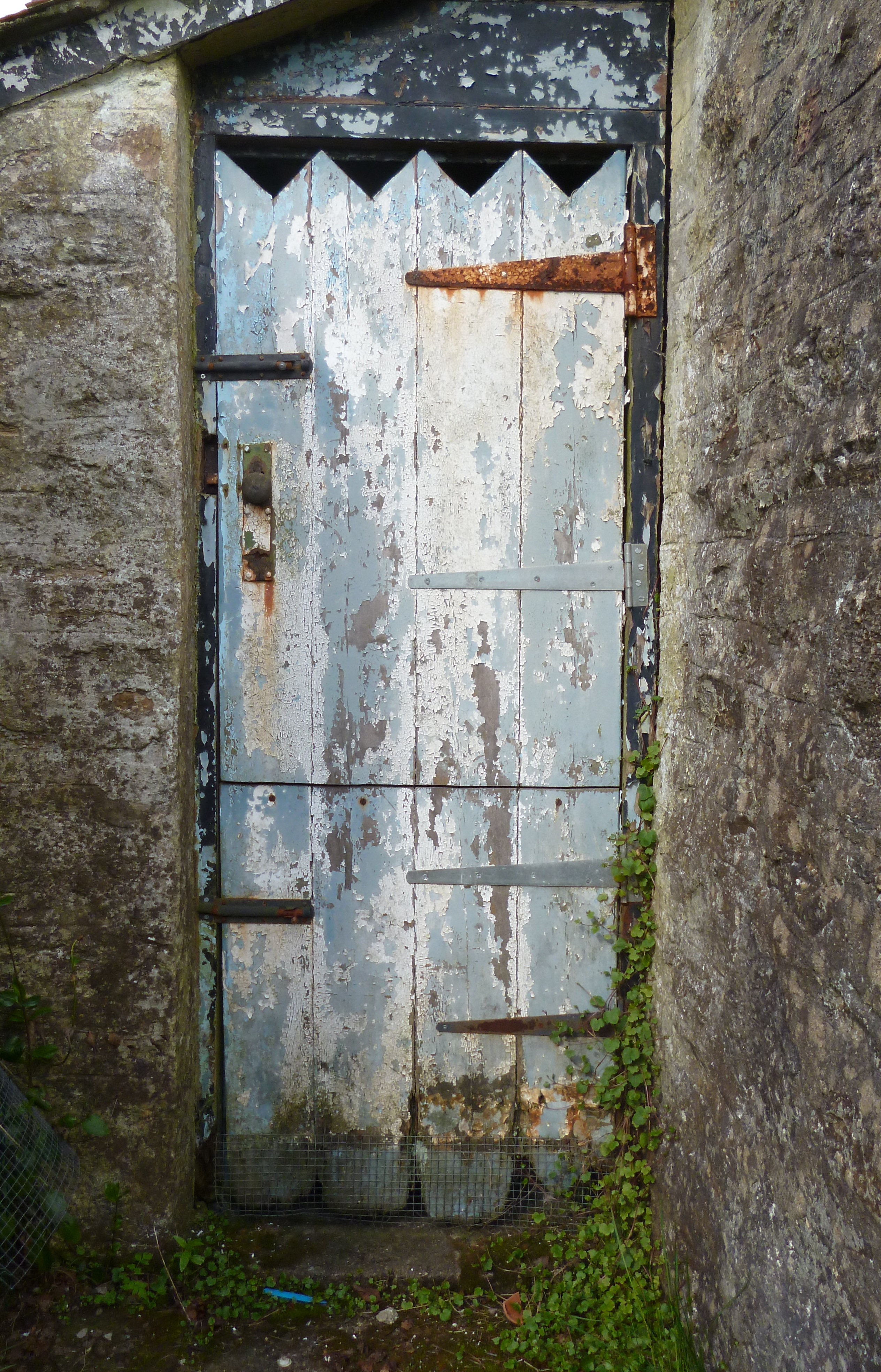
6. Pending DIY projects to help me stay focused on my writing

door

7. And even on rainy days, watching the birds through my study window

014

But enough about me! Now I have the privilege of nominating five Very Inspiring Bloggers myself. This time I’m going for blogs on writing, and here they are:

  1. The astonishingly prolific rarasaur – I know she’s already got this award, but I like spreading the word about the good stuff!
  2. Therapeutic Journal Writing – a lovely writing therapy blog from Lapidus member, Kate Thompson
  3. Poet and teacher, Geraldine Green, whose blog is Salt Road 
  4. Cristian Mihai – a young Romanian blogger sharing his thoughts and views on writing and art
  5. Stroppy author – info about all things writing, with plenty of attitude

With Katherine’s that makes six Very Inspiring Bloggers for you. Happy reading!

Do you know any VIBs? Please share!

When a writer needs to ‘go down to the well’

Just after Christmas, when I had finished my story set on a remote island, I had a brief hiatus, so I asked for a dream.

I’m in Cunningsburgh, in Shetland, but the coast is completely different. Instead of the wide flat apron of land around the voe, it’s high and mountainous.

Cunninsburgh, looking out towards the voe

We go to the top of the cliffs and start our familiar walk, down the narrow path which clings to the side of the steep slope down to the sea. We normally make this a circular walk, but when we reach the water and look up at the path ahead, it looks too long and hazardous. So we double back the way we came, and return to the top once again.

When I wrote the dream down, I knew I’d dreamt about this place before, and done the walk in other dreams; I also remembered that it almost always coincided with this stage in my writing, when I had finished one MS and not yet started another.

After I finish a book, I need a fallow time to rest and recover, refocus and regroup. I play with lots of ideas and then, just when I’m starting to feel impatient, one of them grabs me.

My dream of going down to the water reminds me of an idea I’ve read in books on writing, that writers need to take time out and ‘go down to the well’ to keep refreshing their ideas. Julia Cameron talks about it in her ‘writer’s date’ suggestion in ‘The Artist’s Way.’

Julia Cameron recommends taking time out every week, but I find my writing pattern is such that when I’m in the flow I just want to write 24:7 till I reach the end, and then take a chunk of time out to recover (and get some sleep!)

After this dream, and a period of rest, what eventually grabbed me was a return to the world of Peony Pinker, the protagonist of my latest published series. I guess that’s why I doubled back in my dream.

It’s only through writing down your dreams and noting alongside them the main things that are happening in your waking life, that you start to see patterns and parallels emerging. Certain themes and situations in your dreamworld may become familiar, as they reflect recurring themes and situations in your waking life.

I’ve just delivered my follow-up story to Peony Pinker, ‘Me and my big mouth, by Maddy Monday,’ so I won’t be surprised if I find myself walking back down to the water in my dreams these next few weeks.

If you’re a dreamer, are you aware of a recurring link between a dream situation and a waking one in your own life? 

If you’re a writer, how often do you ‘go down to the well’ – for a few hours every week, or for longer periods between writing projects?

What kind of writer do you want to be?

I’ve always thought of myself as a very happy writer. I used to put it down purely to the fact that I was a dreamer first, and therefore completely used to coming and going across the threshold of consciousness, which meant I never experienced any kind of writing angst about getting blocked or running out of ideas.

But at the recent Scattered Authors conference in Peterborough, my friend and fellow-writer Penny Dolan recommended a book she thought I might like, called ‘Coach yourself to writing success,’ by Bekki Hill, and it has extended my thinking.

life coaching book

Penny was right – I love this kind of book. I enjoy doing practical exercises that help me to arrive at different ways of looking at things. I’m a great fan of life coaching too, having had some life-changing sessions with astrological life coach, Pat Neill, a few years ago and more recently a brilliant group session with a writing coach at a Lapidus networking day.

What has become clearer for me through reading this book is that another reason I’m very happy in my writing is that my goals are perfectly attuned to my core values.

We commonly measure writing success in terms of sales and celebrity, but I have never felt any of that is important; I haven’t felt jealous, anxious or disheartened about having less of a public profile than many of my writing friends.

My core values, it turns out, are in order of importance:

  1. Beauty/ creativity. I’ve blogged about the elegant harmonies of structure that please me in my work on the children’s blog, girlsheartbooks http://girlsheartbooks.com/2012/12/18/does-this-make-me-weird/
  2. Nature/health. I love the writing life because it means I can live somewhere remote and go walking in nature every day
  3. Loving/caring/sociability. I enjoy the connection with readers, for example here on my blog, although it’s medium-profile and profit-free. One of my main drives in writing for children is to suggest ideas which might help them create positive experiences and deal with difficult ones
  4. Originality/self-expression. The parable of the talents has always informed my life, and it feels very important to me that we explore, uncover and develop our God-given gifts, whatever they might be
  5. Spirituality/solitariness. This was the surprising one, because I’d have thought it would rank higher, but when I did the next exercise, expanding upon these core values, I discovered that all of the first four boil down to ways of celebrating the divine, in myself, the world and other people

You are more likely to achieve your writing goals if they fit with your core values in life. Should you manage to achieve goals that don’t, your success is less likely to make you feel happy.

That is not to say you are limited forever to where you are today, because core values can change and evolve. Like you yourself, they are a work-in-progress.

But for this moment and this step, understanding how your current writing goals relate to what your soul wants is empowering and may be a revelation. Like Penny, I can totally recommend this book.

Have you ever thought about how well your writing goals tie in with your core values?

A vocation of unhappiness?

The prolific Belgian author, Georges Simenon, famously said, ‘Writing is not a profession but a vocation of unhappiness.’

Writing is certainly a vocation. Many professional authors have been doing it for years on top of the nine to five before they start to make any money from it, and most say they’d continue to write even if their income from it completely dried up.

Like any other vocation, this hunger to create comes at a cost; it takes time and energy away from social life and other interests, and puts personal challenges upon us which we might otherwise prefer to avoid, such as developing the ability to deal with criticism and rejection.

But because it’s a vocation, that inner drive enables us to overcome our setbacks and difficulties and keeps us moving forward towards a growing sense of doing what we were born to do.

I used to think that dreaming was a vocation of unhappiness too. It felt like a compulsion which had me in its grip. Over the years, it has taken me to all sorts of places where I’ve felt confused and frightened, and out of my depth. It has given me insights and information I did not want to know.

Ignorance is bliss, and dreams are a road to understanding. Writing is hard, and for most of us it will not lead to a life of material abundance. But if you have a vocation you have to find and follow your inner compass, because that is the only way to achieve the supreme happiness of coming home to the self.

A facebook page or blogging – which is best?

A year ago I set up a facebook page for Writing in the House of Dreams, but then I didn’t do anything about it. I didn’t start posting updates, or drawing people’s attention to it, because I wasn’t sure what the value-added would be when I already had – and loved – this blog.

It’s gradually occurred to me, through following some excellent fb pages such as Dreamwork with Toko-pa, The spirit that moves me, Moon Woman Rising, Creativity matters, New heaven new earth and Action for happiness that a facebook page does certain things a blog can’t do.

With a facebook page

  • readers can initiate topics and conversations rather than just responding to the content
  • readers can post pictures as well as comments
  • I can flag up news such as this blog getting a mention in Victoria Field’s excellent poetrytherapynews last week
  • you can flag up your own relevant news – Victoria could have posted her link on my fb page herself
  • it’s a great place for me to share quotes, brief insights and even dreams
  • it’s somewhere you can share your own quotes, brief insights and even dreams
  • it’s more immediate, especially for a once-a-week blogger like me

A limitation with facebook pages is that ‘likers’ no longer see all the updates in their timeline unless the admin pays a fee, whereas every email follower of a blog will receive notification whenever a new post goes up.

So my conclusion is that neither is best – facebook pages and blogging can simply do different things. That’s the theory, and now I’m ready to try it out in practice, so I’ve added the link to my Writing in the House of Dreams facebook page to the widgets at the right hand side of this blog.

I do hope you’ll ‘like’ the new page and go on to become part of its active community. If you really do like it, please tell your friends!

The joy of writing

Last week I was talking about the comfort of dreams, and how dreaming can provide pleasurable experiences for the self which may be ‘only dreams’ in waking life.

This happens spontaneously, but we can replay and deliberately go back into such dreams either in daytime fantasies or as we fall asleep.

Writing can work in the same way, which I’m particularly thankful for at times when I’m not sleeping well. If I feel out of sorts with the world for any reason, and maybe my mind’s gone into overdrive, I’ll get up and write for two or three hours in the middle of the night.

I’ve had a couple of nights like that this week, when I’ve made myself a cup of tea  and left the cares and irritations of my daily life to immerse myself in Maddy Monday’s, whose world is colourful, lively and distracting.

003
My bright and delightful work-in-progress

The joy of writing is that we can choose the worlds we wish to inhabit during the writing time, and even though we will meet all sorts of challenges and difficulties in those worlds – no problem, no story – we are always able to solve them.

Sweet dreams everyone, this week – or failing that, happy writing!

The comfort of dreams

When I interviewed Brenda Mallon here in the House of Dreams a few weeks ago, she touched upon the way that dreaming about a lost loved one can bring great comfort for the bereaved.

These dreams happen when a person is most in need of comforting, but dreams can bring comfort in less extreme times too.

When I was about five years old, I dreamt I was riding along my street in a horse-and-cart, on a lovely summer day. The horse was trotting happily, and the cart was full-to-overflowing with gold coins which jumped and jingled, and sparkled in the sun.

Everyone came out of their houses to wave as I went by, and I knew I ought to throw pennies to the poor, but I didn’t. That gold was mine, all mine!

I liked that dream so much I used to deliberately go back into it every night, as soon as I closed my eyes. It made me fall asleep with a smile on my face.

I used to think that dream showed what a horrible person I was – it was a guilty pleasure. But looking back now, I see it’s just the dream of a child in a large family with little money, where clothes were passed down and everything – even the bath water – had to be shared. It was the pure pleasure of experiencing something which was completely my own.

You can re-enter enjoyable dreams any time you like, by simply closing your eyes and imagining, in the same sort of way as you might revisit pleasurable fantasies in waking life.

It isn’t the only function of dreaming and imagination, but bringing comfort and pleasure is one way these experiences can enrich a person’s life.

Have you ever deliberately imagined your way back into a pleasurable dream on subsequent nights?