The creative writer does the same as the child at play. He creates a world of phantasy which he takes very seriously — that is, which he invests with large amounts of emotion — while separating it sharply from reality ~ Sigmund Freud
Over the years, several people coming new to writing workshops have remarked that they feel like they’re in playschool, when they had been expecting something much more difficult and demanding. ‘It’s very enjoyable,’ they say, ‘but when are we going to get to the nitty gritty?’
The ability to be playful is the nitty gritty – it’s the key to creating the dreamlike fantasies of fiction, and it’s an ability that many of us lose as part of the natural process of growing up and engaging with the ‘real’ world.
Freud says we actually distance ourselves from the fantasies of our inner lives to the extent of feeling fearful and ashamed. The writer’s gift may be that in being able to sustain the playful attention and emotional attachment that children do to their dreams and fantasies, he or she provides an acceptable way for readers to indulge in the same activity vicariously.
And there’s more.
…our actual enjoyment of an imaginative work proceeds from a liberation of tensions in our minds. It may even be that not a little of this effect is due to the writer’s enabling us thenceforward to enjoy our own day-dreams without self-reproach or shame ~ Sigmund Freud
In overcoming their ‘grown-up’ rejection of the dreams and fantasies of their inner world, writers may also be giving a kind of permission for readers to explore and engage with their own.
People often ask me for writing advice, and they’re surprised when the first thing I tell them is to keep a dream journal… keeping a dream journal is perfectly sound, if neglected, writing advice ~Andrew Blackman on writetodone
This extract is from a blog post I read last week which had me punching the air – yes! The author says even people who don’t normally remember their dreams can become dream-recallers through practice. He recommends
recording whatever you can remember immediately upon waking
not trying to judge or analyse your dreams
Then he outlines the advantages for authors in keeping a dream journal, which boil down to inspiration, breaking through blocks and seeing the world differently.
I couldn’t have put it better, but there are a few things I might add about the dream journal itself.
My two most recent journals – they have to look and feel beautiful!
When I first started recording my dreams over forty years ago, I wrote them in school exercise books, just the dreams, packed together with no extra content except the date. I’m not knocking it – that’s all you need in order to establish great dream-recall.
Then I studied dream interpretation using the Western psychological model, and began to include some brief details about what was going on in my waking life, so in effect my journal recorded two parallel lives, waking and dreaming. This threw up some real insights into how both dreams and waking life work, but I wouldn’t necessarily recommend it if you’re looking to use your dreams as a creative resource.
Interpreting comes naturally with experience, in the same way as experience of life deepens our understanding, but if we approach dreams with this primary focus it’s easy to lose the bigger picture. Understanding dreams only as expressions of the waking life would be like understanding every piece of fiction you write as autobiography. It might be, but if you examine that too closely you can lose sight of the story and its own life.
My diaries have evolved: dreams, drawings, bits stuck in…
Gradually, my dream journals have evolved so that although the core of them is my daily record of my dreams, and brief notes about events and preoccupations in my waking like, I’m also recording lots of other stuff such as
thoughts and observations that have engaged me during the day
sketches
plans
story ideas
tarot readings
notes on books I’m reading
quotations
scraps of paper stuck in with cellotape if I’ve jotted ideas down when I’m away from the house
This may sound like a mess, but it’s actually rather lovely, because I use different colour gel pens for the various different kinds of entry.
It may also sound like a major commitment of time but it isn’t. The only regular writing I do is the dreams – all the rest is random, and I’d be doing it anyway, only previously it was scattered about in various nooks and notebooks.
Pulling it all together means it adds up to a rich and satisfying record of my life, both inner and outer, which seems to provide a rich seed-bed in which my various writing projects can easily root and grow.
Great news today – Writing in the House of Dreams has received the Very Inspiring Blogger Award from the lovely Katherine Langrish, writer and story-teller extraordinaire. You may have heard her on Radio 4’s Open Book programme recently, discussing dystopian fiction.
Under the conditions of the award, I have to tell you seven things about myself, and as it’s spring, I’m giving you seven pictures from my garden, which is always a source of happy ponderings for me:
1. My garden is loooong, so even on a day when it’s too cold to sit out, I like to walk up and down on breaks from my computer
2. When it’s warm, you can’t beat a swing seat for sunning
3. Coffee at the table under the trees is good when there are notes or MSS to read
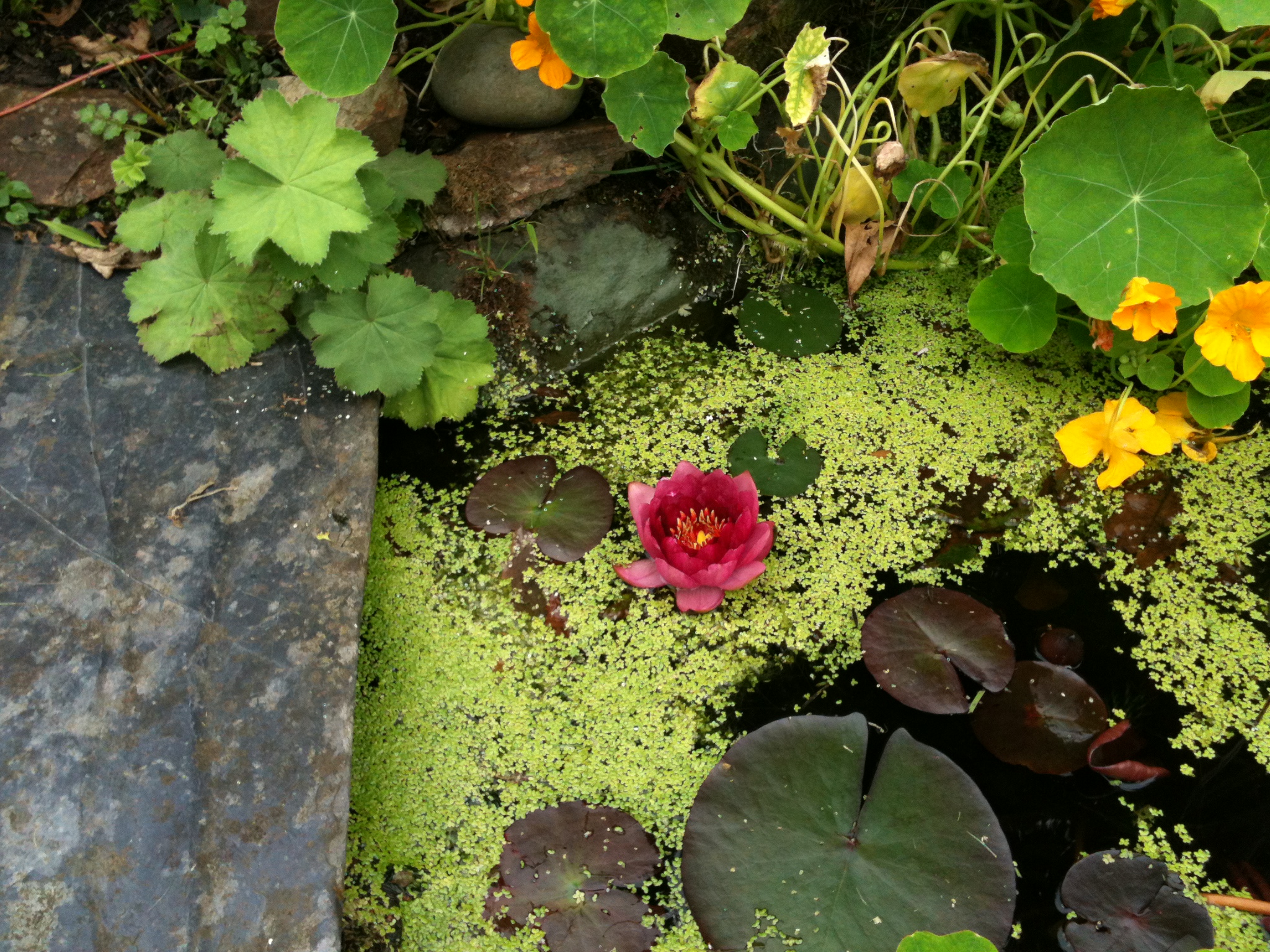
4. For contemplation, a nice peaceful pond
5. Flowers, obviously…
6. Pending DIY projects to help me stay focused on my writing
7. And even on rainy days, watching the birds through my study window
But enough about me! Now I have the privilege of nominating five Very Inspiring Bloggers myself. This time I’m going for blogs on writing, and here they are:
The astonishingly prolific rarasaur – I know she’s already got this award, but I like spreading the word about the good stuff!
Last week, I delivered a children’s book to my agent which I first conceived more than ten years ago. It had been through several complete versions, one of which a previous agent had actually sent to a publisher, as much as anything in the hope of getting some useful feedback, as she and I agreed that it probably wasn’t quite there, though we couldn’t see what was missing.
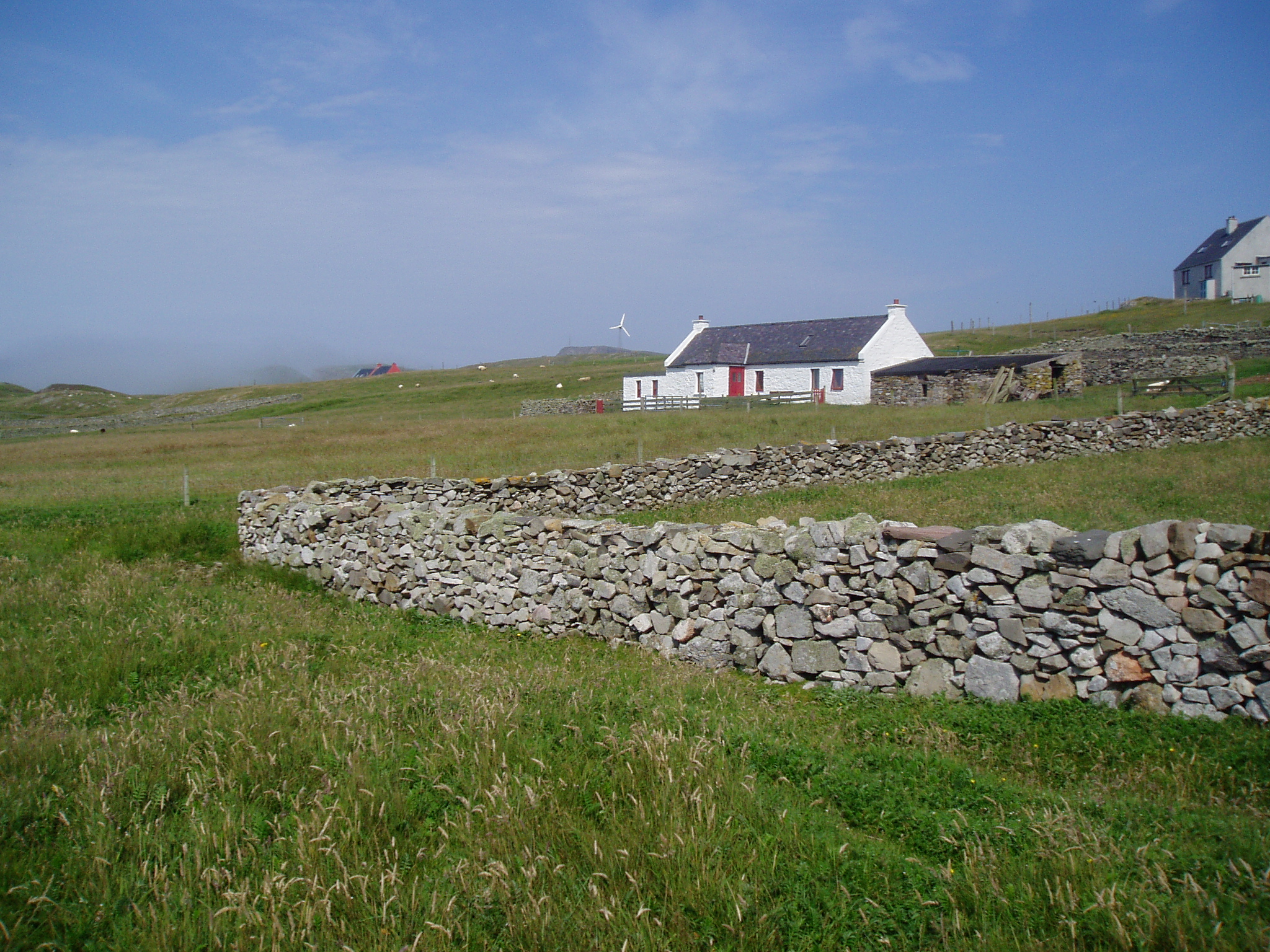
The book was set on a small island – research took me to Foula and Fair Isle in 2003
It wasn’t quite there, but it didn’t go away, and when I had flu before Christmas, it re-emerged quite unexpectedly, to announce that it was ready.
I had lost all my previous notes and versions, but I knew the story, and this time the planning and writing came easy and complete, like a jigsaw falling into place, all the missing pieces found.
Now, starting work on another new book, I’ve discovered that this story also took root in me more than a decade ago, and the same thing is happening. Where it once felt stuck and abandoned, now it’s emerging fully-formed, and all I’m having to do is write it down.
Two versions, ten years between
Last night I dreamt I was at a Scattered Authors conference, talking to other authors about this moment in a piece of work, when the book is inside you, fully-formed, like a shadow book, and your task is to bring it out, not harming or disturbing it, but as whole, which it already is.
You change yourself, your face, your mouth, stretching it wide, until gradually the book emerges out of your mouth, transforming from shadow to solid and real. I demonstrate it. I say how exciting this is, knowing the book is there, then opening yourself up and allowing it to come into the world so that everyone can see what it is.
I thought, ‘What if a life is like a book? Already complete in shadow form, and gradually emerging into the world, a little misshapen in its birthing, perhaps, a few edges knocked off in its early years, but still… when nature is ready, the matter inhabits the shadow.
Jerome Bruner’s thoughtful autobiography
Then I woke up and saw the book I’d been reading before I fell asleep, ‘In Search of Mind: Essays in Autobiography’ by Jerome Bruner, which begins with his thoughts about whether it is our history which shapes us or our destiny, and I smiled.
I love this layering-up of daytime activity, dreams and ideas. The material, the imaginal and the rational, playing alongside each other; themes and variations, music of the mind.
Have you ever had a book or story that took years between the first spark and the final realisation?
Years ago a tutor on a Society of Authors Arvon residential gave us a five-point character sketch, which I’ve used as a first way in ever since, although the fifth point always puzzled me.
Point 1: Name
Choose a name for your character, bearing in mind that names carry information about, for example, age and social background. They also carry more subtle nuances, suggesting a kind of personality and way of being.
Point 2: Their appearance
Age, hair colour, eyes, build, style… one or two points that give you a glimpse of your character
Point 3: Something they love
This might be any kind of thing, from dishonesty to travel, from football to cottage pie. Just the first thing that comes into your head
Point 4: Something they hate
As above
So far, so straightforward, but then there’s Point 5…
Point 5: Their special object
I interpreted this as meaning something you would always associate with them – maybe a physical mannerism such as a limp or an affectation of speech, or something they usually had with them like a dog or cat, or favourite piece of jewellery. But I don’t think most people have a special object such as that, so I always struggled to find one for my characters.
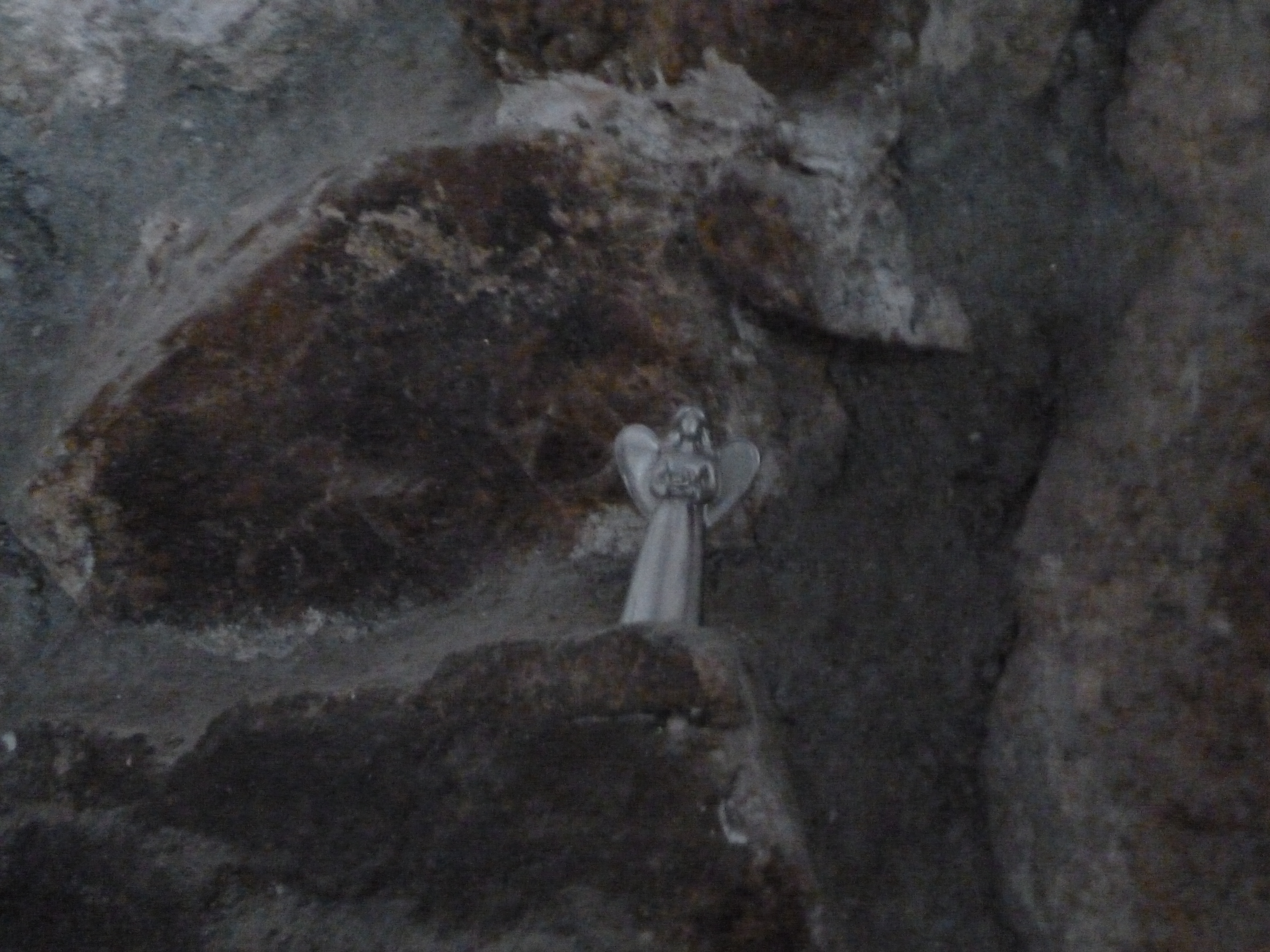
Then when I was tidying up after Christmas I was putting a fallen angel back into my fireplace wall when I suddenly thought, all these objects are special to me.
The angel that fell
There’s the penny-size Thomas the Tank Engine I found in the edge of the sea the summer I spent in the beach cafe writing Peony Pinker. The Christmas cracker car one of my kids gave me when I was writing Car-mad Jack. The champagne bottle candle from a twenty-first birthday cake. The Incredible Hulk who was here in the house when I arrived, and the angel I found in a drawer in an empty house once when I was close to despair. The sewn heart a sweet friend I’ve never met sent to me last year. The teddy-bear my daughter won at the amusements arcade on a family day down at Looe. To mention but a few.
The little teddy bear from Looe
And I suddenly thought of the five-point character sketch, realising that it doesn’t have to be one definitive special object. It can be any object at all that has emotional resonance and meaning for you.
Any object my character feels is special to them will do for point number 5. Or a scattering of small objects like the ones in my fireplace wall, which tell so much of the story of me.
One of the great things about teaching workshops is that you get to meet some very talented, interesting and likeable people. With the kind of workshops I do, such as ‘Writing the Tarot’ and ‘Writing in the House of Dreams’, most of the people who come also have a real sense of adventure.
Cue Paul Farrington, a keen traveller and talented young writer and photographer, who has done a number of courses with me now. At the last workshop before Christmas, Paul brought me a present, and here it is – a large print of a photo he took in America.
Dream house photo by Paul Farrington
I’ve been contemplating this picture over the holidays – how we can see the outside in wonderful detail, but we can only imagine what lies inside that spacious interior. The dark windows reveal nothing; they only reflect back the world outside.
We are the House of Dreams – the outer life so clear and familiar, the inner world often caught only in glimpses, or sometimes completely ignored. Dream-recalling and creative work of every kind are keys to getting right inside, having a proper look around and making yourself at home.
That’s the great joy of writing for me. It enables you to inhabit more of your Self. Dreamworking does the same thing.
Thank-you for following, commenting, tweeting and sharing on facebook throughout 2012, and may your 2013 be rich with wonderful dreams and writing.
I’m absolutely delighted that ‘Writing in the House of Dreams’ has been nominated for ‘The Sunshine Award’
The Sunshine Award is ‘given and passed on to bloggers who positively and creatively inspire others in the blogosphere.’
‘Positively’ and ‘creatively’ are two of my favourite words!
Acceptance of the award comes with the following instructions:
Acknowledge the person who gave this award in a blog post.
Do the Q&A below.
Pass on the award to 10 deserving and inspiring bloggers, inform them and link to their blogs.
So first of all, my thanks to the lovely Carolyn Hughes – do check out her phenomenally popular blog The Hurt Healer which is always thoughtful and beautifully written
Second of all, here’s my Q&A:
1.Who is your favourite philosopher? Hmm… I don’t really have one. I do like Eckhart Tolle’s ‘The Power of Now’ and Susan Jeffers’ philosophy of ‘Whatever happens, I’ll handle it’ though
2. What is your favourite number? 4
3. What is your favourite animal? The owl – it knows the secrets of the night
4. What is your favourite time of day? I find they’re all enjoyable in different ways – it’s one of the benefits of insomnia that you get to know the full 24 hours really well
6. What is your favourite holiday? Camping in the far North of Scotland and the Northern Isles – breath-taking scenery, wonderful wildlife, absolute tranquillity
7. What is your favourite physical activity? Walking in wild places
8. What is your favourite non-alcoholic drink? Coffee in the morning, tea in the afternoon.
9. What is your passion? Writing and dreamworking (no surprises there then!) I love teaching workshops too
10. What is your favourite flower? Nasturtiums, geraniums and roses in the summer, Michaelmas daisies in the autumn, snowdrops in the winter, primroses and daffodils in the spring. Impossible to narrow it down any further!
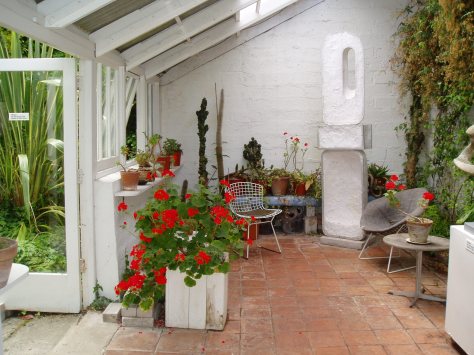
Gorgeous geraniums in Barbara Hepworth’s garden in St Ives
So now my nominations, in no particular order:
1. Toko-pa Artist, musician and dreamworker – a gentle, thoughtful blog and a beautiful voice
2. Writing SistersBetsy Duffey and Laurie Myers – creative inspiration from a Christian perspective, quotes and beautiful illustrations
3. Abi Burlingham Engaging and varied articles about a writer’s life
4 The Artist’s Road One of my favourite blogs about the craft of writing, by Patrick Ross
My guest in the House of Dreams this month is the author Alison Boyle, who attended one of my workshops a while ago. I love the idea of ‘writing in the space between sleeping and waking.’
Alison Boyle
In the space between sleeping and waking I found a way of expressing the internal voice of a main character in my latest book ‘from Pakistan to Preston’.
‘From Pakistan to Preston’
Most of the narrative is in the third person, and I’d been looking for a convincing internal voice for Tommy O’Reilly that exposed the indecisions whirring round his head. Tommy’s self-expressive flights, which I scribbled on scraps of paper at the moment they occurred to me and not a moment later, bring a change of tone and perspective to the story. Through this voice I hope that readers feel they understand – and feel – Tommy’s struggles in loving Sunehri Saleem.
The rest of the book is quite grounded, featuring the unusual work setting of an artificial silk factory in the North of England.
I found that the signposts in Jenny’s dream workshop allowed me to travel a little more confidently down some imaginative pathways I had only tentatively explored through my writing before. The biggest surprise was finding that her workshop didn’t activate a warning beep on my ‘Is this new age nonsense?’ monitor.
At the Manchester Literature Festival, Northern Debuts
My complete conversation with award-winning author Susan Price – she of the vengeful, spurned daemon – has gone live on her blog today. It’s got darkness and daemons, death and delight… all the stuff you’d expect in a chat about writing and dreaming. Take a look!
Plus the added bonus with Susan’s lovely blog, you get Blott 🙂
In interpreting dreams, we’re looking for the hidden connections between the dream and waking life. The clue is often in the emotional quality of the dream, which may resonate with the dreamer’s feelings about a waking life situation.
When we find the emotional echoes, we will often notice that the dream is a kind of alternative story-version of a daytime event or situation. ‘I felt shocked and anxious to stumble upon a shallow grave in my dream when I was wandering through a dark wood… and, come to think of it, I felt shocked and anxious to discover something I had previously been in the dark about…’
Wandering through a dark wood
The events of the dream are so different, we won’t usually notice the hidden connections unless we go looking for them, and it’s the same with writing.
The stories we write come from the same layers of the self as dreams, and like dreams they are usually symbolic versions of the stories we’re living in our ordinary life.
If we notice this at all, it will often be years later when we’ve gained some distance on both the real-life events and the story we’ve written. But it can be instant, as I experienced this week with the book I’m working on. I suddenly thought, ‘This character is me!’ and it was not a very sympathetic character (hello Shadow!)
Having clocked the mirror she was holding up to me, I really examined my attitude towards a situation I was struggling with. Then she was free and I changed her in the story.
I think there is a psychologically healing or self-developmental purpose to creative work in exactly the same way as there is to dreaming. Through these imagined stories, we rehearse our real-life problems and dilemmas; we experiment with different paths and processes in imagination, and explore all the possible outcomes.
I’ve used creative writing with children in schools in a deliberately problem-solving way to explore the issue of bullying, where the children will create a character who is being bullied and then develop their story by asking, ‘What can they do to make it stop?’
The character will try lots of ideas, until they find one that works. In the writing, the children are exploring a difficult real-life situation and imagining strategies they might use if they had to deal with it themselves.
When writing is free, and not a directed exercise like in my bullying workshops, writers will naturally put their protagonists in situations where they will be faced with emotional challenges and find solutions which might blaze a trail for the writer in real life.
Does this mean we should feel exposed by what we write? Not at all. Like dreams, our stories have hidden connections only we can see, because only we know the secret processes of our hearts and minds. Even people who know me well would not be able to identify the link between my shadow-character and what I had been thinking about during the week.
As Jung said, an interpretation tells more about the interpreter’s current state of mind than the dreamer’s, and any hidden connections readers might find in your stories will be connections with their own lives, not yours.
Have you ever had one of those a-ha moments about a piece of writing, when you suddenly realise, like waking from an obvious dream, ‘I know what that was about!’










![sunshine-award[1]](https://writinginthehouseofdreams.com/wp-content/uploads/2012/12/sunshine-award1.jpg?w=474)


 Jenny Alexander's blog: Writing in the House of Dreams